James Forsyth

James Forsyth

James Forsyth is former political editor of The Spectator.

May and Herbert stand firm

From our UK edition

The police were long known as the last unreformed public service. Police reform was regarded as just too difficult by politicians of all parties. Even Margaret Thatcher flinched from it, giving the boys in blue an inflation-busting pay increase after winning the 1979 election. But Theresa May and Nick Herbert appear determined to follow through on the recommendations of the Winsor Report. They have announced today that the report’s author, Tom Winsor, is their choice to be the new Chief Inspector of Constabulary. Winsor, if he passes through his select committee hearing next week, will be the first non-policeman to do this job. The appointment is bound to cause ructions. Even before this news broke, the Police Federation has been trying to undercut Winsor.

Osborne’s City safeguards

From our UK edition

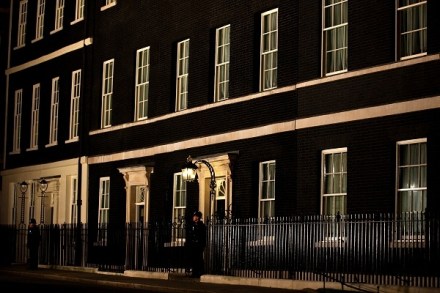
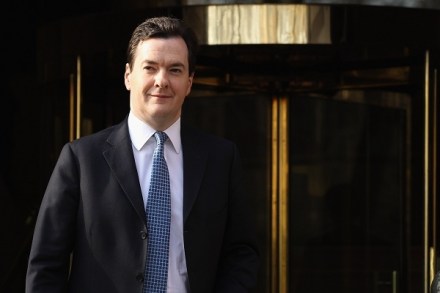
Before David Cameron’s trip to Berlin later today, George Osborne appeared on the Today Programme to emphasise that in the event of a Eurozone banking union, Britain would require safeguards.   Given the importance of finance to this country, Cameron and Osborne can’t accept anything that creates a two-tier single market for financial services. The Tory leadership is also acutely aware that it was this issue that led to Cameron vetoing a proposed treaty last year. It would be politically dangerous for Cameron to do anything that could be characterised as undermining his own veto.   One option being floated by some Tory Eurosceptics is a British veto on financial services.

Miliband’s England

From our UK edition

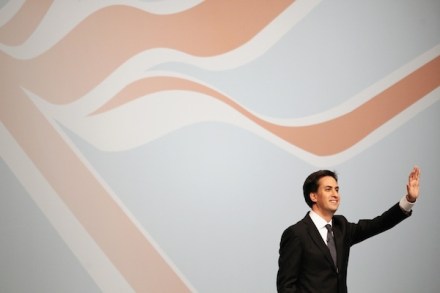
The debate over the Union provides Ed Miliband with a political opportunity. He is the only one of the three major party leaders whose party plays in both England and Scotland. The Tories only have one seat north of the border and the Lib Dems fear that they might lose all of their seats in mainland Scotland at the next election. By contrast, the local elections in Scotland this year saw something of a Labour revival, easily beating back the SNP challenge to its control of Glasgow City Council. Miliband’s speech today was an attempt to make both the case for the Union to an English audience and to discuss English identity.

Cameron’s reshuffle dilemmas

From our UK edition

When David Cameron reshuffles his top team, one of the questions he’ll have to answer is what relationship he wants between the Conservative party and the coalition government. The Liberal Democrats have a deputy leader in Simon Hughes and a party president in Tim Farron who are quite often used by their leadership to try and put distance between them and the coalition. But there is no one who performs that role for the Conservatives.   Interestingly, Sayeeda Warsi has made clear that she would like to be freer to attack the Lib Dems. I also suspect that if she is moved in the reshuffle, whoever takes on the role will want more freedom to carve out a Conservative identity distinct from that of the coalition.

Storms over the continent

From our UK edition

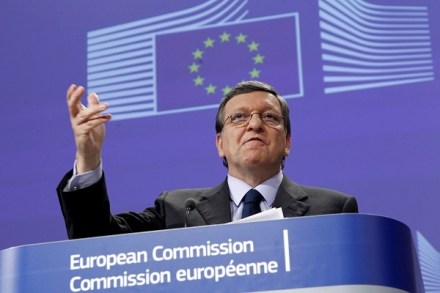
Whitehall sits and waits. Normal politics is continuing, squalls over whether the apprentice stewards at the Jubilee were taken advantage of and the next stage in the Warsi saga have dominated today, but everyone knows that the big story is unfolding — albeit, at an unpredictable pace — on the continent. There are, at the moment, two big questions. The first is how will Spain, which has essentially admitted that it will struggle to sell any more bonds, recapitalise its banks. Once again, we see the president of the ECB, the Commission and most of the other Eurozone members badgering the Germans to bend the rules and allow a quick fix solution. Again, Merkel is giving ground, but only slowly.

Post-Jubilee, it’s back to a new European reality

From our UK edition

As the Jubilee celebrations draw to a close, attention once more returns to events in Europe. There’s a distinct sense among politicians, and especially coalition ministers, that what is happening there will change British politics in a huge way. As one senior MP said to me over the weekend, if a country leaves the Euro then the economic crisis that follows will reset the rules of the politics.   Measures that would have been deemed impossible six months ago will suddenly be on the cards. We’ve already seen a flash of this with Theresa May’s suggestion that the freedom of movement across the European Union could be suspended in the wake of a Eurozone break-up.

The reshuffle is approaching

From our UK edition

One of the issues that David Cameron is contemplating at the moment is the timing of the reshuffle. I hear that he devoted a considerable chunk of last week to thinking about the structure he wants for the government.   The pressing matter that has been delaying the move is doubts over whether certain ministers could survive or not; no Prime Minister wants to freshen up his government only to have to make more changes a few weeks later. So, it was deemed to be impossible to do one before Jeremy Hunt appeared before the Leveson Inquiry. Now, some in Number 10 think that the Prime Minister will have to wait until the investigations into Sayeeda Warsi’s expenses are complete.

Winning back lost ground

From our UK edition

In a bid to make Tory MPs feel more involved, Downing Street is inviting small groups of them to see Andrew Cooper, David Cameron’s director of political strategy, and Stephen Gilbert, the PM’s political secretary. Patrick Rock, who acts as the political liaison to the civil service run policy-unit, also attends. The first of these meetings took place recently, with a dozen MPs attending.   Those who were present describe the presentation as being frank about the government’s recent difficulties, it uses the term omnishambles, but also trying to offer reassurance. There was much talk about how Margaret Thatcher’s position at this stage in the political cycle post 1979 and ’83 was far worse than Cameron’s is now.

The pressure heaps on Merkel

From our UK edition

This morning there’s an odd disconnect between the joyful Jubilee coverage in the papers and the grim economic news inside them. The Eurozone crisis appears to be once again reaching one of those moments when there’s an expectation that something will have to give. The Germans are coming under even more pressure than before to sign up to Euro-bonds and to allow the bailout fund to recaptialise ailing banks; the Spanish are particularly keen on the later point as it is their only way of avoiding an IMF programme. One British government source complains that ‘the Germans are working on a five to ten year timetable, but if they are not careful they are going to have to work to a five to midnight timetable.

After the celebrations, a summer of discontent

From our UK edition

The next few days will see David Cameron doing what he does best: looking the part. Whether it is the Jubilee celebrations or the Olympic torch relay, Cameron can be relied upon to know — or look as if he knows — what is expected of him as Prime Minister. Cameron’s natural ease is his greatest asset. It is why Downing Street aides are convinced that this summer’s events will help restore his reputation. Combine this with the anticipated national feel-good factor and it is easy to see why so many expect that the Jubilee and the Games will ease the government to calmer waters. Despite the lightness with which he bears the burden of command, however, Cameron is under a pressure which no other postwar Prime Minister has experienced: he is running a coalition.

The push for a European Banking Union

From our UK edition

The warning by Mario Draghi, the president of the European Central Bank, that the euro is ‘unsustainable unless further steps are undertaken’ is about as stark as they come. I’m informed that what Draghi is pushing for behind the scenes is for the ECB’s remit to be expanded to include Eurozone financial policy. This would lead to, to put it crudely, the creation of a European Banking Union. It would see the ECB take over from national governments when it comes to bank bailouts and the like. This would, in turn, ease some of the pressures on countries like Spain whose borrowing costs are being driven up by the market’s belief that it will need to recapitalise its banks very soon.

Another Downing Street exit

From our UK edition

Sean Worth was one of the buccaneers of the Downing Street policy unit. But as the civil service began to take a hold of it, Worth was sent over to the Department of Health to help Andrew Lansley see the NHS reforms through. It was also thought that Worth, an expert on social care, would be able to help craft the Tory response to the Dilnott report. But Worth is now leaving to go to the think-tank Policy Exchange. This suggests that any government action on social care is a long way-away. Worth is just the latest in a growing list of Tory aides who have quit the government. Partly, this is a product of just how demanding these jobs are in terms of time and intellectual effort.

Hunt in the clear for now

From our UK edition

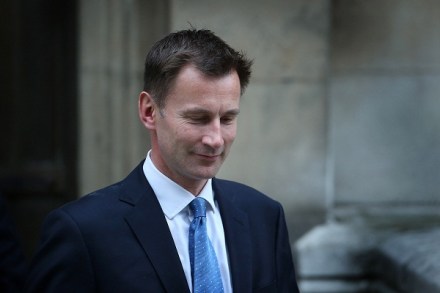
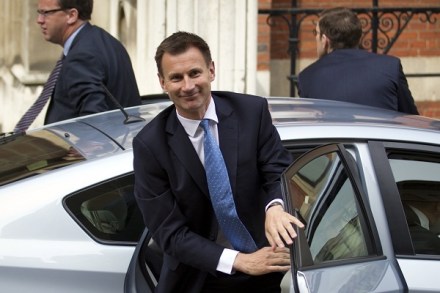
Minutes after Jeremy Hunt finished giving evidence at Leveson, Number 10 stated that he would not be referred to the independent adviser on the ministerial code. Hunt would have settled for this result at the beginning of the day. But Labour is sure to point out that the reason Hunt was not referred to him before was to avoid parallel inquiries. So, now that Hunt has given evidence, there’s no bar to Alex Allan investigating.   The evidence presented today contained no smoking gun. But it still created an impression that is deeply damaging to Hunt and his future career prospects. It turns out that Hunt carried on texting James Murdoch, albeit pleasantries, even after he had taken on the quasi-judicial role.

Hunt at Leveson Pt.1

From our UK edition

Robert Jay, the Leveson Inquiry QC, is taking a different approach with Jeremy Hunt than he has most other witnesses. He is subjecting the Culture Secretary to an old-fashioned court-room examination full of references to the precise timings of Hunt’s actions. Hunt’s main line so far is that he now understands the quasi-judicial process far better than when he wrote Cameron that memo suggesting a meeting with Cable and Clegg to discuss media policy and the bid. He is adamant that when given this role himself, he behaved properly. But the inquiry is now moving on to whether Smith spoke for Hunt in his texts to Fred Michel. Judging by his body language, Jay clearly thinks Hunt is on weak ground here.

On the eve of Hunt’s Leveson appearance

From our UK edition

It has become the conventional wisdom in Westminster that Jeremy Hunt’s career will turn on his appearance before the Leveson Inquiry tomorrow. Friends of Hunt have today been arguing that the Inquiry’s focus should be on how he carried out the quasi-judicial role. They are saying that once appointed to it, Hunt behaved — unlike Vince Cable — properly. They concede that Hunt’s texts to Fred Michel were overly familiar. But they maintain that, unlike Adam Smith’s texts, they gave away nothing about the state of the bid process.

Clarke goes OTT

From our UK edition

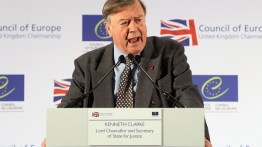
Today’s award for hyperbole goes to Ken Clarke. He has just told the Leveson inquiry that, ‘The power of the press is far greater than the power of parliament.’ Given that parliament can still make the law of the land, this is a rather absurd statement. (Though, I do regret that parliament has given away so many powers to Brussels and the courts. But I doubt that was what Clarke meant.)   Clarke’s statement seems to stem from a belief that MPs buckle under pressure from the press, that they’d all be a lot more liberal if it wasn’t for those pesky tabloids. I just don’t think this is true.

The guilty men

From our UK edition

There was a telling moment in Michael Gove’s testimony to Leveson yesterday, when he applauded Rupert Murdoch for The Sun’s campaign against the Euro: 'Gove: Other politicians recognised that the campaign which the Sun and others ran to keep us out of the single currency was right, and I think if we're reflecting on other newspaper campaigns, I think we can undoubtedly say that was a campaign in the public interest. Jay:  Well, some people might still disagree with that proposition, Mr Gove, but I'm not going to take you on it. Gove: I'm sure — well, a dwindling number may.' To me, the exchange was a reminder of how the whole bien pensant establishment was once in favour of Britain going into the euro.

Social mobility — more than a political battle over universities

From our UK edition

Nick Clegg wants to make social mobility his big theme in office. This is an ambitious target and one unlikely to be motivated by electoral consideration given that visible progress on this front is unlike to be achieved by 2015. The publication of the former Labour minister Alan Milburn’s report, commissioned by the coalition, into the professions and social mobility takes us to the heart of the debate: when can most be done to aid social mobility. Personally, I think the emphasis should be on education reform and family policy. Others, argue that more can — and should — be done later.

Gove stands up for free speech

From our UK edition

Michael Gove’s appearance at the Leveson Inquiry has set the heather alight in Tory and journalistic circles. There is, among those who fret about the dangers to free speech created by the current mood, relief that someone has set out the case for liberty so clearly and without apology. While among Tories there is a delight at seeing one of their ministers articulate a Conservative worldview so clearly. Gove was, in some ways, at an advantage going before the inquiry. His department has no responsibility for the press and so he knew that the focus would be on his work as a journalist and his attack on Leveson, saying that the atmosphere around the inquiry was having a chilling effect on free speech. But, even given that, his performance was an impressive one.

The coalition rows back on the Budget’s VAT changes

From our UK edition

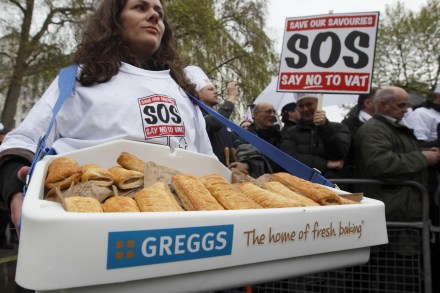
No government likes to u-turn, and particularly not on a Budget measure. So, tonight’s changes to the VAT regime proposed by the Budget for Cornish pasties and static caravans are embarrassing for the coalition. It is also worth noting that they have come after they have taken most of the political heat they were likely to take for the changes, including in the House of Commons where there were decent-sized rebellions on both issues. One of the lessons that I suspect that politicians, and particularly the coalition, will learn from this episode is: don’t try and deal with the anomalies in the VAT system. Voters, for obvious and understandable reasons, react particularly badly to taxes hitting products that were not taxed before.