James Forsyth

James Forsyth

James Forsyth is former political editor of The Spectator.

The Lib Dems can use Leveson to show coalitions work

From our UK edition

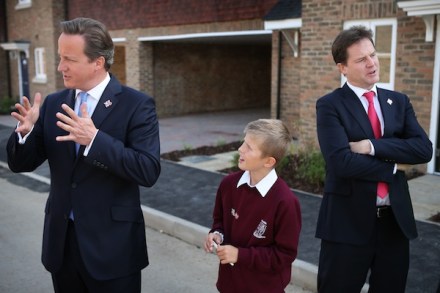
The Liberal Democrats’ strategic imperative in this parliament is to show that coalitions can work. Their response to the Leveson Inquiry is, I suspect, going to be part of this plan. Their position on the issue is hardening. Yesterday’s Guardian report that they would make clear if David Cameron was only speaking for the Conservative party not the government, has been followed by Nick Robinson’s news that Clegg will make his own statement in the Commons if no coalition position can be agreed. I understand that, ideally, Clegg would make his statement from the despatch box.
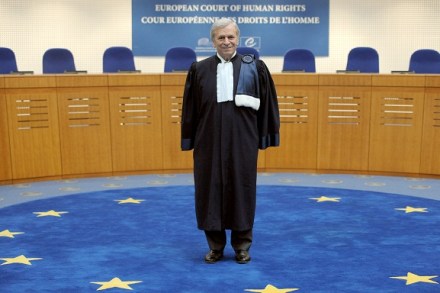
Would the Strasbourg Court end up in charge of any system of statutory regulation of the press?

From our UK edition

In just over 18 hours, advance copies of the Leveson Report will be sent to the Prime Minister, various ministers and the other party leaders. The expectation in Westminster is very much that the Prime Minister will steer away from statutory regulation, saying instead that he wants to see if a new beefed up form of independent but non statutory regulation can do the job. Others in the coalition, remain keen on the idea of a one line bill setting up a statutory based but independent regulator. There is though, as there is with so many stories these days given its intrusion into our national life, an ECHR angle to this debate.

Like the Mounties, Osborne gets his man

From our UK edition

George Osborne pulled off one of those bits of political theatre that he so enjoys today. Watching his statement in the Commons, one sensed something was up as Osborne delighted in delaying naming the new bank governor. It was an indication that, like the Mounties, the Chancellor had got his man. Moments later, a clearly delighted Osborne announced that Mark Carney, the Canadian Central Bank Governor, would be the new governor of the Bank of England. This is quite a coup for Osborne as Carney is widely regarded as the best central bank governor in the world. It also marks a clear break with all that has gone wrong in the City in the last dozen years or so. It was an open secret in Westminster that Carney was the preferred candidate of the Chancellor and his circle.

The UKIP pact idea will keep coming back

From our UK edition

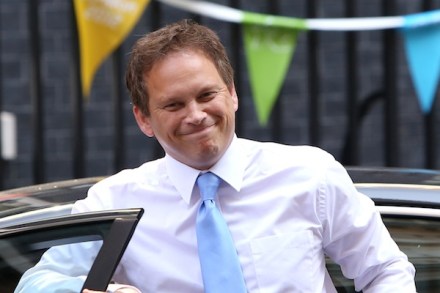
I have a feeling that we haven’t heard the last of the idea of Tory / UKIP pact. However much Grant Shapps tries to knock the idea down, it is going to keep coming back. Why? Because Nigel Farage will never totally dismiss the idea — hence his mischief-making about doing a deal with a Michael Gove-led Tory party — and enough Tory MPs want one to give the idea oxygen. When I spoke to Farage back in May, this is what he said on the subject of candidates standing on a joint Tory/UKIP ticket: 'What I do know is there are Conservative Associations up and down the country who think this could be a way forward...

Liam Byrne tries to turn David Cameron’s striver language back on him

From our UK edition

The Leveson Inquiry will dominate this week. Inside Number 10 they regard it as ‘the most difficult’ of the three big issues dominating their time at the moment – the other two are the autumn statement and the EU Budget. But I suspect that voters will be far less interested in Leveson and the Prime Minister’s response to it than the media and political class are. I’d be surprised if Cameron’s handling of it changed the views of voters—as opposed to those of elites— of him. So, on The Sunday Politics today it was striking to see Liam Byrne, Labour’s welfare spokesman, trying to turn Cameron’s striver rhetoric back on him.

The prejudice on display in Rotherham

From our UK edition

There are some stories that become more shocking the more you think about them. The case of the Rotherham foster parents who have had the children they were caring for taken away from them for being members of UKIP is one of these. It is hard to imagine the distress that must have been caused to them by this arrogant, ill-thought out decision. First, UKIP is not a racist party: none of its policy positions could be called racist in any meaningful definition of this term. I’m sure there are some racists who are members of UKIP, just as there are — I suspect — some Labour, Liberal Democrat, Tory and Green members who are racist. Now, UKIP does take a harder line on EU immigration than the three main parties: the explanation given for why the children were taken away.

A satisfactory outcome at the EU budget talks for David Cameron

From our UK edition

So, the EU budget summit has — as expected — broken up without agreement. We await the date of the next discussion of the matter. But for the moment it means there is nothing that David Cameron will have to try to pilot through parliament. Talking to those close to the Prime Minister, I sense that they are not unhappy with this conclusion. In Downing Street, they feel that their criticisms of the running costs of the EU bureaucracy have struck a chord with other contributor countries. They’re also pleased that Cameron has managed to strike a tough negotiating position without isolating himself. But what is giving them the greatest satisfaction is how solicitous of the British position Angela Merkel was. They regard this as a promising sign for the coming renegotiation.

David Cameron’s tricky position on the Leveson Report

From our UK edition

Politics is gearing up for the publication of the Leveson Report next Thursday. It was telling that when Boris Johnson picked up politician of the year at The Spectator Parliamentarian of the Year awards, he didn’t use the occasion to list of his achievements in London or to reminisce about the Olympics but rather took the opportunity to decry the possibility of statutory regulation of the press. On the other side is Ed Miliband, whose party is committed to backing whatever Leveson comes up with. It is unclear yet what Nick Clegg and the Liberal Democrats will do. But there are a large chunk of Tory MPs who appear to have come round to the idea of statutory regulation.

Nick Herbert calls for Britain to quit the European Court of Human Rights

From our UK edition

The prisoner voting issue is threatening to bring the whole issue of the jurisdiction of the European Court of Human Rights to a head. It is almost impossible to see how the Strasbourg court can be satisfied without the ending of the ban on all prisoners voting, while it is hard to see parliament ever agreeing to that. Cabinet Ministers concede that the government’s current efforts are about buying time more than anything else. (For more on the legal questions that arise from this matter, see David's post on the subject.) Leaving the jurisdiction of the Court is fast becoming the mainstream position in the Tory party.

Backbench driver

From our UK edition

The burdens of office can wear a man down. When Nick Herbert was the minister for policing and criminal justice, he looked exhausted; as if he was carrying the troubles of two departments on his shoulders. But having quit the government in the September reshuffle, he is relishing his newfound freedom. He says he can fit in an interview on Monday morning, between the bishop and his bank manager. Happy to come between God and Mammon, I stroll along to his office, which is still on the House of -Commons’s ministerial corridor. No longer limited by collective responsibility, he has much to say. Herbert’s first major intervention as an ex-minister will be on the European Court of Human Rights.

Westminster waits eagerly for the return of the Crosby show

From our UK edition

Never before in British politics can the recruitment of a part-time consultant have been given so much coverage. The papers have treated Lynton Crosby’s coming arrival at Conservative Campaign Headquarters with the seriousness that used to be reserved for changes in the great offices of state. Ministers are no less excited; they are full of theories about the significance of the hiring of this hardscrabble Australian operative and what it says about the future direction of the party. So what’s the fuss about? Well, as with so much to do with the Cameroons, one can only really understand it in the light of the 2010 election.

Grant Shapps confirms that 20 of the 40 Tory target seats are Lib Dem held

From our UK edition

On the Sunday Politics just now, Grant Shapps confirmed to Andrew Neil The Spectator’s story that 20 of the 40 Tory target seats at the next election are Liberal Democrat held. Shapps stressed that it was nothing personal about the Liberal Democrats but just a reflection of what needed to be done if the Tories were to win a majority. When asked why voters in Liberal Democrat Ministers constituencies should prefer a Tory majority to the current coalition, Shapps cited the need to renegotiate Britain’s relationship with the European Union and the European Court of Human Rights as well as the global economic race. This suggests that these issues will form an important part of the Tory message to swing voters in Lib Dem / Tory marginals.

Imposing a minimum price for alcohol will leave Cameron with a political hangover

From our UK edition

On Monday, the government is set to announce its alcohol strategy. It is expected that this will call for a minimum unit price of 40p. As Graham Wilson reports in The Sun, this idea is a personal favourite of the Prime Minister but opposed by several influential members of the Cabinet. These ministers worry that it’ll be seen as the rich man taking away the poor man’s pleasure. Given the media reaction to the pasty tax and the caravan tax, this is a legitimate concern. They also fear that a successful legal challenge to it, which is a distinct possibility, would do further damage to the government’s reputation for competence.

Reasons for all three parties to worry

From our UK edition

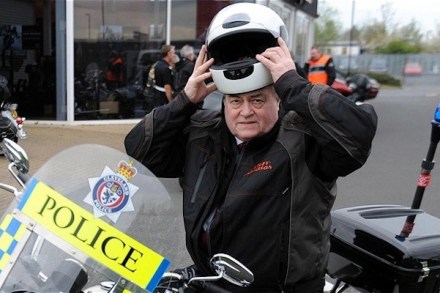
Of the three main parties, Labour will be happiest with today’s results. They’ve won Corby, the contest that was always going to get the most media attention. But, I think, there are things to worry all three parties in the results. Last week, Labour sources were talking about how the big two tests for them of the night were Corby and the Bristol mayoralty. In Bristol, they’ve been beaten by an independent candidate. Ben Bradshaw is already complaining on Twitter that this defeat can be put down, in part, to the party’s resource allocations for these elections; the fact that Corby was prioritised above everywhere else. The Police and Crime Commissioner elections also haven’t been great for the party. John Prescott suffered a spectacular defeat in Humberside.

Comings and goings at Number 11 Downing Street

From our UK edition

Few politicians have put as much thought in to the team around them as George Osborne. He is a collector of talented people. Unlike most Tories, he has gone outside of CCHQ and parliament for nearly every senior appointment he’s made. But I understand that after Christmas he’ll be losing one of the most important members of his operation, Poppy Mitchell-Rose. Mitchell-Rose has acted as Osborne’s fixer and gatekeeper since he first became shadow Chancellor. On the long—and sometimes bumpy—road from opposition to government, she has been a calm sherpa who has dealt with a host of problems before they have even arisen. But she is now moving to Washington, DC, before starting a career in the private sector. I suspect that she’ll not be short of job offers.

Labour’s Andy Sawford wins Corby from Conservatives in by-election

From our UK edition

Labour have won Corby from the Conservatives, and with a larger swing than most pundits were predicting. Its majority of more than 7,000 means that Labour now holds the seat with a larger majority than it did after the 2001 election. The Tories are already pointing to several factors to explain the scale of their defeat. It’s mid-term and the fact that Louise Mensch had quit the seat having won it last time to move to New York definitely hurt them. But it is still a poor, if not spectacularly so, result for them. I suspect it will lead to increased jitters on the Tory benches as MPs work out what a 12.7 per cent swing would do to their majorities. For Labour, it is an encouraging sign.

Labour hold in two by-elections but turnout low

From our UK edition

So far, the election results are as expected. Labour has comfortably held Manchester Central and Cardiff South and the Tory candidate has been elected as the Police and Crime Commissioner for Wiltshire. But turnout has not been good. In Manchester Central it was under 20 percent, the lowest by-election turnout since the war according to the BBC. While in Wiltshire, only 16 percent of people bothered to vote in the Commissioner contest. so far, it looks like yesterday was not Super Thursday but Stay-at-Home Thursday.

Election night: It’s all over bar the counting

From our UK edition

Tonight is election night but there’s not much counting going on. The Corby by-election count doesn’t start until tomorrow morning and Wiltshire is the only place where the Police and Crime Commissioner votes are being tallied up over night. But we should get results in the next few hours in Manchester Central and Cardiff South, two safe Labour seats where the MP is standing down to run as a Police and Crime Commissioner. Most of the media attention will focus on Corby. It is, indeed, a bellwether seat. But it is worth remembering that this is mid-term and a Tory defeat here would not tell us that much, especially given the circumstances of the by-election—constituencies don’t take kindly to MPs standing down half-way through their term.

Another sign that CCHQ is moving on to an election footing

From our UK edition

Today brings yet another sign that CCHQ is gearing up for the long election campaign. After yesterday’s news that the party has chosen the forty seats it intends to target at the next election, I now hear that talent is being moved out of Whitehall and back to Millbank to beef up the team there. Giles Kenningham, one of the most effective Tory spin doctors, is taking leave from the Department of Communities and Local Government, to head up CCHQ’s media operation following Susie Squire’s secondment to Downing Street. Kenningham joined the Tories from ITV in 2007. In the 2010 election, he was one of the two Tories who took charge of responding to Labour’s daily press conference. At DCLG, Kenningham has taken a proactive approach.