James Forsyth

James Forsyth

James Forsyth is former political editor of The Spectator.

When will we able to have a mature conversation about the health service?

From our UK edition

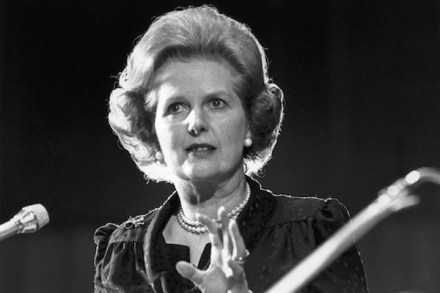
Nigel Lawson described the NHS as the closest thing to a national religion that this country has. The NHS is certainly like a national religion to the extent that it is pretty much impossible to have a rational debate about it. There is often a choice posited between the NHS and no healthcare at all. One can see this mindset in today’s Guardian article on the news that the Thatcher government in 1982 held Cabinet discussions about fundamental rethinking the size and shape of the state.
Will ‘plod-gate’ make voters more sceptical of class-based political attacks?

From our UK edition

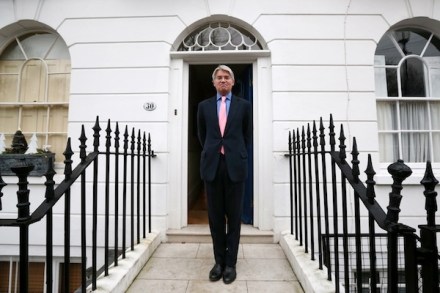
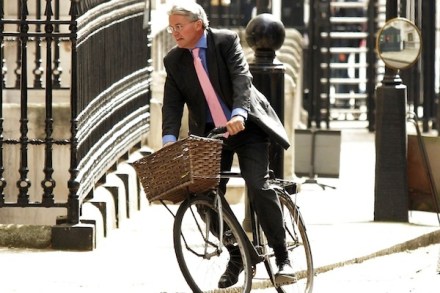
The Andrew Mitchell story has always been about class. If all Mitchell was alleged to have said was ‘you supposed to f’ing help us’ there would have been some clucking and some mockery but no serious calls for his resignation. But the word ‘pleb’ and the phrase ‘know your place’ made the charge toxic. This was also what made some in Number 10 so queasy about any kind of robust defence of Mitchell; the Cameroons believe that whenever the conservation is about class the Tories are losing. This class angle is also what enabled the Labour Party to make political hay out of the issue.

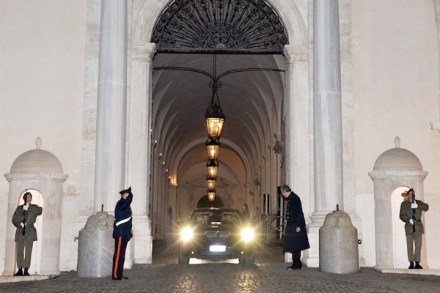
Mario Monti resigns

From our UK edition

Following the passing of his budget, Mario Monti has quit as Italian Prime Minister. At the moment, it remains unclear whether he’ll continue to lead the government until elections next year. Many in the Italian establishment—and, I understand, several European leaders—would dearly love Monti to emerge as the leader of a centrist coalition ahead of the election, though as a Senator for Life he can’t run in the election himself. They view the popular endorsement of Monti’s reforms as the best possible result for the stability of the Eurozone. What seems certain, though, is that the Italian elections will be highly unpredictable. The presence of both a comic and Silvio Berlusconi in the race guarantees that it will not be a conventional contest.

The Mitchell row could plunge the Met into an even bigger crisis

From our UK edition

That Andrew Mitchell no longer has confidence in the Metropolitan Police Commissioner escalates this scandal. I understand from those close to Mitchell that he was particularly concerned by Bernard Hogan-Howe’s declaration a few days ago that he had seen 'nothing that causes me to doubt the original account' contained in the police logs. He felt that this risked prejudging the police’s own investigation into the matter. One other aspect of this affair is where it leaves the relationship between the police and those Cabinet Ministers they protect. After the Mitchell incident, many of them made their displeasure known. David Cameron’s own security detail were seen wearing ‘toffs and plebs’ cufflinks at Tory conference.

Grant Shapps launches Tory target seats campaign

From our UK edition

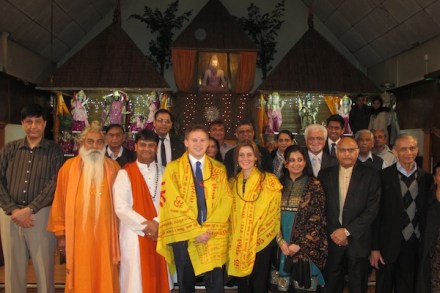
If the Tories are to win a working majority at the next election, they are going to have to take seats off Labour. Even if the Tories won every single Liberal Democrat seat they are targeting — something that is highly unlikely to happen, they would still only have a majority of one. Doing this after five years of austerity government is going to be extremely difficult. The Tory strategy for it, involves boosting the party’s vote among groups that the party traditionally underperforms with. Tellingly, Grant Shapps is launching the Tory target seats campaign today in a Hindu temple in Harrow West, a seat where the Tories underperformed last time; the Labour majority there actually went up in 2010.

We may soon know the truth about the Andrew Mitchell incident

From our UK edition

The plot is rapidly thickening around the whole Andrew Mitchell and police incident. By the end of this matter, I suspect several reputations will have been severely damaged. The email allegedly sent by a police officer, who was posing as a member of the public and an eyewitness to the incident, to his local MP John Randall is a quite remarkable document. It is well worth reading in full just to see the level of detail involved. Those close to Mitchell stress that he is more interested in clearing his name rather than returning to the Cabinet or seeking legal redress. But I understand that this whole scandal might well reach a denouement quicker than anyone currently expects.

PMQs: Labour attacks Cameron as the leader of a ‘Dickensian Britain’

From our UK edition

PMQs started off in a very consensual manner as Ed Miliband asked some worthy questions on Afghanistan. But this quickly changed when Miliband moved onto food banks. The Labour leader attempted to paint food banks as a consequence of the coalition’s policies. When Cameron mentioned the ‘Big Society’, Miliband shot back that ‘I never thought the Big Society was about feeding children here in Britain.’ A string of Labour MPs then made similar attacks on Cameron. One even waved a suicide note left by a constituent affected by changes to disability benefits. The question is whether the picture of, to quote one Labour MP, a Dickensian Britain with ‘grandeur for the few, the workhouse for the many’ rings true. I don’t think it does.

Andrew Mitchell’s next step could be an international job

From our UK edition

The Westminster grapevine is buzzing with the latest rumours about the truth of ‘pleb-gate’. There are legal limits to what we can say. But a few things seem certain. Andrew Mitchell’s friends believe he is on the cusp of vindication. On the Today Programme just now, David Davis called for him to be returned to high office as soon as possible. Davis also claimed that Mitchell had not been able to handle the matter in the way that he wanted to because of constraints imposed on him by people around the Prime Minister. One lesson of the Mitchell affair is that the only person who can really defend a politician when his integrity is under attack, is the politician himself.

Was the deputy chief whip just doing his job by passing on Mitchell concerns?

From our UK edition

The latest twist in the Andrew Mitchell story is particularly intriguing. The Guardian is reporting that news of the confrontation between the police and the chief whip was passed onto Downing Street by the deputy chief whip John Randall. Now, Randall and Mitchell were known not to get on and Randall played a key part in forcing Mitchell out by indicating that he was not comfortable working under him. This latest news threatens to inject yet more poison into the Tory bloodstream. If brother whips can treat each other like this, what hope party discipline? But one longstanding Conservative MP made the case to me just now that Randall’s behaviour is not as odd as it might seem.

A pact wouldn’t solve the Tories’ UKIP problem

From our UK edition

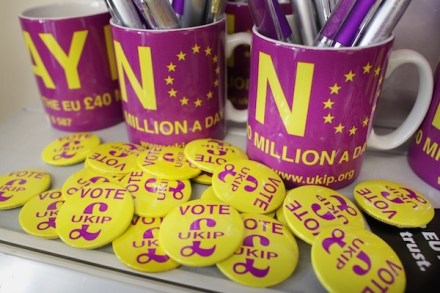
UKIP has seen a significant bump in support in the latest set of polls: it is up five points with Populus this morning. All of which makes Lord Ashcroft’s examination of why people are attracted to UKIP particularly timely. The Ashcroft polling confirms that the UKIP vote is only partly about Europe. It also reflects a wider anger with a political class that appears aloof from peoples’ concerns. Among those considering voting UKIP, the most frequently stated reason is to send a message to the big parties on Europe and immigration. It is also striking that any kind of Tory / UKIP pact seems unpopular. ‘The few voters who had heard the idea of a Conservative-UKIP pact thoroughly disapproved of the proposal.

Cameron prepares his European argument

From our UK edition

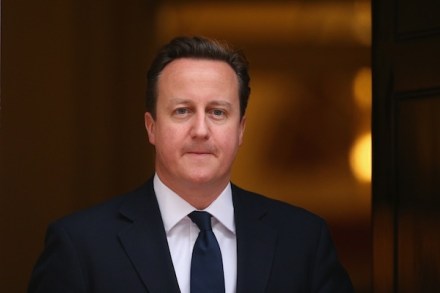
If logistics had allowed, David Cameron would have given his long-awaited speech on Europe tomorrow. Instead, it’s been postponed until January and we had to make do with a statement on the European Council in the Commons today It’s quite clear that Cameron is thoroughly bored of these meetings: he complained that it was the seventh he’s attended this year and that he ‘wouldn’t describe it as a landmark council’. When Ed Miliband mocked the Eurozone countries for coming up with a timetable for having a timetable, Cameron chuckled and nodded. But Cameron does think that something big came out of this summit. As he put it, ‘the principle has been established that changes in the Eurozone, requires safeguards for those outside.

The Liberal Democrat paradox

From our UK edition

Labour under a more left-wing leader, the Tories bearing right. These are circumstances in which you would expect the Liberal Democrats to flourish. But they are in government and haven’t benefitted from this moment. Instead, they are struggling in the polls, coming fourth too often for comfort. Part of the problem is that the public simply aren’t listening to Nick Clegg at the moment. As one Conservative Cabinet Minister sympathetic to the Liberal Democrats’ political strategy observes, ‘Clegg can say anything, he’s just not being heard.’ Those close to Clegg believe that this will turn round in time.

Shapps’ campaign skirmish

From our UK edition

There’s long been a sense on the Tory side that the party’s campaigning isn’t as sharp as it should be, that CCHQ isn’t up to the job. The Ashcroft target seats campaign was so valued not just because of the money but because of the organisational and management muscle behind it. The new Tory Chairman Grant Shapps was sent to CCHQ in the reshuffle with instructions to address the place’s institutionalised incompetence. The early signs are encouraging. When Labour announced that it was launching a campaign in the 60 seats where the number of people on working tax credits, which are only going up by 1%, was larger than the Tory majority, Shapps had a Tory response in place in each of those seats by the time Labour’s campaign actually launched.

The Connecticut shooting

From our UK edition

The news coming out of Connecticut is just awful. 18 children have been gunned down at their school and, reports suggest, that another nine people—including the gunman—are also dead. The gunman’s mother apparently worked at the school, and is believed to be among those he murdered. If this death toll is accurate, it will be the second worst shooting in US history, behind the Virginia Tech incident in 2007. Early reports indicate that the weapon was legally purchased and licensed. It can seem tawdry to talk about politics at a time like this. But there’s no doubt that the gun control debate will now return to Washington. The White House has already indicated that it wants to see the assault weapon ban, which elapsed in 2004, renewed.

Downing Street’s Maria Miller dilemma

From our UK edition

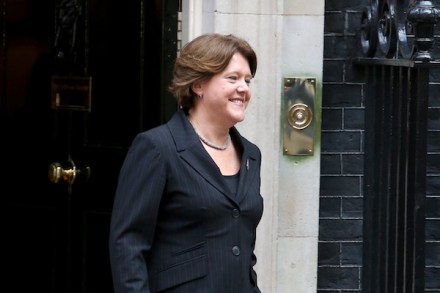
There was a time during the Leveson Inquiry when Jeremy Hunt’s departure from the government was treated as almost inevitable by the media, including yours truly. But Number 10 backed him. He survived and was then promoted in the reshuffle. When it eventually came out, the Leveson Report made only minor criticisms of him and cleared him of the most serious charges against him. This has confirmed Number 10 in its view that most media squalls blow themselves out in time. But the Cameroons have always accepted that MPs’ expenses is a toxic subject with the public. Cameron made a fair number of enemies on the backbenches, with the hard-line stance he took on the issue, albeit once the expenses scandal had broken. Downing Street would be loath to lose Miller for three reasons.

Insults fly at PMQs

From our UK edition

Today’s PMQs was visceral stuff. Ed Miliband accused the Prime Minister and the Chancellor of being Bullingdons Boy who were taking decisions about ‘people they’ll never meet, people, people whose lives they’ll never understand.’ Cameron gave as good as he got, attacking Labour as the ‘party of unlimited benefits’ and said that Miliband ‘only stands up for those who claim.’ These exchanges over the decision to limit the increase in working age benefits to 1% in the autumn statement cheered up both side of the House, the Lib Dem benches looked a bit glum though. Labour and the Tories are both comfortable with these battles lines—convinced that the public is with them.

Our person in Brussels

From our UK edition

One of David Cameron’s great skills is his ability to separate the cares of office from the rest of his life. Samantha Cameron is never likely to say, to misquote Clarissa Eden, that ‘in the past few weeks, I have really felt that the terms of the European renegotiation were flowing through my drawing room’. This Christmas, however, the Prime Minister’s working hours are likely to be dominated by Europe. For in the new year he is expected to give a speech setting out how he wants to change the terms of Britain’s EU membership. Several new European treaties will be needed in the next few years as eurozone governments seek ever closer integration.

David Cameron defends secret courts

From our UK edition

It was striking that at today’s liaison committee session the Treasury Select Committee chairman chose not to ask the Prime Minister about the economy but the secret courts bill. In what were the tensest exchanges of the 90 minutes, Tyrie questioned whether secret courts were necessary while Cameron asked Tyrie to think what he would do in his position. Cameron kept stressing that the government was not making any existing proceedings secret but trying to find a way to have cases heard that can’t be at the moment. Tyrie’s vocal opposition, though, is further evidence that this bill isn’t out of the woods yet. Given that the terms of it were essentially thrashed out between Cameron and Clegg, I’d be surprised if Lib Dem MPs turned against it.

The government and the European Court of Human Rights are on a collision course over prisoner votes

From our UK edition

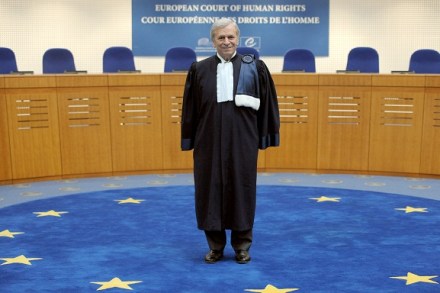
A showdown between the government and the European Court of Human Rights over prisoner votes drew that bit closer today. The government hoped that having parliament vote to uphold a blanket ban on prisoners voting would buy it some time, as the European Court of Human Rights would then have to start examining the issue all over again. But that hope was dashed today when the Council of Europe declared that a blanket ban 'cannot be considered compatible with the European Convention on Human Rights'. It also said that it expected to return to this case in September 2013. I expect parliament will still vote for the blanket ban, if it is given the option, meaning that parliament—which is sovereign in this country—and the court will be in conflict.

Commons shadow boxing on gay marriage

From our UK edition

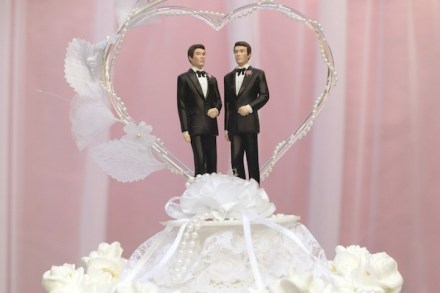
Today’s urgent question on gay marriage was largely shadow boxing for the statement on it, which has now been brought forward to tomorrow. Maria Miller insisted that the chance of a legal challenge to try and forces churches that don’t want to marry gay couples to do so was negligible. But Cameron’s comments about allowing those religious demoninations that want to marry gay couples to do so, led to Edward Leigh calling for another consultation on this issue. Interestingly, just before the urgent question started John Randall, the Conservative Chief Whip, and Greg Hands, another member of the whips office arrived in the chamber. The Tory questions on the issue were fairly evenly split between those in favour of same-sex marriage and those opposed.