James Forsyth

James Forsyth

James Forsyth is former political editor of The Spectator.

To win the next election, the Tories must crush the Liberal Democrats

From our UK edition

On the wall in Conservative Campaign Headquarters is a clock counting down the days, hours and minutes to the next election. It is so large that anyone who enters for the next 901 days won’t miss it. The party is now on an election footing, as the clock is intended to demonstrate. Grant Shapps, the new chairman, had it installed as soon as he was appointed to inject a sense of urgency into CCHQ’s work. Talk to people there and in Downing Street and you would think the election is only months away. They regard David Cameron’s conference speech as having kicked off a long campaign. They speak of ‘election messages’, and ask who will manage target-seat strategies.

Spectator exclusive: Tories ‘top 40’ hit list includes 20 Liberal Democrats

From our UK edition

The Tories have a 40:40 strategy for the next election. The aim is to defend their 40 most vulnerable seats and try and win 40 others to give the party a majority. So which 40 are in their sights? Normally, it's an easy one to answer: you just look at the last election and count which seats have the most narrow Tory defeat. If you'd done this, there would only be 9 Liberal Democrat MPs on the Tory hit list. But the Liberal Democrat vote has changed radically since the last election. So Stephen Gilbert, the PM’s political secretary,  has drawn up a new list, added in demographic factors, current polling data and consumer targeting. As a result, the  number of Liberal Democrat seats on the list more than doubled.

Another headache for the Tory whips

From our UK edition

Today brings yet another set of reminders for Numbers 9, 10 and 11 Downing Street about how difficult maintaining party discipline is going to be. First, there’s The Guardian story about Chris Heaton-Harris trying to use James Delingpole and the threat of him running as an anti-wind farm candidate in Corby as leverage to toughen up the party’s position on the issue. Then, there’s the letter signed by 15 Tory MPs calling on Cameron to make a transferable tax allowance for married couples part of the 2013 Budget. In a sign of where a lot of the trouble will come from in the coming months, the lead signatory to the letter is a minister who was sacked in the reshuffle, Tim Loughton.

Abu Qatada and the who governs Britain question

From our UK edition

No government ever wants to look like it is in office but not in power. This is why this country’s inability to deport Abu Qatada is causing such concern in Conservative circles. David Cameron will be well aware of the symbolism of the issue. In his conference speech this year, he boasted that “For years people asked why we couldn’t get rid of those radical preachers who spout hatred about Britain while living off the taxpayer……well, Theresa May – a great Home Secretary - has done it – and she’s got Abu Hamza on that plane and out of our country to face justice.” Today, Cameron declared himself ‘completely fed up’ with the fact that Abu Qatada is still here.

Order returns to the Tory party on fuel duty vote

From our UK edition

Tonight was a good one for the Tory whips. What looked last week like it could have been a tricky vote on a Labour motion to delay the fuel duty rise, turned into a relatively easy government win. There were only nine Tory MPs absent from the vote and every other Tory MP backed the government. Now, the reason there was no rebellion was, at least partly, because Treasury ministers dropped a fair few hints that there would be action on fuel duty in the autumn statement. Robert Halfon, who has led a sustained campaign on this issue, said after the vote that it was ‘Right to wait until’ the autumn statement on this issue. The question for Osborne now is whether he can find enough money to scrap the rise outright rather than just postpone it for a few months.

Abu Qatada evades deportation, again

From our UK edition

On any normal day, the fact that Abu Qatada has won his appeal against deportation would be a major news story. But today it has been pushed down the running order by the slew of BBC stories. The court’s reason for granting his appeal is that Qatada, in its judgement, would not receive a fair trial in Jordan. The government, which negotiated extensively with Amman to try and satisfy the courts on this point, will appeal. I suspect that Theresa May’s statement to the Commons on the matter later this afternoon will be defiant. It does seem absurd that someone who is not a British citizen, came here illegally and is believed by the government to be a dangerous individual cannot be removed from the country.

What will the coalition do next?

From our UK edition

We are now closer to the 2015 election than the 2010 one. We also expected by now to have the coalition’s mid-term review, the document that will set out its priorities for the second half of its term in office. But its publication has now been delayed until January. This is because the debates about what new policies to include in it are still going on. The quad—David Cameron, George Osborne, Nick Clegg and Danny Alexander—met on November 1st to discuss various ideas for it. They were, as I report in the Mail on Sunday, joined by Oliver Letwin and David Laws for this meeting with the Cabinet Secretary Jeremy Heywood also present. Dominating the meeting was ‘earn or learn’.

Philip Hammond’s Iranian justification for keeping Trident

From our UK edition

The Sunday shows have been dominated today by the aftermath of George Entwistle’s resignation. But Phillip Hammond gave a significant and combative interview on the Sunday Politics. Pressed by Andrew Neil on Michael Portillo’s criticisms of renewing Trident, Hammond dismissed them with the line that the former Defence Secretary ‘doesn’t have access to the information that would allow him to make that judgement on a sound basis.’ He then went on to argue that Trident is a necessary insurance policy in a world that will see an ‘an arms race in the Middle East’ if Iran does get the bomb. Iran, and the dangers it poses, was also Hammond’s justification for selling arms to Saudi Arabia.

BBC in turmoil as George Entwistle quits as director-general

From our UK edition

After his Today Programme interview this morning, it seemed almost inevitable that George Entwistle would have to resign as director general of the BBC and this evening, in a dignified statement, he has. I suspect that Entwistle’s won’t be the last resignation before this saga ends. Chris Patten, the chairman of the BBC Trust, appears on the Andrew Marr show this morning and he will have to show grip. The time is fast approaching when Patten will have to pick between his BBC job and his various other roles, including being Chancellor of Oxford.

Waiting for Leveson

From our UK edition

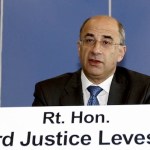
One issue that is in the background of nearly every political conversation at the moment is the Leveson Inquiry and how David Cameron will respond to its recommendations when it reports in the next few weeks. What Cameron does will do a lot to shape the political and media mood between now and the next election. Cameron is keen not to be seen to pre-judge the matter, hence his warning to Tory Cabinet Ministers recently to watch what they say about it, and is playing his cards close to his chest. But those close to him are well aware that there’s a danger that Miliband and Clegg—who have The Independent reveals been holding talks on the matter—will come out almost immediately for what Leveson proposes. This could leave the Prime Minister looking isolated.

David Petraeus quits as CIA director over affair

From our UK edition

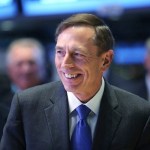
Few people have been more important in America’s recent wars than David Petraeus. Petraeus led the surge of US forces in Iraq and Afghanistan and redefined the US approach to counter-insurgency warfare. He was the most influential military figure of the post-war era and successful enough for some of those close to Obama to hold deep concerns about the prospect of Petraeus running against Obama. 14 months ago, he was put in charge of the CIA by President Obama. There he expanded Predator strikes to Yemen and pushed for a larger drone fleet. But yesterday, Petraeus resigned over an extra-marital affair with his biographer. It is a sad end to a remarkable career.

The Romney campaign meets electoral reality

From our UK edition

When I worked in Washington, I was shown round the White House by a junior Bush administration staffer. As our group made it round the building we passed various photos of George W. Bush signing bits of legislation into law, at nearly everyone our guide would stop and tell us how many voters in various key states would benefit from it. When there was a picture of Bush with a governor, we’d be regaled with both sets of approval ratings. It was clear that whatever the administration’s flaws - and there were many - it had an acute understanding of the importance of data and the changing nature of the American electorate. One would have thought that the campaign of Mitt Romney, a hugely successful businessman, would also have understood the importance of clean, reliable data.

Nick Boles: Where the Tories were wrong on modernisation

From our UK edition

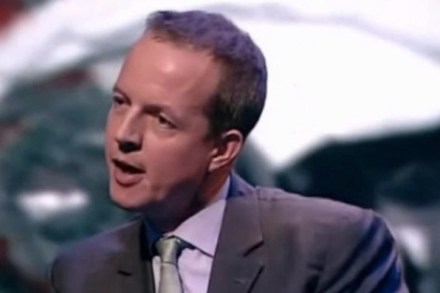
Few people have been more important to Tory modernisation than Nick Boles. He co-founded Policy Exchange, the think tank that has developed most of its policy ideas, and has been a tireless—and tieless—advocate of it. But one of the things that has always marked Boles out is his willingness to think and reflect. In an interview with The Spectator this week, Boles — who was promoted to the government in the last reshuffle — assesses what he and his fellow modernisers got right and wrong. He concedes that the modernisers lacked ‘a strong, economic message’ and that they became too carried away with ‘media zeitgeist’ issues like ‘chocolate oranges in W.H. Smith and some of the environmental messages and the work/life balance stuff’.

The danger of the This Morning ‘paedophile list’

From our UK edition

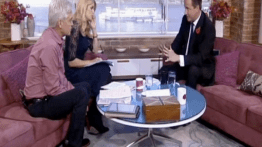
The Prime Minister goes on a mid-morning talk show and is forced to respond to a list of alleged paedophiles that the presenter has taken off the internet. If you put this in a political satire, it would be dismissed as far-fetched. But that is what happened when David Cameron went on This Morning. No-one is disputing the seriousness of the allegations involved. But does anyone really believe that the best way to uncover the truth is for the Prime Minister to be handed a list of names that a TV presenter has taken off the internet? Another concern about the coverage of this scandal is the terms that are being used. As no media organisation is confident enough to publicly name any living individual, we instead see suspicion being cast on whole groups of people.

Obama’s victory is a great solace to No. 10, and they will exploit it to the full

From our UK edition

Four years ago, in opposition, the Cameron offices were a swing state in the US election. Most were for Obama but there was still a sizable number who held a torch for John McCain. But this time round it is hard to think of anyone in Downing Street who wanted a Romney win. I asked several people in No. 10 who would have voted for Romney, but only one name ever came up. The idea of a Tory Downing Street urging on a Democratic President would come as a shock to those who served in the Thatcher and Major governments. In the 1980s, Ronald Reagan and Margaret Thatcher had common foes at home and abroad. But it would be a mistake to think that the relationship between Tories and the Republican party went into decline when they both left office. Instead, it got even closer.

Won’t get fooled again

From our UK edition

Few have been more influential in the process of Tory modernisation than Nick Boles. He founded Policy Exchange, the think tank that came up with most of its ideas, and has been a tireless, tieless advocate for the cause. But when we meet in the Palace of Westminster, he is in reflective mood. The first phase of his career is complete (he was elevated to the government in the recent reshuffle) and he wants to talk about what he and his fellow modernisers got right and what they got wrong. Boles is 6ft 6in, but he’s a friendly chap and he smiles a lot so you don’t feel talked down to. After we take our seats, he needs a moment to unfurl his limbs, but he’s soon talking animatedly, keen to discuss whether the financial crash affected the Tory modernisation project.

Kris Hopkins slams Douglas Carswell and the rebels’ tactics at tense meeting of the 1922

From our UK edition

It was a stormy meeting of the 1922 Committee tonight. The cause of controversy was last week’s defeat of the government on the EU Budget and whether or not the rebels — led by Douglas Carswell and Mark Reckless — had cooperated with Labour. Kris Hopkins, of the loyalist 301 group, read out Carswell’s letter to colleagues saying that he had had no direct contact with the rebels. He then said that seeing as the Mail on Sunday reported this weekend that Carswell had, everyone present should write to the paper and complain about its inaccurate report. The irony was, I’m told, rather effective. But this was not the end of the matter. Anne Main complained that those who had rebelled or abstained were being sent the equivalent of white feathers.

Obama’s victory is a great solace to Cameron, and No.10 will exploit it to the full

From our UK edition

Four years ago, in opposition, the Cameron offices were a swing state in the US election. Most were for Obama but there was still a sizable number who held a torch for John McCain. But this time round it is hard to think of anyone in Downing Street who wanted a Romney win. I asked several people in No. 10 who would have voted for Romney, but only one name ever came up. The idea of a Tory Downing Street urging on a Democratic President would come as a shock to those who served in the Thatcher and Major governments. In the 1980s, Ronald Reagan and Margaret Thatcher had common foes at home and abroad. But it would be a mistake to think that the relationship between Tories and the Republican party went into decline when they both left office. Instead, it got even closer.

Nick Clegg wins PMQs cheers from the most unlikely of MPs

From our UK edition

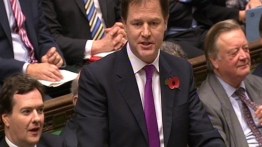
I have rarely seen Nick Clegg enjoy Prime Minister's Questions as much as he did today. Freed from the tyranny of the binder of answers, Clegg answered the questions in a confident and confrontational manner. The usual jeers from the other side of the House didn’t put him off his stride today. One thing that was striking was how often Clegg referred to the Lib Dem-inspired coalition move to raise the income tax thresholds. The Liberal Democrat leadership is convinced that this policy is beginning to pay dividends for the party and that they’ll receive the credit for the big increase in April. Clegg also took the chance to take several jabs at Labour.

US election 2012: the broadcast election

From our UK edition

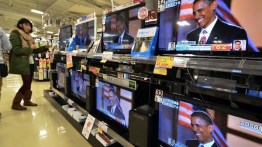
One product of the modern communications age is that we can all follow what US outlets and Twitter are saying while watching the BBC coverage’s of the US elections. This creates a whole host of challenges for the Beeb. Back in the day, few would have noticed that there was a gap between the US networks calling the key state of Ohio for Obama and the BBC catching up. But this time, it stuck out like a poor thumb. The other great challenge for any international broadcaster is the sheer quality of the coverage on US television. One can chuckle at NBC and their political editor having a ‘Command Centre’. But their understanding of the key swing counties in each state is unrivalled.