James Forsyth

James Forsyth

James Forsyth is former political editor of The Spectator.

The wrong choice for Britain’s EU ambassador

David Cameron is committed to an EU referendum if he’s still Prime Minister after the next election. We also know that he’d like to lead the ‘In’ side if he can get a good enough deal. Given this, the fact that the FT is reporting that Ivan Rogers, the PM’s Europe adviser, is the frontrunner to be Britain’s ambassador to the EU is particularly disappointing. Rogers is a cerebral chap who knows the EU and its institutions back to front. But what he is not is someone who is a natural at driving a hard bargain. As one insider says, ‘he’s not a tough negotiator like Cunliffe’, a reference to the current ambassador Jon Cunliffe who is leaving to join the Bank of England as a deputy governor.


Who is optimistic about the Middle East now?

This weekend’s closing of US embassies in the Muslim world and the British embassy in Yemen combined with the warning to Americans about overseas travel is another reminder that the Islamist terrorist threat has not gone away. But the relative calmness with which this news is being treated is a reminder that the politics of the situation is very different now than it was ten years ago. One of the things that has changed is that it is hard to find anyone who is optimistic about the Middle East anymore. The Iraq War was borne out of optimism, the neo-cons were convinced that the Middle East could be democratised. But that optimism has now gone.

The spotlight shifts to Labour

Politics abhors a news vacuum. So with the government on holiday, attention shifts to the opposition. This is why oppositions normally have a whole series of summer stories ready to fill this vacuum. But, oddly, we have heard little from the Labour front bench in the last ten days or so. One consequence of this is that criticisms of Ed Miliband’s leadership by the Labour backbencher George Mudie are going to get more play than they normally would in tomorrow’s papers. There’ve been none of the attacks on a government that you would expect from the opposition in the penultimate summer before a general election. It is hard not to feel that Ed Miliband is being let down by a shadow Cabinet that isn’t being as energetic as it should be.

The next Tory leadership battle is Boris Johnson vs Theresa May – and it’s already started

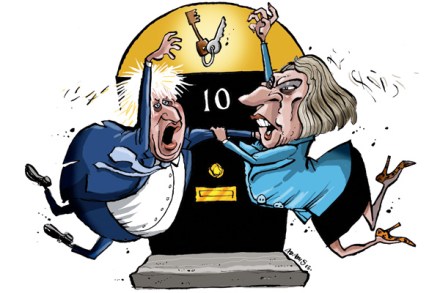
Parliament is out for the summer. David Cameron is on the European leg of his holidays. But Boris Johnson is still beavering away, using the summer months to seek advice from his eclectic group of confidants as to how he can make it to No. 10. Make no mistake: his ambition burns brighter than ever. He wants the top job, and he’s determined to get it. But Boris’s political calculations have been radically altered by his realisation that the main obstacle to him becoming Prime Minister is not David Cameron but the Home Secretary, Theresa May. The Mayor and May are, on the face of it, opposites. She is the epitome of caution, he throws it to the wind. He yearns to be loved, she wants to be respected. He revels in the show business of politics, she disdains it.

EXCLUSIVE: Boris Johnson will not be standing in 2015

Boris Johnson will not stand for parliament at the next election, The Spectator understands. The Mayor of London has told the Cameron circle that he will not seek to return to the Commons in a pre-2015 by-election, nor will he stand at the general election. Boris's decision not to be a candidate in 2015 indicates that he expects Cameron still to be Prime Minister and party leader after the general election. He has told friends that he has no desire to spend three years serving under Cameron. He reasons that if Cameron loses, creating a Tory leadership vacancy, he'll be able to persuade an MP to rapidly stand aside for him. The news that Boris is not standing in 2015 will come as a relief to Cameron's allies.

Shapps’s trinity of Labour weaknesses

Grant Shapps’ latest broadside against Labour shows how keen the Tories are to frame the next election not as a referendum on their performance in government but as a choice between them and Labour. Shapps wants voters to think about the fact that the alternative to David Cameron as Prime Minister is ‘Miliband and Balls’ driving up Downing Street before they cast their ballots. The Tory Chairman’s speech, due to be delivered at Policy Exchange this morning, also shows where the Tories think Labour are vulnerable. Tellingly, he talks about ‘Miliband and Balls’ rather than just Miliband; the Tories believe that Balls’ presence is a reminder to voters of the links between the current Labour leadership and the Brown era.

The demise of 111 spells trouble for the government

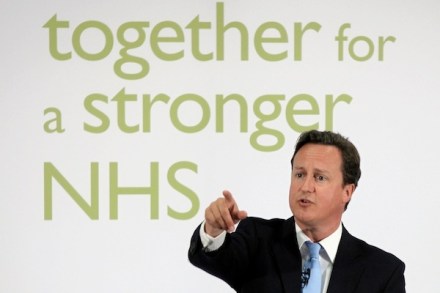
From David Cameron’s declaration that you could sum up his political priorities in the three letters N H S, to the commitment to increase the health budget every year, the Cameroons have sought to reassure on the health service. They want voters to believe that it is safe in their hands. This is what gives the row over the NHS’s 111 helpline number its political importance. Labour, still fuming at how the Tories used the Keogh review to attack its record on the NHS, is trying to use the help-line’s problems to show that ‘you can’t trust David Cameron with the NHS’.

The three places where the Tories want to hit Labour hardest

In the last few months, the Tories have--quite deliberately—behaved like an aggressive opposition. They’ve sought to constantly attack Labour, trying to force them onto the back foot. Even with David Cameron and George Osborne away on holiday, the Tories are determined to keep doing this. On Wednesday, Grant Shapps will launch the Tories’ summer offensive against Labour. He, in the kind of language more commonly used to promote summer horror films than a political agenda, will invite voters ‘to imagine a world where Ed Balls and Ed Miliband end up back in Downing Street.’ This is all part of the Tories’ efforts to link Miliband to Gordon Brown and memories of the last Labour government.

We can’t talk about immigration without talking about the EU

Harrods and The Refugee and Migrant Forum of East London don’t strike one as natural bedfellows. But they are both up in arms about the government’s immigration policies. Harrods is upset about the government’s plans to charge visitors from India, Nigeria and four other countries a £3,000 bond to come here, warning it will hit the London luxury goods market. While The Refugee and Migrant Forum of East London is threatening legal action over the vans going around various London boroughs warning illegal immigrants they could be deported. But, as so often, when we discuss immigration in this country we aren’t talking about the elephant in the room: Britain’s EU membership.

Cable and Gove are right, it is time to pardon this war hero

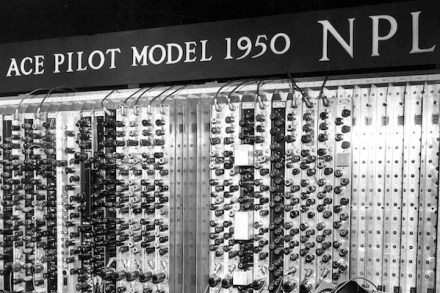
Alan Turing was one of the reasons why Britain won the Second World War. His mathematical and computing skills were vital to cracking the Enigma code. Yet, Turing committed suicide less than 10 years after the end of the war. A conviction for gross indecency for private, consensual gay sex followed by a sentence of chemical castration had taken its toll. Today, the House of Lords debates Lord Sharkey’s bill to grant Turing a statutory pardon. In The Times yesterday, Matthew Ridley argued that rather than a pardon, which would imply that Turing’s actions were criminal, the government should put him on a plinth in Trafalgar Square.

The New Colonials can raise our sights beyond the Channel

There’s a quiet Colonial takeover of British public life going on. An Australian, Lynton Crosby is in charge of the Tories’ political strategy. A South African, Ryan Coeztee performs this role for the Liberal Democrats and the deputy Prime Minister. While a Canadian, Mark Carney is Governor of the Bank of England and, arguably, the single most economically power figure in Britain. I argue in The Spec this week that the rise of these New Colonials tells us something important about this country, its flaws and its place in the world. Crosby, Coetzee and Carney are, in some ways, the missing meritocrats. They are filling a gap in British public life created by the return of the old, and not much improved, ruling elite.

Colonial rule: Why Aussies, Kiwis and Canadians are running Britain

Last month, David Cameron convened a meeting of his most important advisers at Chequers. The Prime Minister, the Chancellor and the Conservative party chairman were all present, but there was little doubt who was in charge. The Australian strategist Lynton Crosby was dominant, doling out orders and drawing up ‘action points’. One of those in the room recalls: ‘Lynton was fantastic. He made sure there was an agenda, that everyone stuck to it.’ It might seem odd for an Aussie to be telling the British PM what to do, especially in this most English of settings, but it’s mainly because of his nationality that the ‘Wizard of Oz’ gets to call the shots.

PMQs: Cameron cheers MPs with ‘every day this country is getting stronger and he is getting weaker’ attack

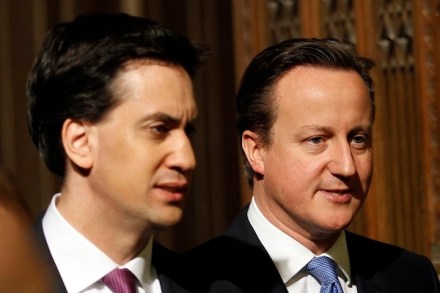
PMQs today was not as noisy an affair as last week. But the opening exchanges between David Cameron and Ed Miliband still had plenty of needle in them: things are becoming increasingly personal between these two. The Cameron/Miliband exchanges were initially relatively even. I noticed a fair few Tory backbenchers having to stifle a laugh at Miliband’s line that Cameron was the Prime Minister for ‘Benson and Hedge funds’. His attack on Cameron’s ‘weasel words’ about whether or not Lynton Crosby had spoken to him about plain packaging, combined with Labour’s call for an inquiry by the Cabinet Secretary, will keep this story going.

Parking-obsessed Pickles stands up to Norman Baker on fines

Coalition relations are fairly harmonious at the moment. There is, though, a wee row brewing that embodies the different ways in which the two Coalition parties think about the world. Norman Baker, the Lib Dem Transport Minister, wants to allow all councils to charge London levels of parking penalties. Baker see this as localism, allowing councils flexibility. Tories — led by Eric Pickles and Philip Hammond — see it as a ‘stealth tax’ which will allow lazy councils to balance the books by fleecing the motorist rather than making their services more efficient. They complain that if Baker gets his way, parking fines could rise by 29 per cent across the country.

Conservatives ramp up the pressure on Andy Burnham

One of the striking things about politics at the moment is how the Tories are behaving like an opposition, campaigning against Labour with even more intensity than they managed in 2009. The Tories intend to use the Keogh report, out tomorrow, to — in the words of one Number 10 insider — give Labour ‘both barrels’ over the NHS. As one Tory minister puts it, ‘Labour’s argument about Mid-Staffs is that it is one isolated, bad case. Keogh disproves that.’ As part of this, the Tories are going after Andy Burnham. The Tory leadership is convinced that Ed Miliband will move Burnham in the reshuffle, there’s a reason why people tend not to shadow in opposition the job they did in government, and want to be able to claim the credit.

New Tory group ‘Renewal’ calls for union members to be allowed to donate their affiliation fee to any party

The Conservative party hasn’t won a parliamentary majority for more than twenty years. If it is to start doing so again, then it will have to need to expand its pool of potential voters. Renewal, run by former Policy Exchange deputy director David Skelton, is a new Tory ginger group trying to focus the party’s attention on this problem. It launches tomorrow and, I suspect, that at least one of its idea will immediately catch the eye of the Tory leadership. It is proposing that the law should be changed so that not only should union members have to opt in to affiliate to a political party but they should also have a choice of which party to affiliate to. This would mean that those union members who choose to could donate to parties other than Labour.

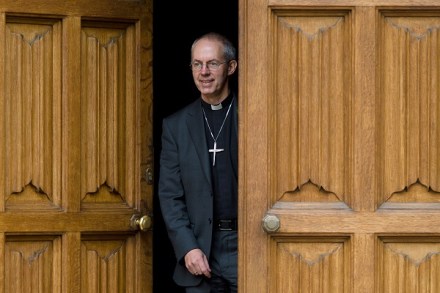
Justin Welby, a very political Archbishop

In this increasingly secular age, you would expect the Archbishop of Canterbury to be a figure of diminishing importance. But Justin Welby is fast becoming the most politically influential Archbishop since the war. Part of Welby’s influence stems from the fact that both the Conservatives and Labour think that he is, secretly, one of them. I remember within days of his appointment being approacedh by a Tory minister and then by one of those closest to Ed Miliband. They both wanted to explain how Welby was going to help move public debate in their direction. One never had this kind of conversation about Rowan Williams whose views were thought not to be of this world.

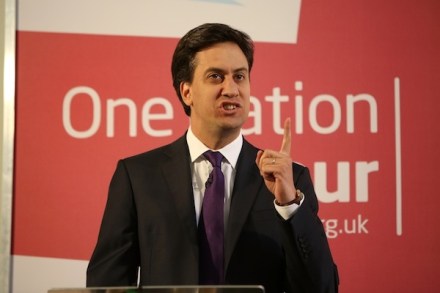
Ed Miliband now has his Clause 4 moment – whether he wants it or not

Ed Miliband doesn’t take a risk unless he has to. In his first two and a half years in charge of the Labour party, he eschewed a dramatic confrontation with the trade unions. Some in his circle wanted him to take them on, as part of a broader campaign against vested interests, but they were ignored, to the relief of Tory strategists. That has all changed now. Miliband has been pitched into an argument with the unions that will determine whether he has a chance of reaching No. 10. The Labour leader was slow to react to the controversy about the union Unite allegedly trying to fix the selection of a candidate in the safe Labour seat of Falkirk.

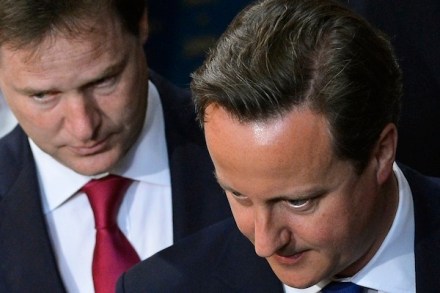
David Cameron and Nick Clegg move like sharks to keep the coalition going

If a shark stops moving it dies. In the Prime Minister and deputy Prime Minister’s office, they believe that the same applies to the coalition. Their view is that if it is going to make it to 2015, it needs to be doing things right up until parliament is dissolved and the election called. To this end, as I reveal in the column this week, they’ve commissioned Oliver Letwin, David Laws and Jo Johnson to sit down and see what else the coalition can do between now and 2015. One of those involved in the talks says ‘we’re pretty confident we can still do deals on various things.’ The hope is that a few more big policy initiatives will act as a counterweight to the temptation for the coalition parties to pull apart as the election approaches.

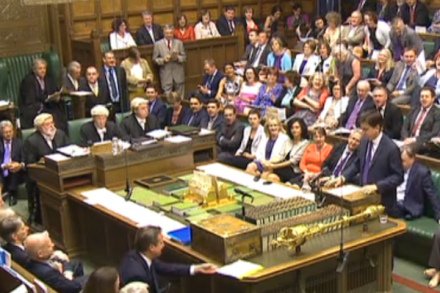
Miliband shores up his leadership at noisy PMQs

That was as loud as the Prime Minister’s Questions that immediately preceded the last election. The Labour benches were clearly determined to ensure that there was no repeat of last week’s mauling of Ed Miliband. They barracked David Cameron from the off, even chanting ‘weak, weak, weak’ during his answers and almost every Labour question was on the propriety of the Tories’ relations with their donors. This, combined with a far stronger performance from Ed Miliband, ensured that the session ended with Cameron, not Miliband, on the back foot. Cameron’s problem is that Miliband is turning this from a debate about union influence on Labour selections into one about money — and when it comes to money, no party looks good.