James Forsyth

James Forsyth

James Forsyth is former political editor of The Spectator.

Ukip, the gateway drug — how Cameron can exploit Nigel Farage

David Cameron heads to the Tory conference in Manchester in a far better position than he would have dared hope a year ago. Labour’s opinion poll lead is shrinking, the economy is finally recovering and Ed Miliband is running out of time to persuade the country that he’s a potential Prime Minister. Ordinarily, the Tory tribe would be in high spirits — but there is a spectre haunting this conference, which almost no one dares name: Ukip. Nigel Farage’s insurgent party is fast becoming an existential threat to the Tory party. The right in Britain is fractured — and fractured movements don’t win elections. In the 1980s, Margaret Thatcher romped to victory against a left that was split between Labour and the SDP.

Chris Grayling: ‘I want to see our Supreme Court supreme again’

When I meet Chris Grayling in his departmental office, I do a double take. The Justice Secretary is not wearing a suit or even his Lord Chancellor’s robes but a pair of pale chinos and a pink Ralph Lauren button-down shirt. Noticing my surprise, Grayling reveals that this is his definition of ‘smart casual’: he’s off to a Tory away day straight after the interview. Grayling is 6ft 5 and his height makes his mood pretty obvious. Straight after the last election, his shoulders were hunched and his head was down. As he now admits, ‘I didn’t want us to go into coalition.’ Compounding his misery, he had missed out on a cabinet post despite having been shadow home secretary. But Grayling is now in cabinet and standing tall.

Ed Miliband has done politics a favour. The election will finally see philosophies compete

The next election is going to be the big, post-crash debate that the country didn’t have in 2010. Ed Miliband, as his speech yesterday demonstrated, believes that radical state intervention is needed to deal with the ‘living standards crisis’. His answer to the fact that there’s no money left is to get companies to pick up the tab for redistribution. There’ll now be clear red water between Labour and the two other main parties at the next election. This raises the question of how the Lib Dems fit into all this. Miliband barely mentioned them in his speech yesterday and has steered clear of attacks on them this conference season.

Authentic Ed Miliband is left-wing and passionate

Today we saw why Ed Miliband ran for the Labour leadership. This was not a speech that his brother could have delivered. It was the most left-wing speech I’ve heard from the leader of a British political party. It was, without a doubt, authentic Miliband and delivered with passion. Politically, I suspect the speech now turns on the freeze on energy prices that Miliband announced a Labour government would introduce. The Tories are out to ‘kill it’ rather than ‘adopt it’, warning of the lights going out if it is introduced. The energy companies, whose profits would be hit hard by it, are also up in arms. The issue for Miliband is that he is proposing freezing prices and the decarbonisation of the energy sector by 2030.

Ed Balls asks: what else could Labour spend £50 billion on if it scrapped HS2?

Ed Balls has just taken the scalpel to HS2 in an interview with Steve Richards. He talked about the project having ‘huge fiscal implications’ and questioned whether the ‘benefits are really there’. He then went on to stress that the question was not just whether HS2 provided value for money, but whether it was the best use of £50 billion. As he emphasised, £50 billion could be used on other transport projects or new housing, hospitals and schools. One could see Balls gleefully contemplating just how much fiscal wriggle room cancelling HS2 would give him. Now, Balls did say that Labour had not reached a final decision on what to do about HS2.

Stephen Twigg snaps back

Much of the talk down in Brighton is of the coming shadow Cabinet reshuffle. One person frequently tipped for the chop is Stephen Twigg, the shadow Education secretary. There’s much chatter that he might be replaced by Liz Kendall. But judging by his interview in today’s Evening Standard, Twigg won’t go quietly. He declares that he’s not going to try to change the fact that most secondary schools are now academies and that ‘if further schools want to convert that’s fine by me.’ This is Twigg telling those on the Labour left who are opposed to academies to get their tanks off his lawn.

Damian McBride shatters the Labour peace

If you want to know just how much anger Damian McBride’s book has created in the Labour party—and particularly its Blairite wing, just watch Alastair Campbell’s interview with Andrew Neil on The Sunday Politics. Campbell doesn’t scream or shout but the anger in his voice as he discusses McBride’s antics is palpable. He did not sound like a man inclined to forgive and forget. This whole row is, obviously, a massive conference distraction. Those close to Ed Miliband had hoped that this year, the Labour leader would get a free run at conference now that his brother has quite politics. But as one of his colleagues said to me late last week, ‘it used to be all about David, now it’ll be all about Damian.

Ed Miliband’s seaside start

Ed Miliband’s interview on the Andrew Marr show neatly summed up the Labour leader’s problems in cutting through. Marr started with a series of questions about Miliband’s plans to change Labour’s relationship with the unions. This might be an important issue but it is hardly one of paramount interest to the electorate and every minute Miliband is speaking about this, he can’t be speaking about other things. The next distraction is the whole Damian McBride business. Indeed, Miliband telling Marr that he’d told Brown to sack McBride is the BBC News headline on the interview. Miliband also had to fend off a whole host of questions about why his poll ratings are so bad. Miliband did, though, try to keep bringing the interview back to the cost of living.

Three reasons why you can’t write off Ed Miliband

This is not the backdrop that Ed Miliband would have wanted for Labour conference. Labour’s poll lead has—according to YouGov—vanished, Damian McBride is dominating the news agenda and there’s talk of splits and division in this inner circle. But, as I say in the cover this week, you can’t write Ed Miliband off yet. He has three huge, structural advantages in his favour. The boundaries favour Labour: Type Thursday’s YouGov poll, the best for the Tories in 18 months, into UK Polling Report’s seat calculator, and it tells you that Labour would be three short of a majority on these numbers. It is a reminder that if the parties are level pegging, Labour is winning.

How McBride dripped poison into the system

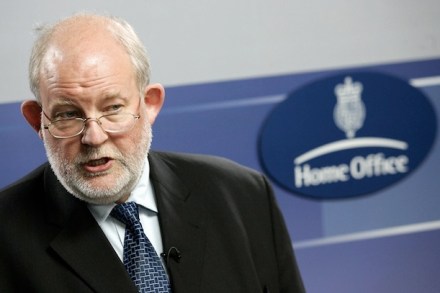
If you want to know why Damian McBride was such a feared figure in Whitehall, read the section in his memoirs about how he sowed division between Charles Clarke, then the Home Secretary, and Louise Casey, the anti-social behaviour tsar. McBride’s approach was far more cunning than straight negative briefings or leaks. Rather, he went through the government grid looking for announcements in this policy area and then briefed them out to the papers in a way that made it sound like it had come from either Clarke or Casey’s teams. The result was that both sides became convinced that the other was trying to take all the credit for what the government was doing on this front.

Tory MPs hold away day on strategy, policy, and general knowledge

Tory MPs are currently heading off to Oxfordshire for an away day. But the Tory leadership is keen to emphasise that this isn’t just another BBQ-style event. There will, they say, be a substantial policy element to it as well which could make things interesting as regular rebels Sarah Wollaston, Adam Afriyie and Peter Bone will all be in attendance. George Osborne, Theresa May and Jeremy Hunt will all hold policy surgeries. Backbenchers will be invited to offer their views on what the government should be thinking about doing in all these areas. They’ll also be presentations on the media environment by Craig Oliver and the new Number 10 press secretary Graeme Wilson. Lynton Crosby will update the MPs on the party’s campaign strategy.

Tristram Hunt: Ed Miliband would be ‘radical’ in office – if he gets there

Tristram Hunt has the easy charm, quick wits and good looks that you would expect of a TV historian. His blond hair has the hint of a curl to it and the only surprise about his appearance is that there isn’t a college scarf wrapped round his neck. His Commons office, where we meet, resembles a don’s study, with books piled high on the coffee table, old maps on the wall and a selection of tea-sets on display. Three years ago, Hunt made the transition from academia to politics. Despite having voted for David Miliband in the leadership contest, he has emerged as an intellectual outrider for Ed Miliband and is, according to the Westminster grapevine, in line for a big promotion in the coming reshuffle.

Laugh now, but Ed Miliband and Ed Balls could soon be running the country

A Tory MP bobbed up at Prime Minister’s Questions recently to ask David Cameron whether he was ‘aware that 4 per cent of people believe that Elvis is still alive? That is double the number, we hear today, who think that Edward Miliband is a natural leader?’ The Tory benches tittered, Labour MPs slumped into their seats as if this was a depressingly fair point,  and the Labour leader himself tried not to look too hurt. The exchange reflected a Westminster consensus that the idea of Miliband as prime minister is risible. His aestas horribilis has reinforced the view among many in the political class that he simply doesn’t have what it takes to be leader.

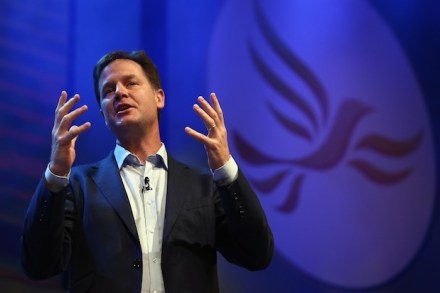
Nick Clegg is thinking about the ‘market’ who’ll vote Lib Dem in 2015

Normally, a party that was down in the polls and on course to lose around a third of its parliamentary seats would be in a grim mood, with the leader under pressure. But we don’t live in normal times; we live in coalition times. So, the Liberal Democrats have just had a remarkably chipper conference thanks to their belief that there’ll be another hung parliament. This, they calculate, will ensure that they get another five years in government. Nick Clegg’s speech today — and its confidence — was predicated on this assumption. There is a danger for the Liberal Democrats that the public rebel against the idea that a party that loses seats and votes and comes third should carry on in government.

Lib Dem conference: It is Nick Clegg’s party now

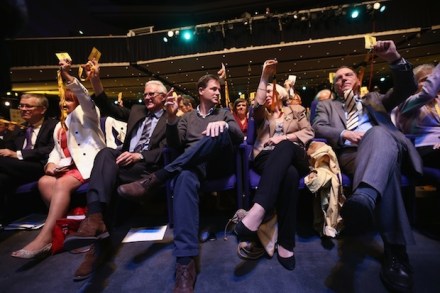
There has always been a sense that Nick Clegg and his coterie have been separate from the rest of the Liberal Democrats. They were more hard-headed in their politics, more professional in their approach and more ambitious for power. But every year of Clegg’s leadership, the party becomes more like the leader. This conference, the Cleggites have been in the ascendant in the hall and on the fringe. The leadership has won every important vote, the activists have happily engaged in surprisingly non-ideological discussions about future coalitions and there has been far less hand-wringing about the compromises of power. In the first years of the coalition, speaker after speaker would bemoan the loss of various councillors, who were portrayed as the innocent victims of coalition.

Lib Dem conference: The Lib Dems hope to keep their identity crisis hidden

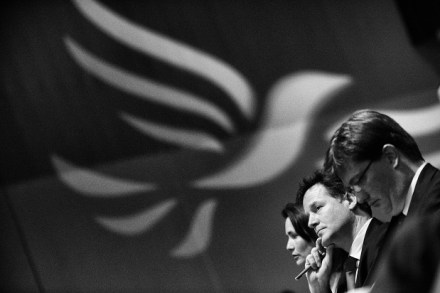
This Liberal Democrat conference is demonstrating that the last election result was actually a relatively simple one for the Liberal Democrats. The parliamentary arithmetic meant that the party only had to decide whether it wanted to be in government or not. No one in the party could accuse those who backed the idea of being ‘closet Tories’ because there was no Labour option. Most Liberal Democrats, and particularly older ones, instinctively — and rather unthinkingly — rebel at the suggestion that they might actually want to govern with the Tories.

Ashdown: We’re ‘a left wing party’ but we’ll do a deal with whoever the voters tell us to

A rather irritable Paddy Ashdown has just told Andrew Neil that the Lib Democrats are ‘a left-wing party’ but that their next coalition would be determined by the voters. Ashdown, whose chairing the Lib Dem election campaign, claimed that it simply wasn’t accurate to say that Lib Dems had a preference for who they’d like as their coalition partner. This is, to put it mildly, a dubious statement and Ashdown did feel the need to concede that senior Lib Dems did have ‘private likes and dislikes’. But he claimed that this wouldn’t influence their decision about who to go into government with.

Nick Clegg tells the Lib Dems, we’re the party of jobs

The Lib Dem conference rally was never going to be the same without Sarah Teather and her comedy routine. With Teather persona non grata following her decision to step down, it was duly a much tamer affair. The only risqué jokes were about Lembit Opik being bitten in the nether regions by a sausage dog. But seeing as Lembit has infuriated party loyalists by again calling for Clegg to go, they got a laugh from the leadership. The message of the conference rally was that the Liberal Democrats are the party of jobs. Nick Clegg claimed that the Tories weren’t the party of jobs, but the party of fire at will; a reference to the Beecroft proposals. But Clegg seemed much happier when he moved on to attacking the Labour party.

Why Nick Clegg is heading to Glasgow in good spirits

Look at the polls and you’d think that Nick Clegg’s circle would be down in the dumps. But, as I say in the magazine this week, they actually head to Glasgow in good spirits. Why, because Clegg’s position as party leader is secure and another hung parliament remains the most likely result of the next election. If in May 2010, you’d said that Clegg would back a strike on a Middle Eastern country without a UN mandate and then lost a House of Commons vote on the issue with 24 of his 57 MPs not backing him on it, we’d have assumed that he’d have been toast. But Clegg’s position is so secure at the moment that this hasn’t even caused any leadership chatter. Another thing pleasing the Liberal Democrats is how likely a hung parliament looks.

Michael Fallon shows why David Cameron should go for experience

Michael Fallon is on course to achieve something that eluded both Michael Heseltine and Peter Mandelson, the sale of the Royal Mail. Fallon is this government’s safe pair of hands, the minister who can be relied upon to get things done. But this second ministerial career (Fallon served as an education minister in Margaret Thatcher and John Major’s government) almost didn’t happen. After the 2010 election, he wanted to be chairman of the Treasury Select Committee. He had spent considerable time cultivating the selectorate only to have the job snatched from under him by Andrew Tyrie. After this defeat, Fallon was brought into Number 10 as Cameron’s parliamentary adviser. Having impressed in that role, he went on to become Minister of State at BIS.