James Forsyth

James Forsyth

James Forsyth is former political editor of The Spectator.

Can Theresa May avoid a Tory row on the European Arrest Warrant?

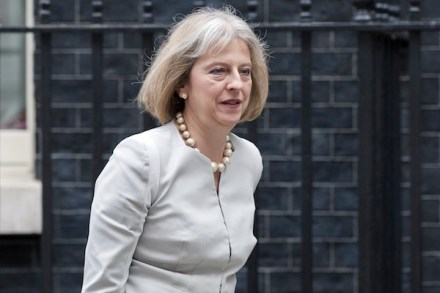
Walk down a corridor in the Palace of Westminster today and you’ll likely be taken aside by a Tory backbencher who wants to vent their frustration about Britain opting back into the European Arrest Warrant. At the moment, the mood is of concern rather than rebellion — a reflection of the fact that Tory MPs are in a fairly positive frame of mind after a good couple of political weeks for the party. But what should alarm Downing Street is that it isn’t just the usual Eurosceptic crowd expressing concern. Indeed, some of those who are most concerned are those who David Cameron has relied on recently to defend his European policy. Off the record, Number 10’s view is that with Theresa May’s help they can avoid a full-on row.
Can Ed Miliband dodge the ‘weak’ tag?

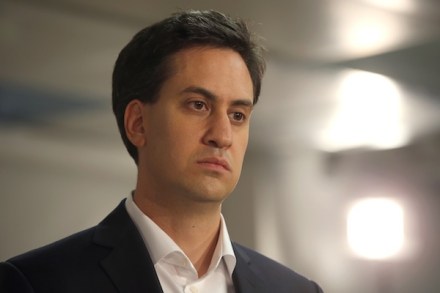
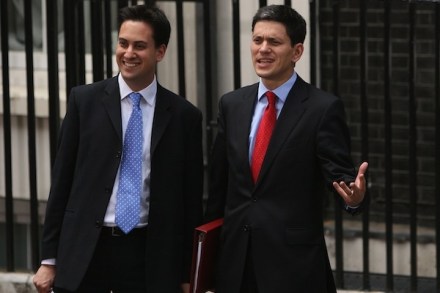
When a political party repeatedly uses an attack line it is nearly always because their polling shows that it works. This is certainly why the Tories keep calling Ed Miliband ‘weak’. Indeed, they’re so keen to keep hitting him with this charge that they’ve stopped accusing him of knifing his brother for fear of undercutting it. This is one of the many things that makes Miliband’s speech tomorrow so important. The Tories are desperate to portray Miliband as a weak leader being pushed around by the ‘bully boys’ of the trade union machine. If Miliband is seen to have ducked the issue, the Tories will have yet more ammunition for their ‘weak, weak, weak’ attacks.

Nick and Dave are ready to rumble. Ed, on the other hand …

The coalition parties have governed together for more than three years now, but they remain culturally very different beasts. When the Liberal Democrats held an away day last week, it was at a conference centre in Milton Keynes — picked, in the words of one Lib Dem, ‘because there are no distractions there’. The Tories are also conducting a bonding exercise: in the Downing Street garden and the chamber of the House of Commons. No. 10’s decision to light the barbecue and put out the bunting for Tory MPs is typical of its new-found interest in party management. It had realised that it was in danger of a vote of no confidence through neglect of its MPs, and it is now trying to correct its past errors.

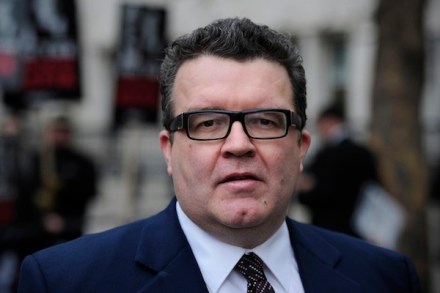
What Tom Watson’s resignation means for Labour

Tom Watson’s resignation from the shadow Cabinet won’t draw a line under the row about Unite’s influence over Labour. But, rather, it will escalate it. This is now a serious enough issue to have drawn a shadow Cabinet resignation. Watson’s self-indulgent resignation letter makes clear that he’s going partly because of Blairite criticism. As he puts it, ‘There are some who have not forgiven me for resigning in 2006’. This puts the whole Blairite / Brownite narrative back at the heart of Labour politics. It is a reminder that a party does something awful to its soul when it removes a totemic, election winning Prime Minister mid-term.  I also suspect Watson’s departure will make those around Len McCluskey feel under pressure.

The curious case of Durand boarding school

The Durand boarding school project is a wonderfully ambitious attempt to give children from one of the most deprived parts of London the kind of education that has traditionally only be available to a privileged few. But earlier this week, the National Audit Office criticised the Department for Education for handing over money for the project without sufficiently assessing the risks. Margaret Hodge, chair of the Public Accounts Committee, followed up with a letter to the parish council questioning the financial sense of the project. However, as a letter from the school’s head Sir Greg Martin reveals, Hodge had not spoken to Durand before writing the letter.

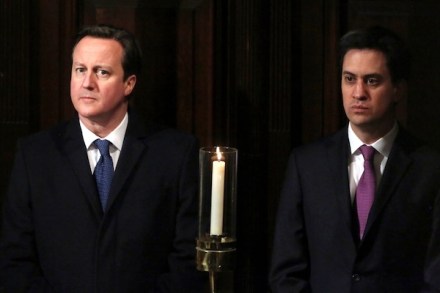
Ed Miliband and David Cameron get personal in PMQs

When Ed Miliband began at PMQs by asking about Egypt, it looked like he was going to do six high-minded questions on foreign affairs and thus dodge the political attack the Tories had lined up for him. But that wasn’t Miliband’s plan, after a couple of questions on Egypt he shifted to education. I suspect that by the end of session, he wished he stuck to what’s going on in Tahrir Square. For Cameron took the return to domestic politics as an opportunity to relentlessly batter Labour over its links to Unite and Unite’s behaviour in Falkirk. Cameron and Miliband went at each other with real needle. There was a level of personal animus between the two of them that you don’t normally see.

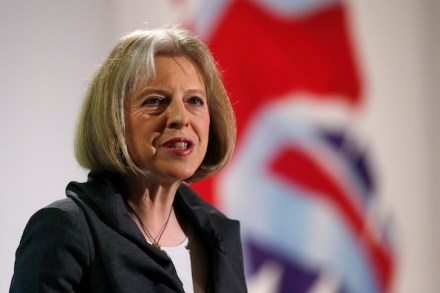
Theresa May’s modernising moment on stop and search

Theresa May’s statement in the Commons today on stop and search strikes me as an important moment. Here, we had a Tory Home Secretary standing up and saying that she understood why some communities felt that stop and search was used unfairly and announcing a review of it. This is, as I said on Sunday, is quite a change in Tory attitudes. William Hague, who was Tory leader at the time, criticised the Macpherson report for making police reluctant to use stop and search. Just five years ago, David Cameron was emphasising the need to ‘free the police to do far more stopping and far more searching’. Now, May doesn’t want to scrap stop and search. But her concerns about its use are a reminder that Tory modernisation is not finished yet.

Why Nick Clegg is so keen to talk to the media

Liberal Democrat leaders are used to having to do more to get noticed than the other party leaders. But it is still striking just how much the Deputy Prime Minister is doing to try and inject himself into the national conversation. Joining Nick Clegg's weekly phone-in on LBC is a monthly press conference. One of the reasons Clegg is doing all this is to try and drain away the anger created by the compromises of coalition and, specifically, the broken promise on student fees. After 23 press conferences, even the lobby will tire — or so the Lib Dems hope - of asking Clegg about the U-turn on tuition fees, the shifting position on the EU referendum and the rest.

The Gove guide to composition

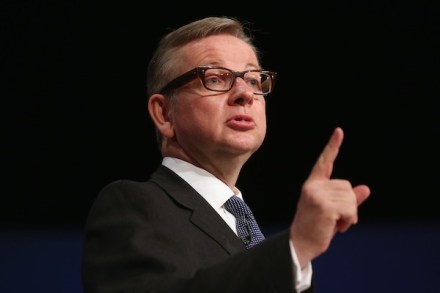
Michael Gove is not the only minister to be frustrated by the poor quality of letters drafted for his signature. One minister was horrified to find his reply to the Prime Minister starting ‘Good to here from you’. Another complains that his name is still spelt wrong, three years after he started in the job. But Gove is, probably, the only one who would send a memo to his ministers and civil servants urging them to read ‘George Orwell and Evelyn Waugh, Jane Austen and George Eliot, Matthew Parris and Christopher Hitchens’ to improve their prose.’ The memo contains, what he dubs, Gove’s Golden Rules for writing a letter which I’ve reproduced in my Mail on Sunday column. But the introduction to these rules is also well worth reading.

‘What’s more important obeying a Brussels directive or keeping the lights on?’

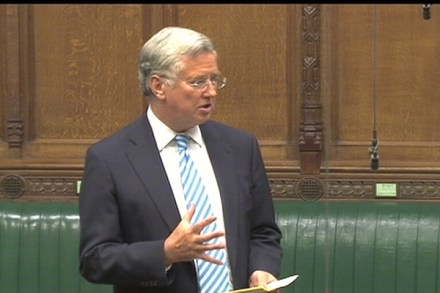
Andrew Neil’s interview of Michael Fallon on The Sunday Politics was a reminder of just how much of UK energy policy is determined by EU rules. When pressed on why there’s such a capacity crunch that there’s a risk of blackouts in the winter of 2015-16, Fallon explained that this was because a whole series of ‘dirtier’ plants are coming off-stream because of EU rules. If this wasn’t happening, there wouldn’t be a problem. Intriguingly, when asked ‘what’s more important obeying a Brussels directive or keeping the lights on?’ Fallon responded that ‘Keeping the lights on is the job of the government’. But he stressed that the government was ‘not planning to break any particular laws’.

Miliband’s EU referendum dilemma

Friday’s vote on James Wharton’s EU referendum bill is going to push the whole Europe question right back up the political agenda. The Tories will try and use it to highlight their support for a vote and the opposition of the other major parliamentary parties. It will be very hard for Ed Miliband to go into the next election opposed to a referendum. It would look like he was opposed to giving the public a say. I also suspect that it will become almost politically impossible to oppose a referendum after the European Elections in 2014. Patrick Wintour reports today that Labour is toying with the idea of either amending the Wharton Bill to back an instant In / Out vote or committing to one within the six months of the next election.

The Tories can’t attack Labour without undercutting their own arguments

One thing that was noticeably absent yesterday was Tory crowing about Labour having signed up to the coalition’s current spending plans. Instead, George Osborne’s response to Balls concentrated on whether Labour would borrow more. Given the Osborne-Balls relationship, you might have thought that the Chancellor would have relished the idea that Balls had been forced into an intellectual surrender. But the Tory leadership is acutely aware that going on about Labour having accepted their spending limits undercuts their argument that it is the same old Labour party, addicted to spending and borrowing. So instead they’ve chosen to argue that Labour’s pledges of fiscal rectitude simply aren’t credible.

Beaten by a Byron Burger

In the battle for the media’s attention Danny Alexander’s infrastructure statement is losing out rather badly to George Osborne’s choice of burger — a more easily digestible subject than the specifics of the government guarantee for a new nuclear power station. When he was asked about it on the Today Programme, Osborne seemed rather baffled by the amount of interest the tweet had generated. But what I was struck by was Osborne’s explanation for why he was on Twitter in the first place. He said that one of the challenges for politicians is that the public only ever see them when they’re on TV or in the Commons. He continued that ‘the point of Twitter is to try and say something about what you’re up to during the day.

An outbreak of peace among the Tories puts the pressure on Miliband

On Monday night, a Tory donor spent £90,000 on a bust of David Cameron at the party’s summer ball. It was an encouraging sign that there are still Conservatives prepared to lavish money and praise on the Prime Minister, and a reminder that the Tories will be able to run an extremely well- funded campaign at the next election. Another source of comfort for the Prime Minister is the stability of his great political love, the coalition. Those close to him are giddily confident that the government will make it all the way to May 2015. One minister boasts, ‘I’m absolutely certain of it.’ This uptick in confidence is a result of the successful, and relatively stress-free, conclusion of the spending round.

Spending review: George Osborne finds a way to put welfare front and centre – again

listen to ‘Spending review 2013: the Coffee House analysis’ on Audioboo The Liberal Democrats insisted that they wouldn’t accept any more welfare cuts. But George Osborne still found a way to put welfare at the centre of his statement today as he sought to put, what he calls, the ‘welfare party’ on the back foot.  It was a reminder that he remains a thoroughly political Chancellor. There were a series of tough conditionality measures. The most headline-grabbing of these was that the around 100,000 people who claim JSA but aren’t proficient in English will have to learn the language or lose their benefits. The state, though, will pay for their language lessons.

David Laws fires first shot in Lib Dems’ anti-Labour offensive

David Laws’ decision to hand Liam Byrne’s infamous ‘there’s no money’ note to ITV  is intriguing. It suggests that the Liberal Democrat leadership intend to escalate their attacks on Labour. Laws must know the power of this image. For when he first mentioned it at an early Osborne/Laws press conference, Andy Coulson pushed hard for an image of the actual note to be released. Coulson calculated that the note would have made nearly all the front pages and established the image of Labour profligacy in the public’s mind. But Laws, slightly taken aback by the level of interest in the note, refused to hand it over. At the time, friends of Laws said that he felt that putting the actual note itself out there would have been a bit below the belt.

Spending review: All departments settle

All departments have now reached agreement with the Treasury in the spending review. Vince Cable’s Business Department, which was not expected to settle until the last possible moment, settled earlier this evening bringing the round to a conclusion. Finishing things off with two and a half days to spare is an achievement for George Osborne. It also demonstrates the durability of the coalition. Many expected that this spending round would put the coalition under unique stress. Tory spending ministers were irritated by having to make ever deeper cuts because the Liberal Democrats would not accept further welfare reductions. While Vince Cable was making clear that he wouldn’t accept cuts to the programmes that he thought were most likely to deliver growth.

Cable talks going to the wire

The Treasury is keen to downplay any sense of drama surrounding the spending review. On Marr this morning, George Osborne declared that he was ‘confident’ that he and Vince Cable would agree the BIS budget ‘in short order.’ He emphasised that the differences between them were not that large. Indeed, I’m informed that the differences between Treasury and BIS are over capital not current spending, making them easier to resolve. Osborne and Cable have only begun to speak directly in recent days. Up until Thursday, Osborne had been leaving the negotiations to Danny Alexander. Despite Osborne’s protestations, it looks like the BIS budget will go down to the wire. Cable is out of town tomorrow and its extremely unlikely a deal will be struck before then.

Osborne offered to reopen wealth taxes debate in exchange for more welfare cuts

The next few days in Whitehall are going to be dominated by the remaining bits of the spending review. The Treasury remains confident that it will wrap everything up with relative ease, BIS seems to be the only department still causing genuine concern. But given that Cable is the left tent peg of this coalition that is a major problem. But there are, I understand, going to have to be some cuts made that the coalition would rather have avoided. This is, in large part, due to the fact that because of Nick Clegg’s veto Osborne got £6 billion less out of welfare than he wanted. I understand that Osborne was so keen to cut welfare rather than departmental spending that he offered to reopen the wealth taxes debate. Clegg, however, refused.

George Osborne’s own personal recovery

The other day, George Osborne was walking with his wife across the courtyard of the Royal Academy. In the evening sunshine, the Chancellor spotted another Tory MP in the opposite corner. The MP was on his mobile: a wave would have seen courtesies observed. But Osborne, who was dressed for dinner, strode over and waited from a polite distance as the call was concluded. His eagerness to talk was particularly striking since the MP had been a frequent critic of Osborne’s handling of the economy. When the conservation started it was clear that the MP’s criticisms were the reason Osborne had come over. The Chancellor, in buoyant mood, wanted to get the MP’s views on how the economy was going. He asked the question because he knew the answer.