James Forsyth

James Forsyth

James Forsyth is former political editor of The Spectator.

Vince Cable is right, Britain is most likely to leave the EU under a Labour government

From our UK edition

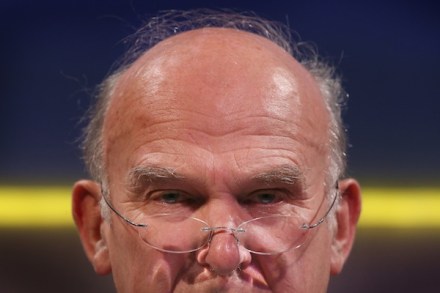
Vince Cable is surely right in his comments yesterday that the most likely scenario for Britain leaving the EU is if Ed Miliband is Prime Minister after the next election. The theory, that you hear a lot in Westminster, goes like this: Miliband is forced by public opinion into promising a referendum on EU membership, he then becomes Prime Minister and is obliged to hold the vote. But by this time, the Tory opposition is advocating a No vote; arguing that a better deal can be negotiated. The country then votes No and the rest of the EU, for once, accepts the result of the first vote. Many senior pro-European Labour figures feel that this scenario is all too plausible.
Autumn Statement 2013: can Labour win with Ed Balls?

From our UK edition

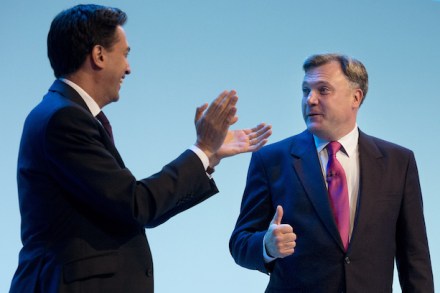
After an autumn in which Ed Miliband has made the political weather, the government desperately needed a competent autumn statement that would change the terms of political trade. Today, it looks like they got that. George Osborne avoided trying to be too clever by half on the cost of living and instead stuck to the big economic picture, the government’s strongest suit. He also avoided any give-aways that would have suggested the fiscsal job was finished and that we were back to politics as usual. That the pension age will rise still further and faster was a potent reminder of how much needs to be done before Britain has an affordably sized state again. The bonus for Osborne was that Ed Balls’ response was dire.

Mandarins routinely take Fridays off and sometimes can’t spell ministers’ names. Why does this go on? 

From our UK edition

It’s a fact that most ministers are most scared, not of their political rivals but of their civil servants. Ministers know that if they cross civil servants, all of their foibles may soon end up in print. It’s one reason why politicians so often repeat the mantra ‘Our civil service is the best in the world,’ so as to keep on their good side. One man stands out: Francis Maude, Minister for the Civil Service, has spent most of his political life telling his party why it doesn’t work as a modern institution and now he’s taking on the civil service with equal frankness. This approach has not gone down well. Mandarins have pushed for Maude to be reshuffled, parodied his proposals and wheeled out the old guard to attack him.

PMQs: Labour’s constant attacks make a Lib-Lab coalition unlikely

From our UK edition

Today’s PMQs showed that Labour still have no plan for Nick Clegg other than to attack him. With Clegg standing in for Cameron, Harriet Harman didn’t try and tease out any differences between the coalition partners but instead attacked him as the best deputy any Tory Prime Minister could have and as an accelerator on the Tory agenda not a brake. On one level, this makes sense. There are a certain number of votes on the centre-left of British politics that Labour and the Lib Dems are competing for. Painting the Lib Dems as Tory accomplices helps Labour in this market. But on another, these highly personal attacks on Clegg make a Lib-Lab coalition that much harder to imagine.

Osborne wants to talk about ‘the responsible recovery’ but energy bills are still Topic A

From our UK edition

In the minds of government strategists, the autumn statement is the moment when the coalition gets to turn the conversation back to the broader economy and away from Ed Miliband’s focus on the cost of living. But the first five minutes of George Osborne’s pre-statement interview with Andrew Marr were dominated by the action the government is taking in response to Miliband’s pledge to freeze energy bills. The problem for the coalition on energy bills is that the £50 it is taking off bills now might well not be enough to stop bills rising next year. If household bills go up again in 2014, Miliband’s price freeze is going to continue to look attractive to voters.

Will George Osborne play Santa next week?

From our UK edition

When George Osborne stands up next week to deliver the autumn statement, he’ll have some good news to deliver. Not only is autumn, the dreariest of the British seasons over, but borrowing has come in lower than expected and the OBR will upgrade the growth forecasts. But the return of growth, as I say in the magazine this week, poses a strategic dilemma for Osborne. If he declares the economic emergency over, the public might conclude it was safe to turn back to Labour. But equally he has to show voters that he’s sharing the proceeds of growth. I suspect that Osborne will steer clear of too many sweetners.

Filming Bono, fighting Balls – how George Osborne’s preparing for his autumn statement

From our UK edition

James Forsyth and Isabel Hardman discuss George Osborne's 2013 Autumn statement: [audioboo url="https://audioboo.fm/boos/1763353-isabel-hardman-and-james-forsyth-discuss-george-osborne-s-autumn-statement"][/audioboo] Next week’s autumn statement looks at first as if it should be easy for George Osborne. For the first time, he’ll arrive with unambiguously good news. He can announce an upgrade of the growth forecasts and that borrowing has come in lower than expected. Politically, however, his task is as difficult as ever. He has to wrestle back the initiative from Labour. Preparations for this ‘fiscal event’, to use the Whitehall parlance, have been intense.

The EU needs to limit free movement to stay together

From our UK edition

David Cameron’s proposals on free movement recognise that the European Union is very different now from what it used to be. When it was essentially a club of rich Western European nations, total freedom of movement was workable. But now that it includes countries whose GDP per head is less than half ours it is not. This is not a particularly Eurosceptic insight. As I reported back in February, Nick Clegg and the Liberal Democrats were thinking of basing future transition controls on per capita GDP to prevent an unsustainable level of immigration. But what is true is that unless the freedom of movement issue is dealt with, it’ll be hard for any government to win a referendum to stay in.

What Lynton Crosby told David Cameron’s political Cabinet

From our UK edition

The next time you see a Tory minister on television, count how long it is until they say that David Cameron is a leader with a long term plan for this country. This is the Tories’ new message. In a presentation to Cameron’s political Cabinet on Tuesday morning, Lynton Crosby told the ministers present that the Tories would probably lose the election if it was held today or tomorrow. But, as I report in the Mail on Sunday, he stressed that the election was still 16 months away so the Tories had time to turn things round. He emphasised that they should play up that Cameron is a man with a plan and attack Ed Miliband and Labour foir being opportunistic, something that is already showing up in Crosby’s polling.

Cameron and the Romanians and the Bulgarians

From our UK edition

For months now, Number 10 has been fretting about what to do about Romanian and Bulgarian immigration. From the end of this year, any Romanian and Bulgarian will be able to move here in search of work. Downing Street knows that if they come in large numbers it’ll negate everything that the government has done to try and get immigration under control. Fairly or not, it’ll be fatal to the Tories’ reputation for competence on this issue. David Cameron is, as today’s Times and Mail reveal, now planning a major intervention on this issue. He wants to achieve three things. First, show that his government is handling the issue better than Labour did.

How the warring ghosts of Blair and Brown still haunt their successors

From our UK edition

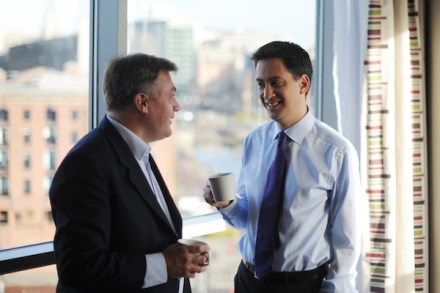
Six and a half years after Gordon Brown finally badgered Tony Blair out of Downing Street, the relationship between these two men still dominates British politics. Why? Because David Cameron and George Osborne, and Ed Miliband and Ed Balls are, in their different ways, doing what they can to prevent history repeating itself. Their relationships are both informed by the Blair-Brown breakdown. Cameron and Osborne have quite deliberately structured their working lives to avoid replicating the tensions within New Labour. The pair shared a set of offices in opposition with their aides sitting in the same room. This was meant to prevent the emergence of two separate, competing power centres. If it had not been for coalition, the pair would have carried this set up into government.

Failing free school to be shut

From our UK edition

The Department for Education is determined to show that it’ll deal quickly with any failing free school. This morning it has announced that the Al-Madinah free school in Derby will be taken over by Greenwood Dale Foundation Trust, a successful East Midlands academy chain. Meanwhile, the Discovery New School in Crawley, which has failed a second Oftsed inspection, has been given 10 days to sort itself out or be closed. Any innovation involves a certain amount of risk. But the fact that three quarters of free schools have been rated as good or outstanding under Ofsted’s new tougher inspection regime, suggests that the policy is generally succeeding.

Welsh would block an independent Scotland from using the pound

From our UK edition

The UK government knows that it plays into the SNP’s hands if it does anything which could be seen as trying to bully the Scots into voting no to independence. So, it has not said that the Scots would not be able to use sterling after independence but merely stated that this would be an issue for the rest of the UK too. The Welsh First Minister, though, has now come out and said that he would veto the creation of a sterling zone. This intervention by Carwyn Jones is one that the UK government had been waiting for, and expecting. It gets the message across without risking the accusation of bully-boy tactics or allowing the SNP to attack Westminster.

How the Blair-Brown tussle influences the top Tory and Labour partnerships

From our UK edition

Listen to James Forsyth discuss the tale of two political partnerships: [audioboo url="http://audioboo.fm/boos/1746142-james-forsyth-on-david-george-and-ed-ed"/] Six and a half years after Gordon Brown finally badgered Tony Blair out of Downing Street, the relationship between these two men still dominates British politics. Why? Because David Cameron and George Osborne, and Ed Miliband and Ed Balls are, in their different ways, doing what they can to prevent history repeating itself. Their relationships are both informed by the Blair-Brown breakdown. Cameron and Osborne have quite deliberately structured their working lives to avoid replicating the tensions within New Labour. The pair shared a set of offices in opposition with their aides sitting in the same room.

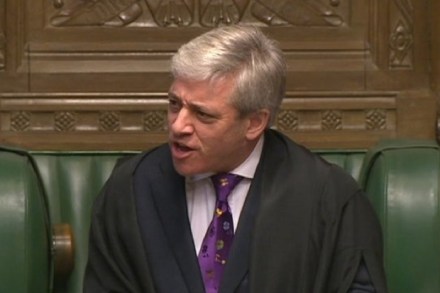
John Bercow presided well over a stormy PMQs

From our UK edition

Both sides came to PMQs today armed with prepared lines. David Cameron had the ‘nightmare’ emails and the whole Reverend Flowers and the Co-Op scandal. Ed Miliband had Nick Boles’ admission yesterday that the Tories are seen as the party of the rich. These jibes were duly hurled across the despatch box. But it was evident that Cameron was enjoying the exchanges rather more. When Miliband called Cameron a ‘loser’ he seemed to be trying a touch too hard. listen to ‘Cameron and Miliband at PMQs’ on Audioboo Cameron’s relaxed attitude was also because he knows that there are serious problems coming down the track for Labour.

Nick Boles calls for the Tories to set up a National Liberal party

From our UK edition

Nick Boles has always been one of the most intellectually interesting Tory modernisers. Back in 2010, he caused controversy with his call for a formal electoral pact between the two coalition parties. But today, he has recanted that idea and instead proposed that the Tories create an internal coalition by reforming the National Liberal Party as their sister party. Boles concedes that his idea for an electoral pact was flawed because the Liberal Democrats aren’t a ‘Liberal’ party but instead a ‘statist party of the soft left’. In a sign of the loss of personal respect for Clegg even among liberal Tory ministers, Boles attacks the deputy Prime Minister as a ‘principle-free zone’ who is happy to cut a coalition deal with anyone however illiberal.

What the Ed Balls is a ‘nightmare’ emails tell us

From our UK edition

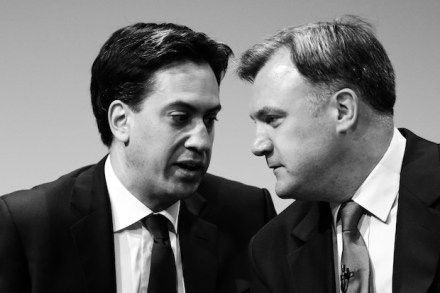
It has long been suspected that there are tensions between Ed Miliband and Ed Balls. The pair fell out badly over the third runway at Heathrow in government and when Miliband was elected leader, he conspicuously didn’t offer Balls the job of shadow Chancellor. But since Balls became shadow Chancellor the pair has largely succeeded in keeping their differences under wraps. But the leaked emails revealed by Simon Walters in the Mail on Sunday today, show what Miliband’s team privately thinks of Balls. Torsten Bell, one of Miliband’s most influential aides, calls Balls a ‘nightmare’ and complains about how complicated his message on the economy is. Tellingly, he isn’t rebuked for his tone by the other Miliband advisers on the email.

There’s no point in just outsourcing our CO2 emissions

From our UK edition

The global warming question is back on the political agenda with David Cameron likening cutting greenhouse gas emissions to house insurance. His argument is that if there’s a risk that they may be harmful, you want to guard against it. But given that ‘global warming’ is no respected of national boundaries, one thing that isn’t sensible is to simply send energy intensive industries and their jobs and profits overseas. But this is just what the EU is doing, according to Bjørn Lomborg. He reports that: ‘From 1990 to 2008, the EU cut its emissions by about 270 million metric tons of CO2. But it turns out that the increase in imports from China alone implied an almost equal volume of extra emissions outside the EU.

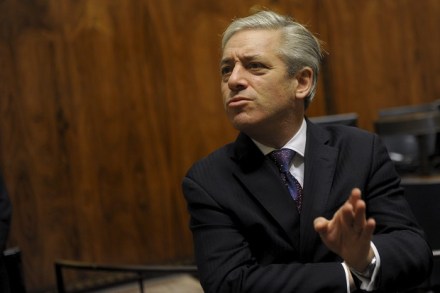
John Bercow is his own worst enemy

From our UK edition

John Bercow has done many good things as Speaker. But he’s in danger of being the second Speaker in a row to be turfed out. Why? Because he can’t let go of his dislike of the Tory hierarchy. The Speaker needs to be above the hurly burly of politics. But Bercow’s increasingly confrontational and personal chairing is threatening his position, as I say in this week’s magazine. As even one of his defenders concedes, ‘You can’t be so dismissive of so many people so much of the time.’ I hope that Bercow can rein himself in. In many respects, he’s been a good thing. That the House of Commons chamber once more seems like the cockpit of the nation is largely down to him.

John Bercow must rein it in — Parliament can’t afford to depose two Speakers in a row

From our UK edition

John Bercow could go down as a great reforming Speaker of the House of Commons. It’s thanks to him, in large part, that the Commons chamber once again seems like the cockpit of the nation. But he now risks becoming the second successive Speaker to be ousted from his job. Even his friends admit that his inability to conceal his dislike for David Cameron and various Tory backbenchers has put his position in jeopardy. Bercow is a contrast to his predecessor Michael Martin. He is razor sharp and confident in his own judgment. No one doubts his intellectual ability. But Bercow has a large number of detractors. He’s gone from being on the hard right of the Tory party to a darling of the Labour benches — and he has picked up many enemies on the way.