James Forsyth

James Forsyth

James Forsyth is former political editor of The Spectator.

Nick Clegg fires the opening shots at Labour on economy

From our UK edition

Nick Clegg’s blast at Labour today is just the opening salvo of a Lib Dem offensive against Labour on the economy. It is another reminder that coalition unity is strongest on the economy. Clegg’s jibe ‘Do you know why Ed Miliband suddenly wants to talk about the cost of living? Because they’ve lost the bigger economic argument’ could easily have been said by Cameron. While his argument that ‘healthy household budgets flow directly from a healthy economy. The two go hand in hand’ echoed George Osborne’s response to the GDP figures. At the top of the coalition, they are immensely frustrated that Labour has managed to change the conversation from the economy to energy prices.

Can the Tories become a mass membership party again?

From our UK edition

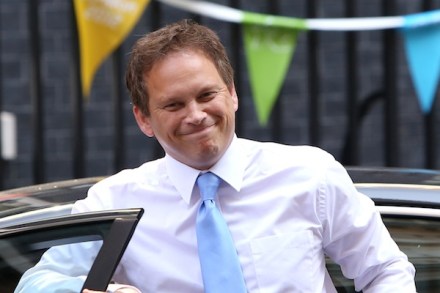
In the average Tory seat, only around 0.5% of Tory voters are Tory members. Grants Shapps, the Tory chairman, wants to change this. He’s written to every Tory MP asking them to take charge of a push in their seat to raise this percentage to 3. If this drive succeeds, Tory membership would rise to 800,000 plus. Opinion among Tory MPs on this move is divided. Some think that the era of the mass membership political party is over. Others, though, argue that increasing membership is doable—even if Shapps target is a tad too ambitious. There is also the issue of how the Tories can increase their presence in areas which they have been absent from for t0o long. At the moment, only two Tory members have associations which pass the Shapps’ size test.

How ‘Help to Buy’ helps the Tories

From our UK edition

Few images are more seared in the Tory consciousness than that of Margaret Thatcher handing over the keys to people who had brought their council house under ‘right to buy’. The image seemed to sum up the aspirational appeal of Thatcherism. I suspect that there’ll be a slight homage to these images when Cameron meets some of those that the government’s ‘Help to Buy’ scheme is helping onto the housing ladder tomorrow. Number 10 wants to show that the full scheme, which has only been running for a month, is already being used by a large number of people. The economics behind ‘Help to Buy’ might make many on the right nervous; even some Cabinet ministers are worried about it stoking another housing bubble.

There mustn’t be a north / south divide when it comes to fracking

From our UK edition

Michael Fallon, who among his many roles is the minister in charge of fracking, has told the Telegraph’s Jame Kirkup that ‘right across the South’ people should prepare for fracking coming to a neighbourhood near them. Considering that fracking will bring with it jobs, growth and cheaper energy this is good news. But it is also good news because it should prevent a north / south fracking divide. There was a danger that fracking would appear to be something that the Tories were happy to have happen in the north but not in their own southern backyards. The former Tory Cabinet Minister Lord Howell’s call for fracking to be concentrated in the ‘desolate’ north was particularly damaging in this regard.

The Union is in peril

From our UK edition

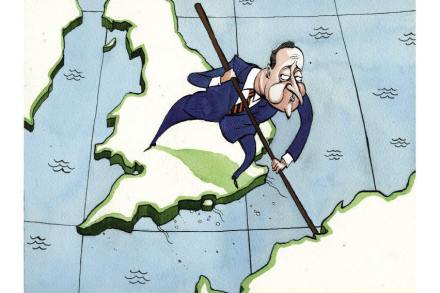
Something quite remarkable happened last week. David Cameron proposed a major change to the constitutional fabric of the United Kingdom and barely anyone noticed. The fact that Cameron’s proposal, subject to a referendum, to let the Welsh Assembly vary income tax rates garnered so little interest is a sign of how inured we have become to constitutional tinkering. But these constant constitutional changes are putting the Union at risk. If Scotland votes no to independence that won’t, as I say in the column this week, be an end to the matter. Everyone from Cameron to the Better Together campaign have reassured the Scots that if they vote no, more powers will be devolved to them. Tactically this is the best way to limit the yes vote, but strategically it is a mistake.

Aren’t we already losing Scotland?

From our UK edition

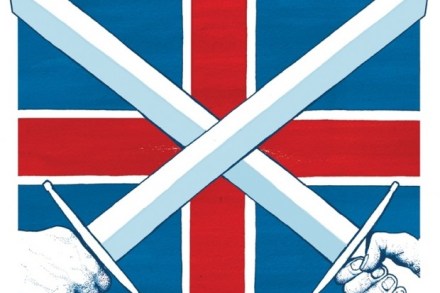
Westminster has been gripped by talk of a referendum this week. But the excitement hasn’t been about the vote in ten months’ time that will decide whether Scotland remains part of the United Kingdom, but about the possibility of an EU referendum in four years’ time. South of Hadrian’s Wall, Scotland’s vote on independence is fast in danger of becoming the forgotten referendum. If the Scottish referendum is the forgotten one then the Welsh one is the one ‘nobody’s ever bloody well heard of’. Last week, David Cameron announced that there would be a vote in Wales to decide whether the assembly there should be able to vary the rate of income tax. This is, by any reasonable standard, a significant change to the fabric of the United Kingdom.

PMQs: Relations between Cameron and Bercow break down

From our UK edition

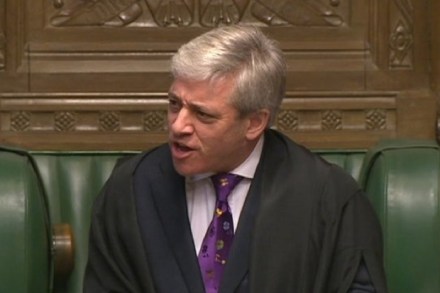
PMQs today was a typically bad tempered affair. The Tories have responded to David Cameron’s mauling two weeks ago, by upping the aggression in Cameron’s answers and the noise levels. Today, the Tories wanted to talk about Unite. At every opportunity, Cameron sought to bring Unite the union, who donate millions to Labour, into his answers. He floated the prospect of new laws to combat the aggressive and unpleasant ‘leverage’ tactics that Unite had used at Grangemouth. He likened Ed Miliband to the mayor of a Sicilian town who had been put in by the mafia and was afraid they would take him out if he took them on. Miliband led on the NHS. But the exchanges were far from enlightening.

How the Tories will write their manifesto

From our UK edition

This week, David Cameron will announce the creation of a series of policy commissions charged with drawing up policies for the next Tory manifesto. Strikingly, every commission will include on it the chosen representative of the Tory backbenches. The groups will, as I say in the Mail on Sunday, be made up of the relevant Cabinet Minister, a member of the Prime Minister’s policy board and the MP in charge of the 1922’s policy work in this area. The Downing Street Policy Unit will provide the secretariat. Number 10’s hope is that by bringing MPs into this process, they’ll feel more loyal to the manifesto once it is produced. As one source puts it, Cameron is 'reaching out and hugging people close’. But this strategy is not without its risks.

Why do the Tories lead on the economy and leadership but trail overall?

From our UK edition

One of the odd things about the polls at the moment is that the Tories lead on economic competence and leadership, traditionally the two most important issues, yet trail overall. There are, I argue in the column this week, three possible explanations for this polling paradox. The first possibility is that Ed Miliband is right, that the link between GDP growth and voters’ living standards is broken. A consequence of this is that voters put less emphasis on economic management in the round. Instead, they want to know which party will do most to help them with their cost of living. Then, there’s the possibility that the traditional political rules don’t apply in this era of coalitions and four party politics in England.

The great irony of the government’s transparency push

From our UK edition

David Cameron’s announcement that the government will publish a register of beneficial ownership should make it harder for companies to evade tax. This register of who owns what will make it harder for people to hide their earnings via complex ownership structures. This register of beneficial ownership is all part of the government’s transparency push timed to coincide with the Open Government Partnership. But what will have more of an effect on British voters’ lives than the register of beneficial ownership are the other measures that Francis Maude announced today. Allowing parents to see their child’s record in the national pupil database will give people a far more rounded view of how their kids are doing compared to others.

The next election will break all the rules

From our UK edition

Ed Miliband’s aides used to scurry around the parliamentary estate, their shoulders hunched. A look in their eyes suggested that they feared their boss’s harshest critics were right. But times have changed. Now Team Ed marches with heads high. The success of his pledge to freeze energy prices has given them a warm glow. Five weeks on from the Labour leader’s conference speech, his commitment still dominates political debate. It has boosted his personal ratings, helped his party increase its support in the polls and convinced his supporters that he might be Prime Minister after the next election. In these circumstances, one might expect the Tories to be panicking. But they’re not.

The government tries to ‘smoke Labour out’ on HS2

From our UK edition

The government’s approach to the HS2 debate has changed. Up until recently, government sources would wave away the suggestion that Labour might withdraw its support for the project. They’d point to Andrew Adonis and his influence on Ed Miliband to explain why Ed Balls’s doubts about it didn’t matter that much. But this has now changed. They’ve now decided, in the words of one Number 10 figure, that they need to ‘smoke Labour out on the issue’. Over the next few weeks, we’ll see the Tories trying to put more and more pressure on Labour to say whether or not they’ll back it. Number 10 is acutely aware that, at the moment, Labour’s ambiguous position is simply emboldening opponents of the project, including many Tory MPs.

Coalition parties near a deal on energy bills

From our UK edition

The good news for the Cameroons on energy is that it looks like they’ll get an agreement by the Autumn Statement to take at least some of the green levies off energy bill. The bad news is that this means that the debate sparked by Ed Miliband’s pledge to freeze energy prices for 20 months if elected is going to continue until, at least, December 4th. An agreement between Cameron and Clegg on energy bills does now appear to be close. The Lib Dem anger at Cameron using PMQs to try and bounce them into a set of concessions has been replaced by a fast-moving negotiation. As one senior Number 10 source says, ‘There’s lots of shouting and public posturing, but 12 hours later Clegg is signalling that he’s prepared to do business.

Simon Stevens could turn out to be Jeremy Hunt’s Mark Carney

From our UK edition

Remember the name Simon Stevens. He’s is the new chief executive of the NHS in England and is going to be absolutely crucial to whether the government can make its health reforms work. Stevens is a former Labour special adviser. However, he comes from the reformist wing of the party. He used to advise Alan Milburn and Tony Blair on the NHS. But a profile in today’s Guardian reveals just how impressively radical Stevens is. Denis Campbell writes that Stevens favours local pay in the NHS. He is also, Campbell says, keen on the idea of independent GPs competing with existing GP surgeries for patients, in the hope that this competition would drive up standards.

The ‘gangbusters’ economy

From our UK edition

Tomorrow’s GDP figures are expected to show that the economy is no longer bouncing along the bottom but is now in steady recovery with a second successive quarter of robust growth. It is all very different from the start of the year when the country appeared to be on the verge of a triple dip recession. As I say in this week’s magazine, when in early February the Chancellor’s chief economic adviser Rupert Harrison told a crunch Downing Street meeting that the economy would be going ‘gangbusters’ by late summer, early autumn, the Prime Minister’s chief of staff Ed Llewellyn was so taken aback by the confidence of the prediction that he insisted on taking a note of it. Growth, though, is necessary but not sufficient for the Tories.

Growth is not enough — the Tories must show they’re not the party of the rich

From our UK edition

The mood was grim when David Cameron, George Osborne and their advisers convened for a crunch meeting on 4 February this year. The economy had shrunk in the final three months of last year; the country was on the verge of a triple-dip recession, unprecedented in modern times. The government was in dire political straits. Those present discussed the situation with appropriate solemnity. But the tension was broken when Rupert Harrison, the Chancellor’s chief economic adviser, passionately declared that the economy would be going ‘gangbusters’ by late summer, early autumn. Ed Llewellyn, the Prime Minister’s chief of staff, chuckled and joked that he would take a note of that confident prediction.

Cameron ‘lost’ PMQs, but he’s moving into a better position on energy bills

From our UK edition

David Cameron took a pasting at PMQs today. Ed Miliband, armed with a whole slew of lines from John Major’s speech yesterday, deftly mocked the Prime Minister. Cameron, faced by a Labour wall of noise, struggled to make his replies heard. At one point, he rose to his feet thinking Miliband had finished, only for the Labour leader to contemptuously signal at him to sit down. listen to ‘PMQs: Cameron v s Miliband on energy prices’ on Audioboo But Cameron did announce some policies today that might offer him a way out of the energy hole he’s currently in. First, he made clear that he wants to scale back the green taxes and levies that are pushing up bills.

Boris’s immigration issue

From our UK edition

When you discuss Boris Johnson’s leadership prospects with Tory MPs, one subject nearly always comes up: immigration. The Mayor is a liberal on the subject while most of the party takes a far more sceptical view. Tory MPs wonder how he’ll explain to the electorate why he once backed an amnesty for illegal immigrants. But Boris’s Telegraph column today shows how he can make a better — and more demotic — case for immigration than any other politician. He is prepared to tackle the subject and, what he calls, ‘this sense of indigenous injustice’ head-on. He’s also surely right that the solution to ever-rising house prices in London is to build more houses.

Is it still the economy, stupid?

From our UK edition

The coalition wants this week to be all about the GDP figures, out on Friday. As I say in the Mail on Sunday, Downing Street is confident that they’ll show the economy is continuing to grow at a relatively decent clip and is already working out how to make political out of that. They have, as Simon Walters reports, already prepared a video mocking Labour’s claims that the coalition’s polices would lead to a million more people on the dole. Ed Miliband’s circle expects that the GDP numbers will again be positive. But they take the view that as long as prices are increasing faster than wages, squeezing voters’ living standards, economic growth won’t mean much politically.

Cameron appears to be prioritising policy for the next election campaign

From our UK edition

Ten days before the last election, The Spectator interviewed David Cameron. By this point, it was quite clear that a hung parliament was the most likely result of the next election. But Cameron repeatedly refused to discuss which parts of the Tory manifesto were non-negotiable. He told us that 'spending a lot of time trying to fillet your own manifesto is not a particularly good use of time in the actual campaign.’ The next campaign, though, is going to be very different, I argue in the magazine this week. We already know that Cameron’s promise to renegotiate Britain’s membership of the EU and hold an In/Out referendum applies regardless of whether Cameron is leading a coalition or a Tory majority government.