James Forsyth

James Forsyth

James Forsyth is former political editor of The Spectator.

Ed Miliband tries to turn his vices into virtues

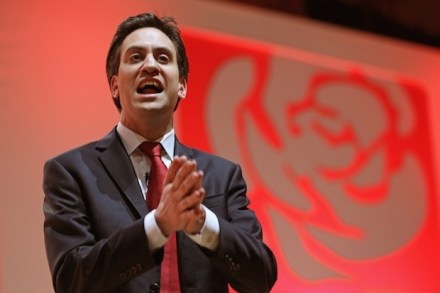
Ed Miliband’s admirers are hailing his speech on Friday as an attempt to change how we think about leadership. It might have been that, but it was also a very political attempt to deal with the ‘Ed problem’, the fact that he trails David Cameron in the leadership stakes by a potentially fatal margin.   There is huge frustration in Miliband’s circle that, as one puts it, voters say that they don’t like spin and then say they won’t vote for Ed as he’s bad at it. But for all Miliband’s decrying of modern politics emphasis on presentation, he has—at times—tried to play the image game just as hard as any other politician.
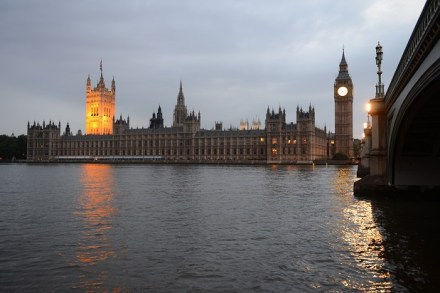
A full separation of powers could reinvigorate parliament

Last summer, parliament was recalled after President Assad’s forces used chemical weapons in Syria. David Cameron wanted the Commons to support air strikes against the Syrian regime in response. But the Commons refused, defeating the government motion. Whatever you thought of the decision, it was a bold move by MPs. They had demonstrated that even on matters of war and peace, the traditional preserves of the executive, they were prepared to stand athwart the Prime Minister. The decision changed Western foreign policy, but not perceptions of parliament. Almost a year on, the public are still cynical about the institution and MPs remain deeply unsure of the worth of what they are doing.

The economy is above its pre-crisis level – but when will voters feel the benefit?

The economy is now, at last, larger than its pre-recession peak. The coalition parties are keen to claim vindication this morning. Nick Clegg has declared that 'The rescue has worked' and used today's numbers to justify the Liberal Democrat's decision to go into coalition. While George Osborne is celebrating a 'major milestone in our long term economic plan'. But he's also keen to warn that 'there is still a long way to go' and to emphasise that 'the mistakes of the past' must not be repeated. In other words, don't let Labour back in. [datawrapper chart="http://static.spectator.co.uk/okYiQ/index.html"] Political symbolism aside, GDP is still lower in per capita terms today than it was before the recession.

Diane James is promoted to Ukip’s new look front bench

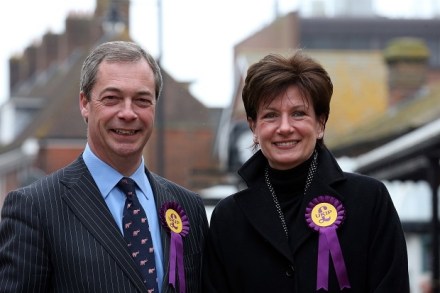
Nigel Farage has promoted a slew of women to senior roles in his reshuffle of the Ukip front bench. Diane James, who came close to winning the Eastleigh by-election, becomes the party's home affairs and justice spokesperson. Louise Bours, a newly elected MEP, takes on the health brief. Her job will be to rebut Labour claims that Ukip wants to privatise the NHS. I understand that she'll be emphasising Ukip's commitment to a universal national health service free at the point of use. Jane Collins, who stood for Ukip in the Barnsley and Rotherman by-elections, becomes the spokesperson on employment. While Jill Seymour takes on transport and Margot Parker small business. There's also an emphasis on blue collar voices in the reshuffle.

Parliament’s next crisis: a dangerous shortage of middle-aged men

[audioplayer src="http://traffic.libsyn.com/spectator/TheViewFrom22_24_July_2014_v4.mp3" title="James Forsyth and Paul Goodman discuss why so many MPs are leaving the Commons" startat=873] Listen [/audioplayer]The House of Commons is off for the summer. But few MPs and ministers expect to make it through to September without the House being recalled because of the grim international situation. This has been the worst year for the West in foreign policy terms since 1979.

The Ukip shuffle: Can the party become more than a one man band?

Nigel Farage has started his long awaited reshuffle of the Ukip top team tonight. Patrick O’Flynn, the former Daily Express journalist, becomes the party’s economics spokesman. Given O’Flynn’s writings, we can be pretty sure that he’ll make taking the middle class out of the 40p tax band one of Ukip’s defining policies. Steven Woolfe becomes migration spokesman. His tweets tonight indicate that his main emphasis will be how EU membership skews Britain’s immigration policy in favour of low skilled EU citizens and against high skilled people from the rest of the world. There’s no word yet on the other front bench roles. There’ll be particular interest in what role Diane James, the personification of the new more professional Ukip, gets.

Cameron’s Lords mess

In the last reshuffle, David Cameron made Tina Stowell the leader of the House of Lords. But, astonishingly, he didn’t make her a full member of the Cabinet, giving her only the right to attend. This, understandably, outraged peers; they quite rightly feel that the leader of the second chamber should be in the Cabinet. It also led to jibes that Cameron was paying a woman less to do the same work as a man, her predecessor Jonathan Hill had been a full Cabinet minister and had the salary to go with it. In an attempt to dampen this story down, it was announced that Stowell’s salary would be topped up from Tory party funds. But this, again, angered peers.

Many of Britain’s best head teachers backed Michael Gove

Reading the papers over the last few days, you'd be forgiven for thinking that no teachers backed Michael Gove and his agenda. But a letter in The Sunday Times yesterday told a very different story. Signed by 76 people, most of them head teachers of outstanding schools in deprived areas, it praised him as 'a man of great conviction' and declared that his 'passion to level the playing field has been unwavering.' The letter is a reminder that many of the best heads in the country were in favour of the Gove agenda because they realised that the status quo was not good enough.

The carnival is over for the Notting Hill set

It is the Sunday after the reshuffle before. Today’s papers are brimming with post reshuffle stories; and not of the kind that Downing Street will like. The Mail on Sunday reveals that Philip Hammond demanded an assurance that he wouldn’t just be keeping the seat warm for George Osborne at the Foreign Office. While the Sunday Times reports on how Owen Paterson and Liam Fox plan to ‘rough up’ the Prime Minister over Europe. The animosity of the right towards Cameron is, perhaps, to be expected. But one of the most striking things about the reshuffle is that it has severed the emotional bonds between Cameron and the modernisers who propelled him to power.

Miliband’s message: I’m neither New Labour nor Old Labour

On the hottest weekend of the year, few people would want to be stuck inside in Milton Keynes. But that is where the Labour hierarchy finds itself. For this weekend is the party’s national policy forum. Ed Miliband’s speech today is meant to try and show that while he has moved on from New Labour he is not old Labour. There will be much talk of how fiscal restraint will have to continue and how Miliband knows there can be no return to the free spending ways of the past. One aide sums the message up as, ‘We know there is no money to spend.’ But it’ll be fascinating to contrast Miliband’s speech today with the one that Tony Blair is giving on Monday to mark the 20th anniversary of his election as Labour leader.

Gove, gone

‘There’s no shame in a cabinet to win the next election,’ declared an exasperated senior No. 10 figure on Tuesday night. This week’s reshuffle was not one for the purists: it was designed with campaigning, not governing, in mind. With less than ten months to go to polling day, politics trumps policy. This is why Michael Gove is moving from the Department for Education to become Chief Whip. The test of this shake-up will be whether the Tories win the next election or not. This reshuffle demonstrated that Tory modernisation is not about measures anymore but men — and women.

PMQs: David Cameron jumps on Harriet Harman’s ‘tax bombshell’

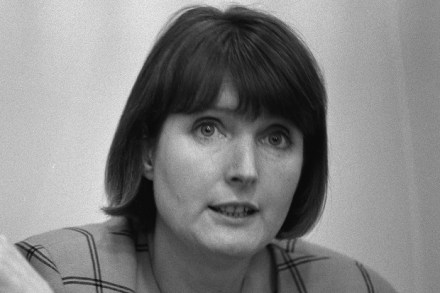
David Cameron cut his political teeth on the 1992 election campaign. He has long told colleagues that he think 2015 will be a very similar election to 1992. Today he seized on what the Tories see as this cycle's Labour 'tax bombshell'. He gleefully read out this quote from Harriet Harman: 'I think people on middle incomes should contribute more through their taxes'. Now, the quote in context is far less damaging than it initially appears. Harman appears to be defending progressive taxation as a concept rather than proposing any new taxes. But Ed Miliband appeared blindsided by the quote and the result was Cameron strolling through the session. listen to ‘PMQs: Why did Cameron sack Gove?

Video: the assassination of Michael Gove

Michael Gove‘s departure from the Department for Education is the biggest shock of this reshuffle. Tory MPs have been even more surprised by it than they were William Hague’s leaving the Foreign Office. Downing Street is keen to stress that the education reform agenda doesn’t leave the DfE with Gove. The changes to the junior ministerial line-up at the department bolsters this argument, Nick Gibb—no friend of the teaching unions—returns as Minister of State for schools and Nick Boles, a close ally of Gove and a man brave enough to take on vested interests wherever he finds them, takes over the Skills Brief.

Cameron will breathe a sigh of relief if the Church of England vote for women bishops

Number 10 has a lot on its mind with the looming Cabinet reshuffle, but I suspect that there'll be a sigh of relief there if the General Synod of the Church of England votes in favour of allowing women bishops. For if proposals for women bishops are defeated again, the problem could well end up in parliament's court. There are those in the Church of England who believe that if this measure fails again then parliament should simply legislate to allow them. Given the status of the Church of England, parliament has the power to do that and there are some influential MPs who privately favour this course. But the last thing that Cameron needs is a divisive debate about the appropriate use of parliamentary power over the Church of England in which he would be expected to take stand.

Nigel Farage hints at how a Tory / Ukip electoral pact might work

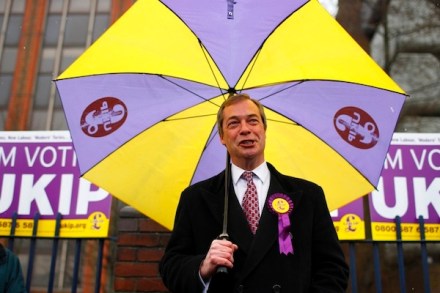
Vote Farage, get Miliband might not have quite as much resonance with voters as the Tories would like. But it is certainly effective with donors. If Ukip is seen as Ed Miliband’s passport to Number 10, it will be far harder for it to raise the money it needs to fight a successful general election campaign. So when Nigel Farage spoke to the Midlands Industrial Council—a group of right-wing business people who have in the past donated substantial sums to the Tories—after the European Elections, most of the questions were about how to avoid a split on the right letting Labour back into government.

US German relations nearing a post-war low

In an era of Russian revanchism, the cracks in the US German relations are particularly concerning. Angela Merkel’s decision to announce the expulsion of the CIA’s Berlin station chief over the US’s recruitment of a German intelligence officer shows just how bad things have got. It is not just German elite opinion that is turning against the US. The Financial Times today reports that polling shows that Germans would prefer to increase ties with China than the US. Now, given that Beijing is an authoritarian government that would have no qualms about spying on anyone, this is not an entirely rational response. But it does reveal the poor state of the trans-Atlantic alliance.

The Great Brussels Steeplechase: runners and riders to be Britain’s next European Commissioner

Next week, EU leaders will meet to parcel out the top jobs in the next European Commission. So David Cameron doesn't have long to decide who he is going to nominate—and Berlin is already bugging him for his pick. Here's The Spectator's run down of the runners and riders. Andrew Lansley: Until recently the firm favourite. But in recent weeks support for him has fallen away. No. 10 has been irritated by the hints he has dropped about having been offered the job. It has also grasped that nominating someone as compensation for dropping them from the Cabinet is a recipe for getting a second-tier job.

Michael Gove’s ‘personal crusade’

Michael Gove’s speech to today’s education reform conference is a robust defence of his reforms. He calls closing the attainment gap between rich and poor a ‘personal crusade for me’. But I suspect that the headlines will be grabbed by his claim that the teaching unions aren’t standing up for education but for their ‘own pay and pensions’. He says that the status quo isn’t good enough and ‘we mustn’t keep going backwards – and failing the poorest above all.’ What I found most striking, though, was Gove’s praise for how academy chains are turning round failing schools such as Downhills. Indeed, Gove clearly envisages a far greater role for these chains.