James Forsyth

James Forsyth

James Forsyth is former political editor of The Spectator.

Commons vote for strikes against IS in Iraq

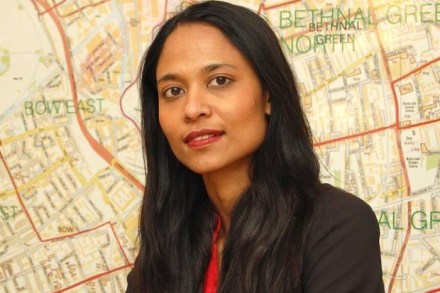
By 524 votes to 43, the House of Commons has voted to support air-strikes against Islamic State in Iraq. The margin of victory is not surprising given how limited the motion was, it rules out ground troops and makes clear there’ll be another vote before any action in Syria. But in a sign of the unease of some on the Labour side, Rushanara Ali, who represents George Galloway’s old seat of Bethnal Green and Bow, has resigned from the front bench over Labour’s support for the motion. Indeed, the first estimates are that 24 Labour MPs voted against while just five Tories opposed. The question now is whether, and when, Cameron might return to the Commons to try and gain approval for action in Syria.
If Islamic State is to be defeated, it must be attacked in both Syria and Iraq

listen to ‘David Cameron's statement on Isis and Iraq’ on audioBoom Parliament will today vote for the motion authorising air strikes by the RAF against Islamic State in Iraq. The motion with its promise of a further vote before any action is taken in Syria and a commitment not to put troops on the ground has been designed to pass as easily as possible. Understandably, no one in Downing Street wants to risk a repeat of last year’s Syria vote. But the reasons why the motion will pass are also the reason why it is not fit for purpose. Islamic State has succeeded in rendering the border between Syria and Iraq meaningless, it operates on both sides of it. But British planes will only hit Islamic State on one side of this line.

Cameron must reunite the Tories or lose the next election

[audioplayer src="http://traffic.libsyn.com/spectator/TheViewFrom22_25_Sept_2014_v4.mp3" title="Freddy Gray, Fraser Nelson and James Forsyth on Cameron's radicalism" startat=70] Listen [/audioplayer]No one goes to Birmingham to revive a marriage. But that is what David Cameron and the Conservative party must do next week at conference. They must find a way to put the passion back into their relationship, to learn to trust each other again ahead of the general election. For neither can win without the other next May. That election is there to be won. The Labour gathering in Manchester this week was not one of a party convinced that it is going to surge to victory in a few months. The atmosphere was subdued, bordering on depressed.

Michael Fallon: parliament needs the ‘courage’ to vote for war

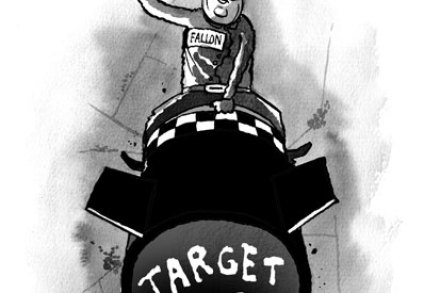
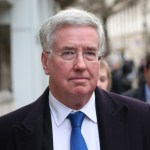
The Ministry of Defence is like a sauna on Sunday. The air circulation system has been switched off and the place is hot — and deserted. Yet when you reach the Secretary of State’s floor, a small team is hard at work. As you enter Michael Fallon’s office, you see why. On an easel sits a map of Iraq and Syria. Tellingly, though, this isn’t the only map on the stand. Sitting behind it are ones of Pakistan, the Central African Republic and Sierra Leone. It emerges later that the one of Ukraine has gone missing. Fallon is 62, but he has the energy of a man half his age. Our conversation is punctuated with regular requests from him to his staff to bring him a map, a copy of the Nato charter or some other piece of paper.

Ed Miliband’s unlucky conference

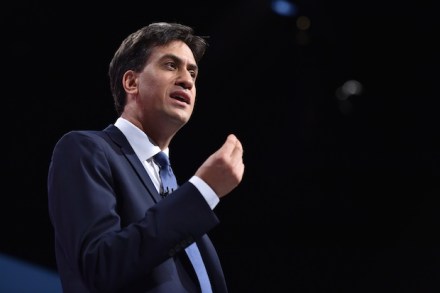
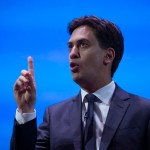
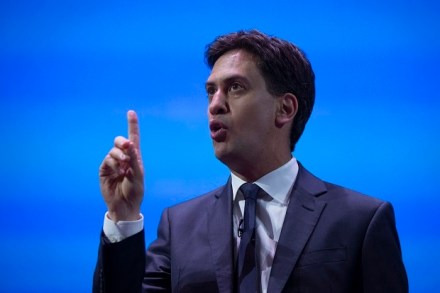
Ed Miliband is not having much luck this conference. First, there’s the fact that it has come straight after the Scottish referendum, making it feel a bit small. Second, other stories have kept intruding on and overshadowing conference. Finally, Miliband’s managed to forget two of the most important sections of his speech, the parts on the deficit and immigration. The missing paragraphs dominated, to Miliband’s audible irritation, his interview on the Today Programme. Miliband explained that he hadn’t meant to cut them out from the speech, but that they had just got lost as he delivered it. Now, to some extent, this is a process story.

The deficit and immigration: were there two worse topics for Ed Miliband to forget?

No notes speech have been Ed Miliband’s political party trick. His One Nation speech two years ago ended speculation about his leadership and last year’s energy price freeze effort knocked the Tories off their stride for months. But today, the no notes speech hurt Miliband rather than helped him. Without an autocue, Miliband skipped bits of the speech. This has happened to him before, one year he missed out the section on the environment. But this year, Miliband missed out the bits he could least afford to: forgetting the sections on the deficit and immigration.

Exclusive: Michael Fallon says UK should reconsider military action in Syria to combat ISIS

The Ministry of Defence is like a sauna on Sunday. The air circulation system has been switched off and the place is hot—and deserted. Yet when you reach the Secretary of State's floor, a small team is hard at work. As you enter Michael Fallon’s office, you see the reason why. On an easel sits a map of Iraq and Syria. Tellingly, though, this isn’t the only map on the stand. Sitting behind it are ones of Pakistan, the Central African Republic and Sierra Leone. It becomes clear as the interview goes on that the one of Ukraine has gone missing. Fallon is 62, but he has the energy of a man half his age.

Miliband’s dividing lines

The more we learn about Ed Miliband’s speech (to be given later this afternoon), the clearer the dividing lines that it is drawing are. The word is that Miliband will announce more money for the NHS paid for by a combination of taxes on mansions, hedge funds and big tobacco. The message: Labour stands up for the NHS while the Tories stand up for people who live in mansions, hedge funds and tobacco companies. This might be crude politics but it will, I suspect, be quite effective. It emphasises Labour’s biggest strength, that they are the party of the NHS and social solidarity, and highlights the Tories’ biggest weakness, the sense that they are the party of the rich who stand up for the wrong people.

Chuka Umunna: the last disciple of New Labour’s third way

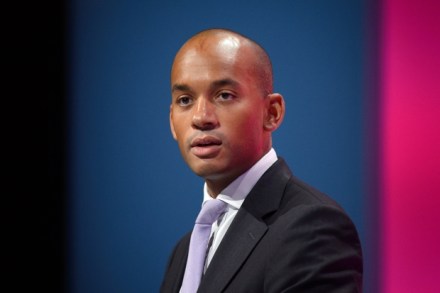
Chuka Umunna is the last disciple of the third way standing. At a Times fringe earlier, he was full of praise for centre-left European reformers such as the Italian PM Matteo Renzi and French PM Manuel Valls. Indeed, when Umunna spoke approvingly of the battle that Valls is having with his own party one sensed that it was something that Umunna would like to do himself. Umunna sought to portray himself as the reasonable outsider. He said that the biggest challenge in politics was to make compromise fashionable again. He urged the Labour party to embrace entrepreneurs and his tone about business and technology was unremittingly hopeful. His desire to command as much political space as possible was reminiscent of New Labour in its pomp.

Miliband confronted by the English Question

Ed Miliband wouldn’t have wanted to spend his big, pre-conference interview talking about English votes for English law but that’s what he had to do on Marr this morning. Miliband was prepared to concede more English scrutiny for English legislation. But it is clear he won’t back English votes for English laws. He even argued that it was hard to describe tuition fees, which don’t apply in Scotland, as an issue just for the rest of the UK. listen to ‘Ed Miliband: 'In favour of greater scrutiny' of English issues by English MPs’ on Audioboo Miliband was much happier when the interview turned to the minimum wage and Labour’s plan to increase it to £8 by 2020.

Have the Scottish Tories been detoxified?

The referendum campaign was a mixed experience for the Scottish Tories. On the one hand, it was a reminder of how much they are still hated in Scotland: End Tory rule forever, was one of the more frequently heard Nationalist battle cries. On the other, they had one of the campaign’s most effective advocates, Ruth Davidson and were accepted in as part of the cross party campaign. Indeed, it was telling that the Better Together campaign together rather than hiding Davidson away used her more and more as the campaign went on. In his Scotsman column today, the former Labour spin doctor John McTernan declares that ‘Ruth Davidson’s campaign has detoxified’ the Scottish Conservatives. This is a particularly striking statement coming from a former Labour partisan.

Labour seeks business support for faster increases in the minimum wage

With Labour conference next week, a letter has gone out to business people from Alan Buckle, the senior accountant who Ed Miliband appointed to look at how to boost the minimum wage, asking them to sign an open letter ‘calling for the minimum wage to rise faster in the years to come than it has in the recent past.’. Patrick Wintour reports that the chief executives of Kingfisher and Nomura are among those who have signed. This letter appears to be a prelude to a conference commitment to a further above inflation increase in the minimum wage.   Buckle writes, ‘I hope you don't mind me contacting you out of the blue. I'm getting in touch to see whether you would be interested in supporting an open letter from business leaders on the issue of low pay.

Final polls put No ahead

The last YouGov poll of the campaign, which has a far larger than usual sample size, has No ahead 52-48. The last phone poll of the campaign, a Survation effort, has No up 53-47. So, the No campaign is ahead by a clear but small margin. [datawrapper chart="http://static.spectator.co.uk/3gFhn/index.html"] The Sun’s political editor Tom Newton Dunn reports that YouGov finds that men in Scotland favour independence 54 to 46 but women back the Union 57 to 43. Its numbers show that only 4 per cent of voters remain undecided. Interestingly, those from the rest of the UK who have moved to Scotland—those living the Union—are voting No by a 72 to 28 landslide. By contrast, Scottish born Scots are split 50/50 on the independence question.

Salmond’s biggest myth

When I asked one leading SNP figure right at the start of this process how they would try and win this referendum, he told me that by the end of the campaign you’d barely be able to tell the difference between, what he called, independence-lite and devo max. This is why Salmond has put such emphasis on keeping the Queen as head of state, still using the pound and the idea that there won’t be any borders controls or customs posts.   Now, with the exception of the Queen remaining head of state these are distinctly dubious propositions. Scotland might choose to use the pound but, given that there isn’t going to be a currency union, it would be doing so in just the way that Panama uses the US dollar.

A 90-day patriot

One question before the independence vote on Thursday is where is the SNP’s most famous celebrity supporter? You might expect Sean Connery to be out rousing the faithful but so far there has been no sign of him. But is he planning a James Bond-style dramatic late entry into the campaign? Well, the Edinburgh Evening News tracked down his brother to ask and this is the reply they got: ‘There’s only a certain amount of days Sean can be in the country for tax reasons, so I know that he intends to use them wisely.’ It is good to know what Sir Sean thinks is a wise use of his time. Thanks to Andy Sparrow of the Guardian for reporting.

Pollsters could have got it wrong on the Scottish independence referendum

As the political nation waits with bated breath for the Scottish referendum result, the polls are dictating the mood. One showing Yes in the lead led to the abandonment of PMQs and all three party leaders heading to Scotland. Recent ones showing No back in the lead, have steadied nerves and reassured the No camp that they have halted Alex Salmond’s momentum and begun to turn the tide. But there are several reasons why the polls might not be as reliable a guide as usual in this referendum. First, as Mike Smithson notes, there hasn’t been a Scottish independence referendum before so. This means that the pollsters don’t have a previous model to work from and improve. Second, there is the question of whether people are being honest about how they’ll vote.

The case for Britain is being made in Scotland, now it must be made in England too

At times in the last few months, it has seemed that if no one was making the case for Britain in Scotland. Too often it seemed that Better Together knew the price of separation but not the value of Britishness. But that is changing. Yes closing the gap, and taking the lead in a couple of polls, has prompting an outpouring of emotion about the United Kingdom from those on the No side. At a pro-Union event in Edinburgh on Friday night, I was struck by how speakers from Gordon Brown to Danny Alexander to George Galloway all talked about Britishness in raw, emotional terms. This focus on Britishness is long over-due. The Guardian’s ICM poll finds that among No voters the most popular reason for voting No is their feelings about the UK.

Who will revive Scottish Labour?

George Galloway announced his support for Gordon Brown as First Minister of Scotland last night. Galloway’s endorsement came as Brown turned up at an event at Usher Hall in Edinburgh that Galloway was compering. The endorsement was met with a broad grin by Brown. But behind the humour, there is a serious point, Scottish Labour knows that it has given Salmond and the SNP far too easy a ride at Holyrood. As the former Labour Minister Brian Wilson acknowledged at last night's event, this referendum is happening because the SNP managed to win a majority in the Scottish Parliament and Labour must take some of the blame for that. That this referendum is so close is also because so many traditional Labour voters are now backing independence.

A new poll shows the Scots referendum is going right to the wire

ICM’s poll has ‘no’ ahead, but only just– it's 51-49. The ICM poll is a telephone one so both phone and internet polls are now showing ‘no’ narrowly ahead but the race too close to call. Adding to the unpredictably of the contest is that ICM found that 17 per cent of voters remain undecided – ‘no’ is on 42 per cent when they are included. Also no one is quite sure of what effect the far higher turnout (87 per cent of respondents said they are absolutely certain to vote) will have. [datawrapper chart="http://static.spectator.co.uk/SxP3I/index.html"] Being up here in Edinburgh you can’t help but notice how engaged people are with this referendum.

Unionists must prepare for a second vote on Scottish independence

Tonight will bring another YouGov poll on the Scottish referendum and this may change the mood again. But right now, the pro-Union side is in far better cheer than it was. It feels that it has not only held the line in the last few days but begun to turn the tables on Salmond. There is a sense in the No camp that they have disrupted Alex Salmond’s momentum and prevented him from turning the final week of the campaign into a procession towards independence. They feel that the economic warnings from various business mean that the consequences of the choice are becoming more apparent. While the promise of a quick move towards further devolution has shown that the choice isn’t between things staying as they are and independence.