James Forsyth

James Forsyth

James Forsyth is former political editor of The Spectator.

The Commons is finally talking about Iraq. Will anyone notice?

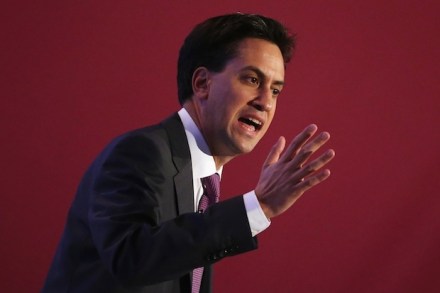
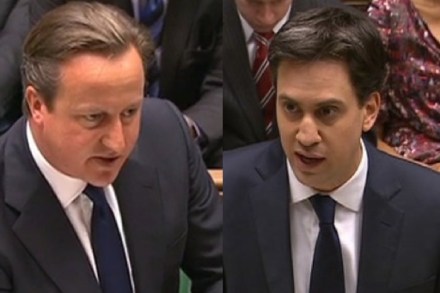
PMQs last week took place just hours after Mosul had fallen to ISIS. But despite this, not a single MP asked Cameron what the government's position on the situation in Iraq was. Today, though, Ed Miliband devoted all six questions to the topic. There was much consensus between Cameron and Miliband but one doubts that the governments in either Baghdad or Tehran will take much notice of what was said in the Chamber. Indeed, the Commons seemed oddly passive about the exchanges as if everyone was aware of the limits to Britain's ability to influence the situation. listen to ‘PMQs: Cameron and Miliband on Iraq’ on Audioboo One thing that remains striking is Cameron's conviction that a terrorist enclave in Iraq would be a direct threat to Britain.
The West shouldn’t be too soft on Iran during ISIS crisis talks

The choice in Iraq appears to be between the devil and the deep blue sea. On the one hand, ISIS need beating back. On the other, the West doesn't want to further strengthen Iran's grip over the Iraqi government. For the time being, though, the West appears to have decided to work with Iran. The Americans have already held talks with them about what to do in Iraq and William Hague announced this morning that the British Embassy in Tehran will re-open. But there is no guarantee that working with Iran will stop the emergence of a terrorist friendly, ungoverned space in western Iraq. As Steven Simon, a former Obama National Security Council official, writes in The New York Times: 'it's unlikely that Mr.

Is Labour’s machine up to fighting a general election campaign?

Judging by the tone of the commentary at the moment, you would think that Labour were badly behind in the polls. In fact, they are ahead by a few points—a margin that would still give Miliband a majority. But what should worry the Labour leader most is that every time the Labour machine is put under scrutiny it is found wanting. Tom Watson, in an intervention that will further worry leadership loyalists, has been out and about making this point this morning. Last month’s election campaign when Miliband didn’t know the name of the candidate he was campaigning for in Swindon was all too typical of Labour’s failings.

The UK will have constitutional change – and it must address the English question

If Scotland votes No on September 18th, it won't be the end of the matter. The Unionist campaign and all three Westminster parties have all promised that more powers will pass to Holyrood if Scotland rejects independence. Cameron himself has endorsed a radical extension of the tax varying powers of the Scottish parliament. This will exacerbate the West Lothian Question, the unfairness by which Scots MPs can still vote on devolved matters at Westminster. Traditionally, the view has been that the answer to the West Lothian question is to stop asking it. But, as I say in the column this week, this position isn't tenable with Ukip on the march. Ukip is already committed to an English parliament in a federal UK.

Once Scotland votes, it’s England’s turn for a constitutional crisis

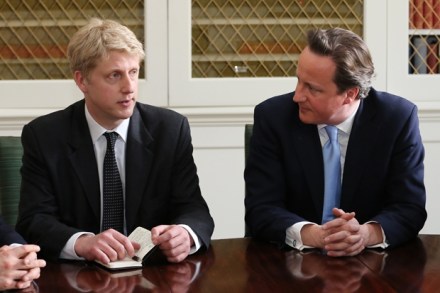
[audioplayer src="http://traffic.libsyn.com/spectator/TheViewFrom22_12_June_2014_v4.mp3" title="James Forsyth and Isabel Hardman discuss the English question and the next election" startat=1129] Listen [/audioplayer]Before David Cameron heads off for his summer holiday, he’ll be presented with a first draft of the Tory manifesto by Jo Johnson, Boris’s younger brother and a cautious, well-organised thinker. He dislikes publicity almost as much as the Mayor of London relishes it. Radical ministers lament that Johnson doesn’t like pushing their recalcitrant colleagues too far, but despite this, the early hints are that the manifesto will be a surprisingly bold document. There will, though, be one thing missing from this draft: what to do about the English question.

David Cameron acknowledges that some Tory MPs want to leave the EU

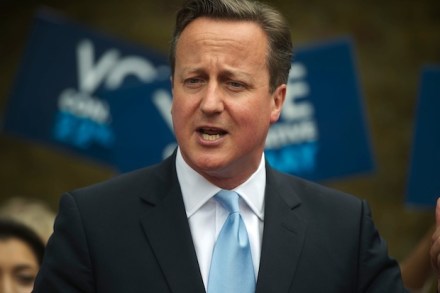
David Cameron addressed the 1922 Committee of Tory backbenchers earlier this evening. The meeting was upbeat because of the introduction of the winner of Newark by-election Robert Jenrick and brief because Cameron had to go off and see the Queen. Cameron only took a handful of questions but all touched on Europe. Cameron defended opting back into the European Arrest Warrant, saying it was part of being touch on terrorism. He also said that he knew that there were those ‘in this room’ who wanted to leave the EU altogether but the only way you’ll get an In Out vote is with a Tory government. Unsurprisingly, Cameron aimed plenty of fire at Miliband and Labour. He argued that while the Tories had a message for those voters who had gone off to Ukip, Labour didn’t.

PMQs: An easy ride for Cameron

David Cameron strolled through today's session of PMQs. Ed Miliband chose not to raise the question of what the Cabinet Secretary's investigation into the May/Gove spat had found but to ask several, serious questions on the Birmingham schools row. listen to ‘PMQs: Cameron and Miliband’ on Audioboo Miliband's argument was that it was unclear who concerned parents should tell if they feared their school was being taken over by extremist elements. But Cameron was able to point out that local government accountability was not the answer as 'Birmingham City Council failed in its duties'. The Labour leader then moved on to passports. He didn't score any hits on this in the Chamber but the Tories should be concerned about this issue.

Labour fails to land any blows on Gove or May over Trojan Horse schools

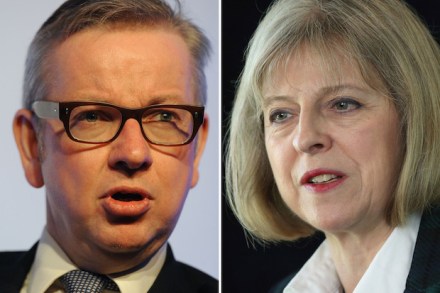
How to deal with Islamist extremism is one of the great issues of our time. What has gone on in these Birmingham schools is a reminder of how real a threat it is to this country and how determined the proponents of this warped worldview are. But before we turn to that question, a quick reflection on the politics of today's events in the Commons: The row between Michael Gove and Theresa May over how to approach this issue resulted in the Education Secretary having to apologise and May having to jettison one of her special advisers. It was a major political embarrassment to the government. Labour tried to capitalise on this by having May appear before Gove's statement on the Birmingham schools.

Will Theresa May now become the Gordon Brown of this government?

You can judge a minister by their special advisers. Ambitious ministers surround themselves with aides who view their primary loyalty as being to the minister rather than the Prime Minister or the government as a whole. But those who are just happy to be in Cabinet accept the advisers they are sent by Downing Street and CCHQ. Theresa May was, without a doubt, in the former category. Her aides are ferocious defenders and promoters of her. Indeed, May is, in many ways, the Gordon Brown of this government. Anyone who her team thought was interfering in her domain got their head bitten off. Even on relatively minor issues like visas for Chinese tourists, they fought like tigers. No quarter is given to those who disagreed with the Home Office line, no matter how minor the subject.

Michael Gove’s moral mission

Few modern-day political speeches need to be read in full, but Michael Gove’s today does. The speech to Policy Exchange's Education Conference contains what must be the moral core of modern-day Conservatism, that disadvantage must not be destiny. Though, the speech does take a very Blairite approach to means. Gove declares that ‘what’s right is what works’. The headlines have been grabbed by Gove’s argument that illiteracy can be ended in a generation. This is a noble aim and there’s no reason why this country should be so accepting of educational failure as it is.

Tories hold Newark with a 7,000 majority

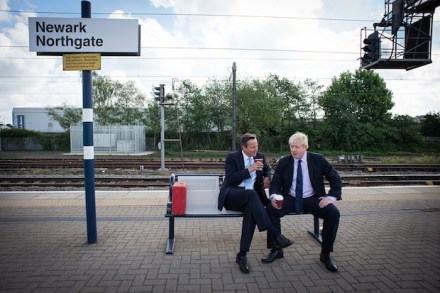
The Tories have held Newark with a comfortable majority of 7,000 plus. The party will be relieved to have won and delighted with the size of their majority over Ukip which was far larger than the 2,500 that Nigel Farage had been predicting earlier in the night. There will be relief in Downing Street and CCHQ that they have sidestepped this banana skin. Considering that the by-election was a result of the disgrace of the previous Tory MP Patrick Mercer and took place only 11 days after Ukip had topped the poll in the European Elections, it had the potential to be a disaster for the Tories that could have sent the party into a Ukip-induced panic. But victory, and especially by this margin, will ensure that the Tory party goes into the summer in relatively calm and united fashion.

Nigel Farage is trying to modernise Ukip

Get Nigel Farage talking about Ukip and its political strategy, and you'll soon notice how he uses the phrase 'New Ukip' to describe the party's more targeted approach. It is a sign that, unlikely as it may seem, Farage is a moderniser. Farage knows that Ukip needs MPs at Westminster if it is to become a permanent presence on the political scene. He also knows that to win these seats it is not enough to just appeal to disillusioned Tories. So, Ukip trying to broaden its reach, to win over disaffected Labour voters even at the risk of alienating some of its existing support.

Nigel Farage is becoming a moderniser

[audioplayer src="http://traffic.libsyn.com/spectator/TheViewFrom22_5_June_2014_v4.mp3" title="James Delingpole and Michael Heaver debate whether Ukip stands for anything" startat=1222] Listen [/audioplayer]There are many words that you might associate with Nigel Farage, but moderniser probably isn’t one. Yet the Ukip leader is embarking on the process of modernising his party. He has concluded that it cannot achieve its aims with its current level of support. So he is repositioning it in the hope of winning new converts even at the risk of alienating traditional supporters. If this sounds similar to what David Cameron did after winning the Tory leadership in 2005, that’s because it is.

David Cameron’s inaction has fuelled the row between Michael Gove and Theresa May over extremism in schools

The row between Michael Gove and Theresa May over how best to tackle Islamist extremism in schools is typical of how tense things get between these two whenever the subject of Islamist extremism arises. Gove wants to wage intellectual war on Islamist extremism, taking on the argument wherever it raises its head. May, heavily influenced by the civil servant Charles Farr, who is very much part of her circle, thinks that a distinction has to be drawn between extremism and violent extremism. But this problem would never have arisen if Number 10 had made the Prime Minister's writ run on this subject. Cameron in his 2011 Munich speech made clear that he wanted even non-violent extremism tackled: ‘Now, you might say, as long as they're not hurting anyone, what is the problem with all this?

The Tories’ tax pledge could see them recover in Scotland

Today's announcement that the UK Tory party is backing the full devolution of income tax to Holyrood, and will commit to that in its 2015 manifesto, is hugely significant. It means that both coalition parties now support some tax competition between Scotland and the rest of the United Kingdom. By contrast, Ed Miliband has made clear that he will never sign off on any devolution deal that allows Scotland to undercut the rest of the UK on tax. Instead, he wants a system where the Scots could only choose to have the same tax rates as the rest of the UK or higher ones. This difference raises the possibility that if independence is defeated in the referendum, the SNP, the Tories and the Liberal Democrats could come together to strike a deal on more tax powers for Holyrood.

David Cameron is doing what Eurosceptics want him to do

Tory Eurosceptics from the Cabinet down have long made clear that David Cameron will only be able to get a sufficiently different deal from the EU if he’s prepared to threaten that Britain will leave if it can’t get what it needs. Many have assumed that Cameron, who has been clear that he would prefer Britain to keep in the EU, would not be prepared to do this. But it seems that he is. The German magazine Spiegel reports that Cameron told his fellow EU leaders that if Jean-Claude Juncker, the Luxembourg federalist, became president of the Euroopean Commission he could not guarantee that Britain would stay in the EU. The threat here is implicit not explicit but it appears to have got the message across.

For a group of Lib Dem MPs, the war is already over

The anti-Clegg Liberal Democrats are fond of World War One analogies, likening their leader to a general sending wave after wave of troops over the top to their deaths. But a more fitting military analogy would be that around a third of Liberal Democrat MPs are cut off behind enemy lines and there is nothing that can be done to save them that wouldn't endanger the rest of the army. The stark reality is, as I argue in the column this week, if you are a Lib Dem MP in heavily Labour territory you are going to lose your seat. This is a hard thing for any MP to accept but particularly hard for a Liberal Democrat. The party has always believed that there is no problem that simply working harder, doing more case work and delivering more leaflets can't solve.

Why no one’s ready to oust Nick Clegg (except the Tories, of course)

[audioplayer src="http://traffic.libsyn.com/spectator/TheViewFrom22_29_May_2014_v4.mp3" title="James Forsyth and Isabel Hardman discuss the Lib Dem's internal warfare" startat=818] Listen [/audioplayer]Nigel Farage is pretty good at giving people hangovers, and on Monday morning all three Westminster party leaders woke up with one. Ukip’s victory in the European elections represents the first time in more than a hundred years that Labour or the Tories had not won a nationwide vote. It showed that the old allegiances on which our politics are predicated have broken down. It also reminded us that none of the parties are national affairs any more; Labour came third in four regions, as the Tories did in six.

Nick Clegg is safe, but his party will continue to glower a while longer

Nick Clegg is safer now than he was this morning. Lord Oakeshott's outing as the source of these ICM seat polls and his resignation from the party has put the plotters on the back foot. MPs who were ambiguous in their support for the leader are now much more forthright. Vince Cable himself is preparing a further statement of loyalty to Clegg following his denunciation of Oakeshott yesterday. The Clegg operation is more interested in getting this story over with than settling scores. It is vigorously defending Cable, arguing that he can't be held responsible for Oakeshott's actions. But the problem for Clegg is that the Lib Dems' internal structures mean that it will take a fair while for the last embers of this plot to be put out.

Nick Clegg defends his leadership and the Coalition

A visibly tired Nick Clegg has just done his first post-European Election TV interview. Clegg conceded that the Liberal Democrats had taken a 'bigger hit in the ballot box' than he expected they would when he took them into coalition. But he made clear he wasn't quitting and that he thought it would be a massive mistake for the party to leave the Coalition now as its 'big judgments were being vindicated'. listen to ‘Nick Clegg: We’re not going to lose our nerve’ on Audioboo Clegg attempted to explain the scale of the defeat to his party by saying that the Liberal Democrats were hit by the double-whammy of being both in government and pro-European.