James Forsyth

James Forsyth

James Forsyth is former political editor of The Spectator.

After a referendum campaign like this, will even no mean no?

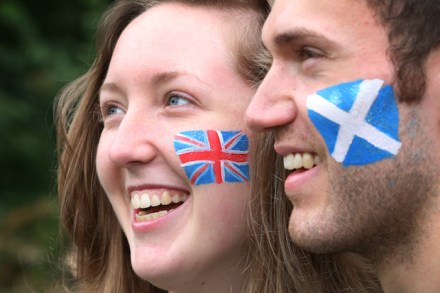
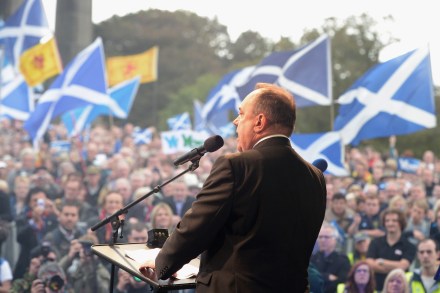
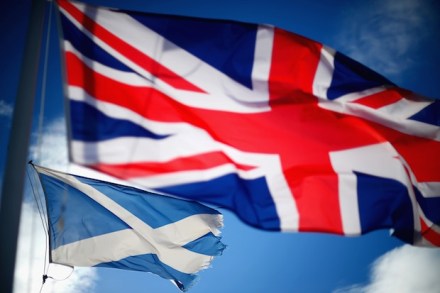
[audioplayer src="http://traffic.libsyn.com/spectator/TheViewFrom22_11_Sept_2014_v4.mp3" title="James Forsyth, Isabel Hardman and Fraser Nelson discuss the crisis in Westminster" startat=1142] Listen [/audioplayer]This is really happening. The Scots could vote to end the greatest, most successful union in human history next week. Westminster has, at last, woken up to this threat and what it would mean for the United Kingdom as a whole. The result has been panic, frenetic activity and a promise to turn Scotland into part of a quasi-federal state. Such has been the speed of this offer that no one quite knows what it means for the rest of the United Kingdom. But keeping Scotland in the Union is the order of the moment. Everything else is mere detail.
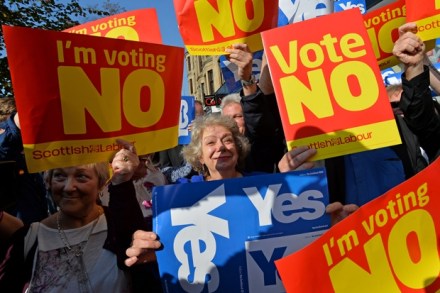
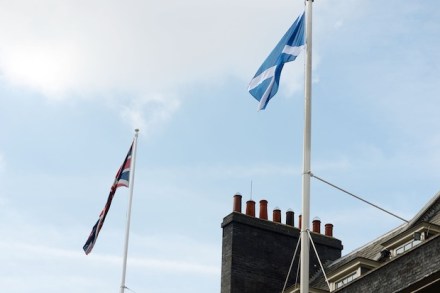
New poll puts No ahead in the Scottish referendum campaign

Tonight brings the first morale boost for the No campaign in a wee while, a Daily Record poll has them 53-47 ahead. Including don’t knows, the numbers are No 47.6%, Yes 42.4% and don’t know 9.9%. A while back, a 53-47 poll would have been regarded as alarming by the No camp. But a week is a long time in politics and tonight’s numbers will be seen as a reassuring sign that a Salmond victory is not inevitable and that independence doesn’t have unstoppable momentum. Particularly reassuring for the No side is that the number of Labour voters backing independence has fallen, which suggests that the bleeding on that front has been staunched. We’ll have to see what the polling effect, if any, is of the visit from the three UK party leaders is.

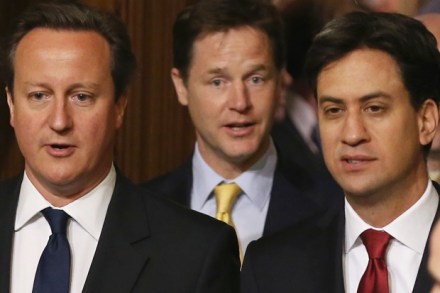
Cameron, Clegg and Miliband head to Scotland to make the case for the Union

David Cameron, Nick Clegg and Ed Miliband are combining forces and heading to Scotland tomorrow to make the case for the UK. Here's their joint statement: 'There is a lot that divides us - but there's one thing on which we agree passionately: the United Kingdom is better together. That’s why all of us are agreed the right place for us to be tomorrow is in Scotland, not at Prime Minister’s Questions in Westminster. We want to be listening and talking to voters about the huge choice they face. Our message to the Scottish people will be simple: "We want you to stay."' The presence of the three party leaders is meant to show that Westminster will deliver on its promises about further devolution to Scotland.

‘Home rule’ for Scotland means the English question must finally be answered

We are now on the verge of the biggest set of constitutional changes in living memory. Even if Scotland votes No, there is going to be a move towards a far more federal UK. The timetable Gordon Brown is announcing this evening for a ‘Home Rule Bill’, borrowing the phrase off Gladstone and the Lib Dems, is a demonstration not only of how concerned the Unionist parties are about the polls coming out of Scotland but how quickly this will all happen. Brown envisages a new settlement by the end of January next year. Now, there is a question about whether it is wise to change the constitutional fabric of the United Kingdom at such a speed. But this is what the Unionist parties now believe is necessary to save the Kingdom.

People power can save the Union

If Scotland does vote for separation—as the latest YouGov poll suggests it will, we’ll enter the most unpredictable political period in living memory. But before we start contemplating the consequences of a Yes vote, it is worth thinking about what is giving independence momentum in Scotland. It is not just being driven by nationalist fervour but by the same anti-politics sentiment that is riling politics right across the United Kingdom. Voters who are fed up with Westminster and disappointed by politics are seeing voting Yes as a chance to rip up the whole system and start again. Breaking up the United Kingdom is, perhaps, the ultimate expression of anti-politics.

The irresponsibility of Andy Burnham

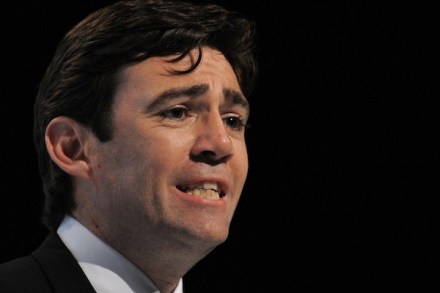
Nothing matters more in British politics right now than keeping the country together. The polls in Scotland show that no one can be complacent about the result on the 18th of September. One thing that has helped the Nationalists to close the gap in Scotland is a serious of alarmist predictions about the NHS. They have seized on some of Andy Burnham’s overblown rhetoric to claim that the NHS south of the border is about to be privatised and that this will have a knock-on effect on Scotland. Given this, a period of silence on Mr Burnham’s part until after the referendum would be most welcome.

Can the Tory party locate its secret weapon?

It used to be said that loyalty was the Tory party’s secret weapon. But this supposed strength hasn’t been very apparent in recent years. Indeed, at times, it seems that the Tory party hasn’t quite recovered from the demons unleashed by Margaret Thatcher’s ouster twenty-odd years ago.   Douglas Carswell’s defection means that Westminster, when it is not panicking about the Scottish referendum, is chuntering about whether his move to Ukip is the harbinger of a bigger Tory split to come, one that The Spectator explores this week. Worryingly for the Tory loyalists, there are people on all sides of the party are preparing for this fight.  As one Tory MP tells me, ‘It has that civil war quality to it: people just want to harm the other side.

The Tories are in civil war. If that doesn’t change, they’ll lose

[audioplayer src="http://traffic.libsyn.com/spectator/TheViewFrom22_4_Sept_2014_v4.mp3" title="Isabel Hardman, Fraser Nelson and James Forsyth discuss the Tory civil war" startat=60] Listen [/audioplayer]The general election is now Ed Miliband’s to lose. This is not a controversial statement: the polls say it, the bookmakers say it and in the last week several of David Cameron’s own ministers have come to believe it. The confidence that seemed to envelop the Conservative party before the summer recess has been replaced by a sense of doom. On its own, Douglas Carswell’s defection to Ukip would not be seen as a body blow — but it hammers home the fact that the right is fractured and many Tory voters made the jump long ago.

PMQs: Fighting suspended as leaders respond to Iraq terror

A few days ago, one would have expected the first PMQs of term to be a rowdy affair as Labour went for Cameron over the Carswell defection. But the recent, hideous events in Iraq have changed all that and today’s PMQs was instead a sober, statesmanlike affair which reflected well on both Cameron and Miliband.

Scottish referendum: ‘no’ lead falls to 6 points, from 22 points last month

Tonight brings a reminder that the Union is in real danger. A new YouGov poll has the No camp’s lead in the Scottish referendum down to just six points. Just a month ago, No had a 22 point lead with You Gov. This poll is particularly striking as YouGov’s polling has not been as favourable to Yes as that of other pollsters; this is Yes’s highest ever score with YouGov. Particularly worrying is that undecided voters are going Yes by a margin of two to one. If this poll is right about how much the gap has narrowed and the undecideds continue to break in the same way, then this referendum could come down to who has the better ground operation. It is, obviously, only those who live in Scotland who have a vote in this referendum.

Ukip set for crushing Clacton win

David Cameron and the Tories’ electoral hopes are about to take a long walk on Clacton’s short pier. A poll in the Mail on Sunday today has Ukip on 64% and the Tories on 20%, a lead that suggests this contest is over before the writ has even been moved. So, Ukip are going to get their first MP. This means that the fracture on the right of British politics is a lot closer to becoming permanent, handing Labour the kind of inherent electoral advantage that the Tories enjoyed in the 1980s. This morning, the next election is Ed Miliband’s to lose. One of the striking things about the poll is that it reveals that not even Boris can save the Tories in Clacton. Cameron had hoped that his ‘star striker’ could get him out of this hole.

Tusk as European Council President is a mixed blessing for Cameron

Donald Tusk, the Polish Prime Minister, has been appointed the new European Council President. Tonight, Tusk has had warm words about how imperative it is that Britain’s concerns about the EU are addressed. As Open Europe reports, he called the possibility of an EU without Britain a “black scenario.”   Tusk’s appointment is a mixed blessing for David Cameron. On the one hand, Tusk comes from a non-Eurozone country meaning that he’ll be sympathetic to Britain’s desire for single market protections for the Eurozone outs. The Ukraine crisis has also reminded the Poles of how important Britain is in terms of stiffening the EU approach towards Russia; meaning that Tusk genuinely would be loath to see Britain leave.

If the Tories can’t keep Carswell in the fold, they are in serious trouble

Douglas Carswell’s defection to Ukip is a serious blow to the Tory party. Unlike so many other defectors, Carswell is not off because he has an axe to grind. This isn’t about his personal prospects but policy. What makes this defection all the more potent is that Carswell has been a major influence on contemporary Toryism. His Direct Democracy agenda is one of the more sizable parts of the whole Tory modernisation project and his Euroscepticism isn’t driven by some Pathé news view of Britain but by a view of how this country can succeed as a modern, free-trading nation. Indeed, the section in Carswell’s speech celebrating contemporary Britain is very Cameroon. So, a Tory party that can’t keep Carswell in the fold has a serious problem.

Time is running out for Alex Salmond and the Nationalists

Nicola Sturgeon, the SNP deputy leader, is busy claiming that post the Glasgow games the momentum will be with the Yes side in the referendum. But this claim is contradicted by the Survation poll in today’s Mail on Sunday which shows support for Yes marginally down on last month. The Yes campaign’s last best chance to gain the ‘big mo’ that it needs comes in Tuesday night’s debate between Alex Salmond and Alistair Darling. Alex has written about why he doesn’t think this debate will be a game changer, but with a million Scots expected to tune in, Salmond isn’t going to have a better opportunity to try and turn things round. But the dilemma for Salmond is how to approach this debate.

Balls tries to defuse the tax bombshell

Ed Balls' interview with the Telegraph today is a demonstration of what he learnt working for Gordon Brown in opposition. He is at pains to deny that he is planning any major tax rises; he doesn’t want to give the Tories the chance to claim Labour are planning a ‘tax bombshell’. He stresses that he understands that ‘People feel they are paying too much tax already’ and emphasises that he ‘would rather all tax rates were lower’. He also explicitly rules out a National Insurance increase to pay for extra spending on the NHS and a so-called ‘death tax’. Interestingly, Balls also restates his desire to limit EU immigration. He says he wants ‘fair movement not free movement’ of workers.

David Cameron can’t afford any more slip-ups

From now until September 18th, the Scottish referendum will rightly dominate national politics. Tuesday night's debate between Alistair Darling and Alex Salmond is the Yes campaign's last and best chance to gather the momentum it needs to pull off an improbable victory. But, as British Election Survey data shows, the result of the referendum is not a foregone conclusion. If the ‘undecideds’ keep breaking the same way, the result will be No 53.6 per cent, Yes 44.6 per cent. This is too close for comfort. But if Scotland votes No, attention will quickly shift to next May's UK election. It is a sign of how speeded-up our politics has become that David Cameron's political career could be over two years before his 50th birthday.

Why this could be David Cameron’s last summer in politics

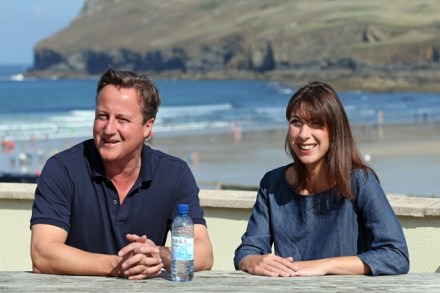
[audioplayer src="http://traffic.libsyn.com/spectator/TheViewFrom22_31_July_2014_v4.mp3" title="James Forsyth and Alex Massie discuss the election and the Scottish referendum" startat=1808] Listen [/audioplayer]At this time of year, whenever you see a British politician looking particularly busy, you can take it as a sign that they are about to go off on holiday. In this puritanical age, nearly all political leaders are afraid to be seen enjoying themselves, and few dare take a break without making sure we all know they’ve earned it. Both David Cameron and Nick Clegg are splitting their summer holidays in two this year to avoid being accused of slacking off. Any sensible politician should make sure of a proper rest this summer.

Why won’t the Salmond / Darling debate be shown in England?

The future of Britain is at stake, but you wouldn't know it from how ITV is behaving. On Tuesday, STV will broadcast a live debate between Alex Salmond and the leader of the No campaign, Alistair Darling. This promises to be one of the pivotal moments in the referendum campaign.  But, depressingly, the only way anyone outside of Scotland will be able to watch it is on the internet via STV Player. The failure to put it on ITV across the whole of the UK reflects the failure to understand that, while only the residents of Scotland may have vote in the independence referendum, the result will affect all of us. If Scotland votes for independence, the rest of the UK will be much diminished. It won't be Great Britain anymore but little Britain.

David Ruffley to stand down as an MP

David Ruffley has announced that he is standing down as an MP at the next election. Ruffley’s decision follows the story about him being cautioned by the police following a domestic incident with his partner going from being a local story to a national one, driven in large part by the indefatigable Guido Fawkes. Ruffley’s decision to resign has spared the Conservatives what would have been a difficult decision. On the one hand, there was the issue of domestic violence and its total unacceptability. On the other, there was the duty of care that the party owed an MP who has had some difficulties in the past few years. But the new chief whip Michael Gove has handled the issue adroitly and come up with the best possible solution to a very difficult problem.

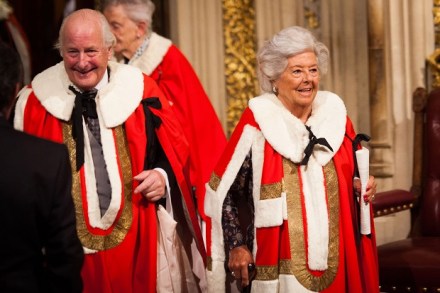
Betty Boothroyd and peers set to rebuke Cameron over Baroness Stowell’s exclusion from Cabinet

Update: In a sign of the strength of feeling in the Lords on this matter, Boothroyd's motion rebuking Cameron passed by 177 votes to 29. This foolish, unforced error now promises to make Cameron's life more difficult than it needs be between now and March next year.   What should worry Cameron most is how cross the peers, including the Tories, are about the whole situation. A considerable number of Tory peers, including some you would view as Cameron loyalists, are intending to turn up and vote with Boothroyd tonight. This makes a government defeat more likely than not. Ministers, though, seem surprisingly unbothered about the prospect of losing this vote. I suspect that this is because the motion isn't binding.