James Forsyth

James Forsyth

James Forsyth is former political editor of The Spectator.

Is the Rwanda flight block a problem for No.10?

11 min listen

The first flight taking asylum seekers to Rwanda was stalled just before takeoff after a late intervention from the European Court of Human Rights (ECtHR). As Priti Patel returned to the Commons to defend the policy, many Tory MPs are furious at the prospect of the courts taking precedent over government legislation. Could this lead to the UK leaving the ECtHR?Also on the podcast, is Keir Starmer too boring? After growing accusations, the Labour leader has urged his shadow cabinet to stop calling him boring and focus on returning to government. Cindy Yu is joined by Katy Balls and James Forsyth.

Is the row over Rwanda good for the government?

11 min listen

The government is fighting on two fronts today. Firstly defending is Rwandan immigration plan from a unified front of Bishops as the first flight is set to take off tonight. Secondly, the Northern Ireland protocol bill which was announced yesterday afternoon faces scrutiny on many fronts.Katy Balls talks with Fraser Nelson and James Forsyth.

The next Brexit battle

12 min listen

The Foreign Secretary has outlined fresh legislation to change the post-Brexit trade agreement with the EU today – allowing ministers to override parts of the Northern Ireland protocol. Whilst the government insists that this is not a breach of international law, critics remain unconvinced.‘I had one member of government say to me this bill is going to be a proxy on Boris Johnson’s leadership’ - Katy Balls.If this were a proxy, could this work in the Prime Minister’s favour? And why has the government not used the safety valve in the protocol itself which is to trigger Article 16?James Forsyth speaks to Katy Balls.

Boris’s Protocol shake-up faces two major challenges

The UK government has now published both the text of the Northern Ireland Protocol bill and a summary of its legal arguments. The main plank of the government’s case for why it isn’t breaching international law rests on the doctrine of necessity. The government document states that ‘the term ‘necessity’ is used in international law to lawfully justify situations where the only way a State can safeguard an essential interest is the non-performance of another international obligation. Under conditions defined in Article 25, the action taken may not seriously impair the essential interests of the other State(s), and cannot be claimed where excluded by the relevant obligation or where the State invoking it has contributed to the situation of necessity.

Will Jeremy Hunt run for PM again?

12 min listen

Has Jeremy Hunt had a good week? When the former health secretary – and 2019 leadership hopeful – announced on Twitter on Monday that he would be voting against the Prime Minister in the confidence vote, Nadine Dorries, the culture secretary, replied that Hunt was 'wrong about almost everything'. Boris Johnson went on to narrowly win the vote, but is that really the end of Hunt's ambitions?  Max Jeffery speaks to James Forsyth and Katy Balls.

Boris has to deliver change without the authority he needs

Boris Johnson needs to be bold: business-as-usual will not save his premiership. But, as I said in the Times yesterday, never has it been more difficult for him to get anything significant done. The first reason is that Johnson must operate knowing that another confidence vote is a near certainty. The rebels need only 32 more votes to oust him and so Johnson must tread carefully. He can’t afford to lose the support of any more MPs. This acts as a check on radicalism. Boris Johnson will need to be able to show Tory MPs that things have improved, that changes are happening. The second is that when a system thinks a PM might not be around that much longer, everything slows down.

Can the UK save the two Brits sentenced to death?

10 min listen

Two British citizens fighting the Russians have been sentenced to death in Ukrainian territory controlled by the Kremlin. How has the UK responded thus far? And domestically, Lord Frost has said that Boris Johnson has until the autumn to turn things around.Max Jeffery talks with Katy Balls and James Forsyth.

What’s behind Boris’s relaunch?

11 min listen

By sticking to his promise to ‘move on’ after the confidence vote, Boris has announced his new flagship policies during a speech in Blackpool. He unveiled the ‘benefits-to-bricks' pledge aimed at extending a home-buying scheme. Will new housing measures be enough to regain the support of the public and the dwindling respect from his party?Also on the podcast, two by-elections are on the way. This could be either a triumphant or disastrous result for the Prime Minister. How might he fare in an election of his own?Katy Balls speaks to Isabel Hardman and James Forsyth.

How the rebels plan to finish off Boris

45 min listen

In this week’s episode: Is the Prime Minister a dead man walking? Spectator Political Editor James Forsyth and MP Jesse Norman who expressed no confidence in Monday's vote discuss the future of Boris Johnson and the Conservative Party. (00:45)Also this week:Why is there so much virtue signalling in modern advertising? Spectator Columnist Lionel Shriver and veteran copywriter Paul Burke discuss its origins, its prevalence, and its effectiveness. (20:20)And finally:Is the dinner party dead? Gus Carter writes in The Spectator this week about how he is never invited to any. He’s joined by Mary Killen to give him some tips on planning a sophisticated bash on a budget.

How the rebels plan to finish off Boris

The Tory party knows it has a problem with plotting. Of its last nine leaders, six have faced a leadership challenge of some sort. The current rules for removing a leader are designed to constrain the party’s appetite for regicide – no one can be challenged unless 15 per cent of the MPs write demanding a no-confidence vote, and the incumbent benefits from a second layer of protection: win, and they can’t be challenged again for a year. The purpose of this year of grace is to ensure that rebels can’t keep coming back until they have finished off a wounded leader. But this being the Tory party, the rules are not set in stone. They are determined by the group of MPs who run the 1922 Committee of backbenchers. They can change them at a time of their choosing.

Did Boris Johnson survive PMQs?

10 min listen

Boris Johnson was surrounded by opposition at the despatch box when he faced the Labour leader at PMQs today. Did Keir Starmer make the most of his opportunity to score points against the Prime Minister's disappointing result in the confidence vote the night before?Katy Balls speaks to Isabel Hardman and James Forsyth.

What will the Tory rebels do next?

13 min listen

It is the day after the night before when Boris Johnson narrowly survived a confidence vote. Today he held a meeting with the Cabinet to tell his colleagues it is time to ‘move on’.  ‘This looks like a slow Tory suicide to me’ - Fraser Nelson Some critics have pointed to the fact that shortly after winning a confidence vote with similar margins, John Major, Margaret Thatcher and Theresa May ended up resigning. What will be Boris Johnson's fate as the Tory rebels plot out their next moves? Isabel Hardman is joined by Katy Balls, James Forsyth and Fraser Nelson.

Is Boris Johnson finished?

11 min listen

The results are in. 211 Tory MPs expressed confidence in the Prime Minister, while 148 said they had no confidence in Boris Johnson continuing to lead the Conservative party. While this is technically a win, it is a narrower victory than Theresa May (who looked splendid in her ball gown tonight) got in her no-confidence vote which lead to her resignation only months later. Is this the beginning of the end for Boris?Isabel Hardman is joined by Katy Balls and James Forsyth on the roof of Parliament to discuss.

Tonight’s vote won’t end the Tory leadership question

There’s an odd amount of unanimity in Tory circles about what is going to happen today. The precise numbers people are speculating about do vary, but there is a general sense that Boris Johnson will win this vote yet not by enough to put the leadership question to bed. The rebels, many of whom have now burnt their boats on the beach, will keep coming and everything will be about if not when the 1922 committee will change the rules to allow another vote. There is a chance that the consensus is wrong. Johnson has still to address MPs and that could shift opinion either way. Then, there is the ConservativeHome poll suggesting the majority of its member panel think Tory MPs should oust Johnson, which may sway some voters. Finally, there is the fact that the No.

From now on, Boris is in a daily fight for survival

Up until now, the Tory leadership rules have protected Boris Johnson. The requirement that 15 per cent of MPs must send in a letter sets a high bar for a no-confidence ballot, as demonstrated by how long it took the rebels to get the numbers against both Johnson and May. But from now on, the rules work against him. Johnson will likely win tonight’s vote. But that does not mean he will lead the Tories into the next election The reason for this is that because the bar is so high for a no-confidence ballot it means that a substantial number of the leader’s own MPs will vote no confidence in them. Once that has happened it cannot be undone. Johnson will be wounded by the result tonight even if he wins.

Boris to face confidence vote tonight

14 min listen

Boris Johnson will face a confidence vote tonight. Announcing the news this morning, the chair of the 1922 committee Sir Graham Brady said in a statement: 'The threshold of the 15% of the parliamentary party seeking a vote of confidence in the leader of the Conservative Party has been exceeded.' Will he win? Katy Balls speaks to James Forsyth and Isabel Hardman.

Politics and the monarchy: a look back at the Queen’s reign

17 min listen

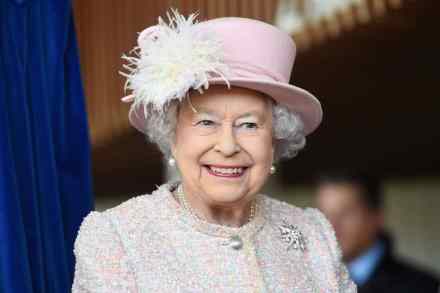
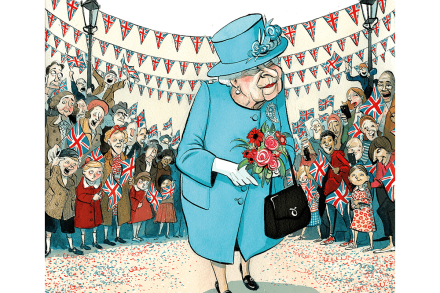
As this week marks the Queen's platinum jubilee, we take a look back at her greatest political achievements in her role as head of state. How important was the relationship between the monarch and the Prime Minister?'I think there's been this restraining act on the behaviour of Prime Ministers, that they will have to explain themselves to the Queen at some point - James Forsyth.Since her reign, she has served 14 Prime Ministers, one of whom was Margaret Thatcher. What was her relationship like with the Iron Lady? Lord Charles Moore, former editor of The Spectator who also wrote a biography on Mrs Thatcher spoke of the mutual respect the Queen and Margaret Thatcher had for one another.

The quiet radicalism of Elizabeth II

34 min listen

In this week’s episode:Robert Hardman & Angela Levin, two of the UK’s royal specialists, explore the character of the Queen and the impact she has had on the institution of the monarchy. (00:36)Also this week:For now, it seems that Boris Johnson is hanging on after the publishing of the Sue Gray report, but how stable is his position? Could a vote of no confidence be closer than anyone expects? The Spectator’s political editor James Forsyth joins the podcast to discuss. (13:47)And finally:Is Chinese cinema in decline? Cindy Yu writes on this in this week’s Spectator, and she joins the podcast along with Andrew Heskins, the founder of easternkicks.com, a review website specialising in Asian film, and co-founder of the film festival, Focus Hong Kong.

Is the SNP more conservative than the Conservatives?

16 min listen

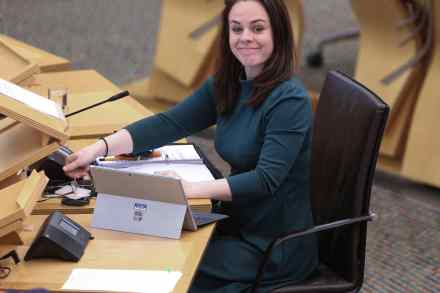
There is a lot of news to cover on Coffee House Shots before the celebrations for the Jubilee begin. First in Westminster with Lord Geidt threatening to resign over Boris Johnson's handling of partygate. Then more internationally to the fraying of the alliance to defend Ukraine. And finally, has Scotland found its Margret Thatcher in Kate Forbes? Cindy Yu talks with James Forsyth and Fraser Nelson.