James Forsyth

James Forsyth

James Forsyth is former political editor of The Spectator.

Why the Greek election could decide Britain’s next government

From our UK edition

Before the eurozone crisis, Greek elections didn’t receive much attention in Westminster. At the moment, however, the polls from Athens are being studied by every politico from the Prime Minister down. How Greece votes on the 25 January could determine the result of our election. If anti-austerity Syriza triumphs, the eurozone crisis will move from a chronic phase into another acute one. For the second election in a row, the backdrop to a British poll and possible coalition negotiation would be talk of debt defaults and bank runs, as Athens struggles with the eurozone straitjacket. Syriza does not want Greece to leave the euro. But it does want the ‘fiscal waterboarding’ to stop, as its leader Alexis Tsipras puts it.

The debate about TV debates dominated today’s PMQs

From our UK edition

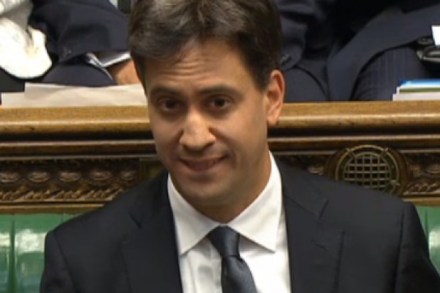
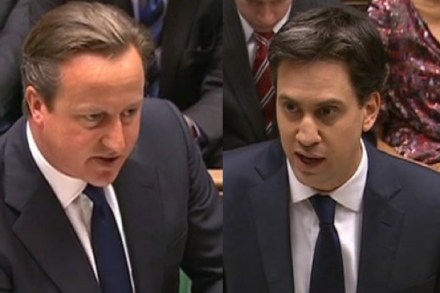
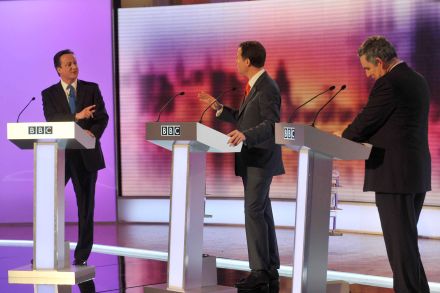
PMQs today was dominated by the debate about debates. After a few statesmanlike questions about the aftermath of the Paris terrorist attacks, Miliband started to needle Cameron about his reluctance to take part in TV debates while Labour MPs made chicken noises. Cameron claimed that he was happy to take part in TV debates as long as the Greens were included and accused Labour of being ‘chicken when it comes to the Greens’; he seemed to back one 5-way debate and one head to head between him and Miliband. Downing Street believes this to be a perfectly defensible position but Cameron is taking a risk by setting it out so clearly because those running the Tory campaign would really prefer no debates at all.

‘Boring is good’ Cameron tells Tory MPs

From our UK edition

David Cameron and George Osborne addressed Tory MPs this evening. The meeting was to update the Tory parliamentary party on the economy and its place in the party’s election strategy. Cameron told them that whatever the question was, the answer was that you can only have it with a strong economy and urged them to repeat this message as much as possible. He said, ‘Boring is good’. Addressing the assembled MPs, Osborne emphasised that the economy was the heart of this debate. He argued that this was first time since 1992 that Labour and the Tories had gone into an election with different spending planes. Most of the questions were fairly loyalist.

Why Cameron doesn’t want any TV debates

From our UK edition

Before Christmas, David Cameron tightened up the rules about ministers going overseas. He wanted them in this country campaigning as much as possible. But, unsurprisingly, his visit to President Obama in Washington this week hasn’t fallen foul of his edict. This trip to Washington is the source of much satisfaction at the heart of government. There are some serious issues on the agenda—the world economy and cybersecurity—but as one of those involved in preparing for it admits, ‘‘There’ll be some crunchy stuff, but it’ll be a very nice photo op, too!’.

What’s better than a tax cut?

From our UK edition

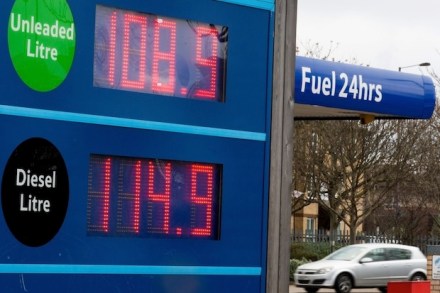
What’s the most important political development this year? The falling oil price. As of 2.30pm, Brent Crude was trading at $50.80 dollars a barrel—massively down on the $115 dollars a barrel it was trading at back in the middle of June. If the plunging price of crude is passed on to consumers, it’ll be the equivalent of a mega tax-cut and might just produce the feel-good factor that has been so lacking in this recovery so far. The Tory leadership is acutely aware of this. As Cameron did the rounds before Christmas, the falling oil price was often the first thing that he brought up. While Tory Ministers now are spending substantial amounts of time trying to pressure energy and petrol companies in to passing this price cut onto customers.

Five reasons why winning in May won’t be that much better than losing

From our UK edition

Defeat in May would be dire for either Cameron or Miliband. It would end their political career in ignominious failure. But winning would not be much better: they would be the weakest PM in living memory. Here’s why it won’t be easy for either of them: Miliband would be a prisoner of his own MPs: The best that both Labour and the Tories can hope for is the narrowest of outright victories. The 21 seat majority that John Major ground out in 1992 is, probably, beyond either of them. Miliband would then find himself having to steer swingeing cuts past a party that is simply not prepared for them.

Why no one will win on 7 May 2015

From our UK edition

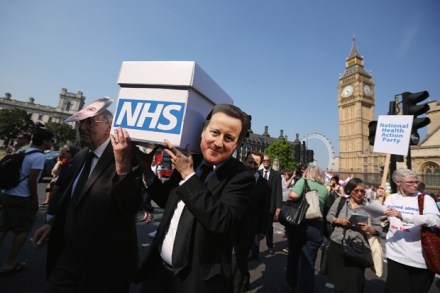
On 19 June 1815, after the battle of Waterloo, the Duke of Wellington declared that ‘nothing except a battle lost can be half so melancholy as a battle won’. Two hundred years later, David Cameron or Ed Miliband might feel the same way as they sit in Downing Street. Any elation over victory will be quickly overshadowed by the thought of troubles to come — in all likelihood insurmountable troubles for either man. Everyone has known for years when this election will take place, with the result that the campaign starting gun has been fired even earlier than usual. Cameron is busy prophesying economic chaos if Labour wins; Miliband is warning that the NHS won’t survive in its current form if the Tories get back in.

Will Merkel throw her diplomatic weight behind Cameron’s renegotiation strategy?

From our UK edition

Before today’s awful events in Paris, the meeting between David Cameron and Angela Merkel was going to be the big news of the day. The German Chancellor does not always observe the usual rules of neutrality when it comes to foreign elections. In 2012, she endorsed Nicolas Sarkozy in a joint TV interview, declaring that it was ‘natural’ to back a fellow Conservative. Now, there was no indication that Merkel was going to offer Cameron similar backing today. But senior Tories were keen to talk up what they were calling ‘das snub’, the fact that Merkel is not meeting with Miliband. (It is also worth remembering that in 2012, Miliband was busy attacking Cameron, Sarkozy and Merkel with his warnings about Camerkozy economics).

PMQs: Playing Punch and Judy with the NHS

From our UK edition

Today’s PMQs was, predictably, about the NHS. But the Punch and Judy nature of the session seemed particularly small in the light of events in Paris. After expressions of solidarity with the French, normal business was resumed. Ed Miliband was enjoying himself, confident that he was on his party’s chosen turf. He piled into Cameron accusing him of blaming patients for the crisis and demanding that he apologise to those who have had to wait for more than four hours. Cameron fended him off, but didn’t look particularly comfortable. However, he had a good counter-attack ready, attacking Miliband for allegedly having told the BBC’s Nick Robinson that he wanted to ‘weaponise’ the NHS. Interestingly, Miliband did not deny that he had said this.

Team Tory unite (but refuse to answer any questions about their own leadership bids)

From our UK edition

The Tories’ front of house team turned up today to try and stoke up a row about Labour’s spending plans. The Tory aim was twofold. First, to try and cement in voters’ minds the idea that Labour would spend too much, pushing up taxes and second to claim that Labour is in chaos when it tries to distance itself from previous spending commitments. The latter is why the Tories are so relaxed about people pointing out that various commitments in their own dossier do not appear in Labour’s official policy prospectus, the one issued after the party’s National Policy Forum.

Cameron avoids a New Year slip-up

From our UK edition

In 2010, David Cameron stumbled in his first New Year broadcast interview over the Tory plans for a married couple’s tax allowance. This slip-up knocked him and his party off course and was a harbinger of the disastrous Tory campaign to come. Today, there were no such mistakes from Cameron as he appeared on Andrew Marr. Instead, he stuck to his competence versus chaos message and tried, fairly successfully, to avoid making any other news. In this campaign, we will see a more disciplined Cameron than the one who fought the 2010 election. The Tories are this time, in contrast to 2010, certain of what their message should be. One challenge for Tory and Labour alike in the next few months is to avoid getting drawn into hung parliament speculation.

Even Ukip don’t dare break the unhealthy consensus on the NHS

From our UK edition

There’s an irony about Ukip’s rise. Nigel Farage party’s popularity is driven by a widespread sense that the main parties are all the same. Yet in the past four years, the differences between the Labour party and the Conservatives have grown substantially, on issues from the size of the state to an EU referendum. In an election year you might expect parties to converge in the centre ground as they chased swing voters. It won’t happen this time. Labour is determined to stop left-wingers defecting to the SNP and the Greens, while the Tories, who have long had their own issue on the right because of Ukip, believe that their best chance of victory comes from heightening the contrast between them and the other parties.

The Blue on Blue action has to stop if the Tories are to win next May

From our UK edition

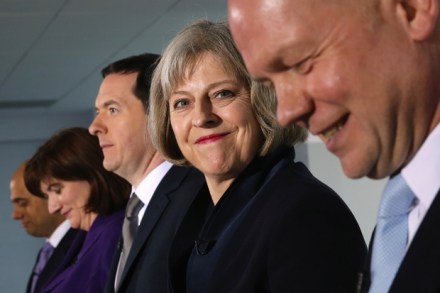
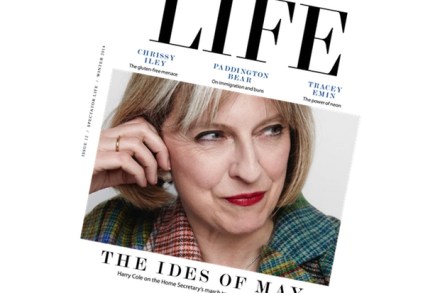
There’s little sign of a Christmas truce in the Conservative party this morning. Instead, the row between Theresa May’s camp followers and the rest of the Conservative hierarchy is still being played out in the newspapers. This might be a particularly public episode of it but this row has been going on in private for quite some time. The cause is really quite simple, Number 10, other Cabinet Ministers and CCHQ believe that May’s followers regularly put promoting her future leadership ambitions above the interests of the party. Harry Cole’s recent profile of May for Spectator Life which claimed that she had given up on Cameron and no longer rated him infuriated both Downing Street and CCHQ. May herself can’t plead ignorance in all this.

Murphy’s mission

From our UK edition

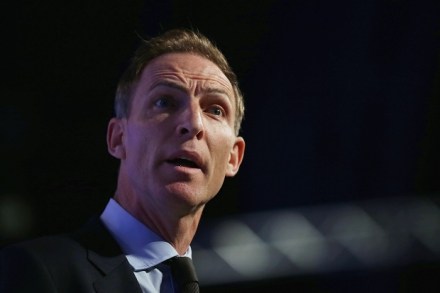
The proverbial visitor from Mars would assume that the Scottish Nationalists had won—not lost—September’s referendum. Alex Salmond has given another crowing interview today, you can read mine with him from The Spectator’s Christmas issue here, in which he offers advice to England on how to rediscover itself. While the crisis in Scottish Labour continues. In an interview with The Guardian, Labour’s new Scottish leader Jim Murphy drives home how big a challenge the party faces there, ‘We’re 20% behind. Just to get even we have to close the gap by 1% a week.’ Murphy is also remarkably frank about the quality of the leaders that preceded him.

Why do internet companies have one rule for paedophilia and another for terrorism?

From our UK edition

Today’s Times investigation into how the Islamic State is encouraging young British women to marry into this terrorist organisation is chilling. It is also a reminder that social media is the jihadis’ recruitment tool of choice. What’s striking is that Facebook closed down the account of Aisha, one of the girls in the investigation, because of the material she was posting. Now, the crucial question is whether Facebook informed the authorities after closing these accounts. What riles the security services, as I said in a piece last month, is that this is not done routinely. Infamously, Facebook did not inform the authorities that it had closed down an account belonging to Michael Adebowale, the man who went on to murder Lee Rigby.

The May-Cameron feud claims another victim

From our UK edition

The increasingly bloody feud between Theresa May’s political operation and David Cameron’s has claimed another victim. Nick Timothy, May’s long-serving special adviser, has been spectacularly kicked off the candidates’ list. The precise reason for Timothy’s ejection from the list is in dispute - Paul Goodman has Timothy’s version of events on Conservative Home. But Timothy is not the first of May’s special advisers to run into trouble, Fiona Cunningham was forced to resign by Number 10 after— in a flagrant breach of the rules —Cabinet correspondence was published on the Home Office’s website. Timothy, though, is not leaving the candidates list without a fight.

PMQs: Cameron and Miliband clash on the economy

From our UK edition

Today’s PMQs was the last one before the holidays. But there was not much Christmas cheer on display. Cameron and Miliband clashed on the economy, with the Labour leader keen to drive home his line that the Tories are intent on taking Britain back to the 1930s. Cameron had prior notice of Miliband’s first question because someone had seen the question on the Blackberry of a Labour staffer on the train and put it on Facebook. Armed with this knowledge, Cameron tried to defuse the attack by pointing out that he was only planning to return spending to, in real terms, 2002/2003 levels. He also had plenty of references lined up to Labour’s leaked anti-Ukip document, which warns that the Tories have a 17 point lead on the economy.

The Union needs balance

From our UK edition

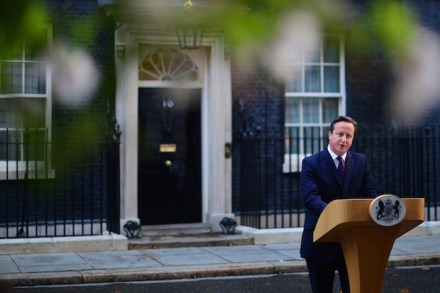
Today’s Guardian long-read on the Scottish referendum is a great piece of journalism. Both Alistair Darling and Danny Alexander argue in it that when David Cameron stepped out of Downing Street and announced his support for English votes for English laws he allowed the SNP to snatch victory from the jaws of defeat, to argue that Scottish voters had been hoodwinked.   Now, to be sure, Alex Salmond make much of Cameron’s announcement. In his Spectator interview he says that it showed that Cameron thinks Scots ‘heads zipped up the back’ and that he didn’t get the enormity of what had just happened.

Why both the Tories and Labour now want a fight on the economy

From our UK edition

Tomorrow, in a sign of how keen the Tories are to keep the political debate focused on it, both David Cameron and George Osborne will give speeches on the economy. Cameron will announce that he is bringing forward a scheme to offer first-time buyers under 40 a 20% discount on 100,000 new home. This scheme had originally been slated for the Tory manifesto but will now be up and running before May. Inside Number 10, they hope that this scheme will help demonstrate that there are tangible benefits for voters to sticking with the Tories and their long term economic plan.   Later on, Osborne will use an address in New York to challenge Ed Miliband on whether Labour would repay any of the national debt.

Jim Murphy wins Scottish Labour leadership contest

From our UK edition

Jim Murphy has been elected leader of the Scottish Labour party. He defeated his more left wing rival Neil Findlay with 55.59 per cent of the vote to Findlay's 34.99 per cent. Kezia Dugdale was elected deputy leader. Murphy is a far more formidable politician than his predecessor, Johann Lamont. But he faces a mighty task. A YouGov poll of Scotland ahead of the UK general election, published this morning, finds the SNP on 47% with Labour 20 points behind. If repeated at the election in May, and assuming a uniform swing, this would see Labour lose 34 of the 41 Scottish seats that it won in 2010.    However, Murphy has energy and no fear of the SNP, both qualities that Scottish Labour has been lacking in recent times.