James Forsyth

James Forsyth

James Forsyth is former political editor of The Spectator.

From coalition to chaos – get ready for the age of indecision

From our UK edition

A recent email from Samantha Cameron started an intriguing debate in the Prime Minister’s social circle. It was an invitation to a Christmas party at Chequers and word quickly spread on the Notting Hill grapevine that the PM was convening an unusually large gathering of friends at his country retreat. So, the guests wondered: were they being asked around because the Camerons were having a last hurrah at Chequers, sensing that they would be evicted by the electorate? Or was the bash being thrown because they were in celebratory mood, convinced that the political tide has turned their way? This confusion is understandable. We might only be three months away from the start of the election campaign but only a fool would predict the result with much confidence.
Interview: Alex Salmond’s game plan for the Commons

From our UK edition

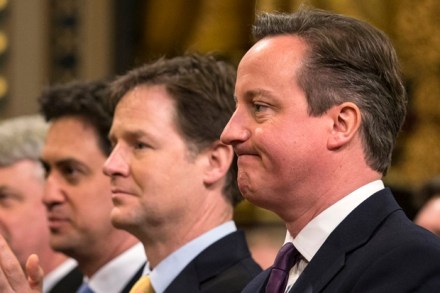
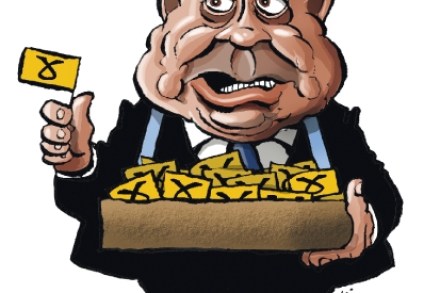
Alex Salmond is losing his voice but that’s not going to stop him from talking — I doubt that anything would, or could. I meet him in the Savoy, after The Spectator’s Parliamentarian of the Year Awards (he won top gong) and he orders a hot toddy — setting out the ingredients just in case the Savoy Hotel is too English to know how to make one. No one talking to Scotland’s former first minister today would have any idea that his political dream was clearly rejected by Scottish voters just three months ago. He is relishing the SNP surge and the likelihood of his party holding the balance of power at Westminster next year, which he gleefully describes as ‘the favourite’s bet just now’.

PMQs: Nick Clegg delivers a perfect Cameroon performance

From our UK edition

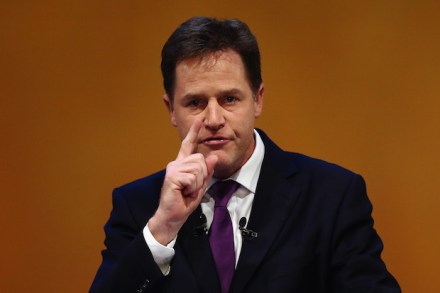
Nick Clegg’s performance at PMQs reminded me of Field Marshall Bosquet’s verdict on the charge of the Light Brigade, ‘c’est magnifique, mais ce n’est pas la guerre’. After a week in which the Lib Dems have been busy trying to differentiate themselves from the Tories, Clegg turned up at PMQs and delivered an aggressive defence of everything that the government has done. Indeed, I’m struggling to think of anything that Clegg said from the despatch box today that Cameron would have disagreed with. The session was also a reminder of the personal animosity between Clegg and the shadow Cabinet. Harriet Harman went for him over his party’s attitude to women, complete with reference to Clegg’s unfortunate GQ interview.

We have a choice between competence and chaos, according to the Tories

From our UK edition

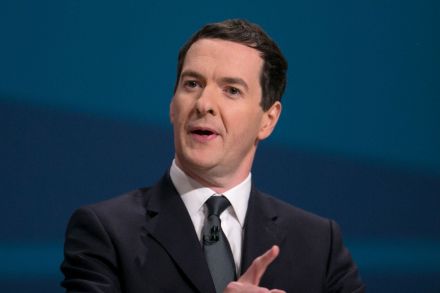
Competence versus chaos—that’s what the Tory leadership want to frame the next election as a choice between. Hence George Osborne’s repetition of this phrase five times in one brief interview with the BBC’s Nick Robinson. The Tories want to make the voters think that they offer competence and everyone else chaos. As George Osborne puts it, ‘And it’s not just Liberal Democrats, it’s Labour, UKIP, you can put them all into the same mix. What they’re offering is a chaotic alternative of higher taxes, higher borrowing, a return to economic chaos.

The Tories aren’t planning to run a £23 billion surplus in 2019/20

From our UK edition

All the talk about the ‘colossal’ cuts to come if the Tories win re-election has been predicated on the assumption that the Tories are committed to running a £23 billion surplus in 2019/20. But this assumption is wrong. As David Gauke told Andrew Neil just now, ‘At the moment the OBR predicts that we will have a surplus of £23 billion, but we’re not making a commitment to the British people, that’s what the number will be in 2019.’ Instead, I understand — after extensive conversations with members of the Chancellor’s circle — that the Tories intend to start increasing spending in line with inflation once the Budget is back in surplus.

In praise of Michael Clarke

From our UK edition

The cricketing world has begun its slow trudge back to normality. Phillip Hughes has been buried and conversation has, half-heartedly, began to turn back to the game itself. Australia will take the field at Hughes’ adopted home ground of Adelaide on Tuesday for a Test match against India.   But it would be remiss to let this week pass without praise for Michael Clarke and the dignity that he has shown as he has led the game and Australia in mourning the death of a young man who was on the verge on fulfilling his great talent. As Alex said the other day, to anyone who has played cricket at any level there was something particularly moving about Hughes' death.

The three Tory vulnerabilities Osborne is hoping to shut down

From our UK edition

In the last few days, George Osborne has moved to close down three Tory vulnerabilities ahead of the election campaign. First, there was the decision to put another £2 billion into the NHS. Osborne has always believed that support for the NHS is the most important feature of Tory modernisation and this extra money has rather undercut Labour’s commitment to spend another £2.5 billion on the health service. The Tory hope is that this extra money, and the party essentially signing up to Simon Stevens blueprint for the NHS, will prevent health from becoming the major election issue that Labour need it to be. Second, Osborne has tried to neuter the appeal of the mansion tax.

The very model of a political Chancellor

From our UK edition

Autumn Statements lack the drama and traditions of the Budget. Gladstone never delivered one, there is no Autumn Statement box and no possibility of a dram of whisky as the chancellor delivers it. But this year’s Autumn Statement was more important, and more substantial, than next year’s Budget will be: the Liberal Democrats are adamant that March is too close to the general election for the Budget to do anything other than update the fiscal forecasts and set out the duty rates. The test this week isn’t economic but political. As with last year, the Tories have spent the autumn racing down a rabbit hole after a populist policy initiative: this time it was Ukip’s immigration policy, last year it was Ed Miliband’s energy price freeze.

Another very political mini-Budget from George Osborne

From our UK edition

A preview of James Forsyth's political column in this week's Spectator, out tomorrow: Autumn Statements lack the drama and traditions of the Budget. Gladstone never delivered one, there is no Autumn Statement box and no possibility of a dram of whisky as the chancellor delivers it. But this year’s Autumn Statement was more important, and more substantial, than next year’s Budget will be: the Liberal Democrats are adamant that March is too close to the general election for the Budget to do anything other than update the fiscal forecasts and set out the duty rates. The test this week isn’t economic but political.

Tories to shut up about immigration and talk about the economy instead

From our UK edition

There is a simple political test for the autumn statement, does it make the economy Topic A again? The Tories’ election strategy relies on the economy being the dominant issue of the campaign. If it is not, it is very hard to see how Cameron and co can win.   The Tories want everything to be seen through the prism of the economy. Hence Osborne’s emphasis this morning that he can only put an extra £2 billion into the NHS because the economy is strong.   In recent months, immigration has supplanted the economy as voters’ top concern. This has been to Ukip—and not the Tories—benefit. This is why Cameron’s speech last Friday was designed to shut the issue down.

Will the Smith Commission proposals help or destroy the UK?

From our UK edition

The phrase ‘Britain will never be the same again’ is overused. But today its use is justified. The Smith Commission proposals on further devolution for Scotland are a huge step towards a federal United Kingdom. All income tax, with the exception of the personal allowance, will be devolved to Scotland—so north of the border there could be different bands and rates. With more devolution to Scotland, the West Lothian question becomes more acute. So, David Cameron has been quick to stress this morning that he will bring forward his proposals on English votes for English laws before Christmas. The fundamental question is whether this move to federalism will save or destroy the Union. On balance, I’m hopeful it will save it.

The technology giants are breathtakingly irresponsible about terrorism

From our UK edition

[audioplayer src="http://traffic.libsyn.com/spectator/TheViewFrom22_27_Nov_2014_v4.mp3" title="James Forsyth and Hugo Rifkind debate the clash between geeks and spooks" startat=37] Listen [/audioplayer]The arrogance and intransigence of some of the technology companies in the fight against terrorism has become extraordinary. We learned this week that one of Fusilier Lee Rigby’s murderers, Michael Adebowale, had Facebook accounts closed. Apparently, this was because it was feared he was using them for terrorist activities. No one told the authorities. Even now, our security services — which have helped prevent 40 attacks since 2005 — have not been given full details of what Adebowale was doing online.

PMQs: Ukip’s presence unnerves both the Tories and Labour

From our UK edition

Ed Miliband is determined to talk about the NHS as much as possible at PMQs while David Cameron wants the economy to be Topic A. The result: Miliband asks about the NHS and Cameron replies by saying that you can’t have a strong NHS without a strong economy. At the moment, there is no sign of either side being able to break this PMQs stalemate. listen to ‘PMQs: Leaders battle over the NHS’ on audioBoom With the leaders stuck in a groove, the backbench questions are now where the action is. The SNP’s Pete Wishart previewed one of the SNP’s 2015 lines of attack, warning of a Ukip-UK as the main parties try and catch up with Nigel Farage. Cameron’s reply wasn’t bad though; he said that the SNP and Ukip were linked by their desire to divide people.

No breathing space for Miliband and Labour

From our UK edition

This was meant to be the weekend when Ed Miliband got some ‘breathing space’, a chance to recover after the last torrid few weeks. But his—and his party’s—troubles are still all over the papers today. The Tories defeat in Rochester has not moved the spotlight on to Cameron and his difficulties in the way that Labour hoped it would.   Now, this is largely because of that Tweet. Emily Thornberry has succeed in uniting Miliband critics and loyalists alike in anger at her stupidity. But, as I report in the Mail on Sunday, many of Miliband’s longest standing political allies feel that the Labour machine has grossly mishandled the issue.

The politician who can fill a venue quicker than Kylie

From our UK edition

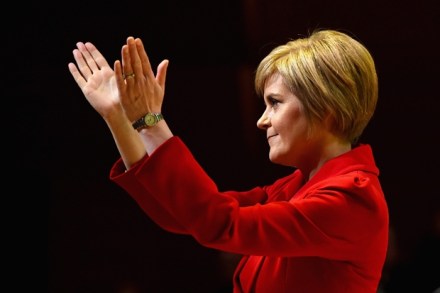
What’s the most significant political story of the week, Ukip winning Rochester or Emily Thornberry’s resignation? Well, I suspect, it might be neither of them and that the really big event this week happened north of the border, Nicola Sturgeon being sworn in as First Minister. For the new SNP leader is riding a quite remarkable wave of popularity. Right now, she’s addressing a rally at the Glasgow Hydro, a 12,000 seat venue that she sold out faster than Kylie Minogue—what other politician in Britain could hope to do that?   As I say in the column this week, what makes Sturgeon’s popularity all the more remarkable is that she is a career politician.

Thanks to Emily Thornberry’s resignation, the biggest losers from Rochester were Labour

From our UK edition

Walk round the Commons today and it is striking that Tory MPs are in relatively good spirits while Labour ones looks distinctly more downcast. At first this seems odd, after all it is the Tories who have just lost another seat to Ukip. But in the battle of the weak that is British politics right now, Labour have had the worst of the past twenty four hours. Obviously, it is Ukip who have the best of it, but the Tories have come off rather less badly than Labour which is what counts for relative success in Westminster at the moment. In the end, the Rochester result wasn’t as bad for the Tories as they feared it would be a fortnight ago. Ukip’s seven point margin of victory means that the Tories have a strong chance of taking the seat back in May.

Ukip on course for victory in Rochester – but no Tory panic

From our UK edition

Counting is underway in the Rochester and Strood by-election and the early indications are that Ukip has won the seat on a turnout slightly over 50%. The result is expected between 3.30am and 4am, and my colleague Seb Payne will be tweeting updates throughout the night. This was a campaign that started with the Tories saying they could win—and many saying that they had to win, but ends with the discussion all being about how big the Ukip majority will be. Here’s the rub, though: there’s no sign yet that defeat will send the Tories into a full-on panic. Even Cameron-sceptic MPs are saying that this by-election defeat is ‘priced in’.

Emily Thornberry resigns over Rochester Tweet

From our UK edition

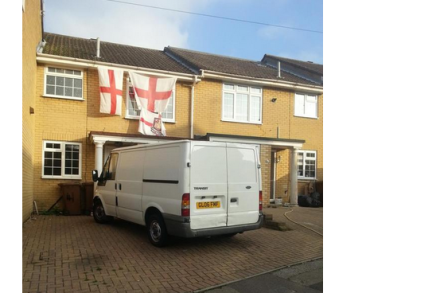
Emily Thornberry has resigned from the shadow Cabinet for sending a Tweet that appeared to mock a Rochester voter who was flying several St George’s Cross from their window and had a white van parked outside. Thornberry’s resignation follows Miliband aides briefing that the leader was the angriest they’d ever seen him after being told about the tweet. All this shows just how sensitive Labour is to the charge that it is now a party run by a metropolitan elite who have little connection with the party’s traditional working class base. I suspect that if Miliband had not had the last few weeks that he has, Thornberry would have been allowed to try and ride out this storm. But Labour clearly feel that they have try and close this story down as quickly as possible.

Meet the new Queen of Scots: Nicola Sturgeon’s unstoppable rise

From our UK edition

[audioplayer src="http://traffic.libsyn.com/spectator/TheViewFrom22_20_Nov_2014_v4.mp3" title="James Forsyth and Alex Massie discuss Scotland's new First Minister" startat=730] Listen [/audioplayer]‘She sold out the Hydro arena faster than Kylie Minogue,’ said one awestruck unionist of Nicola Sturgeon this week. Scotland’s new first minister has come into office on a tide of support that many in Westminster find hard to imagine. Not only is she packing out concert venues, her party is also consistently scoring above 40 per cent in the polls. If she can keep this momentum going, she will rout Scottish Labour at the next general election. Defeat in the independence referendum has not halted the nationalists’ momentum — quite the opposite.

Cameron and Miliband exchange insults at PMQs

From our UK edition

PMQs is in a rut. The exchanges between Cameron and Miliband now descend into the trading of insults even faster than they did before and both sides simply use PMQs as an opportunity to trot out stock lines. Miliband was determined to use today’s exchanges to paint Cameron as a kiss-up, kick-down politician, trying to contrast his opposition to the mansion tax with his support for the so-called ‘bedroom tax’. (It is, though, worth remembering that only one of these policies is actually a tax.) Miliband fumed, ‘If you’ve got big money you’ve got a friend in the Prime Minister. If you don’t, he couldn’t care less.’ Cameron, for his part, was keen to mock Miliband at every opportunity.