James Forsyth

James Forsyth

James Forsyth is former political editor of The Spectator.

The Lords back down on votes at 16 for the EU referendum

The House of Lords has tonight rejected a Labour amendment that would have given 16 and 17 year olds the vote in the EU referendum. This removes the largest potential obstacle to getting the EU referendum legislation into law quickly. This means that, if the government can get a deal at the EU summit in February, a June referendum is still possible. The government’s victory in the Lords tonight was not expected. Most observers, including myself, thought that the opposition’s in-built majority would be enough to get the Labour amendment passed, and so start ping pong between the two Houses. But the Lords has backed down from a confrontation with the elected House on this matter.
The EU plan to seize control of national borders

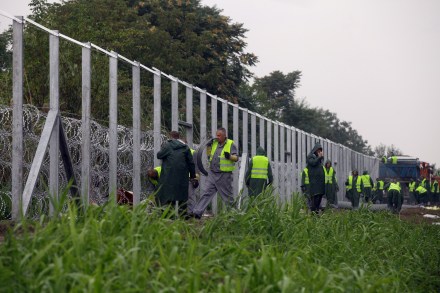
When the EU is in crisis, the Commission’s answer is, inevitably, more Europe. So, its response to the migrant crisis is to propose an EU border force that could, in extremis, take over the management of Schengen countries’ borders without permission. Now, Britain is not in Schengen so this proposal would not apply here. But it is worth considering just how federalising it is. Under this proposal, the Italians, say, could suddenly find the EU manning its borders. It would be a major erosion of national sovereignty. The Guardian’s Ian Traynor reports that the French and the Germans are backing this idea, which gives it a reasonable chance of success.

Exit strategy vs stay-in power

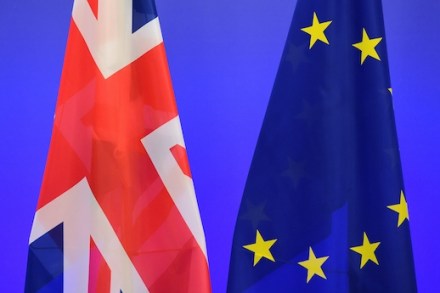
By this time next year Britain will, if the government has its way, have voted on whether or not this country should stay in the European Union. This referendum has the potential to reshape British politics. It will not only determine whether we remain in the EU, but it will also play a huge role in determining who will be the next Prime Minister. It will present David Cameron with the most difficult party-management challenge that he has faced in more than a decade as Tory leader. Downing Street has given up trying to secure a deal at the European Council later this month. The new target is early in the new year. The major stumbling block to any agreement is the British proposal for a four-year bar on EU migrants receiving either in- or out-of-work benefits here.

The ground forces problem

As the row over David Cameron saying that the Joint Intelligence Committee estimate there to be 70,000 potential anti-Islamic State fighters in Syria showed, the big question mark about the West’s anti-IS strategy is who will provide the ground troops for it. The Kurds will only fight in their own area and so far, there is little sign of a credible Sunni force emerging to take on Islamic State. While working with Assad has its own drawbacks. (In many ways, the existence of IS--albeit, in weakened form--suits his interests.) David Ignatius details just how wrong US efforts to train up Sunni fighters have gone in the past year in Washington Post: In Iraq, U.S.

After Labour’s Syria shambles, step forward Major Dan

[audioplayer src="http://rss.acast.com/viewfrom22/thegreendelusion/media.mp3" title="James Forsyth and Fraser Nelson discuss Labour's civil war over Syria airstrikes" startat=700] Listen [/audioplayer]It makes no sense for Britain to bomb Islamic State in Iraq but not Syria. Attacking a group that does not respect international borders on only one side of a border makes no strategic or military sense. From the Prime Minister down, government ministers are acutely aware of this absurdity. That is why they have been so keen to gain the Commons’ permission to extend the strikes to Syria. Yet this week Westminster has been gripped, not by the strategic case for taking the fight to Islamic State in Syria, but by the effect that this debate has had on the Labour party.

How the shadow Cabinet voted

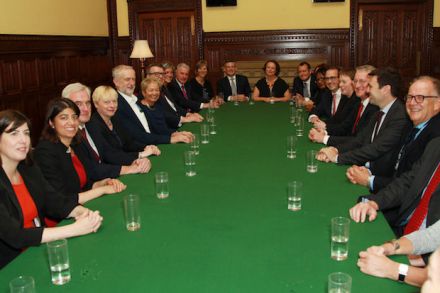
A majority of the shadow Cabinet voted with Jeremy Corbyn tonight in opposing extending air strikes against Islamic State to Syria. But 11 members of it voted for bombing Islamic State in Syria. Here’s the full list: Against: Jeremy Corbyn Jon Ashworth Jon Trickett John Healey Lisa Nandy Kerry McCarthy Andy Bunrham Diane Abbott Catherine McKinnell Ian Murray Lilian Greenwood John McDonnell Seema Malhotra Nia Griffith Kate Green Owen Smith For Hilary Benn Tom Watson Angela Eagle Gloria de Piero Michael Dugher Maria Eagle Lucy Powell Heidi Alexander Luciana Berger Chris Bryant Vernon Coaker The chief whip Rosie Winterton, contrary to earlier reports, abstained.

Commons votes to bomb Islamic State in Syria

British airstrikes against Islamic State will be extended to Syria after the House of Commons voted strongly in favour of the government ‘s motion tonight. The government had a majority of 174, enabling David Cameron to claim that he has the consensus backing for bombing IS in Syria that he has long craved. 67 Labour MPs voted in favour of strikes, which was higher than expected this morning. But Hilary Benn’s remarkable impassioned speech, the finest I’ve heard in the Commons, swayed at least one wavering Labour MP—Stella Creasy voting for, having previously been undecided and facing huge constituency pressure against action. Thought, it was worth noting that the government would have won even if no Labour MPs had voted with it.

David Cameron’s ill-advised remark has undermined his whole approach in the Syria debate

The House of Commons is not rising to the occasion today. David Cameron’s opening speech in the Syria today was dominated by repeated interventions demanding that he apologise for talking about ‘terrorist sympathisers’ in the Labour party yesterday. Cameron said that there was ‘honour’ in voting either way in this debate. But he wouldn’t apologise; I suspect because he remembers those murdered by the IRA and what the shadow Chancellor said in the eighties about the ‘ballot, the bullet and the bomb’. But Cameron’s ill-judged remark last night undercut his whole planned approach today. Cameron wanted to strike a humble, consensual tone; emphasising how the motion had been shaped by concerns raised in the House.

There are two strong reasons why the UK should join Syrian airstrikes

There is a war in Syria already. Islamic State’s headquarters in Raqqa are already being bombed on a regular basis. These facts are all too frequently forgotten in our debate about whether to extend airstrikes against Islamic State to Syria. But that we would not be the first country to strike Raqqa is not a reason to sit on the side-lines. To my mind, there are two particularly strong reasons for the UK joining the coalition attacking IS in Syria. The first is our obligations as an ally. Post the Paris attacks, the French President has made a direct plea for our help.

Cameron says that the Commons will debate Syria strikes on Wednesday

David Cameron has just said that the Commons will debate extending air strikes against Islamic State to Syria on Wednesday. Given that Cameron has repeatedly made clear that he wouldn’t bring the issue back to the Commons unless he was confident he could win a vote with a clear majority, this must mean that he calculates that Labour granting its MPs a free vote means that he now has the numbers he needs. Speaking from the Cabinet Room, Cameron argued that this ‘was the right thing to do’ as the UK’s allies had asked for this country’s help and because Islamic State does not respect the Iraqi / Syrian border, it makes little sense to attack it only on one side of this border.

Feldman’s defenders weigh in

Friends of Andrew Feldman have launched a vigorous defence of the party chairman ahead of this afternoon’s board meeting. A long-serving member of the party board, a Cabinet Minister and a senior Number 10 source have been phoning around offering their backing to him. They argue that when Shapps and Feldman were co-chairmen, there was a clear division of labour with Shapps involved in the ground campaign and Feldman taking charge of the money and administrative matters. So, it should be Shapps—not Feldman—who takes responsibility for what went wrong with Road Trip 2015.

The EU renegotiation is now the biggest obstacle to Osborne making it to Number 10

At the start of this week, everyone was wondering how George Osborne was going to get out of trouble on tax credits, avoid a deeply damaging row over police cuts, all while still keeping to his surplus target. But thanks to the Office for Budget Responsibility upgrading its forecasts, Osborne was able to scrap the tax credit changes, protect the police budget and maintain his plan for a £10 billion surplus by the end of the parliament. But now, an even bigger challenge awaits Osborne: the EU renegotiation. I argue in my Sun column today that it is now the biggest threat to his chances of becoming Prime Minister.

Cameron insists the UK must attack IS in Syria, but only with a ‘clear majority’ in the House

David Cameron came to the Commons today to make the case for the UK extending its bombing campaign against Islamic State to Syria. His tone was as emollient as possible, as he responded to the Foreign Affairs Select Committee report which argued that the UK should not do this. He said that the UK could provide unique capabilities and that there are 70,000 non-extremist, Syrian fighters who could act as a ground force to support the bombing campaign. He stressed that as long as the Islamic State ‘Caliphate’ exists, it would act as a rallying cry for Islamist extremists around the world and that it had ‘repeatedly’ tried to attack the UK.

The spending cuts Osborne flatly refused to make

[audioplayer src="http://rss.acast.com/viewfrom22/thegreatfakewar/media.mp3" title="Fraser Nelson, James Forsyth and Isabel Hardman discussing the Autumn Statement and Spending Review" startat=870] Listen [/audioplayer]The Autumn Statement on 25 November had long been circled in Downing Street diaries as the season’s defining political moment. Its importance only grew after the Lords rejected the government’s tax-credit changes and George Osborne announced that he would present his revised proposals in this statement.

Why the tax credit cuts had to go

In the peroration of his statement today, George Osborne declared that the Tories were ‘the mainstream representatives of the working people of Britain.’ This is how he wants to position the Tories and it is why the tax credit changes had to go: they were getting in the way of the Tory attempt to rebrand themselves as the workers’ party. By ditching the tax credit changes, the Tories can now return to this theme—and can try and gain maximum political benefit from the national living wage. Osborne believes that with Jeremy Corbyn / John McDonnell leading the Labour party, the Tories have a real opportunity to pick up support from low income voters who wouldn’t normally have thought of voting for the Tories.

Defence review: Cameron takes Corbyn to task over national security

David Cameron’s initial statement to the Commons on the Strategic Defence and Security Review was a rather high-minded affair. Cameron talked about how the world was an even more dangerous place now than it was in 2010 and conceded that governments can’t predict the future, and that you had to ‘expect the unexpected’ when it came to national security. But his reply to Corbyn’s rather rambling response - which went on so long that John Bercow felt obliged to tell the Labour leader to hurry up - was brutal. Cameron rattled off Corbyn and his shadow chancellor John McDonnell’s greatest hits on national security as the Labour benches looked even more depressed than they did last Wednesday.

Cameron to make his case for war to the Commons next week

David Cameron will set out his case for air strikes against IS in Syria to the Commons late next week. Cameron is, as I say in my Sun column today, immensely frustrated by the current British position of only bombing Islamic State in Iraq and not Syria. But he knows that it would be politically back breaking for him to lose another Commons vote on a matter of war and peace, so is proceeding cautiously.   But last night’s UN resolution has strengthened Cameron’s hand. Even before that, 30 Labour MPs were certain to back Cameron on this issue and another 30 were highly likely to. With a UN resolution now in place, these numbers are only likely to increase.

Cameron to make his case for war to the Commons next week

David Cameron will set out his case for air strikes against IS in Syria to the Commons late next week. Cameron is, as I say in my Sun column today, immensely frustrated by the current British position of only bombing Islamic State in Iraq and not Syria. But he knows that it would be politically back breaking for him to lose another Commons vote on a matter of war and peace, so is proceeding cautiously.   But last night’s UN resolution has strengthened Cameron’s hand. Even before that, 30 Labour MPs were certain to back Cameron on this issue and another 30 were highly likely to. With a UN resolution now in place, these numbers are only likely to increase.

Western weakness presents Putin with an opportunity in Syria

The West has failed in its principal, post 9/11 objective: to deny terrorists sanctuary. Islamic State is a terrorist enclave in the heart of the Middle East. Yet, the West’s response to this has been strikingly, and shockingly, lacklustre, I argue in the magazine this week. Barack Obama’s main preoccupation seems to be stressing that US ground troops will not be sent in to destroy Islamic State. While the British response is even feebler, to bomb Islamic State—but only on one side of the Iraqi/Syrian border. Even, the French who are hitting IS on both sides of the border, aren’t sending in ground troops. This lack of Western leadership is creating an opportunity for Vladimir Putin.

Obama’s failure is Putin’s opportunity

[audioplayer src="http://rss.acast.com/viewfrom22/parisattacksaftermath/media.mp3" title="James Forsyth and Ben Judah discuss whether the West should work with Putin" startat=824] Listen [/audioplayer]The principal strategic objective in the war on terror has been a failure. Ever since 9/11, the aim has been to deny terrorists sanctuary. That, after all, is why the United States and Britain went into Afghanistan — troops were sent in only after the Taliban refused to hand over the al-Qaeda leadership and shut down the terrorist training camps. But now, a large terrorist enclave exists in the very heart of the Middle East. President Obama’s reaction to this massive strategic failure has been lack-lustre.