James Forsyth

James Forsyth

James Forsyth is former political editor of The Spectator.

Merging the various Out campaigns is not the biggest challenge, winning is

What could be worse, from a Eurosceptic perspective, than multiple Out campaigns? One Out campaign that can’t win. Those Eurosceptics who believe that merging the various Out campaigns is the biggest challenge right now are missing the point. There are currently various serious government ministers and business people who are ready to back Vote Leave once the renegotiation is done. But they won’t sign up to an Out campaign that, they believe, is Ukip dominated. It will be an uphill struggle for Out to triumph in this referendum. Normally, the change proposition—Out in this case—needs to be ahead by a double digit margin before the campaign starts if it is to win, which Out isn’t at the moment.
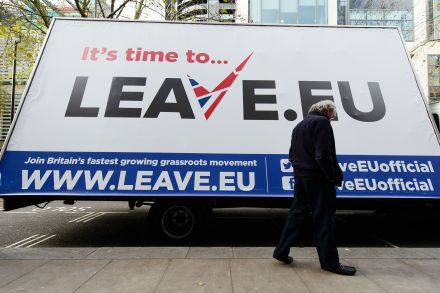
Three reasons why this Eurosceptic infighting is such a gift to David Cameron

There will have been gales of laughter in Downing Street and the In campaign this morning as they read Sam Coates’s account of the attempted coup in the No campaign. This Eurosceptic infighting is a huge gift to David Cameron for three reasons. 1). It will deter serious people from politics and business getting involved with the NO campaign. Few will want to sign up with a campaign that is already riven by infighting. Ministers and Tory MPs who were on the fence about what to do come the referendum, will be that much closer to sticking with the Prime Minister this morning. 2). Campaigns that win aren’t arguing about internal structures and who gets to do media with only 140 odd days to go to polling day.

Stay or leave, Europe is sinking anyway

[audioplayer src="http://rss.acast.com/viewfrom22/whysexmatters-thedeathofsportandistheeusinkingwhetherbrexithappensornot-/media.mp3" title="Isabel Hardman, James Forsyth and Fraser Nelson discuss whether the European project is in grave danger – regardless of Brexit happening or not" startat=1420] Listen [/audioplayer]As Tory ministers wrestle with their consciences before the EU referendum, an intriguing new argument for voting to stay has emerged. Rather conveniently, it resolves the conflict between principle and personal loyalty to David Cameron that several members of the Cabinet are wrestling with. It goes like this: the European Union is going to collapse in the next ten to 15 years.

PMQs: Corbyn misses his chance over Google’s tax deal

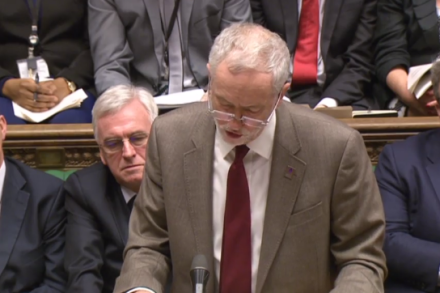
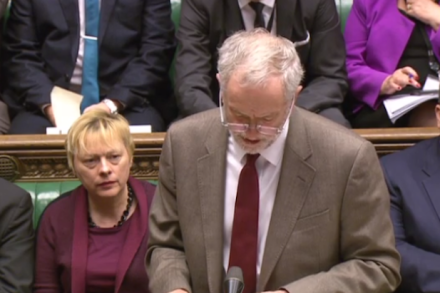
Today’s PMQs was an opportunity for Jeremy Corbyn to embarrass the government and align himself with public anger over how little tax some multinationals pay. But he missed this opportunity. By going on HMRC’s deal with Google in isolation, he allowed Cameron to point the finger of blame at the last Labour government. Indeed, Cameron even dragged Corbyn into defending the record of the Blair and Brown governments on corporate taxation. A far more effective tactic would have been to contrast the British deal with the French and Italian ones. Why have these governments managed to get more tax out of Google than our own? Another problem with Corbyn at PMQs is that he doesn’t pick up on Cameron’s hostages to fortune.

How many Tory MPs will back staying in the EU?

With the government still convinced that there’s a better than 50:50 chance of a deal at the February EU Council which would pave the way for an EU referendum in June, the pressure on Tory backbenchers to back the Prime Minister is being stepped up. This week, saw the launch of the Cameron endorsed, pro-EU membership Conservatives for Reform in Europe group. Those involved in this group are confident, as I write in The Sun today, that they will get the support of a majority of Tory MPs. Tory MPs are being left in no doubt as to what side Cameron wants them on come the referendum. The message to them, as one of those close to Cameron puts it, is that a ‘free vote doesn’t mean a free pass’. But there are reasons to suspect that the referendum timetable might slip.

The centre-right is failing world-wide – so what’s the secret of Cameron’s success?

[audioplayer src="http://rss.acast.com/viewfrom22/donaldtrumpsrise-racismattheoscarsandcameronscentre-rightsecret/media.mp3" title="James Forsyth and Isabel Hardman discuss the PM's centre-right secret" startat=628] Listen [/audioplayer]There are times when Westminster’s obsession with US politics is embarrassing for even the strongest believer in the Anglo-American relationship. Monday was one of those days: MPs debated banning Donald Trump, the reality TV star turned presidential hopeful, from entering Britain. Leaving aside the illiberal absurdity of this, Trump hadn’t even said he was planning a visit. It was a pathetic attempt by MPs to insert themselves into the US presidential race. But what cannot be denied is the extent to which Trump is shaking up US politics.

What’s the hold up with the British Bill of Rights?

Before the election, the Tories talked about introducing a British Bill of Rights in their first 100 days in office. But eight months on from the election, the government hasn’t even started consulting on it yet. Some of this delay is understandable. When Michael Gove was made Justice Secretary, he wanted to work out his own solution to this problem. But the timetable has just kept slipping. After the election, we were told proposals would come in the autumn. Then, it was before the end of the year. Then in December, in the New Year. Yet, we still haven’t seen these proposals—and won’t in the next few weeks either. But, as I write in The Sun this morning, the bill is now pretty much ready.

How many EU referendums we will end up having?

The pre EU referendum skirmishing stepped up a notch today. Chris Grayling became the first member of the Cabinet to start making the case for Out. While Vote Leave and Stronger In tangled over the question of a second referendum. As I write in the magazine this week, Vote Leave is increasingly keen on the idea of promising a second referendum on the terms of exit if Britain votes Out. The idea is that this would ‘de-risk’ voting Out and protect the campaign against claims from IN that Britain would get an awful deal from the rest of the EU if it voted to leave.

Policy Exchange’s latest hire shows that integration is now a key government issue

Few think tanks have been as associated with the Cameron project as Policy Exchange. Its alumni are dotted in various positions around government, with a particularly strong presence in Downing Street. So, it is interesting that Policy Exchange’s director Dean Godson has today announced that he has hired David Goodhart, the former editor of Prospect and the author of The British Dream: Successes and Failures of Post-War immigration, to head a new Integration Hub at the think tank. Goodhart’s arrival is a reflection of how much questions of immigration and integration are now preoccupying the centre-right.

Project Fear

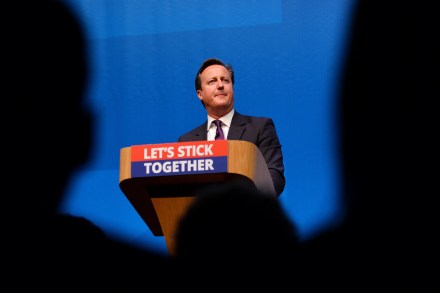
The negotiations may be ongoing, but David Cameron has given up waiting for the outcome of his talks with the European Union. The Prime Minister has made up his mind: he wants Britain to vote to stay in the EU — and the campaigning has already begun. His closest allies have been assigned to the task; Downing Street is already in election mode and a strategy is being devised. As with the Scottish referendum campaign, the In campaign will consist of vivid warnings about the dangers of voting to leave. In Scotland it was dubbed Project Fear, and that’s what Cameron is planning again. In theory, the Prime Minister has until the end of next year to call the referendum vote. In practice, he wants it over with.

PMQs: It seems that David Cameron has no desire to expand Heathrow

Will the Tory party be able to come back together again after the EU referendum? Well, today’s PMQs suggested the reason why it should be able to. The Cameron/Corbyn clash was a classic left/right affair and by the end of it, Eurosceptics were cheering Cameron as loudly as anyone else on the Tory benches as he thundered that Labour have a leader ‘who doesn’t believe in Britain’. I suspect that we will also hear again Cameron’s line that Corbyn is a 'small c' conservative who just wants to leave the poor to stew on sink estates while the Tories are the party of home ownership and aspiration.

Which way will Boris and Gove go on Europe?

David Cameron might have announced this week that Cabinet Ministers will be allowed to campaign for Out come the EU referendum. But Downing Street is doing what it can to limit how many ministers take up this offer. At the moment, the consensus view around the Cabinet table is that four Cabinet Ministers are going to be for Out—Chris Grayling, Theresa Villiers, John Whittingdale and IDS—with another—Priti Patel—highly likely to. As I say in The Sun today, if Cameron can keep the number of Cabinet Outers down to four or five, Number 10 will be delighted. Cameron will be able to say that the vast majority of the Cabinet support staying In and he’ll have denied the Out campaign, the political leadership it needs.

Corbyn is untouchable now

There have been few more pathetic displays of political impotence than the tweets sent by shadow cabinet members paying tribute to Michael Dugher after his sacking by Jeremy Corbyn. Dugher, a classic northern Labour fixer, had taken on the role of shadow cabinet shop steward. He spoke out against Momentum, the Corbynite pressure group, warned against a ‘revenge reshuffle’ and criticised negative briefings against the shadow cabinet from the leader’s office. But rather than protesting at his sacking through a walkout, shadow cabinet members confined their solidarity to a 140-character gesture. Their tweets, rather than looking like brave defiance of the boss, actually showed just how cowed they are.

PMQs: Corbyn’s farcical reshuffle has overshadowed everything else

Jeremy Corbyn actually asked six reasonable questions at PMQs today. But his attack on the government’s handling of the floods will be completely overshadowed by his chaotic reshuffle; one shadow Minister actually resigned during PMQs. The Tories were itching to bring up the Labour reshuffle. The first question from a Tory MP asked Cameron to reassure her that condemning terrorist attacks was not a bar to holding high office, a reference to Pat McFadden’s sacking. Then, in reference to a question about the anniversary of Shakespeare’s death from Nadhim Zahawi, Cameron rattled off a series of pre-prepared gags, cracking that the reshuffle was a ‘comedy of errors’.

Has Liz Truss just declared her support for Cameron in the EU referendum?

David Cameron’s declaration that ministers will be able to campaign on the opposite side from him come the EU referendum has prompted much speculation about who will take advantage of this freedom. One of those regarded as being undecided on this matter was the Environment Secretary Liz Truss. She is ideologically close to the Out camp, she founded the Free Enterprise Group of Tory MPs which is now headed by James Cleverly - an Outer - and worked closely with Vote Leave’s Dominic Cummings when she was an Education Minister, but she is also a Cameron loyalist. Her speech this morning to the Oxford Farming Conference suggests that Truss is strongly leaning towards backing Cameron come the referendum.

I won’t be Corbyn’s man in London . . .

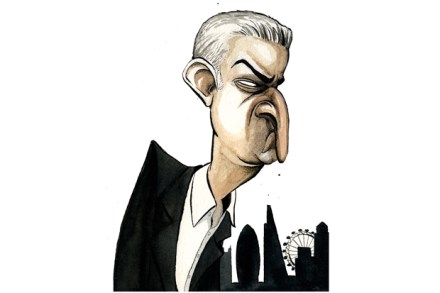
Sadiq Khan has long been known as one of Labour’s most pugnacious politicians: someone who likes to fight, and likes to win. The son of a bus driver, he became a human rights lawyer, entered parliament in 2005 and that same year was named newcomer of the year at The Spectator’s parliamentary awards. He ran Ed Miliband’s leadership campaign in 2010 and led Labour’s fierce — and surprisingly effective —campaign in London last year. Now, his sights are set on reclaiming City Hall for Labour and persuading even those on the right that he is the natural heir to Boris Johnson. ‘I want Spectator readers to give me a second look,’ he says, when we meet in the House of Commons.

Voters will be offered two deeply imperfect options in the EU referendum

By this time next year Britain will, if the government has its way, have voted on whether or not this country should stay in the European Union. This referendum has the potential to reshape British politics. It will not only determine whether we remain in the EU, but it will also play a huge role in determining who will be the next Prime Minister. It will present David Cameron with the most difficult party-management challenge that he has faced in more than a decade as Tory leader. Downing Street has given up trying to secure a deal at the European Council later this month. The new target is early in the new year. The major stumbling block to any agreement is the British proposal for a four-year bar on EU migrants receiving either in- or out-of-work benefits here.

Boris for Foreign Secretary?

David Cameron is warming to the idea of making Boris Johnson Foreign Secretary. As I write in The Sun this morning, Cameron is drawn to the idea of sending Boris to the Foreign Office in a post-May reshuffle. But a Cabinet ally of the Prime Minister stresses that Boris will have to be ‘unequivocally yes’ come the EU referendum if he is to be Foreign Secretary. It is easy to see why the idea of doing what it take to bind Boris in before the referendum is gaining traction in Number 10. Polling shows that Cameron backing Britain staying part of the EU gives the In campaign a big boost. But if the next best know Tory, Boris, backs Out that effect is pretty much wiped out. Philip Hammond, the current Foreign Secretary, is regarded as expendable by many in Downing Street.

The Vote Leave campaign could be formidable – but it has an Achilles heel

As David Cameron prepares to make his case to European leaders over dinner this evening, the Out campaign is stepping up its preparations for the referendum. Vote Leave will host 10 regional launches in the New Year and appoint campaign directors for each region. It’ll also hire staff to work at a constituency level. Combine this with a central campaign team that contains former senior aides to Theresa May, Michael Gove and Philip Hammond and you have the basis for a formidable operation. With the backing of senior business figures such as Crispin Odey and Luke Johnson, they also shouldn’t have any trouble raising money. But the campaign itself is not as confident of the final result as some of the MPs backing it.

PMQs: Cameron tries to bring Christmas cheer to the Commons

The last PMQs before Christmas will not live long in the memory. After last week’s rather entertaining Eagle Osborne clash, it was back to the Cameron and Corbyn show. The Labour leader has now abandoned his ‘new politics’ style and today asked all of his questions on the NHS. The exchanges weren’t particularly enlightening as Cameron parried the Labour leader with relative ease. Cameron was clearly keen to whip up the Tory benches and send them off for the holidays in good cheer. But the atmosphere in the Chamber remained relatively muted. . Angus Robertson went on the EU renegotiation, the subject which Corbyn should have led on as six questions on it would have put Cameron on the back foot.