James Forsyth

James Forsyth

James Forsyth is former political editor of The Spectator.

Lords votes to give 16 and 17 year-olds the vote in the EU referendum

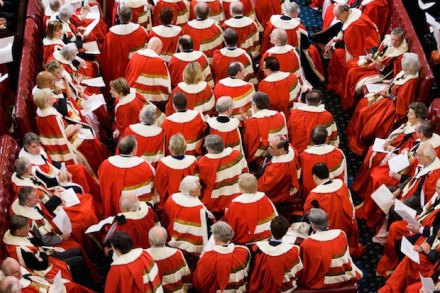
The House of Lords has tonight voted to give 16 and 17 year olds the vote in the EU referendum. This question will now go to the Commons, which can try and overturn it and send the bill back to the Lords—so-called ‘ping pong’. The government has already made clear tonight that it will try and overturn this amendment. But, intriguingly, some Tory MPs have told me that they think the Commons will actually back votes at 16 for the referendum when this comes back down to the Commons. If this does happen, this could delay the referendum as the Electoral Commission argue that extra time will be needed to register these new voters.
PMQs: Jeremy Corbyn’s views on security are only harming Labour

One moment from PMQs today will stick in the mind for a long time. After Corbyn had asked his last question, Cameron declared ‘Hasn’t it come to something when the leader of the opposition thinks that the police, when confronted by a Kalashnikov-waving terrorist isn’t sure what the reaction should be?’ At that point, the Labour front bench just looked utterly dejected and beaten. They will soon have to decide how much longer they can let this farce continue for. If they do not act soon, then the damage done to the Labour party might be irreversible.

Theresa May: the Paris attacks ‘have nothing to do with Islam’

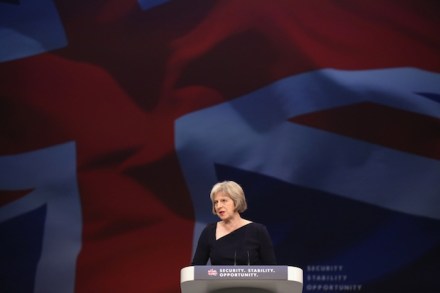
On a day when Jeremy Corbyn has been making clear his concerns about both the government’s use of drones and any shoot-to-kill policy for terrorists on British streets, Theresa May’s statement on the Paris attacks was striking for the level of cross-party agreement. Andy Burnham paid generous tribute to the Home Secretary and pledged Labour’s support for her anti-terror crackdown. The only discordant note came on the question of police funding. Burnham aligned himself with Bernard Hogan-Howe’s warning that cuts of more than 10 percent to police funding would make it harder to keep the streets safe. May set out how the police here would ‘intensify’ their approach to big events in an attempt to prevent a Paris-style attack here.

Our policy towards Islamic State makes no sense

If Islamic State is a threat to Britain that requires a military response, then surely we should be attacking it on both sides of the Syrian/Iraqi border? Our current policy of only hitting it in Iraq, when its operation there is directed from Syria and resupplied from there, makes neither strategic nor moral sense. So, why is Britain not hitting Islamic State in Syria too? Well, that goes back to the legacy of 2013 and the Commons refusal to back bombing Syria then. But the truth is that bombing Islamic State in Syria is not the same as ‘bombing Syria’; it is hitting a terrorist group in a part of the country where Assad’s writ has not run for quite some time.

Cameron’s Syrian stew

[audioplayer src="http://rss.acast.com/viewfrom22/civilwarinthecatholicchurch/media.mp3" title="Fraser Nelson and Isabel Hardman discuss whether MPs will ever vote to bomb Syria" startat=864] Listen [/audioplayer]David Cameron doesn’t do regret. It is not in his nature to sit and fret about decisions that he has taken and can now do nothing about. But there are still a few things that rankle with him. One of those is the House of Commons’ rejection of military action in Syria two years ago. This defeat was a personal and a political humiliation for Cameron. For months, he had been pushing for action against Assad. President Obama had finally accepted that something must be done following the Syrian regime’s use of chemical weapons.

How will the government respond to this peer pressure?

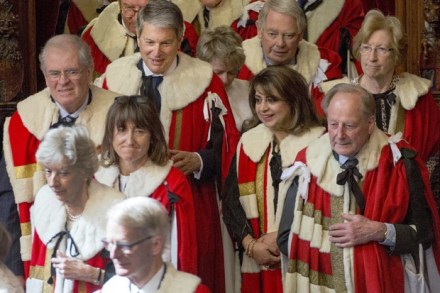
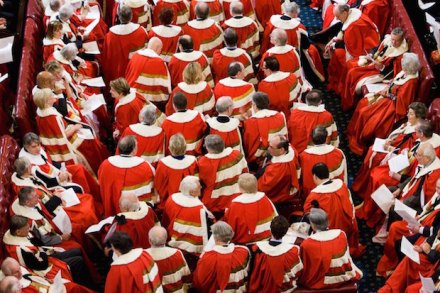
Monday’s night defeats for the government over tax credits in the House of Lords put into lights a problem that many of Cameron’s allies have been worrying about for months, the fact that they keep losing votes in the upper house. Since the election, the government has lost more than 70 per cent of divisions there. There isn’t anything simple that it can do to solve this problem. On Monday night they turned out more Tory peers than they had in a decade but they still couldn’t hold the line. One thing is clear, the government has no desire to get into a major scrap with the House of Lords.

Non-EU countries don’t want Britain to join their club

When you talk to representatives from friendly, non-EU countries about Britain’s referendum, two things strike you. First of all, nearly all of them want Britain to stay in the EU. I have not yet had one conversation where one of them has told me, even on background, that they think it would be better if Britain left. But the second thing that strikes you is their argument for why it would be better for Britain to stay in the EU relates, understandably, to the interests of their own country, not this country. They tend to like what Britain brings to the EU and think that it would be more difficult to deal with without Britain. It is through this frame that we should see the interventions that will come from foreign governments in the next few months.

Lords of misrule

A few days after the general election, I bumped into one of David Cameron’s longest-standing political allies, one of those who had helped him get selected for Witney back in 2000. I remarked that he must be delighted that Cameron had now won a majority. To my surprise, he glumly replied that it would only be significant if Cameron were to create a hundred new peers. Without them, he warned, the govern-ment’s most important measures would end up bogged down in the Lords, where Labour and the Liberal Democrats combined comfortably outnumber the Tories. Now, normally when people urge the Prime Minister to create new peers it is because they hope that they will be on the list themselves.

David Cameron’s ‘milk and honey’ intervention on the EU could be a mistake

David Cameron’s decision to wade into the EU debate by dismissing the Norway option and warning that there is no ‘milk and honey’ alternative to EU membership is one of the most significant political moments of this parliament. It is Cameron entering the referendum fray, and long before the renegotiation has been concluded. On one level, Cameron is correct. There are Eurosceptics who have advocated the Norway option. In his keynote speech on Europe last year, Owen Paterson — who is on the parliamentary planning committee of Vote Leave — declared: ‘This brings us to the only realistic option, which is to stay within the EEA agreement. The EEA is tailor made for this purpose and can be adopted by joining EFTA first.

Government defeated twice in the Lords on tax credits

The government was defeated twice in the Lords tonight on tax credits, with the motions put down by Baroness Meacher and Baroness Hollis both passing. We are now expecting a response from George Osborne this evening on what the government will do. Considering that these tax credit changes are meant to bring in £4.4 billion in 2016/17, the government is in a proper pickle. Now, the motions in the Lords tonight were not ‘fatal’, they don’t compel the government to abandon the tax credit changes wholesale.

The lunch that began the end of the Cold War

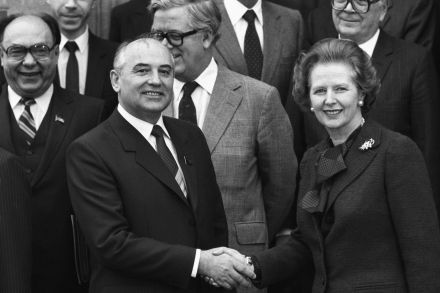
It is one of the great counterfactuals of contemporary history, what if Mikhail Gorbachev had walked out of that Chequers lunch with Margaret Thatcher in 1984? As Charles Moore explained at last night’s Spectator event to celebrate the launch of the second volume of his Thatcher biography, that lunch—where Thatcher and Gorbachev debated capitalism and Communism—was key to the ending of the Cold War. For Thatcher then persuaded Ronald Reagan that he should meet Gorbachev and that Gorbachev was someone they could do business with. But Gorbachev had almost left Chequers early, his wife had mouthed to him across the table ‘should we go now?

Will Theresa lead the Out tribe?

[audioplayer src="http://rss.acast.com/viewfrom22/thedeathoffeminism/media.mp3" title="James Forsyth and Isabel Hardman discuss whether Theresa May will lead the Out campaign" startat=1050] Listen [/audioplayer]Who is the most politically interesting member of David Cameron’s cabinet? There’s a good case to be made for Michael Gove. He is as intent on reforming the justice system as he was our schools. If he succeeds, it will be the biggest transformation in Britain’s approach to criminal justice since the Roy Jenkins years. The prison population will begin to fall.

Top Theresa May aide going to work for the Out campaign

Theresa May’s senior special adviser Stephen Parkinson is leaving government to go and work for Vote Leave, the EU referendum Out campaign. Parkinson, who previously worked on the No to AV campaign, will start next month. [caption id="attachment_9280692" align="alignright" width="225"] Stephen Parkinson, Theresa May's outgoing senior special adviser[/caption] The fact that someone who has worked so closely with the Home Secretary is joining the Out campaign will intensify speculation that May herself will soon come out for leaving the EU. But those close to her emphasise that she is waiting to see the result of the renegotiation before making up her mind.

PMQs: Corbyn fails to sustain the pressure on Cameron

PMQs was a rather ill-tempered affair today. With tax credits and steel closures dominating proceedings, the two sets of benches went at each other with vigour. This was much more like an old-style PMQs than the other Corbyn sessions. The Labour leader began on the tax credits issue. His questions were beginning to rile Cameron, who — in a poor choice of words — said that he was ‘delighted’ that tax credit cuts had passed the Commons. But Corbyn then changed tack to ask about the steel industry. This eased the pressure on the Prime Minister and allowed him to regain the initiative. Corbyn finished his set of questions by demanding that Cameron cooperate with a UN investigation into how Britain treats the disabled.

Lord Warner resigns the Labour whip

Lord Warner has resigned the Labour whip in protest at the direction in which Jeremy Corbyn is taking the party, Patrick Wintour has revealed tonight. Warner was a minister of state at the Department of Health under Tony Blair. Now, Corbyn supporters will be quick to point out that Lord Warner is hardly a household name and that he was at the far Blairite end of the party. Both of these statements are true. But Warner’s departure should still worry Labour. All parties are coalitions and no leader should want to be losing former ministers from the party at any point in their leadership, let alone this early. One footnote to Warner’s defection is that it will deny Ukip of one of their favourite attack lines againt Labour.

David Cameron’s EU renegotiations appear to be underwhelming his own MPs

David Cameron has just delivered a statement to the House of Commons on last week’s European Council meeting. Cameron stressed that any visa liberalisation programme for Turkey would not apply to Britain as this country is not part of Schengen. He also reiterated his condemnation of President Assad and accused the Russians of predominantly striking other rebels groups in Syria not Isil; he said that only 20 per cent of Russian strikes in Syria had been directed against Isil. But the most politically significant part of the statement came when Cameron again set out his renegotiation demands.

The Tory party is now at ease with Margaret Thatcher

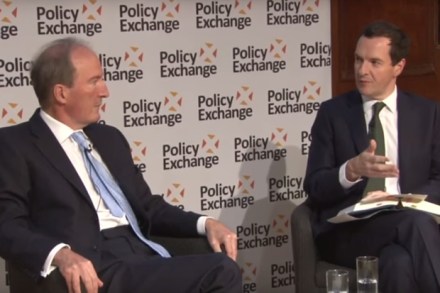
Last night, George Osborne interviewed Charles Moore to mark the publication of the second volume of Charles’s magisterial biography of Margaret Thatcher. You can watch the whole thing on the Policy Exchange website but one of the most striking things about the event, apart from Charles’s subtle needling of the Chancellor, was the questions that Osborne felt able to ask. He raised the issue of Thatcher’s legacy for the Tories in the north and Scotland, the poll tax and the question of when she should have gone. Even a few years ago asking these questions would have prompted a row, or at least some disquiet in the audience which had its share of veterans of the Thatcher years. But a proper, rounded discussion of Thatcher and her legacy is now possible.

When will the EU referendum be?

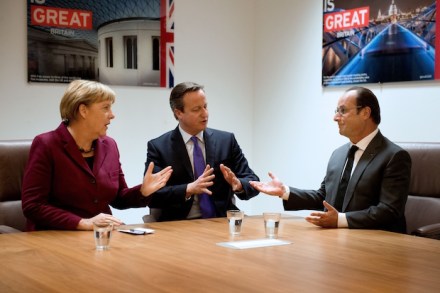
David Cameron is in Brussels today with the European Commission not hiding its irritation at the slow pace of the British renegotiation. One member of the Cabinet committee handling the renegotiation admits that ‘We were hoping to be further ahead than we are now’. Though, they blame the hold-up not on Britain being unclear about what it wants but on the migrant crisis taking up the time and attention of European leaders and the EU institutions. The upshot of all this, though, is that the date for the referendum is slipping back. At the moment, autumn 2016 is the government’s preferred date. But members of the Cabinet, including those on the Europe committee, are increasingly talking about a 2017 date.

Could George Osborne come out for the Out campaign?

[audioplayer src="http://rss.acast.com/viewfrom22/thedisasterofthesnp-silliberal-one-partystate/media.mp3" title="James Forsyth and Isabel Hardman discuss the current state of the EU referendum" startat=1038] Listen [/audioplayer]Westminster may have been guilty of ignoring the Scottish referendum until the last minute, but no one can accuse it of doing the same with the EU one. No one knows when this vote will take place, yet every conversation about the politics of this parliament revolves around the subject. The referendum, and its aftermath, will determine not only whether Britain stays in the European Union but also who the next prime minister will be and whether the Tories win a landslide in 2020.

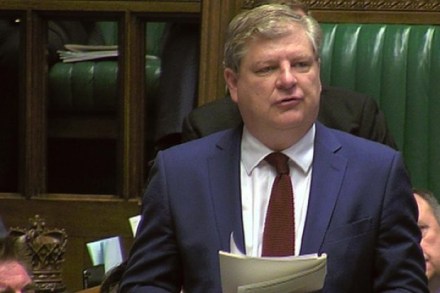
PMQs: Angus Robertson has become the Prime Minister’s stress ball

Jeremy Corbyn’s second outing at PMQs was better than his first. Rather than having all six questions determined by the email-writing public, he now uses a question from a member of the public to introduce a topic and then asks his own follow ups. Corbyn combined this with a few old-style put downs—mockingly declaring that ‘The Prime Minister is doing his best, and I admire that’ and saying, ‘could I bring the Prime Minister back to reality’— to turn in a more effective performance. But Corbyn still isn’t using PMQs, his best parliamentary platform, to change the political weather. Yes, the follow-up about tax credits was pointed but it hasn’t moved the debate on.