James Forsyth

James Forsyth

James Forsyth is former political editor of The Spectator.

French politicians have a major problem on their hands

From our UK edition

Today's attack was the 7th Islamist terrorist atrocity in France since January 2015. Two hundred and thirty six people have been killed by Islamist terrorism there in the last 18 months. This attack might only have killed one innocent person but it was a particularly brutal event: an 84-year-old priest had his throat slit while celebrating Mass. It was an attack that was designed to shock and to divide, to make it impossible to ignore the religious element of this act of terrorism. Douglas Murray and Haras Rafiq discuss Europe's summer of terror: The two terrorists were shot dead by police before they could kill their other hostages, two nuns and several members of the congregation.

Sarah Champion unresigns and returns to Labour frontbench

From our UK edition

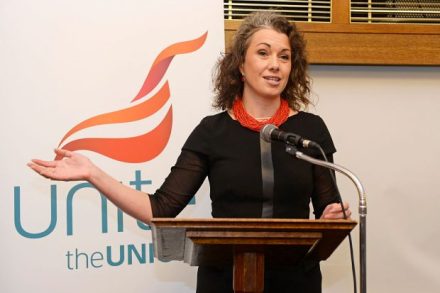
Sarah Champion, the Labour MP for Rotherham, was one of the Labour frontbenchers who resigned in an attempt to force Jeremy Corbyn to quit as Labour leader. But today, she has asked for —and been given — her job back. https://twitter.com/SarahChampionMP/status/748175455409344512 Now, Champion was just a frontbencher, not a full member of the shadow Cabinet. But her un-resignation is another straw in the wind suggesting that things are moving in Corbyn’s favour. Champion’s willingness to return to the front bench suggests that she’s resigned to Corbyn winning when the results are announced in September. It also enables Corbyn to say that by allowing her to come back, he has shown that he wants to bring the party back together again.

Why Prime Minister May has been a surprise

From our UK edition

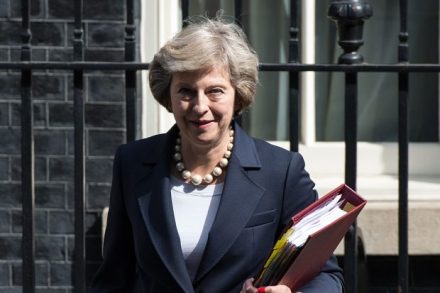
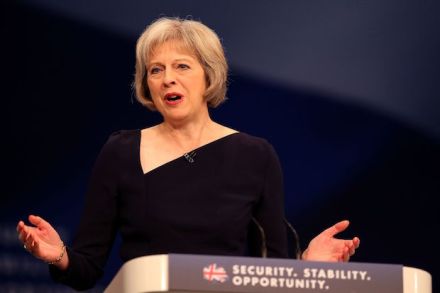
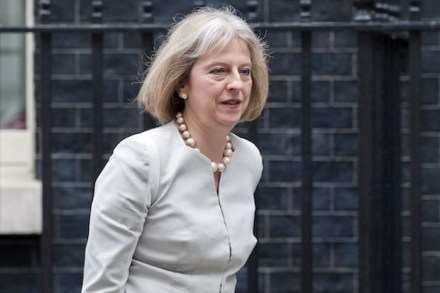
As we come to the end of Theresa May’s first full week as Prime Minister, she hasn’t quite been the Prime Minister Westminster was expecting. As I say in The Sun today, even her supporters thought that she would be solid, dependable but a bit dull—as befits someone whose sporting hero is Geoffrey Boycott. But May has shown quite a bit of flair in the last few days. She swept Jeremy Corbyn for six at PMQs on Wednesday; demonstrating a comic timing that we hadn’t seen from her before. On her European tour this week, she confidently showed off her language skills. So, what’s going on? Well, those who have worked with her for a long time says that becoming PM has given her confidence and brought her out of her shell.

Len McCluskey warns that the security services might be trying to sabotage Jeremy Corbyn

From our UK edition

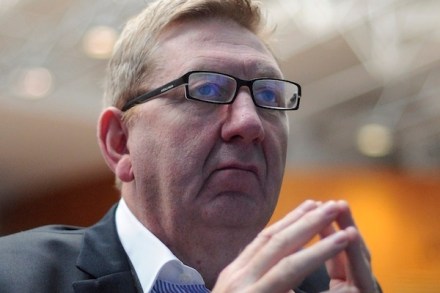
The Labour leadership election has become even more bizarre today. Len McCluskey, the leader of Unite the Union and a key Corbyn backer, has given a Guardian interview in which he suggest that the ugly behaviour of Corbyn supporters online is actually the work of the security services. He tells Decca Aitkenhead: “Do people believe for one second that the security forces are not involved in dark practices? Decca, I have been around long enough … the type of stuff that we ultimately find out about, under the 30-year rule.” When Aitkenhead challenges him on this, McCluskey continues: “Well, I tell you what, anybody who thinks that that isn’t happening doesn’t live in the same world that I live in.

Theresa May gets a warmer than expected reception in Paris, and a pledge on the border

From our UK edition

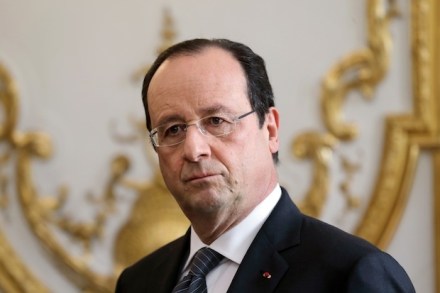
Paris was meant to be the more difficult leg of Theresa May’s first European tour as Prime Minister. But May’s press conference with Francois Hollande was far more cordial than expected. The French President was at pains to stress all the forms of cooperation that would continue between the two countries after the UK  left the EU. He continued to back the Le Touquet agreement which keeps the UK border at Calais.  However, he still wants Article 50 served quickly; ‘the sooner, the better’ was how he put it. There was, though, a tiny bit of softening on the question of talking about things before then. May, for her part, turned in a crisp performance.

Enjoy the honeymoon, Theresa. It won’t last

From our UK edition

Theresa May has been keen to stress that she doesn’t want this country or her government to be defined by Brexit. In her first week as Prime Minister, she has moved quickly to show that she isn’t going to be continuity Cameron. Her reshuffle made the cabinet less posh and more suburban than her predecessor’s. She has suggested that grammar schools might be on the way back, and national-interest tests could be introduced for foreign takeovers. Things are changing fast. May — and those around her — are modernisers. It’s just that they feel the previous modernisation was wrong.

Theresa May wipes the floor with Jeremy Corbyn at her first PMQs

From our UK edition

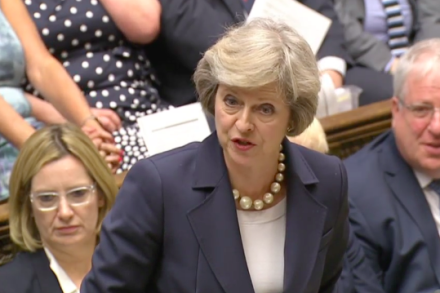
Theresa May was utterly brutal with Jeremy Corbyn at PMQs today. She mocked the Labour leader repeatedly, leaving the Tory benches delighted and the Labour benches looking more miserable than ever. Once again, Corbyn’s problem was his inability to think on his feet. He asked May about Boris Johnson saying that some of Barack Obama’s view came from him being ‘part-Kenyan’ and his use of the word ‘piccaninnies’. May didn’t defend the new Foreign Secretary, instead choosing to answer a different bit of Corbyn’s question. But the Labour leader failed, as he so often does, to properly follow up on this. Corbyn then walked into a trap.

The political theatre of the Trident debate

From our UK edition

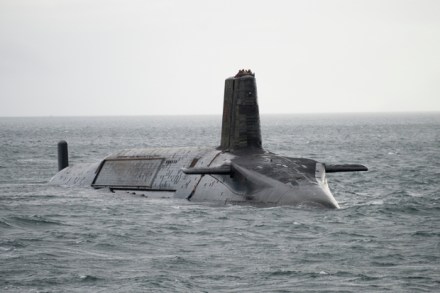
The Trident debate might be about national security, but all the parties have political points they want to make. Indeed, the reason the debate is happening now is that the Tories wanted something to bring them together, and divide, Labour post-referendum. Angus Robertson, the SNP’s Westminster leader, began with a few kind words for the new Prime Minister. But then, he was straight on to repeatedly—and theatrically—asking the government front bench to set out what the full life time cost of the Trident replacement would be. https://www.youtube.com/watch?

Theresa May takes control

From our UK edition

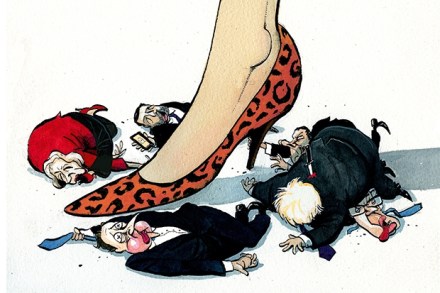
Theresa May has demonstrated this week that she isn’t interested in being continuity Cameron. Her reshuffle was, as I say in The Sun, a brutal change up from the previous Cabinet and she has shown that she is determined to take on the party of the rich tag in a way that David Cameron never could. In this reshuffle, May hasn’t bothered to disguise who her friends are and, just as importantly, who are her enemies. She was ‘wintery but courteous’ when she sacked people. Any Prime Minister who sacks more ministers than the size of her majority is taking a risk. Some of those who she sacked are already thinking about their next move. But others accept it had to be done. .

‘She doesn’t do likes’

From our UK edition

As Tory MPs gathered at St Stephen’s entrance in Parliament to await their new leader on Monday afternoon, a choir in Westminster Hall began to sing. The hosannas spoke to the sense of relief among Tory MPs: they had been spared a long and divisive nine-week leadership contest. A period of political blood-letting brutal even by Tory standards was coming to an end. The United Kingdom would have a new Prime Minister. More than relief, there was hope for the bulk of MPs who had previously not been marked out for advancement. Theresa May’s accession shows that the narrow rules which were thought to govern modern British politics are not hard and fast. May is not one of the shiny people. She isn’t a member of a gilded political set.

Theresa May has just shown she really is serious about Brexit

From our UK edition

‘Brexit means Brexit’ has been Theresa May’s message since she started running for the Tory leadership. But Brexit could mean a whole variety of things. For example, a Norwegian-style deal with the EU would, technically, be ‘Brexit’. But now, Theresa May has shown real intent. She has demonstrated that she really is serious about this. She has appointed three leavers to the key Brexit-related jobs in government. David Davis will be Secretary of State for exiting the EU, Liam Fox gets the International Trade job and Boris Johnson the Foreign Office. The David Davis appointment is particularly striking. He resigned, unexpectedly, from David Cameron’s shadow Cabinet.

David Cameron, the Tory moderniser

From our UK edition

David Cameron’s valedictory address from Downing Street was not only a defence of his government record but a summing up of Tory modernisation. He emphasised not only that the economy was stronger, but also highlighted the tax cuts his government had enacted. So far, so traditionally Tory. But then he hailed the introduction of the living wage, a big departure from classic Tory thinking—the party had opposed the minimum wage in the 1997 election. Next up was the Tory public service reform agenda. Cameron pointed to how many more children were now in good or outstanding schools and to the creation of free schools. But he linked this radicalism to his decision to increase aid spending to 0.

What to expect from Theresa May, and why she might surprise you

From our UK edition

As Tory MPs gathered at St Stephen’s entrance in Parliament to await their new leader on Monday afternoon, a choir in Westminster Hall began to sing. The hosannas spoke to the sense of relief among Tory MPs: they had been spared a long and divisive nine-week leadership contest. A period of political blood-letting brutal even by Tory standards was coming to an end. The United Kingdom would have a new Prime Minister. More than relief, there was hope for the bulk of MPs who had previously not been marked out for advancement. Theresa May’s accession shows that the narrow rules which were thought to govern modern British politics are not hard and fast. May is not one of the shiny people. She isn’t a member of a gilded political set.

Victory for Corbyn as Labour’s NEC puts him on the ballot

From our UK edition

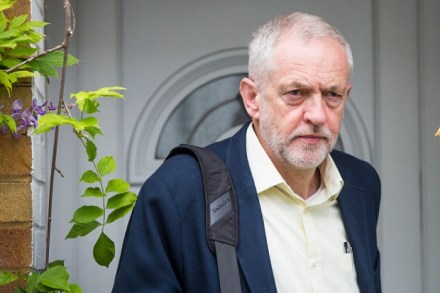
Jeremy Corbyn will be on the Labour leadership ballot. After a contentious meeting that lasted for almost six hours, the party’s National Executive Committee have ruled by 18-14 that as the incumbent his name will appear automatically on the ballot paper and so there is no need for him to gather nominations from MPs and MEPs. This is a massive victory for Corbyn and his wing of the party. He is now favourite to win this leadership election and if he does, the 172 Labour MPs who voted no confidence in him will either have to shut up or split off and form their own party. Crucially, if they leave after Corbyn has won again, it will be Corbyn and the hard left who will be left in possession of the Labour name and the party apparatus.

Can Theresa May nurse the Tories back to health?

From our UK edition

It might prove easier for the Tories’ new leader Theresa May to reunite the party post referendum than expected. First, many Tory MPs have been taken aback by the brutality of the past few weeks. They know how close the party is to entering into a post-Maastricht cycle of political violence and there appears to be a desire to pull back from the brink. Second, both sides have had their pound of flesh. The Leavers have seen David Cameron resign and George Osborne see his leadership hopes dashed; the Remainers have seen Boris Johnson and Michael Gove brought low by the leadership contest. May’s biggest challenge will, obviously, be to negotiate a Brexit deal that is acceptable to both the country and the Tory parliamentary party.

May must sound optimistic about Brexit

From our UK edition

Theresa May’s biggest weakness in the Tory leadership race is that she backed Remain while most Tory members went Leave. But, as I say in The Sun this morning, if she can sound confident and optimistic about Brexit, then she will win and become Britain’s next Prime Minister. May needs to make clear that now the referendum result is in, she’s sees Brexit as an opportunity to be seized, not as a risk to be managed. She can’t afford to cede optimism on this to Andrea Leadsom. I understand that her Leave-voting supporters—Liam Fox, Priti Patel, David Davis and her campaign chair Chris Grayling—will all be out and about this weekend saying that May is the person to deliver exit.

It will be a closer race than expected between May and Leadsom

From our UK edition

Most Tory MPs are back in their constituencies today, and several of those that I have spoken to are now predicting a closer race between May and Leadsom than Westminster expected. One May supporting MP tells me that the councillors they have spoken to are intrigued by Leadsom, a fresh face they want to hear more about. There’s also a view among many members, I’m told, that MPs wouldn’t have sent Leadsom through to the final two if she wasn’t qualified to be Prime Minister. For the next few weeks, I intend to take all polling of Tory members on this race with a pinch of salt. Why? Because Leadsom -- unlike Boris, say -- isn’t that well known and so her numbers could go up, or down, when members hear more about her, her experience and her views.

With Gove gone, the Tories must now choose: experience or Brexiteer?

From our UK edition

So, Tory members will choose between Theresa May and Andrea Leadsom to be their leader and the UK’s Prime Minister. May will enter the membership ballot as the firm favourite. She has the support of the vast majority of MPs and her experience—six years as Home Secretary and 17 years on the front bench—contrasts sharply with Leadsom, who has only been a Minister for two years. Leadsom’s main selling point, however, is that she supported Brexit while May did not. She will argue that the policy should be implemented by someone who believes in it and argued for it. Michael Gove’s elimination was not that surprising. His leadership bid could never get over the nature of his entry into the race, abandoning Boris Johnson at the last minute to run himself.

Theresa May love bombs Tory MPs

From our UK edition

The final parliamentary hustings of the Tory leadership contest has now taken place. With Theresa May assured of a place in the final two, the real interest was in whether Andrea Leadsom or Michael Gove could extract more from the occasion. Leadsom was first up, and I understand gave a better performance than she had on Monday night. She joked at the end of her speech, ‘I’m a quick learner—note I didn’t use the expression baby’s brains once’. But concerns were raised by her saying that she wouldn’t publish her tax return now but would let Tory MPs come and look at it if they wanted to.  Her answer that she would use trade envoys to negotiate a new trade deal with Europe also raised eyebrows from old hands.

Jeremy Corbyn refuses to mention Tony Blair in his Commons statement on Chilcot

From our UK edition

As the House debated the Chilcot report, it was hard not to look round the Chamber and reflect how many MPs were not members when the Commons voted on whether to commit British forces to the conflict in Iraq. But the two party leaders were there then. David Cameron voted for the war, Jeremy Corbyn did not. Cameron took the House through the Chilcot report’s conclusions in a measured, non-partisan way. He ended by urging the country not to jettison the special relationship, confidence in the intelligence agencies and an appreciation that military intervention can be effective following Iraq and the failures detailed in this report. https://www.youtube.com/watch?v=yAoqBea6ETM Then came Jeremy Corbyn.