James Forsyth

James Forsyth

James Forsyth is former political editor of The Spectator.

Michel Barnier plays hardball on Brexit

From our UK edition

Michel Barnier, the Commission’s Brexit negotiator, has been giving a running commentary on Brexit this morning. Barnier, striking a predictably tough stance before the negotiations start, said that he wants the divorce aspects of the Article 50 deal concluded by October 2018, to give sufficient time for ratification. This, essentially, means that there’ll be one year of negotiations from after the German elections next autumn. But Barnier’s position is that only once this deal has been agreed, can talks move on to what the future relationship between the UK and the EU will be. In other words, no talks on trade until the exit process has been agreed. He emphasised that there will be no cherry picking and that the four freedoms are indivisible.

Renzi concedes defeat in Italian referendum and resigns as PM; the Eurozone is heading for a fresh crisis

From our UK edition

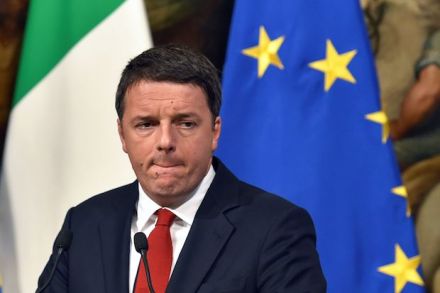
Matteo Renzi has conceded defeat in the referendum he called on his constitutional reforms and announced that he is resigning as Prime Minister. NO are on course for an overwhelming victory, they are ahead by a close to 60-40 lead in the count at the moment. Needless to say, this referendum result has profound implications for the Eurozone. The market was supposed to have priced in a defeat for Renzi, but the euro has fallen to  $1.05 earlier this evening - down 1pc from Friday's close. Defeat will lead to calls for early elections, next year and there is a chance that these elections could lead to the Eurozone’s first anti-single currency government.

Austria and Italian voters could plunge the EU into crisis

From our UK edition

Voters in Austria and Italy head to the polls tomorrow and could plunge the EU into a political and economic crisis, as I say in The Sun today. In Austria, the candidate of a genuinely far-right party—its first leader was a former SS officer—could become president. If the Freedom Party’s Norbert Hofer does win, and the race is too close to predict with any confidence, it’d show that the very extremist forces that the European project was meant to crush are now on the rise—and in part, because of the EU’s own failings. But it is the Italian referendum that could have the more immediate consequences. Italy bans polls just before votes, so we don’t have any up to date polling.

Europe: the Next step

From our UK edition

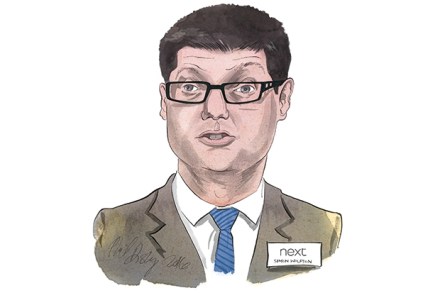
It often seems like the European referendum campaign never really ended. Everything from budget forecasts to Britain’s Olympic performance is simply the cue for another round of In-or-Out arguments. But Simon Wolfson, the mild-mannered chief executive of the high street fashion chain Next, is trying to move things on. Having been one of the biggest business names in favour of leaving the European Union, his aim is to form a coalition between Leavers and Remainers to forge a certain type of Brexit. ‘There is a natural alliance between those people who voted Out but who believe in an open, free, tolerant economy and those people who voted to remain.’ Wolfson tells me when I meet him in Next’s London headquarters on the Tottenham Court Road.

PMQs gets interesting as Tory Eurosceptics coordinate their activities

From our UK edition

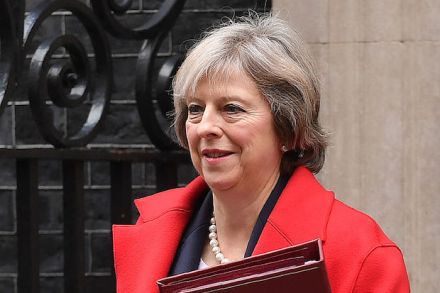
A rare event at PMQs as Jeremy Corbyn went on the economy. The Labour leader had some well-crafted questions but rather spoiled things by confusing the IMF and the IFS, enabling Theresa May to declare that it is a good job she stands at the government despatch box and he sits on the opposition front bench. May gave little away, as is her wont, but Corbyn again went on social care -- which is, obviously, an area where Labour think they can make political advances. A couple of Tory Eurosceptics asked May about reciprocal rights for UK and EU citizens respectively and the refusal of the EU to engage on this point. May wouldn’t take the bait on this. But she did indicate that she still hopes that this issue can be dealt with soon after Article 50 is invoked.

Trump and Fillon mean that Britain matters far more to Eastern Europe

From our UK edition

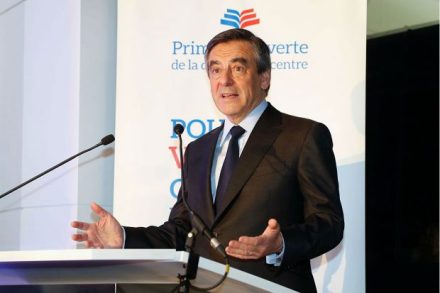
By next summer, Britain could be the only one of the three major Western military powers unequivocally opposed to the idea of Russian domination of its near neighbours. For François Fillon, the Republican candidate for the French Presidency and the favourite to win, has -- as UK security sources point out -- pretty much the same view of Russia as Donald Trump does. Fillon favours allying with Russia in Syria and seeking Vladimir Putin’s help to defeat both Islamic State and the broader Islamist terrorist threat. Fillon also wants EU sanctions on Russia, imposed because of its annexation of Crimea and broader interference in Ukraine, lifted. This shift in world affairs has profound implications for Britain.

Boris is fed up with being the butt of the government’s jokes

From our UK edition

In the autumn statement, Philip Hammond chose to mock Boris’ failed leadership bid. This wasn’t the first time that one of the Foreign Secretary Cabinet’s colleagues had had a laugh at his expense. At our parliamentarian of the year awards, Theresa May joked that Boris would be put down when he was no longer useful. But Boris and his circle are getting rather fed up with him being the butt of the joke, as I say in The Sun today. Those close to Boris feel that these gibes undercut him on the world stage. 'If they want the UK to be taken seriously, they need to back him not mock him’ one close ally of his tells me.

Britain’s winning hand

From our UK edition

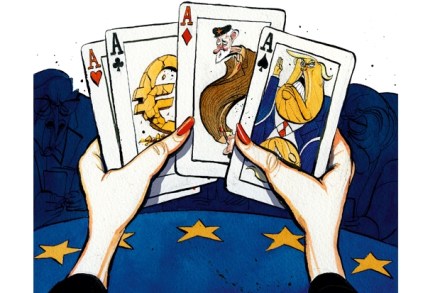
On the morning after the European Union referendum, Britain looked like a country in crisis. The Prime Minister had resigned, Scotland’s first minister was talking about a second independence referendum and the FTSE was in free fall. In several EU capitals, there was an assumption that, when the Brexit talks began, Britain would be the new Greece: a country that could ill afford to reject any deal offered by the EU, no matter how humiliating. In the days following the vote, Mark Rutte, the Dutch prime minister, declared that Britain had just ‘collapsed — politically, economically, monetarily and constitutionally’. Five months on, Britain is in a stronger position than Rutte and co. would have believed possible.

Philip Hammond’s productive afternoon

From our UK edition

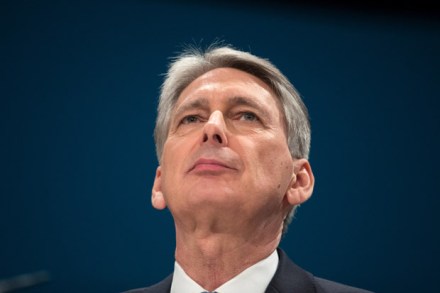
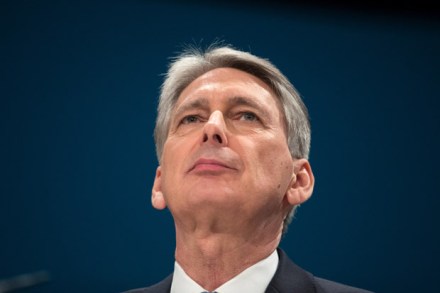
For most people being Foreign Secretary would be a great job, but Philip Hammond never looked like he particularly relished that role. What he has always wanted to be is Chancellor and today in his first major parliamentary event in the role he crisply set out what he thinks is wrong with the UK economy. He said that to make a success of Brexit, Britain would have to deal with its productivity gap, the housing challenge and address the regional imbalances in the economy. Cabinet colleagues say that Hammond talks more passionately about productivity than any other subject. Judging by today, he views investment in economically productive infrastructure as the key to dealing with the problem.

Don’t send Farage to Washington; invite him to Chevening

From our UK edition

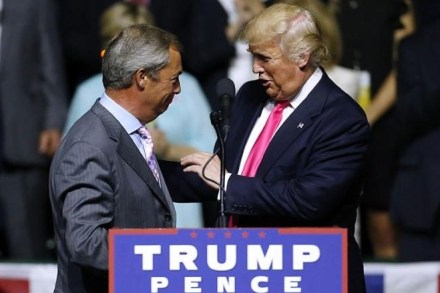
Donald Trump has been putting the cat amongst the diplomatic pigeons—again. His tweet suggesting that Nigel Farage should be made the UK’s ambassador to the US couldn’t have been better designed to wind up the UK government by reminding everyone that it is the leader of Britain’s third party—not the Prime Minister—who knows the president-elect best. https://twitter.com/realDonaldTrump/status/800887087780294656 It also, to put it mildly, rather undermines the current UK ambassador, Kim Darroch, but given Theresa May’s team’s unhappiness with him they might not mind that so much. Now, obviously, Farage shouldn’t be the UK’s man in Washington.

Tory Brexiteers pressure May to quit EU single market and customs union

From our UK edition

Normally, the Saturday before an autumn statement would be dominated by speculation about what is in it. But, as I say in The Sun today, both Number 10 and the Treasury are emphasising that while there’ll be important things on productivity, infrastructure and fiscal rules in Wednesday’s statement, there’ll be no rabbits out of hats. Partly, this is because of  Philip Hammond’s personality: he’s not a political showman. But it is also because he’s not got much room for manoeuvre.  As he has emphasised to Cabinet colleagues, the growth forecasts might not be dramatically lower than they were in March, but cumulatively they have a big effect—limiting what the government can spend.

The economic consequences of Philip Hammond

From our UK edition

What are now called ‘fiscal events’—the Budget and the Autumn Statement—have become the biggest dates in the Westminster calendar. The Chancellor lights up the landscape with political pyrotechnics. There are attempts to bribe prospective voters through tax and spending changes, a litany of pork-barrel projects designed to help individual MPs, and fiendishly complicated schemes no one expects. But with the Treasury under new management, this will all change on Wednesday. Philip Hammond is the least political Chancellor Britain has had for quite some time. The two longest-serving incumbents of recent times, George Osborne and Gordon Brown, doubled up as electoral strategists whose fiscal policies were informed, above all, by political aims.

PMQs: Jeremy Corbyn’s failings give Theresa May a way out

From our UK edition

At first it looked like Jeremy Corbyn was going to go on the rights of Chagos Islanders at PMQs, but then he shifted tack to Brexit. Corbyn’s questions were quite tightly honed -- using Boris Johnson’s comments in a Czech newspaper interview about Britain probably leaving the customs union to needle May. But Corbyn’s own failings give May a way out each time, she just attacks him for not being up to the job. At the end of their exchanges today, you were left with the sense that a better opposition leader could have caused May real problems today, but Corbyn simply isn’t up to it.

May tells business: We have got to change globalisation, to save it

From our UK edition

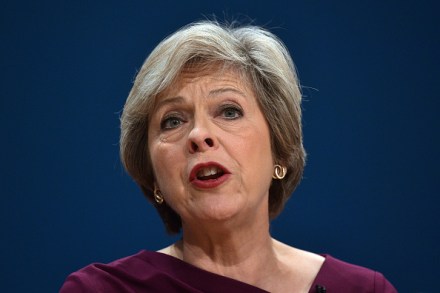
Theresa May’s first big foreign policy speech as Prime Minister is a call to reform globalisation, to save it. As with her conference speech, she argues that there’ll have to be changes to the way it works if popular support for it is to be maintained. Her argument is that ‘when you refuse to accept that globalisation in its current form has left too many people behind, you’re not sowing the seeds for its growth but for its ruin.  When you fail to see that the liberal consensus that has held sway for decades has failed to maintain the consent of many people, you’re not the champion of liberalism but the enemy of it.

Theresa May now has some Trumps in her Brexit negotiating hand

From our UK edition

Britain’s position heading into its Brexit talks is far stronger than it was a week ago, I argue in The Sun today. Why, because Donald Trump has changed the dynamics of global politics. Brexit’s critics used to claim that this country would be isolated after it left the EU. But it is hard to make that case when the president-elect of the most powerful country in the world is in favour of it. Indeed, the next US President is more enthusiastic about it than the British Prime Minister. He was for it before June 23rd. Theresa May now has a chance to create a strong relationship with Trump before other European leaders even start trying.

An opportunity for Britain

From our UK edition

When Britain voted to leave the European Union, the government was at pains to insist this was not a vote to leave Europe. With Donald Trump in the White House, this distinction will be crucial: the UK will suddenly become a lot more important to the security of the continent. The Donald has not bothered to court foreign leaders. Downing Street, which prides itself on its ability to befriend US presidential contenders, has no relationship with him; neither does anyone else in Europe. As a result, there is no certainty that America’s new commander-in-chief will feel bound by Nato’s Article 5 obligation to defend any member that comes under attack. If that assumption is shaken, then what?

Government’s high court defeat sparks election chatter

From our UK edition

What worries government ministers, as I say in The Sun this morning, is not the actual vote on the Article 50 bill—voting against the bill as whole would be akin to rejecting the referendum result—but attempts to tie Theresa May’s hands ahead of the negotiation through amendments to the bill. One senior Cabinet Minister tells me that peers and MPs ‘won’t be able to resist’ trying to amend the bill. Though, it is worth noting that because of public concern about free movement there probably isn’t a Commons majority for staying in the single market, post referendum. Downing Street is adamant that they don’t want an early election, and that if they lose their appeal to the supreme court they can get this bill through clean.

Tory MP quits over Theresa May’s approach to Brexit

From our UK edition

Stephen Phillips is resigning as a Tory MP in protest at the government’s reluctance to engage with Parliament over Brexit. Phillips, a lawyer by profession, voted Out in the referendum. But he has repeatedly argued that parliamentary sovereignty means that the executive must come to parliament before triggering Article 50 and consult with parliament over its negotiating aims. He blames his resignation on the fact that ‘growing and very significant policy differences with the current Government mean that I am unable properly to represent the people who elected me.' Phillips is quitting with immediate effect, meaning that there is another by-election coming. Phillips’s Lincolnshire seat voted heavily to Leave, so a pro-Brexit candidate will almost certainly win the seat.

Government loses Article 50 court fight

From our UK edition

The government has lost the High Court Article 50 case. The court has ruled that Article 50, the formal two-year process for leaving the EU, can’t be invoked without parliamentary approval. The government will appeal to the supreme court. If parliament does get a vote on Article 50, I doubt that it would vote it down: the public voted for Brexit in a referendum, after all. But I suspect that parliament would demand far more detail of the government’s negotiating objectives than it is currently prepared to give. The government’s defeat in this case is an embarrassment to Theresa May and the Attorney General Jeremy Wright, who appeared in court for the government.

Breaking the Bank

From our UK edition

The exchange of letters this week between Mark Carney and Philip Hammond made it very clear who the supplicant was. The Governor of the Bank of England informed the Chancellor of the Exchequer that he was prepared to extend his term by one year. Carney pointed out that while the personal circumstances that had made him want to limit his term to five years had not changed, this country’s circumstances had. So he would be here a little longer. Things had seemed very different a few weeks ago, when Theresa May bemoaned the consequences of the Bank’s monetary policy in her party conference speech. ‘A change has got to come,’ she had warned. ‘And we are going to deliver it.