James Forsyth

James Forsyth

James Forsyth is former political editor of The Spectator.

Theresa May can now drive a hard Brexit bargain – and she knows it

From our UK edition

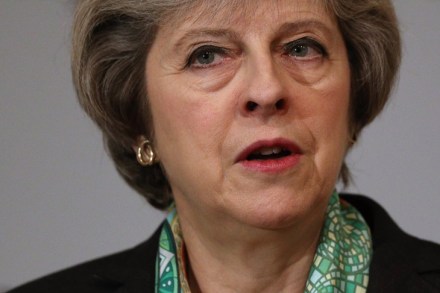
The backdrop to Theresa May’s Brexit speech is almost as interesting as the speech itself promises to be. First, there’s the government's very deliberate decision to make clear—via a Philip Hammond interview in the German press—that Britain will play hardball if it can’t secure a decent deal with the EU. Hammond made clear to Welt am Sonntag that if the UK can’t negotiate a reasonable new trading arrangement with the EU then it is prepared to slash tax and regulation to make its economy more competitive. This is a deliberate attempt to play on European worries about having some kind of Singapore West on its doorstep.
Why Theresa May isn’t the new Iron Lady

From our UK edition

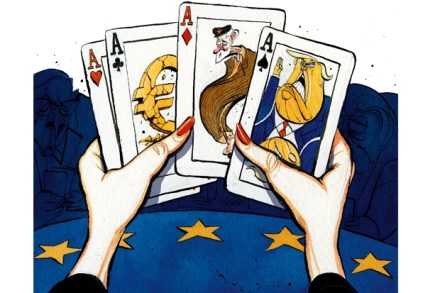
Curbs on executive pay, restrictions on foreign takeovers and workers on boards. Not Jeremy Corbyn’s plan for Britain, but ideas raised by Theresa May and put forward for discussion at her cabinet committee on the economy and industrial strategy. Not for 40 years have the Tories had a Prime Minister so firmly on the left of the party. May joined the Tories before Margaret Thatcher became leader and in many ways she represents a bridge back to the pre-Thatcher era. That is why comparisons between Britain’s two female prime ministers don’t reveal much — they come from very different traditions. Since Thatcherism took over the party, many Tories have looked to the United States for intellectual inspiration. But May is more of a continental-style Christian Democrat.

The PM’s national security adviser is leaving

From our UK edition

  Mark Lyall Grant, the Prime Minister’s national security adviser, is leaving. As I report in The Sun today, the 60 year-old Lyall Grant is to retire later this year. The hot favourite to replace Lyall Grant is Mark Sedwill, the permanent secretary at the Home Office. Theresa May knows Sedwill well from her time as Home Secretary, they worked together for three years. Having him in Downing Street will mean that she has foreign policy advice from an official with whom she has developed a strong working relationship with. ‘She likes people we know and trust’, says one senior figure involved in discussions about the move. Sedwill, a former Foreign Office man, is well qualified for the job.

Trump Team preparing US / UK trade deal

From our UK edition

Boris Johnson returned from the US this week boasting that the UK was now ‘first in line’ for a trade deal with the US. He said that the Trump team and the new Congress ‘want to do it fast’. But as I write in The Sun this morning, the situation is even more advanced than this. I understand that the Trump team is already working on the outlines of a US / UK trade deal. Interestingly, they want the deal to be pencilled in before the UK leaves the EU, though the UK could not formally sign it until it has left the bloc. The US’s keenness for a trade deal with the UK strengthens the case for the UK leaving the customs union. Inside the customs union, Britain is not able to do its own comprehensive trade deals.

Leak suggests EU will seek ‘special’ deal to access the City post-Brexit

From our UK edition

The Guardian has a very significant story on its front page tomorrow. It has obtained notes of a meeting that Michel Barnier, the EU’s chief negotiator, had with senior MEPs this week. These notes show that Barnier told them that he wanted a ‘special’ deal that would guarantee access for the EU firms and countries to the City of London’s financial markets. Interestingly, Barnier also said—according to The Guardian’s account—that ‘There will need to be work outside of the negotiation box … in order to avoid financial instability.” This suggests that Barnier shares Mark Carney’s view that there are financial stability risks for Europe if the EU cuts itself off from the City of London.

Theresa May, left-wing Tory

From our UK edition

Curbs on executive pay, restrictions on foreign takeovers and workers on boards. Not Jeremy Corbyn’s plan for Britain, but ideas raised by Theresa May and put forward for discussion at her cabinet committee on the economy and industrial strategy. Not for 40 years have the Tories had a Prime Minister so firmly on the left of the party. May joined the Tories before Margaret Thatcher became leader and in many ways she represents a bridge back to the pre-Thatcher era. That is why comparisons between Britain’s two female prime ministers don’t reveal much — they come from very different traditions. Since Thatcherism took over the party, many Tories have looked to the United States for intellectual inspiration. But May is more of a continental-style Christian Democrat.

Jeremy Corbyn dodges disaster but fails to inspire at PMQs

From our UK edition

At PMQs today, Jeremy Corbyn didn’t have a disaster: there was no repeat of yesterday’s shambles. But he didn’t take full advantage of the opening he had. Yes, he went on the NHS—but he didn’t cause Theresa May as much trouble as he could have. There was no reference to the Times’ story this morning claiming that Downing Street is blaming Simon Stevens, the chief executive of the NHS. Nor did he manage to create any daylight between May and the Health Secretary over changes to the four-hour waiting target and Hunt’s warning that people turning up to A&E unnecessarily is a large part of the problem. This isn’t to deny that the NHS is a risk for the Tories.

Jeremy Hunt has a point about A&E

From our UK edition

One of the supposed rules of modern politics is that you shouldn’t tell the voters they are wrong. So, Jeremy Hunt saying that a large part of the problem at A&E is people turning up who shouldn’t, is going to come in for some criticism. One can almost hear Labour readying its denunciation of the Health Secretary for trying to blame patients for the NHS crisis that Tory cuts have caused. But Hunt is right about people turning up to hospital too readily. He cites NHS England’s numbers which show that up to 30 per cent of those attending A&E don’t need to be there. It should be noted, though, that people often go there because it is so difficult to find a GP out of hours.

Martin McGuinness’s resignation piles pressure on Arlene Foster

From our UK edition

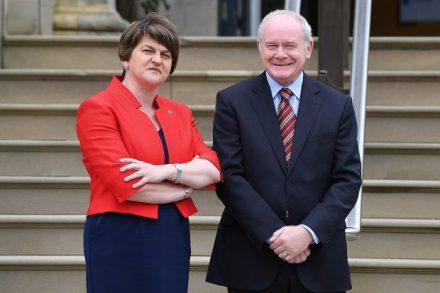
Martin McGuinness is to resign as deputy First Minister of Northern Ireland. McGuiness’s resignation is designed to embarrass the First Minister, the DUP’s Arlene Foster, over the hugely over-budget renewable heat incentive scheme. McGuinness walking out effectively collapses the power-sharing executive and will lead to fresh Assembly elections. McGuinness going puts further pressure on the embattled Foster. She has been in trouble over the renewable heat incentive scheme which is almost £500 million over budget. McGuinness says he is resigning because Foster cannot stay in place while an inquiry into the running of it goes on. Under it, you could get money for simply running your heating whatever the weather. There is one way that elections could be avoided.

Theresa May: Donald Trump’s remarks about women are ‘unacceptable’

From our UK edition

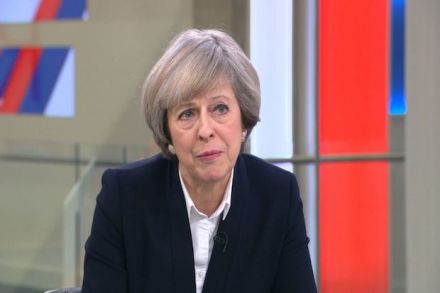
The most memorable moment of Theresa May’s New Year TV interview was when Donald Trump’s quote about grabbing women by the pussy was read out to her. A clearly uncomfortable May replied that it was unacceptable language. Before quickly adding -- in an attempt to avoid angering the incoming President—that Trump himself had said that his language was unacceptable. One of the reasons that it was the most memorable moment was that May stuck to her usual script on both Brexit and domestic policy. She again made clear that control of immigration is paramount for her in the negotiations. But despite repeated attempts from Sky’s new political presenter Sophy Ridge, May wouldn’t confirm what this logically implies—that Britain is leaving the single market.

The other lesson that Theresa May must learn from Cameron’s failed EU negotiation

From our UK edition

Theresa May has clearly learnt one lesson from David Cameron’s failed negotiation with the EU. As I write in The Sun this morning. she has realised that if she just asks for what cautious officials think she can get, then she won’t get enough to satisfy the voters—hence Sir Ivan Roger’s resignation as the UK representative to the EU. But an even bigger problem for Cameron’s renegotiation was that the other side never believed he would walk away from the deal. Cameron compounded this problem when he made clear that he wanted the whole thing done quickly, further reducing his negotiating leverage.

Europe is still struggling to face up to the terror threat

From our UK edition

Europe’s unpreparedness to deal with the terrorist threat it is now facing is highlighted in two reports today. The Wall Street Journal has obtained a copy of the report prepared for the Belgium parliament on the failure of the Belgium authorities to stop the Islamic State terror cell who travelled from Belgium to carry out the 2015 Paris attacks. The report details a quite remarkable litany of incompetence, including the failure of the Belgium police to act on a warning that Salah Abdeslam had changed his social media profile picture to a picture of the Islamic State flag. The failure of Belgium’s various police and intelligence agencies to cooperate with each other is well known. But it is not just Belgium that is struggling to deal with the terrorist threat facing it.

Brexit means that few years will be as memorable as 2016

From our UK edition

Few years will live as long in the memory as 2016. Historians will ponder the meaning and consequences of the past 12 months for decades to come. In the future, 180-odd years from now, some Zhou Enlai will remark that ‘it is too soon to say’ when asked about the significance of Brexit. The referendum result shocked Westminster. Michael Gove was so sure it would be Remain that he had retreated to bed on the evening of 23 June and only found out Leave had won when one of his aides telephoned in the early hours of the morning. Theresa May admits in her interview with us that she was ‘surprised’ by the result and had been expecting a Remain vote, based on both the polls and the mood in her own constituency.

Europe’s year of insurgency

From our UK edition

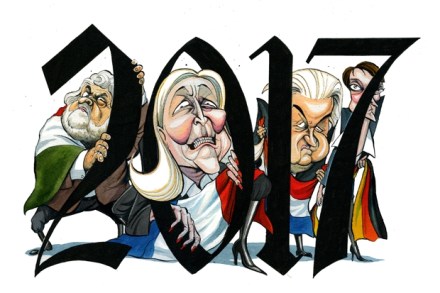
After the tumult of 2016, Europe could do with a year of calm. It won’t get one. Elections are to be held in four of the six founder members of the European project, and populist Eurosceptic forces are on the march in each one. There will be at least one regime change: François Hollande has accepted that he is too unpopular to run again as French president, and it will be a surprise if he is the only European leader to go. Others might cling on but find their grip on power weakened by populist success. The spectre of the financial crash still haunts European politics. Money was printed and banks were saved, but the recovery was marked by a great stagnation in living standards, which has led to alienation, dismay and anger.

Strikes shouldn’t be able to shut down key railway lines

From our UK edition

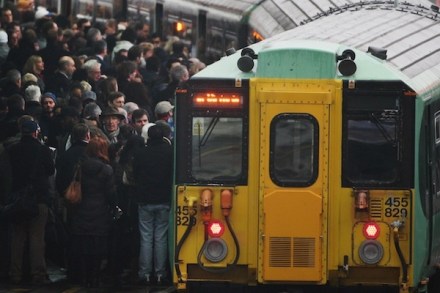
300,000 people were hit by Aslef and the RMT’s strike on Southern Rail yesterday. The bad news for commuters is that things will get worse in the New Year. The unions have a six day strike planned for January, that means a whole working week of commuters not being able to get to their jobs, specialist medical appointments being missed and families being put under pressure. I argue in The Sun today that the government needs to act to help commuters. What it should do is ask parliament to pass a law that would impose minimum service requirements on the rail unions and the train operators. Never again should a whole line be able to be taken out by strike action. I understand from those MPs pushing for this, that Chris Grayling is supportive.

PMQs: Festive silliness before Corbyn gives his best performance yet

From our UK edition

PMQs began with the Labour MP Peter Dowd asking Theresa May if she didn’t wish that she had told Boris Johnson to FO rather than sending him to the FO. To which, May replied that he was a fine Foreign Secretary -- an FFS. At this point, it seemed that the session, the last PMQs before Christmas, might descend into festive silliness. But that didn’t happen. Jeremy Corbyn urged people to buy the Jo Cox charity single, a call May echoed, before moving onto social care. Over the next five questions, Corbyn turned in his best PMQs performance -- admittedly not a particularly high a bar to clear. Corbyn kept pressing May to abandon the corporation tax cut and spend the money on social care instead.

Labour has even bigger problems than Jeremy Corbyn these days

From our UK edition

Want proof of how bad things are for Labour? Jeremy Corbyn and his disastrous leadership is not even its biggest problem anymore. I write in The Sun that Labour’s biggest problem, and it is potentially an existential one, is that its reaction to the Brexit vote is threatening to make it a political irrelevance More than 60 percent of Labour seats voted to leave the EU. In these constituencies, being the party that is trying to block Brexit would be electoral suicide. That’s why the Labour leadership felt compelled to accept the government’s amendment this week saying Theresa May should start the formal, two-year process for leaving the EU by the end of March. But Labour MPs in heavily Remain seats have different interests.

A year of revolution

From our UK edition

Few years will live as long in the memory as 2016. Historians will ponder the meaning and consequences of the past 12 months for decades to come. In the future, 180-odd years from now, some Zhou Enlai will remark that ‘it is too soon to say’ when asked about the significance of Brexit. The referendum result shocked Westminster. Michael Gove was so sure it would be Remain that he had retreated to bed on the evening of 23 June and only found out Leave had won when one of his aides telephoned in the early hours of the morning. Theresa May admits in her interview with us on p. 26 that she was ‘surprised’ by the result and had been expecting a Remain vote, based on both the polls and the mood in her own constituency.

Commons votes in favour of invoking Article 50 by the end of March

From our UK edition

461 MPs have just voted for Theresa May to invoke Article 50 by the end of March. The Tory amendment to Labour’s opposition day motion passed comfortably with only 89 MPs opposing it—and Ken Clarke the only Tory amongst them with 20-odd Labour Mps joining the SNP and the Lib Dems in voting against. Now, this vote is not binding and if the government loses its appeal to the Supreme Court will not be sufficient to satisfy the courts. But it does indicate that the government will be able to get an Article 50 bill through the Commons without too much trouble. It does make you wonder why Theresa May didn’t simply ask parliament to pass an Article 50 resolution before the Gina Miller case made it to the High Court.

PMQs: Emily Thornberry’s battle over the customs union

From our UK edition

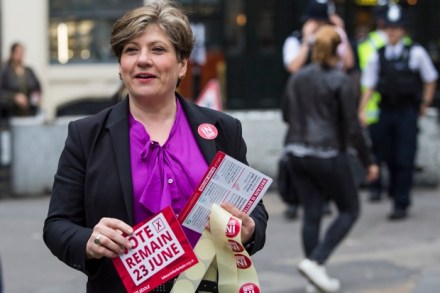
With Theresa May away, it was David Lidington v Emily Thornberry at PMQs today. The shadow foreign secretary asked Lidington if the UK would stay in the customs union, Lidington danced round the question. But Thornberry, unlike Corbyn, kept coming back to the same question. By the end of the exchanges, it was clear that Lidington wasn’t going to answer the question. Thornberry had also armed herself with a string of pro-Remain quotes from Lidington from before 23 June, which she deployed quite effectively. But Lidington is an effective, enough, despatch box performer and managed to avoid incurring serious damage.