James Forsyth

James Forsyth

James Forsyth is former political editor of The Spectator.

Motion of no confidence in Bercow tabled

From our UK edition

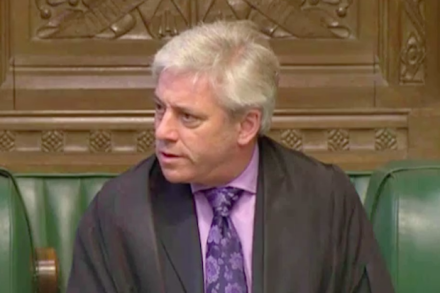
The Tory backbencher James Duddridge has formally tabled a motion of no confidence in the Speaker John Bercow. Duddridge’s attempt to remove the Speaker follows Bercow’s outburst against Donald Trump from the chair on Monday, which further called into question his impartiality and his judgement. Duddridge’s motion is unlikely to succeed. The SNP and nearly all Labour MPs will back Bercow while the government has no appetite for getting drawn into this fight. The vote, though, will be an embarrassment to the Speaker. There’ll be a sizeable number of Tories who vote for it, 150 is the number being talked about tonight, and it will show how Bercow has lost the confidence of a section of the House. But Bercow is not the type to be embarrassed into standing down.
Theresa May’s racing certainty

From our UK edition

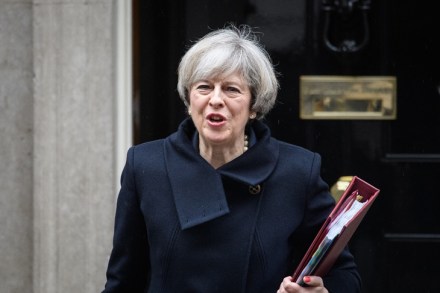
There are few things more predictable than people talking about the unpredictability of politics. We live in an age, we are told incessantly, in which anything can happen politically — and regularly does. Yet there is one exception. Westminster is already sure about the result of the next general election: a majority for Theresa May. One long-serving Tory MP tells me the party has never been more certain of victory in his lifetime. The Tories, with their 15-point poll lead, do look far better placed today than they did, say, 18 months before either of the Thatcher landslides, in 1983 and 1987. It isn’t just the Tory tribe who are convinced they’ll win, either. Labour MPs are looking for jobs now to beat the rush that they suspect will follow the next election.

The House of Commons votes for Brexit

From our UK edition

The drink will be flowing in the government whips’ office tonight. For the Brexit Bill has passed through the Commons unamended and with an absolutely thumping majority at third reading of 372. This means that a clean bill will go to the House of Lords. This will strengthen the government’s hand there as peers will be more reluctant to make changes to a clean bill and one that has passed the Commons with such a large majority. Despite all the talk of knife-edge votes, the government’s majorities tonight were pretty comfortable—30 or above on all the amendments.

Clive Lewis resigns from Jeremy Corbyn’s shadow Cabinet, will he now run for Labour leader?

From our UK edition

Clive Lewis, the shadow Business Secretary has resigned from the shadow Cabinet. He has said that he couldn’t vote for an unamended Article 50 Bill, as the Labour front bench were being whipped to do, and so has quit Jeremy Corbyn’s shadow Cabinet. The question now becomes, does Lewis run for the leadership? He is now the bookmakers' favourite (Ladbrokes has him at 5/1) and he'd be a far stronger candidate than Owen Smith. He was one of Corbyn’s original backers in 2015 and has strong left-wing credentials yet he demonstrated pragmatism on Trident and the nuclear deterrent. His resignation will give him more appeal among the hard-core pro-European wing of the party, who you would normally expect to want a more Blairite candidate.

Jeremy Corbyn ambushes Theresa May at PMQs

From our UK edition

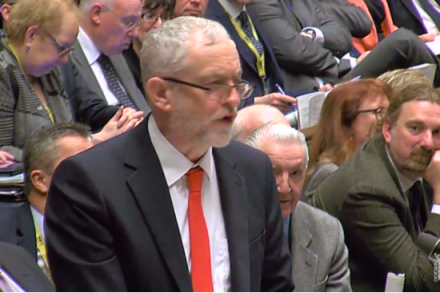
Jeremy Corbyn ‘won’ PMQs today thanks to an old-fashioned ambush. The Labour leader had copies of texts that the leader of Surrey County Council thought he was sending to Nick at DCLG, presumably Sajid Javid’s special adviser Nick King, but which he had actually sent to another person. The texts seemed to suggest that a Tory government had done a secret deal with a Tory council to see off a referendum there on raising council tax by 15 per cent to fund social care. Now, the suggestion that a government—whose Chancellor and Health Secretary are both Surrey MPs—was doing backroom deals with one of the richest county councils in the country was politically explosive.

John Bercow’s grandstanding over Donald Trump isn’t befitting of his office

From our UK edition

John Bercow has just declared that he will oppose an invitation for Donald Trump to speak in either Westminster Hall or the Royal Gallery when, or should that be if, the US President comes on a state visit to Britain. The Speaker of the House of Commons’ opposition makes it extremely difficult for any invitation to be offered for Trump to address both Houses.  Bercow’s argument is not simply that Trump hasn’t been president long enough to merit the honour, but that the Commons’ opposition to, to use his own words, ‘racism and sexism’ mean that such an invitation would be inappropriate.

Sort the housing crisis, or a Corbyn will win a general election

From our UK edition

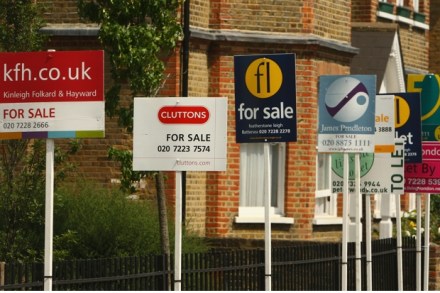
Jeremy Corbyn isn’t going to become Prime Minister. But if the housing crisis isn’t solved, the next left wing populist could—I say in The Sun this morning. Home ownership has dropped to a 30 year low and homes are becoming increasingly unaffordable. In London the average house costs 11 times earnings. Without radical reform, the Tory idea of property owning democracy will wither and, eventually, die. The government’s housing white paper due out next week is meant to try and solve these problems. Councils will be told to come up with realistic views of the housing needs of their area that take into account the growing population. If government thinks that their plans don’t do this, councils will be ordered to redo them.

No. 10 is learning how to deal with the Donald

From our UK edition

Imagine if Donald Trump declared that Islam had ‘no place’ in his country, or proposed banning the burqa ‘wherever legally possible’. There wouldn’t be enough space in Trafalgar Square for all the protestors. British ministers would be forced to the Commons to make clear their disagreement with the President of the United States. And there would be millions more signatures on the petition demanding that his state visit invitation be rescinded. The Trump White House, of course, hasn’t said either of these things. They are the on-the-record positions of two heads of governments in the EU.

If Corbyn couldn’t Trump Theresa at today’s PMQs, when can he?

From our UK edition

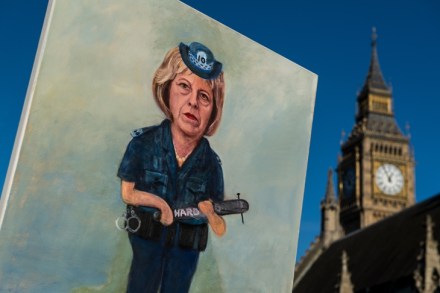
Today should have been a good PMQs for Jeremy Corbyn. He had the chance to denounce Donald Trump and embarrass Theresa May over his actions, as Prime Minister she is—obviously—constrained in what she can say about the US president. But May had come well prepared and ended up besting Corbyn. She hit at his fundamental weakness, when she declared ‘he can lead a protest, I’m leading the country’. Perhaps, the most substantive moment of the session came when Corbyn asked for a guarantee that the NHS wouldn’t be opened up to US companies as part of a US / UK trade deal. May replied, ‘The NHS is not for sale’.

Boris’s very diplomatic response to Trump’s visa ban

From our UK edition

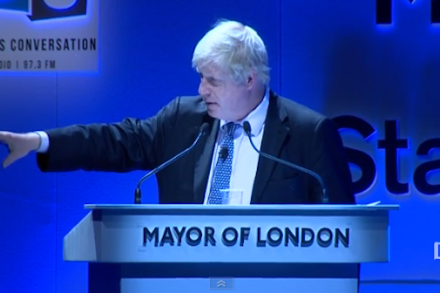
Boris Johnson came to the House of Commons to answer questions on the Trump visa ban with the opposition benches in full outrage mode. The policy is wrong, ill-considered and a blunt instrument. But those in the Chamber who see it as a sign the US is on the road to fascism are getting things out of proportion. As Johnson said you can see it as ‘divisive and wrong’ without resorting to 1930s parallels or wanting to disinvite Trump from his State visit. There were a series of irate questions from the Labour benches. Yvette Cooper demanded that Johnson ‘for the sake of history, for Heaven’s sake have the guts to speak out', Dennis Skinner called Trump a 'fascist' and Mike Gapes labelled Theresa May an ‘appeaser’.

A US / UK free trade deal is the big prize for Theresa May

From our UK edition

Theresa May’s team will be basking this morning in the write-ups of her successful visit to Washington. As I say in The Sun this morning, the big prize for her is a US / UK free trade deal. Government ministers think that, given the political will on both sides, the deal could be negotiated in just eight months. There is also confidence in Whitehall that the US will be prepared to grant an exemption for public services which would ‘protect’ the NHS. This should do much to reduce the intensity of the opposition to the deal. Trump’s protectionist rhetoric is often cited as a reason why a US / UK deal won’t happen, or will be very limited.

Theresa May has learnt the art of dealing with Donald

From our UK edition

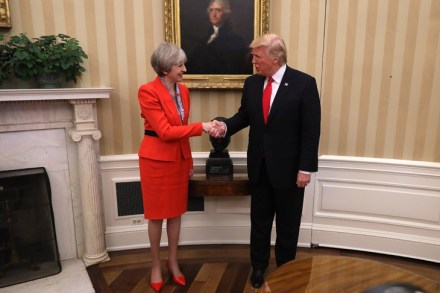
The Trump / May press conference went as well as the Prime Minister’s team could have hoped. The new president was effusive about Brexit saying it was a ‘wonderful thing’, a ‘fantastic thing’ and declaring that it’ll be a ‘tremendous asset’ for the UK. He was also warm about May personally, predicting that their relationship was going to be ‘fantastic’ and opining that they had already hit it off.  Usefully for May, Trump also didn’t say anything outrageous, by his standards, at the press conference. In response to the BBC, he said that the US wouldn’t torture because Defence Secretary Mattis’s objections overrode his own personal belief that it worked.

Tulip Siddiq’s resignation is a reminder that Labour is in no man’s land on Brexit

From our UK edition

Tulip Siddiq, the Labour MP for Hampstead, has resigned from the Labour front bench over Jeremy Corbyn’s decision to impose a three-line whip on the Article 50 vote. Siddiq’s argument is that she doesn’t back triggering Article 50 and nor does her constituency, which voted heavily to Remain in the EU, and so she can’t support Labour’s official position on this issue. Siddiq’s resignation, the first Brexit front bench resignation, is a reminder that—as I say in my column this week — the Article 50 vote will be more politically difficult for Labour than the Conservatives.

A wake-up call for Parliament

From our UK edition

Parliament is the cockpit of the nation, but MPs have been on autopilot rather a lot in the past 40-odd years. Ever since the United Kingdom joined the European Economic Community, more and more powers have been passed away from Parliament to Brussels and its institutions. Brexit will see these powers come flowing back to Westminster. So it was appropriate that the Supreme Court has decided that Parliament must legislate for the triggering of Article 50, the two-year process by which this country will leave the EU. For MPs to vote against Article 50 would be to vote against the referendum result itself; it says nothing about the terms on which Britain will leave the EU.

PMQs: Corbyn gives one of his worst performances yet

From our UK edition

It is one of the oldest tricks in the book: make news just before the leader of the opposition gets up at PMQs to wrong foot them. This is what Theresa May did to Jeremy Corbyn today, announcing that there will be a government white paper on Brexit after all. The Labour leader was clearly thrown by this, and never recovered. He ended up turning in one of his worst PMQs performances. Though, it is worth noting that May still hasn’t said when this white paper will be published. To make things worse, Corbyn began by offering condolences to the family of a policeman shot in Belfast at the weekend. The problem, as the DUP’s Nigel Dodds pointed out later in the session, is that the policeman hasn’t died and is in a stable condition in hospital.

Why the Germans are so worried about the Trump administration

From our UK edition

One of the advantages for Theresa May in being the first foreign leader to visit the Trump White House is that other European government are eager for information about what he actually plans to do. Both Handelsblatt and Spiegel have good pieces detailing the German government’s concerns about its lack of contact with, and information about, the new administration. Spiegel reports that an offer from Angela Merkel’s team for her to travel to the US at short notice to meet the new president has not yet received a reply. While the German Ambassador to the US’s last meeting with Jared Ksuhner, Trump’s son in law and—by general agreement—the most powerful figure in the new White House, ended with Kushner asking, ‘What can you do for us?

What does President Trump do to Brexit?

From our UK edition

With Theresa May expected to head to Washington next week to see President Trump, I have a look at what the Trump presidency might mean for Brexit in my Sun column this morning. Despite his protectionist rhetoric, on full show again yesterday, Donald Trump is keen on a US / UK trade agreement. He has told people that he would like to get personally involved in negotiating the deal. I understand that his transition team has done more work on it than they have for any other agreement. Squaring the circle between Trump’s protectionist rhetoric and his enthusiasm for a US / UK deal isn’t as hard as it first looks. The UK is not one of the low wage economies that Trump rails against the US doing deals with.

Trump’s trade war could cause global economic carnage

From our UK edition

The most striking thing about Donald Trump’s inaugural address was how little it tried to reach out to those who had not voted for him. On election night, Trump made a deliberate effort to strike a graceful note. He said that America owed Hillary Clinton a ‘major debt of gratitude for her service to our country’.  To those who hadn’t voted for him, he said, ‘I'm reaching out to you for your guidance and your help’. But today, after thanking the Obamas for their help in the transition, his message was aimed squarely at his base. He talked about an ‘American carnage’ that he was going to stop and repeatedly pledged to put ‘America First’.

May has taken back control

From our UK edition

‘No negotiation without notification’ has been the EU’s mantra since 24 June last year. Its leaders have been determined that there’ll be no talks before Britain has formally submitted its Article 50 letter, starting the two-year countdown to this country leaving the union. Even now, after Theresa May has set out her Brexit plans with a decent amount of detail, the EU is sticking to this line. Why? Because it wants Britain to be negotiating against the clock. Despite this, there have been informal conversations over the past six months that have helped forge the Brexit strategy that May set out on Tuesday.

May’s aim: take back control of the Brexit negotiation

From our UK edition

Listen to Isabel Hardman, Fraser Nelson and James Forsyth reviewing Theresa May's speech: Theresa May’s speech today was striking for how much it took off the negotiating table. Britain is, she said, leaving the single market. She isn’t going to spend anytime seeing if free movement - but only for those with a job - might be somehow compatible with single-market membership. She was also clear that the UK is quitting the EU’s common external tariff and commercial policy.  Why is May doing this? Well, staying in the single market with no say over the rules is, obviously, not a sustainable position—you couldn’t regulate the City of London by just cutting and pasting in EU rules.