James Forsyth

James Forsyth

James Forsyth is former political editor of The Spectator.

Double trouble | 16 March 2017

From our UK edition

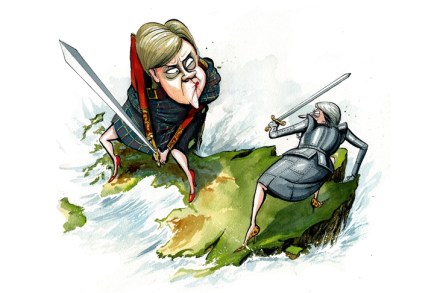
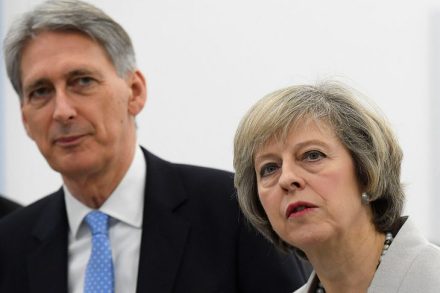
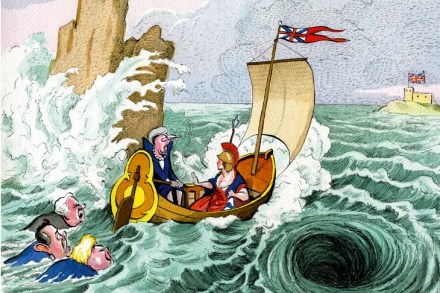
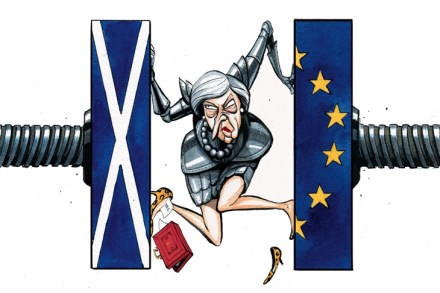
Theresa May is a cautious politician. She has risen to the top by avoiding unnecessary risks; no one survives 18 years on the Tory front bench by being a gambler. But few prime ministers have the luxury of choosing their battles, and she would not have chosen the two that may now define her premiership: successfully negotiating Britain’s exit from the European Union while saving the United Kingdom. If she achieves both, she will join the pantheon of great prime ministers. If she fails, she’ll be keeping Lord North company in the history books. Unlike David Cameron, May has been preparing for a new Scottish referendum from the moment she entered Downing Street.
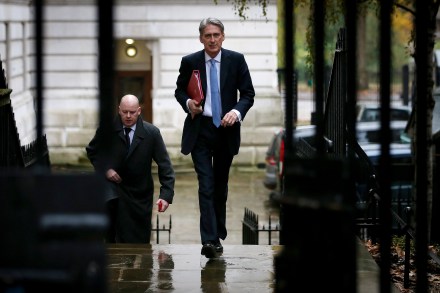
Philip Hammond’s NICs U-turn has blown his credibility as Chancellor

From our UK edition

Philip Hammond’s credibility as Chancellor has just taken a big blow. Under pressure from his own backbenchers, he has abandoned the proposed National Insurance increase for the self-employed. This means that he has U-turned on one of the central measures of his first Budget. What makes this change particularly humiliating for Hammond is that he told Tory backbenchers last Wednesday night that they could defend this National Insurance increase confident in the knowledge that the government wouldn’t change tack. But now it has. From now on, Tory MPs will treat Hammond’s reassurances with scepticism. The other problem for Hammond is that he made much of how he was making this change because of his deep concern about the erosion of the tax base.

How Theresa May can avoid IndyRef2

From our UK edition

Fraser Nelson is joined by Alex Massie and James Forsyth to discuss IndyRef2: Nicola Sturgeon has thrown down the gauntlet to Theresa May with her speech today. When the Scottish parliament backs a second independence referendum, as it will in the next few weeks, the UK government will have to decide how to respond. After all, there can be no referendum without Westminster’s consent. A Madrid-style outright refusal to allow a referendum is unlikely. But the real fight will be over the timing. Sturgeon says she wants a referendum in either Autumn 2018 or Spring 2019. But the UK government has privately made clear that any referendum would have to come after Brexit, so Scots would know what the UK’s relationship with the EU was when they voted.

The Tory Budget rebellion is growing

From our UK edition

The Tory rebellion over the tax hike on the self-employed isn’t abating, it is intensifying as I say in The Sun this morning. As one Cabinet Minister tells me, Tory MPs ‘left the Budget feeling a little bit concerned. They’ve seen the papers, and thought this isn’t good. After the emails and constituency stuff, there’ll be even more nervous’. One Tory backbencher, who is a good judge of the mood of the parliamentary party, says ‘People are not happy at all. Somethings’ got to change’. But Philip Hammond is digging in. He is ‘absolutely determined not to retreat on this’ according to one Cabinet ally of his. He has, I’m told, been ‘surprised by the extent of the backlash’.

A Budget to keep Brexit off the rocks

From our UK edition

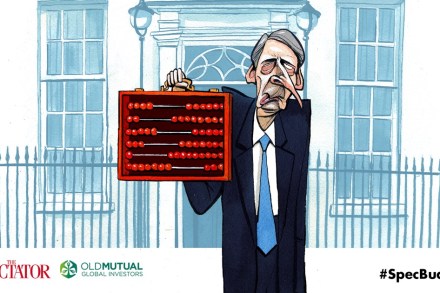
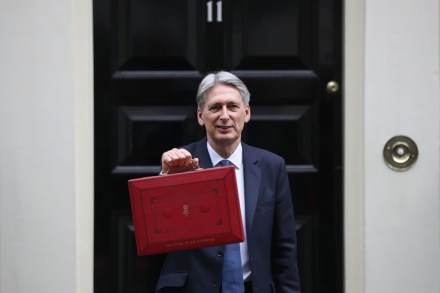
Chancellors often enjoy a Budget for the chance it gives them to show off. They enjoy wrong-footing their opponents with a dramatic and unexpected announcement right at the end of their speech — the much-anticipated rabbit pulled from the hat. But Philip Hammond is not a political showman. He must be the only Chancellor in living memory to have played down his first Budget, telling colleagues with big ideas to come back to him this autumn. This lack of showmanship should not be mistaken for an absence of serious intent. He is unique among recent chancellors for two reasons: he has no ambition to move one door along to No. 10 Downing Street, and he can be confident of a long stint in the job.

Philip Hammond must act fast to avoid a repeat of the pasty tax row

From our UK edition

The government is in trouble over the National Insurance increase for the self-employed. Journalists are busy pointing out that the Tory manifesto explicitly said that there would be no increases in National Insurance. But Philip Hammond’s allies are—rather absurdly—claiming that the Budget keeps this manifesto promise as the post-election tax lock law only refers to Class One National Insurance contributions, and what is being raised is Class 4 ones. This is the wrong ground for the government to fight on; and they’ll end up losing if they remain camped out here.

Why Hammond won’t be pulling rabbits out of hats on Budget day

From our UK edition

Normally, the Saturday before a Chancellor’s first Budget would be dominated by discussion about their plans for the economy. But, as I say in The Sun this morning, Philip Hammond would rather not be delivering a Budget next week. He thinks it should be in the autumn, but he has one more Spring one to do before this shift can take place. This, as one Ministerial colleague observes, puts him in a unique position: ‘He’s the first Chancellor in history to play down his first Budget’. But then, Hammond is not a showman. He’s not interested in producing rabbits out of hats. He’s also cautious about Brexit.

Trump’s show of strength to Moscow

From our UK edition

Donald Trump has not lost his capacity to surprise: few would have bet on him starting his address to Congress with praise for Black History Month. Tuesday night’s speech was the nearest Trump has come to acting like a traditional president. But one thing conspicuous by its absence was any mention of Russia. To Europeans, his Russia policy remains a riddle wrapped in a mystery inside an enigma. Four things make Trump’s approach to Moscow particularly hard to fathom. First is the fact that no one is sure who really speaks for him on foreign policy. What should Europe make of vice-president Mike Pence’s soothing words at the recent Munich Security Conference?

Today’s PMQs only really got started when Corbyn sat down

From our UK edition

The clash between the Leader of the Opposition and the Prime Minister used to be the main event at PMQs. But this is fast ceasing to be the case. The most interesting bit of today’s session came after Corbyn had finished asking May questions. In her exchanges with Angus Robertson, May refused to confirm that all powers in devolved areas, such as agriculture and fishing, would go to Holyrood post Brexit. Now, there is—obviously—a bit of Nationalist grievance hunting going on here and having multiple agricultural regimes within the UK would not be entirely sensible. But it would be a mistake if Brexit did not lead to a more powerful Scottish parliament. We have got used to patsy questions to Prime Ministers from their own side.

Francois Fillon limps on despite ‘fake job’ probe

From our UK edition

Francois Fillon had previously said he would drop out of the French Presidential race if corruption allegations against him resulted in him being placed under formal investigation. But the candidate of the Republican party has just held a press conference to declare that yes, he is being placed under formal investigation over payments to his family but no, he is not dropping out of the race. He has accused the judiciary and the press of attempting a ‘political assassination’. Fillon’s decision to stay in the race increases the likelihood of a Macron/ Le Pen run off round. The latest polls show Le Pen in the lead in the first with Macron second and Fillon third. A new Republican candidate might have shaken up the race.

Labour haven’t hit rock bottom yet

From our UK edition

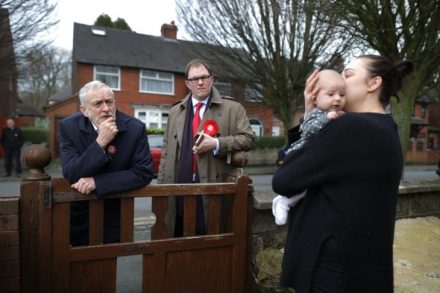
Copeland was a truly awful result for Labour. But as I say in The Sun this morning, the really alarming things for Labour is that things can get worse for them. Many Labour MPs have been operating on the assumption that the NHS will keep the party’s loses down to a manageable level in 2020. But Copeland suggests that this hope is misplaced. Labour went all in on the health service there and had no shortage of material to work with, the maternity unit at the local hospital is under threat. By the end of the campaign, Labour’s message was perilously close to vote for us or the baby gets it—and yet people still didn’t vote for them. The other thing that should really worry Labour is that the Tories’ Corbyn card will be even more potent in 2020.

Labour hold Stoke as Ukip and Nuttall fail to breakthrough

From our UK edition

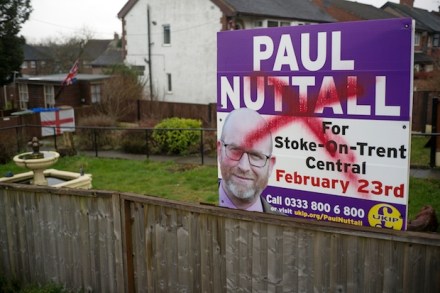
James Forsyth discusses the by-election results with Fraser Nelson and Isabel Hardman: Labour has avoided total electoral disaster and held the Stoke Central seat with a relatively comfortable majority of 2,620. The Labour vote share in the seat was only marginally down on the 2015 general election, which while not good for an opposition party does suggests that Brexit hasn’t taken as big a chunk out of Labour’s support in Leave voting seats as some are suggesting. Labour are trying to argue that their victory here marks a turning point in their attempt to see off the Ukip threat to them in Brexit voting seats in the Midlands and the North. It is certainly true that not winning here is a blow to the new Ukip leader Paul Nuttall.

Polls close in Copeland and Stoke

From our UK edition

Polls have closed in the Copeland and Stoke by-elections. It is too early to say with any certainty what the results will be, but we’ll be with you on Coffee House until the results are declared. In Copeland, it is a two horse race between Labour and the Tories. The Tories aren’t predicting they’ll take it, but they do sound rather optimistic. In private, some Labour MPs are very pessimistic about this result. But this could be expectations management. If the Tories do take Copeland from Labour, it’ll be a staggering result: the governing party hasn’t taken a seat in a by-election in thirty odd years and that was in the middle of the Falklands war with the former Labour MP standing for the SDP.

The new third Way

From our UK edition

Forget left and right — the new divide in politics is between nationalists and globalists. Donald Trump’s team believe that he won because he was the America First candidate, defying the old rules of politics. His nationalist rhetoric on everything from trade to global security enabled him to flip traditionally Democratic, blue-collar states and so to defeat that personification of the post-war global order, Hillary Clinton. The presidential election in France is being fought on these lines, too. Marine Le Pen is the nationalist candidate, a hybrid of the hard right and the far left. She talks of quitting the European single currency and of bringing immigration down to 10,000 a year, while cursing international capitalism with an almost socialist fervour.

Corbyn fumbled his NHS attack at today’s PMQs

From our UK edition

When Ed Miliband was asking the questions at PMQs, we didn’t think we were living through a vintage age of parliamentary debate. But every week, Miliband’s performances looks better by comparison. Jeremy Corbyn went on the right topic today, the NHS, but his questions were all over the place and lacked coherence. Indeed, at one point it was hard to tell what the actual question was. But, I suspect, that Labour will feel that if Corbyn has managed to bump the NHS up the agenda ahead of the two by-elections on Thursday, then it will have been a worthwhile exercise. But it is telling that any advantage Labour gained from the session came not from Corbyn chivvying information out of Theresa May, but just the obvious topic that he and his team decided to go on.

Labour has no alternative

From our UK edition

In normal times, by-elections are bad for governing parties and good for oppositions. But it is an indicator of how much trouble Labour is in, as I say in The Sun this morning, that they are the ones who are nervous ahead of Thursday’s by-elections. Some in the Labour machine seem almost resigned to losing Copeland to the Tories and are concentrating on trying to hold off Ukip in Stoke. Given that Labour is polling as low as 24% and Jeremy Corbyn’s ratings are worse than Michael Foot’s were at this point in his leadership, and the epic defeat Foot led Labour to in 1983 paved the way for 14 more years of Tory government, you might think that defeat in either contest would be the end of Corbyn’s leadership. But it won’t be.

For the sake of Britain’s constitution, will everyone please shut up?

From our UK edition

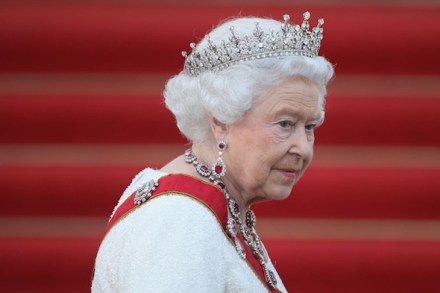
One of the striking features of Britain’s unwritten constitution is how it relies on various people keeping their opinions to themselves. The monarch, the Speaker of the House of Commons and senior judges must all avoid expressing political views in public – or even in what one might call semi-private. It’s not their right to remain silent; it’s their responsibility. The royal family is expected to stay out of politics from birth, the Speaker is an MP who puts aside partisanship when he or she is dragged to the chair, and judges must show that they are applying the law, not advancing their own agenda. Any appearance of partiality is toxic, calling into question either their own survival or that of the office they hold.

For the sake of the constitution, please shut up

From our UK edition

One of the striking features of Britain’s unwritten constitution is how it relies on various people keeping their opinions to themselves. The monarch, the Speaker of the House of Commons and senior judges must all avoid expressing political views in public – or even in what one might call semi-private. It’s not their right to remain silent; it’s their responsibility. The royal family is expected to stay out of politics from birth, the Speaker is an MP who puts aside partisanship when he or she is dragged to the chair, and judges must show that they are applying the law, not advancing their own agenda. Any appearance of partiality is toxic, calling into question either their own survival or that of the office they hold.

Number 10 distancing itself from Law Commission’s secrecy proposals

From our UK edition

There has been an understandable, and justified, outcry about the Law Commission’s proposed changes to secrecy legislation. The current proposals present a serious threat to investigative journalism and whistle blowers. But Theresa May’s Number 10 is very keen to point out that this review was something commissioned not by them, but by David Cameron’s Number 10. ‘This is a consultation by an independent body instigated by the previous Prime Minister’ is how one May aide describes it—which is a clear attempt to distance the current Prime Minister from this whole business. I am told that it is highly unlikely that the proposals will be implemented in their current form.

Why the Lords won’t block Brexit

From our UK edition

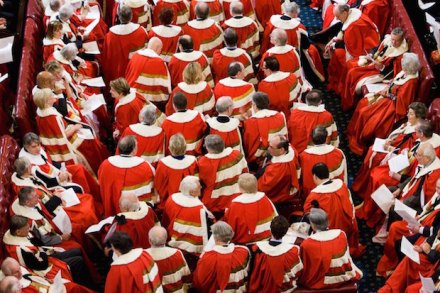
The government has no majority in the House of Lords and a majority of peers were pro-Remain. But despite this, the Article 50 Bill will get through the Lords I argue in The Sun this morning. Why, because the reason that we still have an unelected chamber in the 21st century is that the House of Lords has a strong self-preservation instinct: it knows its limits. If the Lords were to try and block something that had been backed in a referendum and had passed the Commons with a majority of 372, then it would be endangering its very existence. Indeed, I understand that the Labour front bench have already made clear through the usual channels that they won’t try and block the bill. There will, of course, be attempts to amend it.