James Delingpole

James Delingpole

James Delingpole reviews television for The Spectator.

Am I slightly psychopathic to be so obsessed with gangster TV?

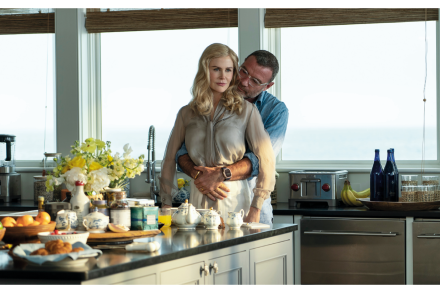
Most of my favourite TV shows seem to involve gangsters in one way or another: The Sopranos, Breaking Bad, Top Boy, The Offer (that brilliant series on Paramount+ about the making of The Godfather), series two of The White Lotus, Suburra, Gomorrah; even, you could argue, Game of Thrones (cod-medieval fantasy gangsters with dragons) and Succession (gangsters who don’t need to use guns). It’s the first thing in ages where I’ve been salivating to watch the next episode Perhaps there’s something lightly psychopathic about being so allured by a genre which celebrates relentless, brutal killing, where the forces of law and order and civilisation are the enemy, and where the business model is to get stupidly rich at the expense of the desperately poor, addicted and hopeless.

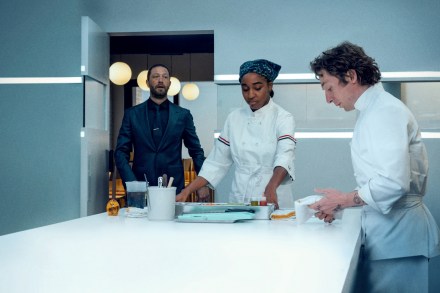
If you can stand the stress, The Bear is still possibly the best thing on TV

The Bear has been called ‘the most stressful thing on TV’ and I think that’s probably a fair description. It’s set in a Chicago restaurant and – as has become de rigueur in all films and TV series about restaurants – the kitchen scenes are invariably fraught, jerkily shot, uptight, pent-up, explosive, inflammable, past boiling point, chaotic, horrific and generally conducive to the prevailing notion that while war might be hell it’s an absolute picnic when compared to being a chef. It’s also, if you can bear the stress part, possibly the best thing on TV. At least it has been for the first two series, which have built on that ‘cuisine is hell’ cliché to create a strong, character-driven drama that is often rich, rewarding, moving and surprising.

Why you should never watch sci-fi series on streaming channels

Jason Dessen, the hero (and, as you’ll discover shortly, anti-hero) of Apple TV’s latest sci-fi caper Dark Matter, is a physics professor at a second-rate university in Chicago. You can tell he’s not that good at his job because he introduces the concept of Schrödinger’s cat (surely the only interesting bit in the entirety of physics) five minutes before the end of a lecture. ‘Oh and the cat dies,’ he says to the uninterested students as they file hurriedly out of class. With no time constraint, sci-fi series on streaming channels can keep spinning you along for all eternity Still, at least he’s happy. His teenage son might have been genetically engineered to fit the phrase ‘but he’s a great kid’ and his hot wife Daniela is beyond perfect.

How a TikTok dance craze turned into a brainwashing cult

Because you don’t – I hope – use TikTok you will never have heard of the Wilking sisters. But back in the day (2020) they were huge, their homemade videos of dance routines performed at their suburban Michigan home attracting 127 million views. A year later, it all turned sour. Dancing for the Devil: The 7M TikTok Cult opens with one half of the sibling duo, Melanie, talking tearfully about her terrible loss. You think at first that Miranda has died. But no, it’s almost worse, for Miranda has become a living ghost – still present on social media, but dead to her family and friends, and unrecognisable from the girl-next-door she used to be. She has been sucked into a religious cult called the Shekinah Church.

BBC1’s new Rebus is the kind of TV detective they just don’t make any more

Imagine a new series of Morse in which the real-ale-quaffing, jag-driving opera buff is turned into a speed-snorting mod on a pimped up Lambretta. Or – this one I’d actually like to see – jeune Poirot, featuring a clean-shaven habitué of fin-de-siècle Brussels absinthe dives. This may give you an inkling as to how upset one or two Rebus fans are about the Edinburgh detective’s latest TV incarnation. Confusingly titled Rebus – as opposed to, say, Punk Rebus or Wee Rebussie – the series depicts a protagonist quite a bit younger than his former TV incarnations, grumpy, dishevelled Ken Stott and a mite-too-smooth John Hannah.

Why did C.J. Sansom approve this moronic Disney+ Shardlake adaptation?

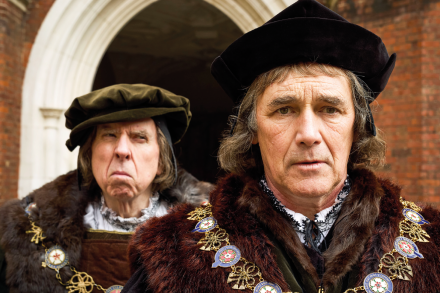
What would C.J. Sansom have made of the Disney+ version of his novel series about 16th-century crookback lawyer Matthew Shardlake? Sadly, because he died just a few days before its release, we’ll probably never hear the full story. But this comment from the show’s producer offers a hefty clue: ‘Chris [Sansom] has been enormously generous and he wants more people to read the books, and this is such a good way.’ Sounds very much like Sansom accepted this atrocity of an adaptation as a necessary evil: his books had been stuck in development hell for nearly two decades (possibly, because his labyrinthine whodunits about monastic reform and court politics in Henry VIII’s England were considered a bit niche for mass audiences) and, in the end, he simply capitulated to moronitude.

Sordid, ugly and threadbare: Jimmy Carr – Natural Born Killer reviewed

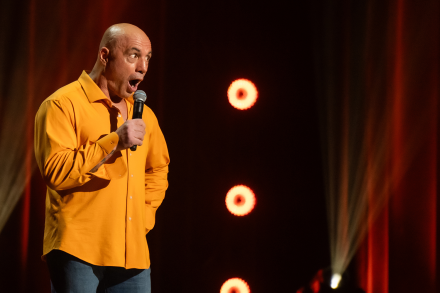
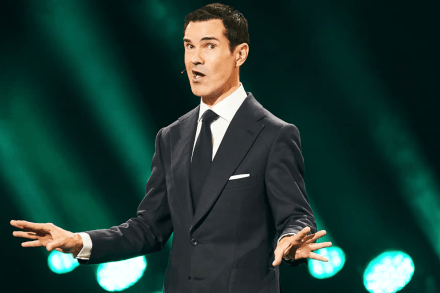
Here’s an offensive joke: ‘Jimmy Carr gets paid to do a Netflix special.’ All right, it’s not original – I nicked it from an online chat forum. And it’s not especially funny. But unlike any of the sordid, ugly, threadbare material in Carr’s excruciating set, it does at least contain a measure of critical insight. Carr vauntingly lists all the ‘did he really go there?’ topics he plans to cover: ‘child abuse, domestic violence, abortion, murder, gun control and trans issues’. But his treatment of these subjects doesn’t feel refreshingly transgressive so much as gratuitously unpleasant. Here’s a sample: ‘Climate change is like my niece. It’s getting hotter every year.

Fans of torture, dolly birds and fat lines of cocaine will love The Gentlemen

Guy Ritchie only does one thing but he does it very well: slick, violent, sweary, black comedy capers about the unlikely intersection between toffs and the criminal underworld, invariably starring ex-footballer Vinnie Jones as a loveable tweed-wearing thug. If you were hoping for something different from The Gentlemen, prepare to be disappointed. If, on the other hand, you can never quite get enough of shotguns, stately homes, frantically crowbarred-in but still-quite-amusing one liners, rival gangsters, vast quantities of claret (in both vinous and sanguinary forms), torture, dolly birds, travellers, slightly annoying solecisms, fights, gambling and fat lines of cocaine, then this will be your cup of tea, guvnor, and no mistake, innit, what ho, old chap.

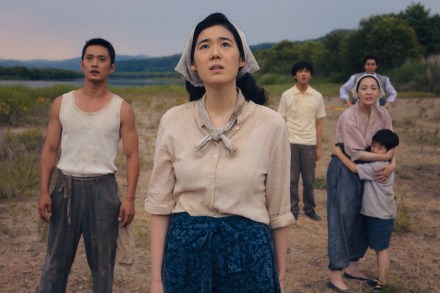
Lavish, graphically violent swashbuckling: Disney+’s Shogun reviewed

Here’s a frightening thought for those of you who remember the original Shogun (1980), starring Richard Chamberlain as the Elizabethan navigator who ends up playing kingmaker amid the power struggles in the Japan of 1600. We are now further away in time from that series than that series was from the beginning of the second world war. And yet it feels almost like yesterday when we gathered with our parents in front of our tellies with their bulbous backs and no remote controls to watch Chamberlain in his natty kimonos grappling with Japanese culture. TV was so much more of a family affair in those days, with blockbuster mini-series  – Roots, Jesus of Nazareth, The Thorn Birds etc – garnering ratings which, in our fragmented modern culture, would be impossible.

A turkey: Netflix’s Avatar – The Last Airbender reviewed

Blimey, Avatar: The Last Airbender is a load of tripe. And I really didn’t want it to be. There’s nothing I like more than trawling the networks for exciting new cultural phenomena from the burgeoning, weird oriental TV market – such as Squid Game and One Piece – and bringing it to your attention. Perhaps it fails because, while based on a hugely popular echt Japanese anime series, this is made by Americans. Whatever the case this much-heralded fantasy offering (no relation of the James Cameron Dances With Smurfs movies) is a turkey. The premise is enticing. It’s set in a world divided into competing tribes – Earth, Air, Fire and Water – who co-habited in strained harmony till the aggressive Fire Nation got out of hand, wiped out most of their rivals and took control.

Evocative and immaculate: Netflix’s One Day reviewed

One Day is a bestselling novel with a simple but effective premise: a delightful, made-for-each-other couple meet on their last day at university, narrowly miss getting off with one another, then continue narrowly to miss getting off with one another every year for 14 years until finally, eventually they do. Actually, I’m not sure about the pay off. I never got round to reading David Nicholls’s book, nor did I catch the poorly received movie version with Anne Hathaway playing the love interest. But I’m keeping my fingers crossed and shall be very disappointed if the dénouement doesn’t deliver what the plot seems to be promising. All right, so the episodes – each set, as in the book, on the same date in successive years – are only half an hour long.

The unique hell of being a wartime bomber pilot

Some years ago I did a short series of interviews for The Spectator with war veterans about their combat experiences. Most had found them exciting, fulfilling, even enjoyable: ‘I wouldn’t have missed it for the world!’ said infantryman Mike Peyton, who likened it to doing the black ski run at Tortin in Verbier. But the one who had nothing good to say about it was RAF bomber pilot David Hearsey. ‘All those films where you see fliers gather in the mess for a sing-song round the piano: didn’t happen in my squadron,’ he told me. ‘Our base was grim, cold and windblown. Everyone was miserable and terrified and barely socialised with anyone outside their crew. What was the point? They were all going to die sooner or later.

Gladiators was never good TV

I’m sure there’s a Portuguese word which describes ‘enforced nostalgia for a thing you never enjoyed in the first place’. Whatever it is, it applies in spades to BBC1’s reboot of Gladiators, which we’re now told was one of the landmarks of 1990s Saturday TV entertainment but which I don’t recall fondly one bit, despite having a child who would have been just the right age to enjoy it. What I do remember was the desperate contrivance of it all. The Fawn, I recall, was invited to go with our boy the Rat to write up a feature on the very first show and interview the stars. She came back traumatised.

CBBC’s The Famous Five shows you can update a classic without trashing it

The new Doctor in Doctor Who has blond hair, blue eyes and a firm handshake, dresses in a splendid red coat and has an exciting catchphrase: ‘Hounds are running! Tally ho!’ No, not really. The new Doctor is so very much what you’d expect the new Doctor to be like that you can guess without my telling you. And it’s not that I think that Ncuti Gatwa is going to be bad as the Doctor. On the contrary, from what little I’ve glimpsed of him so far, he seems charismatic, energetic, and fun. But I do wish the BBC commissars responsible for the series would try to make their social programming agenda a bit less insultingly obvious. Like all the best propaganda, Doctor Who is often gripping and visually enticing ‘It’s not aimed at you.

Still the best thing on TV: Apple TV+’s Slow Horses reviewed

Slow Horses is the best thing on television. And it’s now so successful and popular it can afford to launch series three with a sequence worthy of James Bond: Istanbul location budget; spectacular chase sequences involving cars and speedboats with some thrillingly dangerous manoeuvres round a huge container vessel; a beautiful, immaculately dressed female agent meeting (spoiler alert, though to be fair you can see this one coming a mile off) a tragically sticky end. Except it’s better than Bond – not that difficult these days, it must be said – because it is missing all that grim portentousness, over-earnestness and pomposity. The cars are beaten up and gadget-free; the stunts look plausible; and the agents behave like real human beings.

A calculated insult to the viewer: Channel 4’s The Princes in the Tower – The New Evidence reviewed

Major spoiler alert: if you don’t want to know the ending of The Princes in the Tower: The New Evidence, skip the next paragraph. Still with me? Good. The answer is no, Richard III did not order the killing of the two princes. That was just Tudor propaganda. Both boys, the sons of Edward IV, survived, and escaped to Europe. Thence, supported by their aunt Margaret of Burgundy, they made separate, ultimately unsuccessful attempts to regain the throne for the Yorkists, one under the name Lambert Simnel, the other as Perkin Warbeck. I’m telling you this not to be a spoilsport but to spare you 82 minutes of valuable life. Yes, the bare-bones story is fascinating, and researcher Philippa Langley deserves huge credit for her discoveries.

Back to the future: Sunak’s big gamble

45 min listen

On the podcast: It's been a busy week in Westminster. On Monday, Rishi Sunak's first major reshuffle saw Suella Braverman sacked and David Cameron make a surprise return to politics.  Then two days later, the Supreme Court's Rwanda ruling left the government's pledge to 'stop the boats' in tatters. It was meant to be the week in which Rishi Sunak had hoped to stamp his authority on a fracturing party, but it seems to have only added to the narrative of Tory disrepair. Katy Balls writes about Rishi’s last gamble in the magazine this week, and joins the podcast alongside Kate Andrews, The Spectator’s economics editor. (01:01) Also this week:  Svitlana Morenets writes a candid account of the current state of the war in Ukraine for The Spectator.

Incomprehensible and epically anti-climatic: Netflix’s Bodies reviewed

Bodies is another of those ‘ingenious’ time-travel apocalypse mash-ups so tricksy and convoluted that by the time the ending comes you’re praying fervently that the nuclear bomb will go off and everyone will die as punishment for the hours of life you’ve wasted on this angsty, politically correct, humourless tosh. The premise is initially intriguing: four detectives in different time periods – 1890, 1941, the present and the near-future – have to solve the same murder mystery. But it soon becomes clear, as is the way with these things – see, for example, the mind-bending irksomeness of Christopher Nolan’s Inception – that the solution will be simultaneously incomprehensible and epically anti-climatic.

Surprisingly addictive and heartwarming: Netflix’s Beckham reviewed

If you’re not remotely interested in football or celebrity, I recommend Netflix’s four-part documentary series Beckham. Yes, I know it’s about a famous footballer who happens also to be a celebrity and who, furthermore, is married to the famous model/celebrity/whatever who used to be in the world’s most famous girl band, the Spice Girls. But trust me, you’re going to be hooked. One of the things that hooked me was the way it enables you to play catch-up on all the David and Victoria Beckham stories you pointedly ignored during the past three decades because, damn it, that pair were quite overexposed enough already without needing any of your attention wasted on whatever nonsense they’d got up to lately – Beckham’s goal, for example.

I watched it so that you didn’t have to: ITV2’s Big Brother reviewed

Big Brother is Nineteen Eighty-Four rewritten by Aldous Huxley. The detail that George Orwell got wrong is that far from being terrified and brainwashed into submission by Big Brother, the populace would embrace the all-seeing eye as their route to fame, prosperity and freedom. Some of the populace, at any rate. We met 16 of them – there were 30,000 applicants, allegedly – on ITV on Sunday night, mugging and pratting around and enjoying their newfound semi-celebrity en route to entering the new-look Big Brother house, vying to win a £100,000 prize and, presumably, a career in minor-league showbiz by abasing and humiliating themselves in public. Into monopede DJs with disco lights on their false leg?