James Delingpole

James Delingpole

James Delingpole reviews television for The Spectator.

Excruciating: Netflix’s House of Guinness reviewed

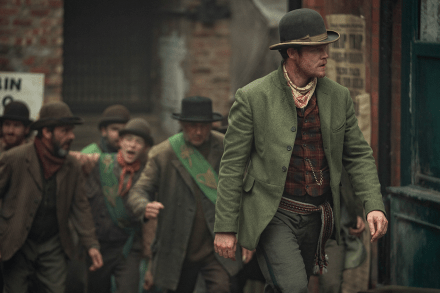
First the surprising news: not a single one of the four Guinness siblings in 1868 Dublin is black; and only 25 per cent of them – surely a record for Netflix – is gay. Now the bad: despite these oversights, House of Guinness remains very recognisably the work of Steven Knight, the Peaky Blinders screenwriter who once set a drama in 1919 Birmingham and said to himself: ‘I know just what this period needs to make it more echt: a cameo appearance by dub poet Benjamin Zephaniah.’ As a Brummie (more or less), I loathed Peaky Blinders.

Believe it or not, Russia is great

I have been invited to Moscow by the Russian Orthodox patriarchate because the organiser is a fan of my podcast. Everyone at home thinks I am either dangerous or mad. My mother is convinced I’m going to be bumped off by the FSB or killed by a drone. Others claim I have become a useful idiot of the evil dictator Putler because the patriarchate are merely his stooges. ‘Is that true?’ I ask the patriarchate’s media affairs guy. ‘Well, under Peter the Great we were run by the government. And under communism we weren’t allowed to exist. So you could argue that, historically, we’re about as independent as we’ve ever been.’ When I put the same question to an archbishop, his response is more forthright.

Netflix’s Hostage is an act of cultural aggression

Apart from hunting, one of the very few consolations of the end of summer is that telly stops being quite so dire. But that moment hasn’t quite arrived yet – as you can tell from the fact that I’m reviewing Hostage. There’s so much that is annoying about Hostage that I don’t know quite where to begin. But let’s start with its cloth-eared use of the word ‘abducted’. Suppose you were the prime minister (Suranne Jones) and your implausible Médicins Sans Frontières husband Alex (Ashley Thomas) had been kidnapped by a masked terror group in French Guiana and you had to brief your teenage daughter on what had happened, which verb would you use: the formal, uptight, Latinate, police-procedural one or the normal spoken-English one?

Alien: Earth is wantonly disrespectful to the canon

I once spent a delightful weekend in Madrid with the co-producer of Alien. His name was David Giler (now dead, sadly, I’ve just discovered) and he’d hit upon the bizarre idea of trying to get my anti-eco-lunacy book Watermelons made into a Hollywood movie. The film project never came off but I did learn an important lesson in our time together, hanging out in nice restaurants and pretending to work: if you want a happy life cushioned from financial care, the secret is to wangle yourself percentage points of a successful franchise. Another example of this is Franc Roddam, with whom I once spent an even stranger weekend in Accra, Ghana. Roddam devised the format for the MasterChef concept and has been sitting pretty ever since.

I love how awful My Oxford Year is

The punters are saying My Oxford Year is a disaster. ‘Predictable, uninspiring and laughable,’ complains some meanie on Rotten Tomatoes. But they’re missing the point. My Oxford Year may be a work of accidental genius, but it’s a work of genius nonetheless. You will squirm, you will laugh derisively, you will cringe. By the end, though, you will be forced to admit that you secretly enjoyed every moment, for this is the very examplar of a so-bad-it’s-good masterpiece. You know it’s going to be awful from the very first frame: a still representing the bookshelf of our handsome, clever and poor heroine Anna De La Vega (Sofia Carson) who has come up to Oxford to spend a year doing an MA in Victorian poetry prior to taking up a job at Goldman Sachs.

Worth watching for Momoa’s gibbous-moon buttocks alone

If you enjoyed Apocalypto – that long but exciting Mel Gibson movie about natives being chased through the jungle with (supposedly) ancient Mayan dialogue – then you’ll probably like Chief of War, which is much the same, only in Hawaiian. Like Apocalypto, it even has sailing ships appearing mysteriously from Europe with crews that serve the role of dei ex machina, rescuing endangered native protagonists at key moments. This time our based-on-a-true-story hero is Ka’iana, the 18th-century Maui chieftain who succeeded in uniting the four warring island kingdoms (Oahu, Maui, Molokai and Lanai) and turned them into the kingdom of Hawaii.

Long live YouTube! It has been good to conspiracists like me

Even though I loathe almost all forms of technology and would happily disinvent the lot (apart, possibly, from airships which are well overdue a revival), I cannot pretend that YouTube has not been good to me. I am pleased to read that it is now the second most-watched service on British televisions, behind only the BBC. All of it, amazingly, is still on YouTube In the antediluvian era that I mainly long for, you couldn’t make your own TV shows unless you were either rich enough to own a TV station or you submitted to the rules, regulations and standards of behaviour commensurate with being employed by that TV station. But now you can. Anyone can. Even someone as technology-illiterate and unemployable and underfunded as me.

The demise of South Park

President Trump has a very small willy. His boyfriend is Satan. He’s a con man who will sue you for billions on the flimsiest of pretexts but will probably settle for a few hundred million. If this is your idea of cutting-edge satire then you are going to love the new season of South Park, which includes a number of scenes of Trump stripping off in his White House bedroom and trying to interest the devil in his minuscule appendage. But if I were Paramount+ and I’d just signed a $1.5 billion deal for the exclusive five-year rights to South Park, I think I’d be feeling a bit shortchanged by the première of the show’s 27th season. Sure, you could argue that South Park was always this way: the first episode (in 1997) was, after all, titled ‘Cartman Gets An Anal Probe’.

Turgid, vacuous, portentous: The Sandman reviewed

One of the great things about getting older is no longer feeling under any obligation to try to like stuff you were doomed never to like. Steely Dan, Dickens, Stravinsky, Henry James, George Eliot, Wagner, the Grateful Dead, Robin Williams, the collected films of Wes Anderson and Tim Burton, Graham Greene, the Clash, The Young Ones, Seinfeld, Emily Dickinson – obviously I could go on. I don’t like them; I never did like them; but the difference between then and now is that now I know I’m right, whereas then I thought it might be a personal deficiency. Also fairly high on my ‘No’ list would be superhero comics, superhero movies and late-1980s graphic novels, including the excessively fawned-upon Watchmen.

The Simpsons may be genius – but it’s also evil

Marge Simpson is dead. But does anyone care? I’ve written loads of pieces over the years about the genius of The Simpsons – how extraordinarily prescient it is (most famously when, in 2000, it predicted a Trump presidency), how delightful the subplots are, how it works on so many levels – but I’m now beginning to suspect that all along it was a honeytrap designed to seduce you and your children into screen zombiedom. Obviously I don’t want to push the ‘TV is bad for you’ argument too hard because I might be out of a job.

Style, wit and pace: Netflix’s Dept. Q reviewed

Can you imagine how dull a TV detective series set in a realistic Scottish police station would be? Inspector Salma Rasheed would have her work cut out that’s for sure: the wicked gamekeeper on the grisly toff’s estate who murdered a hen harrier and then blamed its decapitation on an innocent wind turbine; the haggis butcher who misgendered his vegetarian assistant; the Englishman who made a joke on Twitter about a Scotsman going to the chippy and ordering a deep-fried can of Coke… It would get lots of awards, obviously, but I doubt it would do that well in the ratings. As with Slow Horses, this is about enjoying the company of loveable misfits But you needn’t worry about Dept. Q (Netflix).

Excruciating: Sirens reviewed

You had a narrow escape this week. I was about to urge you to watch Sirens, the latest iteration of that fashionable genre Ultra-Rich Lifestyle Porn, currently trending on Netflix. But luckily for you I watched it right to the end and got to witness the whole edifice collapsing like a speeded up version of Miss Havisham’s wedding cake. Normally, this doesn’t happen. Like most critics I have neither the time nor the work ethic to view a TV series in its entirety before putting in my tuppenny-ha’penny’s worth. I just assume that if something starts well or badly it’s going to continue that way. Not Sirens, though.

If you are of a certain age, you’ll really enjoy Tina Fey’s The Four Seasons

The Four Seasons is one of those shows you notice in the ‘Top TV Programmes on Netflix’ section, see it’s some kind of glossy romantic comedy starring American actors you’ve vaguely heard of, and skip past quickly in search of something with zombies or subtitles. This would be a mistake though because, at least if you are of a certain age, you’re really going to enjoy it. I think the litmus test is whether you’re old enough to remember the 1981 Alan Alda film on which it is based, which I do, just about, vaguely. It’s that kind of movie where a bunch of old friends who have been holidaying together regularly since university – does anyone actually do this? – are discombobulated by and rebond over a traumatic event.

Better than Hollywood: Netflix’s The Eternaut reviewed

‘Next time you do a review, you’ve got to find something you like. You’ve been far too negative,’ said the Fawn. ‘Well, it’s hardly my fault if everything on TV is crap at the moment. I can’t just call up good stuff to order,’ I said. ‘Try,’ said the Fawn. Luckily – and unwontedly – Netflix has come to my rescue with a dystopian sci-fi series called The Eternaut. Though I’m not totally convinced by the name – a conflation of ‘eternity’ and ‘astronaut’ – it’s a very enjoyable watch, which confirms, yet again, Delingpole’s Iron Law of Television: always go for the shows with subtitles. This one is from Argentina, based on a graphic novel written by Hector German Oesterheld with artwork by Francisco Solano-Lopez.

Olenka Hamilton, Melanie McDonagh, Hannah Moore, James Delingpole and William Atkinson

31 min listen

On this week’s Spectator Out Loud: Olenka Hamilton ponders whether Poland’s revival is a mirage (1:24); Melanie McDonagh asks who killed the postal service (9:52); Hannah Moore argues that family cars aren’t built for families any more (14:35); James Delingpole reviews Careme from Apple TV and Chef’s Table from Netflix (21:15); and, William Atkinson provides his notes on Thomas the Tank Engine (26:48).  Presented by Patrick Gibbons. Produced by Oscar Edmondson and Patrick Gibbons.

Confection of sex, bad history and nonsense: Apple TV+’s Carême reviewed

Antonin Carême was known as the ‘chef of kings and the king of chefs’. His patrons and employers included Talleyrand, Napoleon, the Prince Regent, Tsar Alexander and the then richest man in France, James Rothschild. He popularised the tall ‘toque’ hat worn by chefs; he either invented or perfected culinary classics including the vol-au-vent, the profiterole and the mille-feuille, as well as sauces including velouté and béchamel. All this he managed to achieve despite having come from a desperately poor background, raised in a shack in revolutionary France and sent off as a young lad to help make ends meet as a kitchen boy and later as apprentice to Paris’s best patissier. A fascinating rags to riches story, you might think.

It should be illegal for TV baddies to profit from their psychopathic acts

I’m about to give away the opening scene of the latest gangsters-are-cool drama MobLand. Don’t worry. It won’t spoil anything. By the end of this review you won’t want to watch even a moment of this dog’s breakfast of an atrocity of charmless, witless, misbegotten, amoral tripe anyway. So we’re in a basement with Tom Hardy, playing his usual amiably ruthless hard-man character. This time he’s called Harry Da Souza and he’s the chief fixer for a London-based Irish crime family called the Harrigans. On this occasion, Da Souza is mediating between two lower-tier rival gangs, whom he has orders to make apologise to one another. After much tense negotiation, the gang leaders agree to shake hands but refuse to apologise.

Surprisingly good: Amazon Prime’s Last One Laughing reviewed

‘What will it take to make Richard Ayoade laugh?’ If you find this question about as enticing as ‘Whose turn is it to deworm the cat?’ or ‘What is Keir Starmer’s favourite plant-based ready meal?’ I really don’t blame you. But still if you watch Last One Laughing (Amazon Prime), I think you might change your mind. The idea of this reality series is to confine ten comedians for six hours in a Big Brother-style enclosure and ban them, on pain of expulsion, from being amused by one another’s jokes. One misplaced smirk gets you a yellow card; the next ill-judged titter and you’re out on your ear. The winner, as per the title, is the last one laughing.

Dope Thief is a cut above your usual inner-city crime-drama porn

I really had no interest in watching Dope Thief. It’s another of those crime dramas set in a bleak-looking city – possibly there are some pretty parts of Philadelphia but we only get to see the bad bits – where everyone seems to be on welfare or a drug dealer, or both, everything looks washed out, grimy and grey, and where you could die horribly any second. And I get quite enough of all this on my increasingly rare trips to London. But I was desperate. I’ve finished the second season of Severance (very good; definitely worth the effort); White Lotus will only see you through one night a week; season three of Reacher is so dismal it doesn’t even qualify as ‘so bad it’s good’. So I needed something else and the online reviews for Dope Thief looked decent.

The downfall of climate change poster boy Michael Mann

Even if you’ve never heard of Michael Mann, you will have felt his baleful influence on your energy bills. He is the inventor of the hockey stick chart, which shows a sharp increase in late 20th century global temperatures, like the blade of an ice hockey stick. It put rocket boosters on the climate change scare and was used as an excuse by policymakers to send green taxes, tariffs and regulations soaring. Mann was an obscure academic who had just been given his PhD at the University of Massachusetts when his graph was published in the journal Nature in 1998. Within months – fêted everywhere from the New York Times to the Intergovernmental Panel on Climate Change (IPCC) – he’d become the poster boy for the alleged global warming apocalypse.