James Delingpole

James Delingpole

James Delingpole reviews television for The Spectator.

How I learned to embrace my inner toff

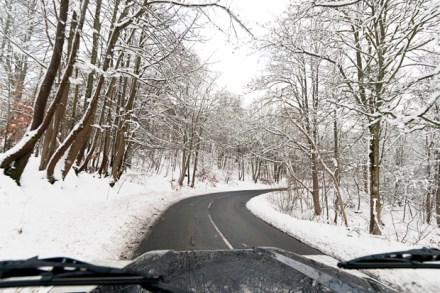
I do hope it’s a terrible winter this year: a total bastard where everyone’s snowed into their drives and those few who do manage to escape end up being slewed across the road or filmed in tragic tailbacks by drones for BBC news bulletins or stuck in ditches and having to tramp miles across icy fields trying to find a friendly farmer to pull them out. Nothing personal. It’s just that I’ve finally got hold of the car I always wanted — a Land Rover — and I’d hate people to think I only bought it for class-identity or small-penis or show-off reasons. I want to feel vindicated as a practical, responsible, sensible family man. I want the four-wheel drive to do its proper thing, rather than just be an expensive, fuel-consumption-boosting waste of space.

Faulty ignition

Apart from the next Game of Thrones, there’s nothing I’ve been looking forward to quite as much as The Grand Tour (Amazon Prime). I like Clarkson, Hammond and May, I like banter, I like political incorrectness, I like exotic scenery, I like cars, I like puerile jokes and I liked Top Gear. Take the same ingredients but with a £4.5-million-per-show budget — more than four times what they had with the BBC — and you’d have to ask yourself: ‘What could possibly stop this from being the greatest TV show ever?’ Well, I hate to be a party pooper but it’s definitely not there yet. We had some friends staying for the weekend and we all sat down eagerly after supper, fully expecting to be wowed.

The moral arc of the universe bends towards me

So I made £250 betting on Trump to win the presidency. It would have been more, except that every time I got close to topping up my stake, this boring, mimsy, responsible voice in my head kept saying: ‘Now, now James. Don’t be silly. All your sensible friends who know much, much more than you do about politics have been telling you that President Trump just isn’t going to happen.’ One of them was m’learned colleague Toby Young. Until recently we used to do a podcast together.

RIP Leonard. You were my man

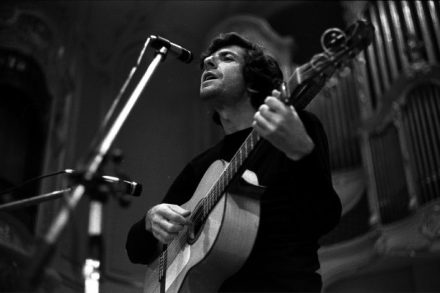
Everyone has a special place in their heart for the late Leonard Cohen – from his 80-something contemporaries to middle-aged musos to teenage girls. The last – quite unusual for an artiste of Cohen's generation, especially one so apparently glum, uncommercial and downbeat – is largely thanks to his composition 'Hallelujah', which was what Alexandra Burke sang to win the X-Factor final in 2008.  It was memorably covered for Generation X by the doomed Jeff Buckley in an angelic rendition on his 1994 album Grace. Oh and also it appears in a very sad moving scene in Shrek. And it's not even Cohen's best song. Cohen himself thought little of it when it trickled out on his 1984 album, Various Positions.

Crown jewels

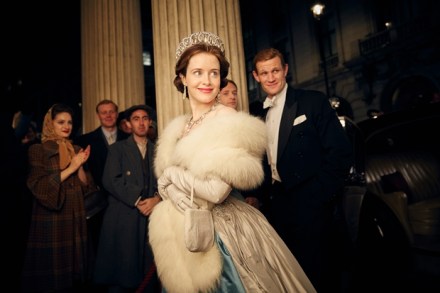
Nairobi. February 1952. Laughing children brandishing sticks are driving an indignant bustle of ostriches up a rudimentary 1950s-Africa semi-bush runway towards the camera, when — WHOOSH! — right over their heads skims the exact BOAC aircraft in which the actual soon-to-be Queen Elizabeth flew to Kenya, as painstakingly rebuilt by the world’s top aircraft restorers at a cost of only $27 million... Actually, I made up the last detail. But if you want to know why the drama departments at the BBC, Channel 4 and ITV are quaking in their boots just watch a couple of episodes of Netflix’s sumptuous, leisurely and immaculate recreation of the Queen’s early years on the throne. It’s like the moment when America entered the war: ‘Such materiel!

Hell is other people’s dogs

I’ve now just about reached that delightful stage in life where you’re no longer exposed to the horrors of other people’s children. This is because my friends’ offspring are mostly either safely away at university or virtually invisible in some far-off room staring at a screen, appearing only briefly to grunt some cursory greeting as they collect their food or drink before retiring once more to their virtual teenworld. But just when I thought it was safe to go back into the water, I’ve discovered that it isn’t, actually, because my friends have started to replace their vanishing children with something much, much worse: their stupid bloody annoying dogs. Like children, dogs are the litmus test for all your friends’ worst weaknesses.

The lying game | 27 October 2016

‘Adam Curtis believed that 200,000 Guardian readers watching BBC2 could change the world. But this was a fantasy. In fact, he had created the televisual equivalent of a drunken late-night Wikipedia binge with pretentions to narrative coherence...’ You really must watch Ben Woodhams’s brilliant 2011 Adam Curtis-pastiche mini-documentary The Loving Trap, which you’ll find on YouTube. It’s so devastatingly cruel, funny and accurate that when I first saw it I speculated that Curtis would never be able to work again. https://www.youtube.com/watch?v=x1bX3F7uTrg But this was fantasy. Of course, I knew that Curtis would be back, not least because to be parodied in this way is not an insult but a sure sign that you’ve seriously made it.

The most persecuted minority at universities

A few columns ago, I told the mortifying story of how I totally died at the Oxford Union. Today I’m going to tell you how I managed to avoid the same fate on a more recent trip to the Cambridge Union, where I spoke in a debate and opposed the motion: ‘This house would open its doors to refugees.’ Partly, I was just better prepared. One of the benefits of a public-speaking disaster is that it makes you particularly loath ever to repeat the horror. I can’t say I spent any longer on my speech. What I did do, though, was co-ordinate much more with the rest of my team beforehand (ex-MEP Godfrey Bloom, current MEP Roger Helmer, economist Alasdair Macleod) so that we knew what we were all going to say and didn’t repeat one another’s arguments.

Hong kong: Eating it up

The brilliant thing about Hong Kong is that you don’t have to worry for a second about all the culture you’re missing. That’s because there’s absolutely nothing to do there except shop (I got a seriously nice bespoke dinner jacket for just £400 from Lafarfalla Tailor) drink and, most importantly, eat. Oh all right, so there are some half-strenuous walks you can do in the surprisingly uncrowded countryside just outside the city (you can cab it from the centre to the pretty Shek O beach — which on weekdays is half-deserted — in just 25 minutes) but even then the main purpose of the exercise is to end up in another restaurant.

Revenge of the robots

The other day James Lovelock, the sprightly 97-year-old inventor of Gaia theory, told a mildly surprised Guardian interviewer that he wasn’t remotely worried about climate change any more. A far more plausible threat, he explained, were all the killer robots that would soon emerge and find no use for us inconvenient humans. Apparently this is a fashionable worry. It has to do with something called the ‘singularity’, which is the theoretical moment when machines become so sophisticated than they can outthink us, then advance at such a pace that we become powerless to stop them.

A good Brexit is a hard Brexit

What you really should have done if you were in Birmingham on Monday this week was skip the not notably riveting Philip Hammond speech, and head instead for the fringe event run by the Bruges Group starring me, Professor David Myddelton and Charles Moore. I can’t speak for my performance (modesty forbids me) but my fellow panellists were brilliant: funny, incisive and as optimistic as you’d expect of a pair of ardent Brexiteers addressing the victorious home crowd for probably the first time since that happy day in June. (Charles is on stage talking about all of this (and more) in London on Monday, by the way. Tickets here). ‘Which of us here could ever have imagined that we’re actually part of the majority: the 52 per cent?’ I asked.

I want my Brexit good and strong

What you really should have done if you were in Birmingham on Monday this week was skip the not notably riveting Philip Hammond speech, and head instead for the fringe event run by the Bruges Group starring me, Professor David Myddelton and Charles Moore. I can’t speak for my performance (modesty forbids me) but my fellow panellists were brilliant: funny, incisive and as optimistic as you’d expect of a pair of ardent Brexiteers addressing the victorious home crowd for probably the first time since that happy day in June. ‘Which of us here could ever have imagined that we’re actually part of the majority: the 52 per cent?’ I asked. And lots of people clapped at the wonderful warm feeling this gave them. But then I introduced a worm into their apple.

Close encounters of the Eighties kind

Stranger Things is the most delightful, gripping, charming, nostalgic, compulsive, edge-of-seat entertainment I’ve had in ages. Like a lot of the best TV these days, it’s on Netflix, which I highly recommend so long as you can cope with the technical complexities of getting it to appear on your screen in the first place. Yeah, I know, all you bastard millennial types sneering at Granddad for his inability to do stuff that’s like so totally easy and obvious.

Hong Kong offers an exciting vision of a post-Brexit future

Since he moved to Hong Kong three years ago, the Rat’s Cantonese has been coming on apace. This has rather less to do with his language skills — never that much in evidence on his school reports — than it does with the fact that my stepson works in what is still, despite the mainland Chinese’s best efforts, one of the most aggressively free-market cultures in the world. ‘It’s like this,’ Rat explained, when the Fawn and I visited earlier this year. ‘If you want to get a cab somewhere urgent in the morning and you can’t speak good enough Cantonese then basically you’re stuffed. The drivers just swear at you and drive off. They haven’t got time to be wasting listening to dumb Gweilo trying to make themselves understood.

The miracle of Hong Kong

Since he moved to Hong Kong three years ago, the Rat’s Cantonese has been coming on apace. This has rather less to do with his language skills — never that much in evidence on his school reports — than it does with the fact that my stepson works in what is still, despite the mainland Chinese’s best efforts, one of the most aggressively free-market cultures in the world. ‘It’s like this,’ Rat explained, when the Fawn and I visited earlier this year. ‘If you want to get a cab somewhere urgent in the morning and you can’t speak good enough Cantonese then basically you’re stuffed. The drivers just swear at you and drive off. They haven’t got time to be wasting listening to dumb Gweilo trying to make themselves understood.

Victoria’s secret: none of it’s true

Did you know that Queen Victoria might never have married Prince Albert had it not been for an amazing stroke of luck on a woodland walk in Windsor Great Park, involving the queen’s beloved spaniel Dash. Dash, as good fortune would have it, managed to break his leg on a handy knife that someone had left lying around. And the hitherto remote and stuffy German princeling, carelessly ripping yet another of his shirts (the second in about a week) to create a makeshift bandage, splinted Dash’s leg with such tender care that flighty Emma knew at once that cold, disapproving Mr Knightley was the man for her. And that, I’m afraid, is why I’m not going to be watching another minute of this silly, facile, irresponsible series.

What you learn when you learn a poem by heart

I’ve just learned by heart another poem — my first in nearly 30 years. The one I chose was A.E. Housman’s ‘On Wenlock Edge’, not for any special reason other than that it’s part of the canon and that it happened to be in an anthology conveniently to hand by the bath when I decided to embark on this new venture. When I started, it was purely for the mental exercise. (I mean, nice though it is to be able to quote lines of verse, I can’t conceive of many circumstances when I’ll be able to wheel out a phrase like ‘When Uricon the city stood’ and be congratulated for my insight, erudition and pertinency.

Pussy galore

I think I might be turning into Alf Garnett. When I was growing up I saw him as an obnoxious, cantankerous, ranting old git that my grandparents’ generation seemed to find funny but who left me cold. Now I’m beginning to identify with him as an unfairly maligned and surprisingly youthful fount of wisdom whose tragedy is to be ignored by maddeningly unsympathetic womenfolk and infuriating kids. That was my thought, anyway, watching Till Death Us Do Part (Thursday, BBC Four) — a one-off remake of one of Johnny Speight’s original Sixties scripts, with The Fast Show’s Simon Day as Alf.

George Osborne’s gone, thank God. So why’s Mark Carney still around?

Did you see that odd photo of George Osborne looking shifty, queuing up in the Vietnamese jungle for the chance to fire an M60 machine gun? I found it interesting for a number of reasons. One, obviously, is that it’s probably the first time in five years Osborne hasn’t been pictured wearing a hard hat and goggles. Another is what it tells us about his earnings prospects on the US speaker tour circuit: those guns can fire up to 650 rounds a minute — so at the local tourist rate of £1 a bullet that’s quite an expensive cheap thrill. Mainly, though, what struck me about that snap was just how quickly fortune’s wheel can turn.

When autumn comes

You know when late summer has arrived because conkers are starting to form on the horse chestnuts, your eagerness to get the kids back to school has reached fever pitch, and another season of The Great British Bake Off (BBC1, Wednesdays) has begun. If it feels like there has never, ever been a time when GBBO wasn’t on, this is because there hasn’t. Here are some key facts about our favourite telly comfort blanket you won’t find on Wikipedia. 1. Mary Berry has barely aged at all since the show’s first edition was broadcast in 1946 immediately after Muffin the Mule.