James Delingpole

James Delingpole

James Delingpole reviews television for The Spectator.

A Formula 1 doc for people who hate Formula 1

Some years ago I was invited to the British Grand Prix at Silverstone courtesy of a watch manufacturer. As freebies go it was one of the best: endless champagne, overnight in a posh hotel near the track (wife invited too), then a trip by helicopter so as to avoid all the frightful traffic jams. All was going swimmingly until the actual race… God, it was boring. Noisy too. You’re stuck in an elegant marquee with endless booze and as many gold-plated, jewel-encrusted lobsters as you can force down your gullet, but it’s impossible to relax or chat or enjoy yourself because screaming endlessly in your lughole is the ‘neeaaawwww’ noise of those stupid bloody racing cars.

Foreign language TV is without the political correctness spoiling English drama

Every cloud has a silver lining. Never again are you likely to have a better opportunity to catch up with those classic TV series your friends have been banging on about but which you've not had time to see. I'm not saying my own list is definitive, only that if you're not blown away by all of the below, you really need your taste examining.  There isn't space to give my recommendations in one go, so this week I will cover War and Drugs (Pt I): Band of Brothers If you like war movies then this is at least as exciting as the first twenty minutes of Saving Private Ryan, only spread out over ten, often nail-bitingly tense, visceral, grimily authentic episodes.

Should ‘Spanish flu’ have been known as ‘American flu’?

There's an ongoing debate in the media as to whether or not president Trump is being 'racist' by repeatedly referring to Covid-19 as a 'Chinese' virus. 'It's not racist at all,' Trump insisted at one press conference. 'It comes from China, that's why.' This is at least objectively true – unlike the case with Spanish Flu, which didn't come from Spain at all. In fact the 1918 pandemic – which killed an estimated 50 to 100 million people around the world – most likely originated in the flat, treeless cattle country of Haskell County, Kansas, west of Dodge City. But it was never known as American Flu. Why?

Old-school Sunday-night family viewing: ITV’s Belgravia reviewed

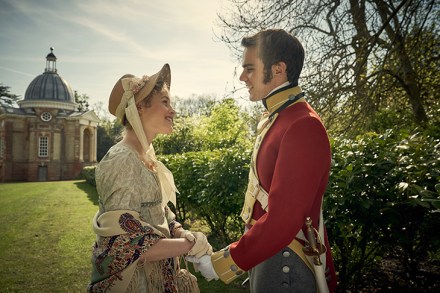
The world may be going to hell in a handcart but some things remain reassuringly unchanged: Julian Fellowes period dramas about feisty dowager duchesses, social climbing and snobbery, say. I like and admire Fellowes so I don’t want him to take this the wrong way. But when I say that his new series Belgravia (ITV) borrows from the same template he employed so successfully with Downton Abbey, and before that Gosford Park, and also in that series set on the Titanic that didn’t do quite so well, I’m not trying to suggest he’s a one-trick pony. More that he’s a canny chap who understands his market, has found the perfect formula and is damned if he’s not going to milk it for all it’s worth.

The refreshing darkness of Netflix’s Locke & Key

From our US edition

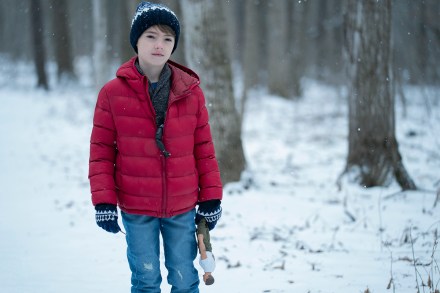
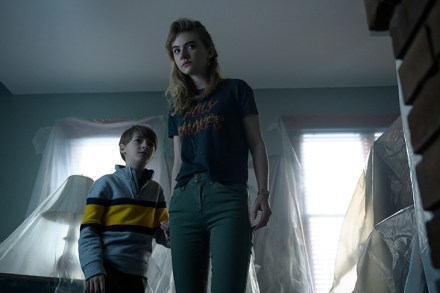
Don’t be put off by the slow first episode, which makes you fear it’s just going to be another of those so-so emo magical-fantasy adolescent dramas in which Netflix abounds: Locke & Key is superior, addictive and bingeworthy stuff in the league of, or possibly even better than, Stranger Things. It begins with an achingly clichéd scenario — family driving across America to seek new life in exotic location, kids bickering in the back, awkward high-school experiences awaiting them, etc. — and the familiarity never lets up.

locke & key

Malorie Blackman’s Noughts + Crosses has nothing to tell us about Britain today

The BBC could scarcely have chosen a less auspicious time to release as its flagship Spring drama an adaptation of Malorie Blackman's contentious, race-baiting Noughts + Crosses. For one thing, it is under increasing pressure to demonstrate that it is not purely the propaganda arm of the liberal, metropolitan elite. For another, a dystopian fantasy about a Britain where blacks are the bullying ruling class and whites are the oppressed Untermenschen has even less urgent or topical satirical value than it did when it was first published 18 years ago. Blackman, I'm sure, has done very nicely out of her young adults trilogy.

The best Gangster shows to binge-watch this weekend

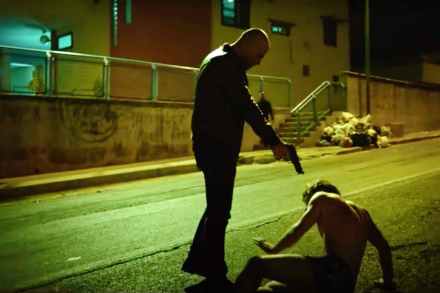
Gomorrah (Sky) https://www.youtube.com/watch?v=-4QORgagblU Life in the Naples Mafia (the Camorra) is nasty, brutish, short – and nothing like Goodfellas. Even when you’ve made your millions from the drugs trade, there’s nothing to spend it on save your fleet of armoured 4 x 4s and your gilded cage in some bleak, rundown suburb which it’s never safe to leave because you’ll only end up arrested or shot. Spoiler alert: almost everyone dies over the four seasons of this mesmerisingly bleak, moodily soundtracked, fabulously compulsive drama.

Too edgy and clever to be wasted on kids: Netflix’s Locke & Key reviewed

One of my perpetual gnawing terrors is that I’ll recommend a series that looks initially promising but turns out to be total rubbish, meaning I’ll for ever have thousands of viewers’ wasted lives and disappointment on my conscience. But my even greater fear is that I’ll peremptorily condemn something after one or two episodes which subsequently reveals itself to be a near-masterpiece. This almost happened with Locke & Key (Netflix). ‘You realise I’m watching this on sufferance. The second you’ve seen enough to review, we’re moving on to something else,’ declared the Fawn. And I could sort of see her point.

Why I’ve lost respect for Jeremy Clarkson

If Jeremy Clarkson had lived through the Wars of the Roses he would have been neither a Yorkist nor a Lancastrian. He would have lurked in his castle, reassuring each side of his unswerving loyalty, till the moment came when Richard III lost his crown. At this point Clarkson would make his position absolutely clear: he'd been a diehard Lancastrian all along. How do I know this? Because I've just seen 'Seamen' (The Grand Tour) in which Clarkson reveals himself as an ardent believer in climate change. He mentions it about half a dozen times in one episode - almost to the point where you wonder if he isn't taking the mickey. Perhaps he is.

Hunters is 2020’s most ridiculous series

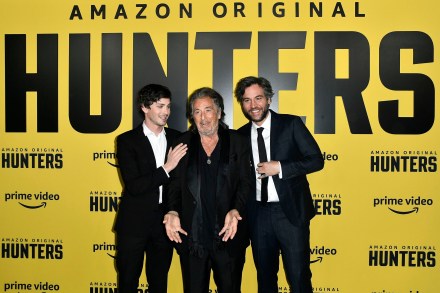
What a brilliant idea the concept of Hunters (Amazon Prime) must have sounded after the third or fourth Martini. "So, like, it's set in the 1970s and America is swarming with Nazis. Actual Nazis. They've infiltrated every level of society and they're totally evil and powerful, like vampires with swastikas. And all that stands in their way to create a Fourth Reich is a plucky band of diverse Nazi-hunters, led by a Bruce-Wayne-style concentration camp survivor and billionaire played by Al Pacino!" But then, after the hangovers kicked in, wiser counsels ought to have prevailed. Someone might have pointed out that, with the Holocaust still within living memory, maybe it's a bit too soon to turn the subject into schlocky superhero revenge porn for Generation Z.

The appeal of psychopaths

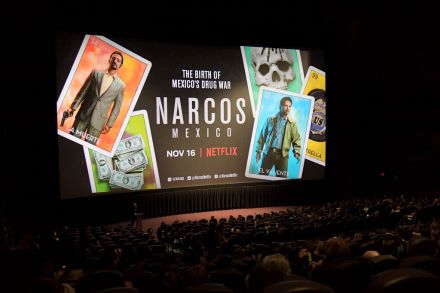
Ever since the end of Gomorrah season four (Sky Atlantic) I have been bereft. I eked it out for as long as I could, going whole weeks without watching an episode — rationing it and savouring it as you do when you’re down to your last Rolo. But eventually I could put off the climax no longer, I watched them all die — as everyone always does in Gomorrah, so I’m not spoiling anything — and now I’m on the hunt for a substitute. So far the most obvious candidate is Narcos: Mexico season two (Netflix). This contains most of the same key ingredients: bling, convoys of vehicles ripe for ambush, drugs shipments, betrayal, tense stand-offs that could end up either in extreme violence or a cunning, game-changing new arrangement, torture, etc.

The Democrats are fracking insane

From our US edition

This article is in The Spectator’s March 2020 US edition. Subscribe here. What could be more emblematic of the American Dream than fracking, the miracle technology that has created thousands of real jobs, lowered the cost of living, generated wealth and prosperity, boosted competitiveness and helped make the United States not just energy independent, but a net exporter of natural gas and petroleum products for the first time in decades? And what could be more characteristic of the elitist, small-minded, anti-market, anti-blue-collar, anti-growth, green-obsessed liberal-left than that the Democratic party is hell-bent on banning it?

fracking
cats

Cats: The Snuff Movie

From our US edition

This article is in The Spectator’s March 2020 US edition. Subscribe here. In the 1970s, the English humorist Alan Coren set out to create the grabbiest literary cover package in the history of bestsellerdom. He titled his book, a collection of funny essays, Golfing for Cats and hit the trifecta by putting a massive, and otherwise totally irrelevant, swastika on the front. Needless to say, the book sold well. Golf isn’t as big now as it was then, but Coren’s other two ingredients remain staples of popular entertainment.

SAS: Who Dares Wins is harsh, gruelling and transgressively countercultural

SAS: Who Dares Wins (Channel 4, Sundays) is literally the only programme left on terrestrial TV that I can bear to watch any more. And I’m only slightly exaggerating. Where else, anywhere from the BBC to Channel 4, would you see a woman being punched in the face and made to cry by an ex-SAS soldier for your amusement and delectation? Where else would the competition not be rigged in one way or another so as to ensure that the appropriate race and gender mix made it through to the end? Yes, of course it was shocking a few weeks back watching midwife Louise Gabbitas, 29, get thumped several times in the head by a bloke. Especially when we viewers knew that he was in fact undercover ex-special forces and had been sent to spy on her.

How to be a man

  The river of death has brimmed his banks And England’s far and Honour’s a name But the voice of a schoolboy rallies the ranks ‘Play up! Play up! And play the game!’ Even as long ago as the first world war, men bitterly mocked the tritely jingo-istic sentiment of Sir Henry Newbolt’s poem ‘Vitaï Lampada’. So it wouldn’t remotely surprise me if it turned out that I was the last chap on earth who still finds it an inspiration. Yes, I know all that G.A.

The Witcher’s hours

From our US edition

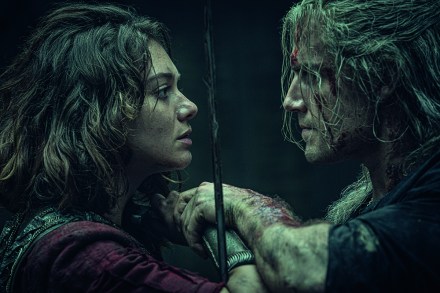
This article is in The Spectator’s February 2020 US edition. Subscribe here. If you want to get really depressed about the future of television, consider this: over Christmas, The Witcher was Netflix’s highest-rated original series on IMDb, beating everything from Black Mirror to Stranger Things and The Crown. The reason you should be depressed is that The Witcher’s popularity may send a dangerous signal to screen producers: don’t worry about the script or the acting, just chuck in lots of monsters, ultra closeups of swords cleaving heads, arrows going into people’s eyes and girls in body-hugging leather fantasy outfits, like a Dark Ages version of Hooters.

witcher

Netflix’s Messiah is a great concept undermined by implausible politics

Sky’s latest bingewatch potboiler Cobra can’t quite make up its mind whether it wants to be an arch, knowing House of Cards-meets-The Thick Of It satire about parliamentary intrigue. Or a full-on post-apocalyptic thriller in the manner of Survivors or The Walking Dead. It ends up succeeding in neither. The premise is that a powerful solar flare is heading towards Britain, leaving the government little time to prepare, and subsequently causing all manner of chaos: plane crashes, hotel fires, escaped prisoners, mass blackouts. Will mild, likeable Conservative prime minister Robert Sutherland (a miscast Robert Carlyle), his fractious cabinet and his civil service prove up to the job of extricating Britain from a new Dark Age?

I’m at risk of becoming a cat person

Just before Christmas our cat Runty died and I wasn’t in any rush to find a replacement. I like cats well enough but I wouldn’t consider them one of life’s essentials. You can’t ride them; they won’t come with you on walks or bark at burglars or gaze at you like you’re the most wonderful, special, adorable person in the entire universe; plus, of course, they are the most evil, deadly and inappropriate predator. Domestic cats kill an estimated 55 million birds each year in the UK alone — and an estimated total (when you add in all the mice, voles, slow-worms, newts and so on) of 275 million wild animals.

A hero for the Snowflake age

From our US edition

This article is in The Spectator’s January 2020 US edition. Subscribe here. What have they done to Jack Ryan? That’s a rhetorical question, by the way: he’s been captured by a crack team of Ivy League majors in Race, Gender and Weaponized Resentment Studies — probably the same guys who wrote the Washington Post headline calling Abu Bakr al-Baghdadi an ‘austere religious scholar’ — and they’ve reengineered him as a beta-cuck pantywaist woke dork for the Age of Snowflakes. To be fair, Jack did slightly show these tendencies in the first season of his Amazon adventures.

jack ryan

BBC’s A Christmas Carol was the victim of tub-thumping lefty politics

'People trust us,' claimed Lord Hall, recently. But like a lot of what you hear from the BBC these days I'm not sure that that is strictly accurate. The BBC's shamelessly biased news coverage over Brexit was bad enough but what has really started in sticking in viewers' craws is the way its relentlessly woke politics have now infected pretty much the entirety of its entertainment output. There is almost no escape from the BBC's finger-wagging lectures, not even when it's Christmas and you're desperately trying to have fun. As exhibit A, allow me to present A Christmas Carol. 'Charles Dickens, Christmas and the BBC: what could possibly go wrong?', you might have thought. To which the BBC replied: 'Hold my beer!