James Bartholomew

James Bartholomew is the author of The Welfare of Nations.

A reply to a young Corbynista

From our UK edition

Dear Sebastian, Thank you for your reply to my letter. Your words are a reality check. I have spent decades closely following economics and politics in various parts of the world and reading a lot of history. You, as you say, are not particularly political. You have pursued your career, played in a rock band and done really well. But the result of our different paths is that we think about politics in a different way. I have to admit that your way is probably more typical than mine. The thing that strikes me, above all, about your letter is how much weight you put upon the personality of individual politicians. You write about whether or not they are consistent and dedicated to the good of the country. You are interested in their aspirations and feelings.
To a young Corbynista

From our UK edition

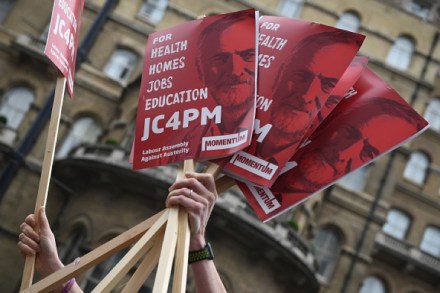
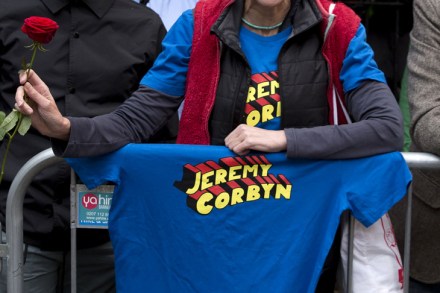
Dear John, I really hope you won’t be offended by this letter from your uncle. I have nothing but respect for you and I would hate to damage the friendly relationship we have had since I first met you when you were six years old. I understand from your aunt that you voted Labour in the latest election and that you are a ‘Corbynista’. In fact even your aunt herself — a lifelong Tory as far as I know — has been saying how nice Jeremy Corbyn is and how much better he handled the Grenfell Tower tragedy than Theresa May did. Of course, you can vote for whoever you like and it’s none of my business. But I take the risk of irritating you because I would like to tell you why I did not vote for Corbyn.

The disgrace of the British left

From our UK edition

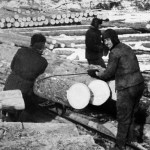
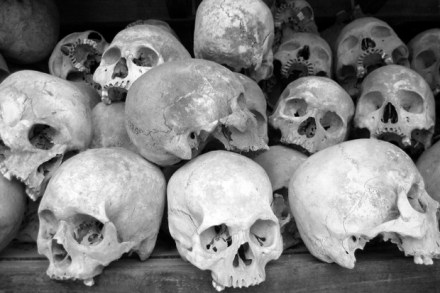
Giles Udy did not start out with the intention of writing this book. He was in Russia about 15 years ago and happened to hear about Norilsk, a remote, frozen part of Siberia where the Soviet Union had established forced labour camps. Udy managed to get permission to visit the place. The temperature there could fall to as low as 50C and many thousands died due to this, low rations and barbaric treatment. The inmates were too weak to dig deep graves in the ice-hardened ground for the ones who died, so sometimes the slow movement of the Earth still brings bones to the surface. Udy’s original idea was to write about the 300,000 people who passed through Norilsk over the years.

Boris Johnson’s closing speech was the defining moment of the campaign

From our UK edition

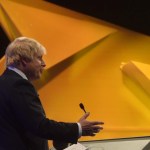
For me, last night provided the defining moment of the campaign. I was in the audience of 6,000 or so at the Wembley Arena listening to the final major debate, hosted by David Dimbleby. As far as I could tell, the evening was turning into a win on points for Vote Leave. Ruth Davidson, for the Remainers, had some moments of real success. She banged out a long list of military people who maintained that Britain would be safer within the European Union. She said she was going to take the words of these experts seriously even if the Leave speakers did not. But Andrea Leadsom, for the Leave side, was good and to the point. She was also smiley and sunny in a way that none of those speaking for the Remain side were.

Life in a gulag

From our UK edition

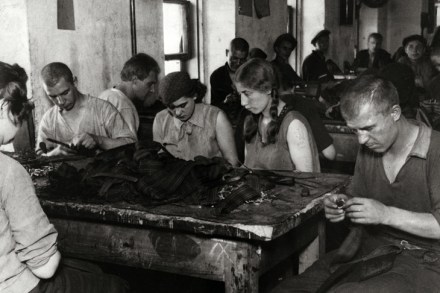
I was invited to Moscow earlier this year to give a talk about my latest book. But while I was there, I wanted to see if I could track down a few survivors of the gulags — the prison work camps where millions died during the communist years. I wanted to film interviews with them to be used as exhibits in a museum of communist terror which I hope to help create. I asked Anne Applebaum, who wrote Gulag: A History of the Soviet Camps, if she could offer any advice on finding survivors. She gave me tips but added: ‘You’re a bit late.’ The people who were incarcerated in Stalin’s work camps are mostly dead. It was going to be difficult — perhaps impossible.

Taught to be stupid

From our UK edition

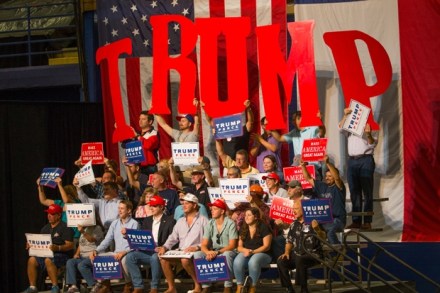
Enough! Enough! For months, the so-called liberal elite has been writing articles, having radio and TV discussions, giving sermons (literally) and making speeches in which it has struggled to understand those strange creatures: ordinary people. The elite is bemused by what drives these people to make perverse decisions about Brexit and Trump. Are they racist, narrow-minded or just stupid? Whatever the reason, ordinary people have frankly been a disappointment. Time, ladies and gentlemen, please! Instead, let’s do the opposite. Let’s try to explain to ordinary people what drives the liberal elite. The elite persists with some very strange and disturbing views. Are its members brainwashed, snobbish or just so remote from real life that they do not understand how things work?

It’s time for Mark Carney to go

From our UK edition

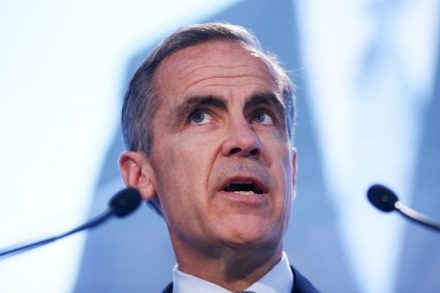
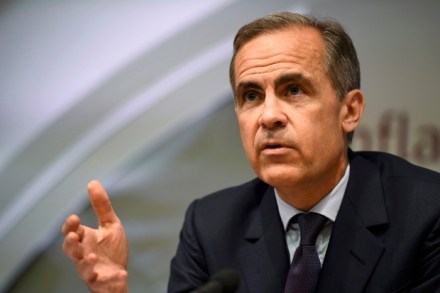
Oh dear. Mark Carney is irritated. His proud independence has been challenged. The Prime Minister had the temerity to admit that she was not altogether thrilled with his ‘super-low’ interest rates and quantitative easing. These policies meant that people with assets got richer, she pointed out. ‘People without them suffered… People with savings have found themselves poorer.’ Mr Carney found this intolerable and haughtily rebuffed her, saying, ‘The policies are done by technocrats. We are not going to take instruction on our policies from the political side.’ Back in your box, Mrs May. Carney’s in charge!

Carney must go

From our UK edition

Oh dear. Mark Carney is irritated. His proud independence has been challenged. The Prime Minister had the temerity to admit that she was not altogether thrilled with his ‘super-low’ interest rates and quantitative easing. These policies meant that people with assets got richer, she pointed out. ‘People without them suffered… People with savings have found themselves poorer.’ Mr Carney found this intolerable and haughtily rebuffed her, saying, ‘The policies are done by technocrats. We are not going to take instruction on our policies from the political side.’ Back in your box, Mrs May. Carney’s in charge!

Britain’s great divide

From our UK edition

In Notting Hill Gate, in west London, the division was obvious. On the east side of the street was a row of privately owned Victorian terraced houses painted in pastel colours like different flavoured ice creams. These houses, worth £4 million to £6 million each, were dotted with Remain posters. On the west side was a sad-looking inter-war council block, Nottingwood House, which had dirty bricks and outside staircases and corridors. No posters there. But that is where my fellow campaigners and I headed — down to the basement entrances with their heavy steel gates. We looked up the names on the canvassing sheets and rang the bell of one flat after another until we found someone who would buzz us in. This was the hunting ground for the Leave campaign.

The Spanish argument for abolishing government

From our UK edition

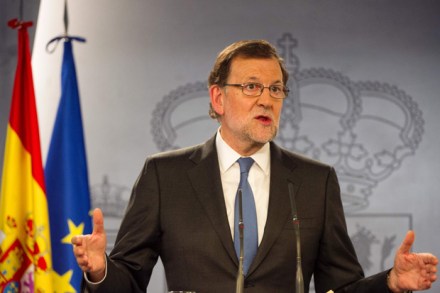
On 26 October last year, the Spanish government shut up shop in preparation for a general election. This duly took place in December but then a strange thing happened: after all the build-up, the arguments, the posters and the television coverage, the result was… nothing. The various parties were so balanced, so mutually distrustful and ill-assorted that no government could be formed. Since last October, therefore, there has been no government in Spain. One can imagine that the average political correspondent would think this a terrible problem, maybe even a crisis. The Financial Times has referred to Spain ‘enduring’ months of ‘political uncertainty’. This is assumed to be a matter requiring furrowed brows and grave tones.

Who needs governments?

From our UK edition

On 26 October last year, the Spanish government shut up shop in preparation for a general election. This duly took place in December but then a strange thing happened: after all the build-up, the arguments, the posters and the television coverage, the result was… nothing. The various parties were so balanced, so mutually distrustful and ill-assorted that no government could be formed. Since last October, therefore, there has been no government in Spain. One can imagine that the average political correspondent would think this a terrible problem, maybe even a crisis. The Financial Times has referred to Spain ‘enduring’ months of ‘political uncertainty’. This is assumed to be a matter requiring furrowed brows and grave tones.

Communism kills

From our UK edition

I went to Budapest last year and did the usual touristy things. I climbed up the hill to the fantasy castle walls in Buda. I took a boat ride. I went to the Turkish baths — edging cautiously into scalding hot water and then summoning up the courage to tip a bucket of cold water over myself. Finally, I reached the grim end of the tourist trail: the so-called House of Terror. On the outside, it looked like every other Hungarian house on the boulevard. Inside, it was a museum set up in the actual place where first Nazis, then communists, inflicted imprisonment, terror and murder. Visiting it was a powerful emotional experience. You see the actual basement cells where prisoners were tortured or hanged.

Left without pleasures

From our UK edition

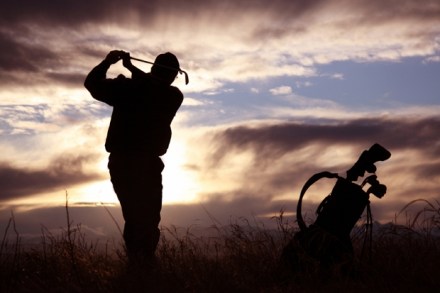
At a party recently I started talking to a friendly, charming woman and we established early on that she was left-wing. We chatted about this and that and for some reason I asked her if she played golf. ‘Oh no,’ she replied. ‘As I’m left-wing, I am not allowed to play golf.’ I was taken aback. Here was a soul who would go to her grave without ever experiencing the thrill of watching her drive soar into the air and race more than 200 yards down the middle of a fairway. A feeling akin to pity brushed across my mind. Concerned, I asked if there was anything else she was not allowed to do. ‘I suppose I am not allowed to play bridge, either.

Keynes’s big mistake

From our UK edition

Some things are universally accepted as true. Water finds its own level; crumpets are best eaten in winter; and the England football team will not win the World Cup again, ever. On a par with these things, the most accepted part of economics is Keynesianism. Of course, John Maynard Keynes said lots of things about economics in between his many and varied sexual encounters. But, as is the way of the world, one of the things he said turned out to be particularly influential. It is so influential that it has gone around the world. It is repeated and relied upon by Japanese finance ministers, New York Times columnists, Nobel prize winners and anti-austerity demonstrators. It is in textbooks around the globe. It is on page 262 of the Edexcel Economics A-level text book.

Where’s the joy gone?

From our UK edition

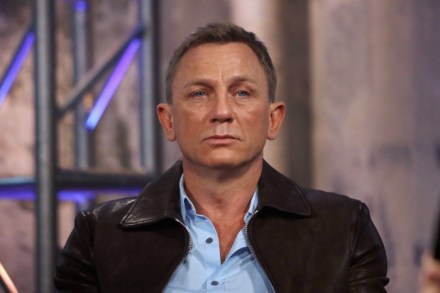
Have you seen Spectre, the latest Bond film? If not, the opening sequence is terrific. Lots of action and excitement. The whole film is full of stunts and thrills. But after watching it, I realised there was something missing: joy, or joie de vivre. Daniel Craig plays Bond like an android who has spent too much time muscle-building instead of having a good time. Contrast Spectre with From Russia With Love, one of the early Bond films. The first scene in which we see Sean Connery as Bond, he is humorous and amorous as he snogs a beautiful woman in a punt moored at the side of a river. He lifts out a bottle of champagne which he has left cooling in the water, tied with a piece of string. He tests it to see if it is cool enough.

I invented ‘virtue signalling’. Now it’s taking over the world

From our UK edition

To my astonishment and delight, the phrase ‘virtue signalling’ has become part of the English language. I coined the phrase in an article here in The Spectator (18 April) in which I described the way in which many people say or write things to indicate that they are virtuous. Sometimes it is quite subtle. By saying that they hate the Daily Mail or Ukip, they are really telling you that they are admirably non-racist, left-wing or open-minded. One of the crucial aspects of virtue signalling is that it does not require actually doing anything virtuous. It does not involve delivering lunches to elderly neighbours or staying together with a spouse for the sake of the children. It takes no effort or sacrifice at all.

Degrees in disaster

From our UK edition

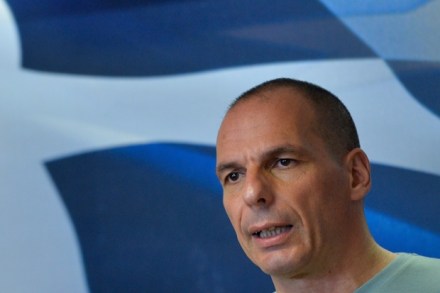
So farewell, Yanis Varoufakis. You used to be Greece’s finance minister. Then you resigned, or were you sacked? You took control of the Greek economy six months ago when it was growing. Yes, honestly! Growth last year ran at 0.8 per cent, with forecasts of 3 per cent this year. The government had a primary budget surplus. Unemployment was falling. Until you came along. Varoufakis was a product of British universities. He read economics at Essex and mathematical statistics at Birmingham, returning to Essex to do a PhD in economics. With the benefit of his British university education he returned to Greece and, during his short time in office, obliterated the nascent recovery. The economy is now expected to contract by 4 per cent this year — an amazing transformation.

Easy virtue

From our UK edition

Go to a branch of Whole Foods, the American-owned grocery shop, and you will see huge posters advertising Whole Foods, of course, but — more precisely — advertising how virtuous Whole Foods is. A big sign in the window shows a mother with a little child on her shoulders (aaaah!) and declares: ‘values matter.’ The poster goes on to assert: ‘We are part of a growing consciousness that is bigger than food — one that champions what’s good.’ This a particularly blatant example of the increasingly common phenomenon of what might be called ‘virtue signalling’ — indicating that you are kind, decent and virtuous. We British do it, too. But we are more sophisticated, or underhand.

James Bartholomew’s diary: Give up the Today programme – you’ll feel better

From our UK edition

It’s amusing to see serious journalists and authors struggling to use Twitter under instruction from their newspapers and publishers. They realise they lose dignity by condensing their great thoughts into a mere 140 characters: it is inevitable, whoever you are. Imagine Jesus had been obliged by his Father to tweet. It just wouldn’t have been the same: ‘Might be a bit short of loaves and fishes on the mt today. Take a miracle to feed everyone!’ or ‘Great supper with the lads tonight — worried that tomoro might not go so well. #nastyfeeling’ This year the referendum on Scottish independence takes place at last. Oh, please, may the Scots vote yes! Pretty please! Come on Salmond! Everyone says what a brilliant politician you are.

Diary – 16 June 2012

From our UK edition

The best moment during my trip around America was at a charter school in San Lorenzo, California. Talking to a group of children, I asked one of them, Michael, a slightly sulky-looking Hispanic boy, where he would be if he was not at this school. ‘Juvie,’ he replied. The other children explained that he meant Juvenile Hall or Detention. In other words, if he had stayed at a normal state school he would have made an early start to a life of crime. Here at the charter school, he had not. How and why had the school made such a difference, I asked him. ‘We spend our whole life here!’ he grumbled — no time for crime. His mother had made him go. Evidently a wise and determined woman.