Jade McGlynn

Jade McGlynn is a research fellow at King’s College London and author of Russia’s War and Memory Makers: The Politics of the Past in Putin’s Russia.

Putin is increasingly losing touch with reality

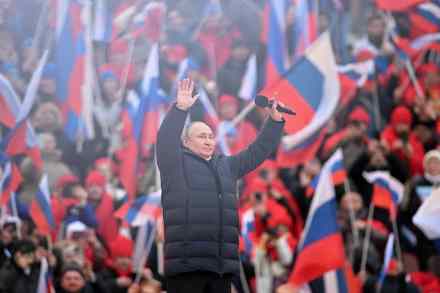
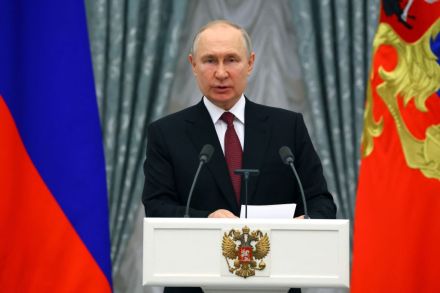
Trailed as an historic address to the nation following the weekend’s Wagner rebellion, Vladimir Putin’s short speech on Monday night was instead an unconvincing condemnation of everything generally and nothing much specifically. If the speech was historic, it was only because of the way the president brought up Russia’s historical betrayals and revolutions.  No amount of snarling and lip-curling could distract from the feebleness of Putin’s argument on Monday night Putin’s (mis)uses of historical grievance often cause bemusement in the West but it serves him well domestically.
Prigozhin offered a terrifying glimpse into Russia’s future

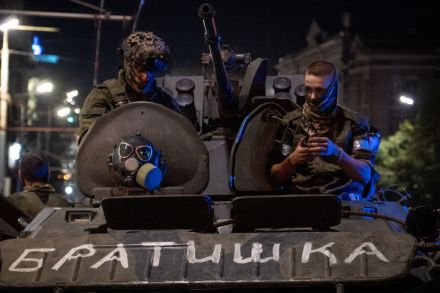
Yevgeny Prigozhin’s rebellion against the Russian military and political leadership may have stopped some 200 km short of Moscow, but its reverberations will be felt in the Kremlin for a long time. The  march, and the images of people in Rostov cheering Wagner fighters and hissing at the police, was a rare and unwelcome insight into what Russian politics could look like after Putin is gone.  Those who greeted the Wagnerites with baked goods and refreshments suggested that the fighters were ordinary folk like us, from the ‘narod’ (people). This speaks to Prigozhin’s perceived authenticity in Russia – an attribute in short supply in Russian politics generally – and also to the deliberate detachment of so many Russians from the political elites.

How Russia became obsessed with fake news

On 1 July, Colonel-General Mikhail Mizintsev, known as the ‘Butcher of Mariupol’, delivered a statement about recent attacks on apartment blocks in Odesa. In a familiar tone of Soviet bureaucratese, he read aloud: ‘To implement the provocation across 26–28 June, twenty foreign mass-media representatives, as well as employees of the international organisation UNICEF, were brought to Odessa [to watch] a mock attack, planned by the military administration of theOdessa region, on a social facility where a crowd of up to 30 anti-Russian activists had been prepared in advance to act as victims and casualties. Each participant in the staged scenes was paid $100 in advance and they also received a cash reward of $500 after the videos were filmed.’37 This is just one small example.

Spectator Out Loud: Jade McGlynn, Lucy Dunn and Graeme Thomson

20 min listen

On this week's episode, Jade McGlynn reads her article on the Russian mothers and wives turning against Putin, because of their sons and husbands missing in the war (00:55). Lucy Dunn, a former junior doctor, asks whether pharmacists aren't part of the solution to the crisis in the NHS (09:45). And Graeme Thompson reads his Notes On protest songs (15:50). Presented and produced by Cindy Yu.

Women trouble: soldiers’ wives and mothers are turning on Putin

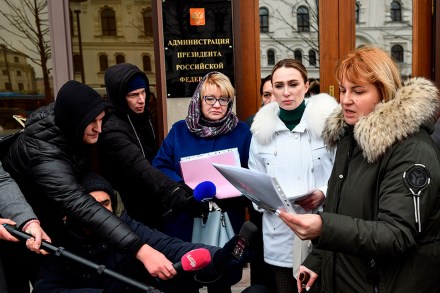
The women of Voronezh are very busy these days. Across the Russian city, aunties are busy sewing boots and winter clothing. Relatives are busy crowdfunding for night goggles and drones. Wives are busy demonstrating outside military bases. Mothers are busy making preparations to travel 150 miles southwest where they will cross the border into Ukraine to find and bring home the broken bodies of their abandoned sons.  The wives and mothers of Voronezh are not alone in their efforts, or in their demands that the authorities return their underequipped and undertrained men. In neighbouring Kursk region, relatives of mobiks (men called up for mobilisation to Ukraine in September) staged a protest on the Russian--Ukrainian border.

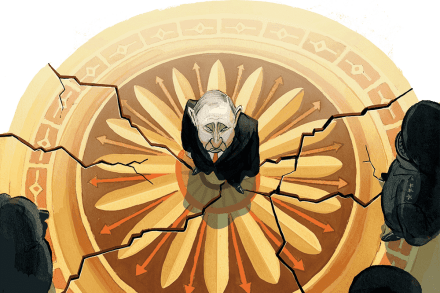
Kremlin crack-up: who’s out to get Putin?

39 min listen

This week: In his cover piece for the magazine Owen Matthews writes about the power struggle at the heart of Russia. He is joined by Jade McGlynn, specialist in Russian Studies at the Monterey Initiative, to discuss whether Putin might be running out of time (01:00).Also on the podcast: Has America’s pot policy gone to pot? In The Spectator this week Mike Adams says that US cannabis legislation has been a total failure, a view contested by Katya Kowalski, Head of Operations at drug policy think tank Voltface. They both join The Edition podcast to debate the way forward for cannabis legalisation (16:26).And finally: Should we pity privileged men? For our magazine Damian Reilly writes about The Privileged Man, the support group for men that have it all.

Why more and more Russians are backing the war

O, do the Russians long for war? Ask of the stillness evermore, Ask of the field, or ask the breeze, And ask the birch and poplar trees. So begins a famous Soviet-era song and poem, written by Yevgenii Yevtushenko during Khrushchev’s Thaw. Volodymyr Zelensky cited the poem in his eve-of-war address to Russians, hoping it would rekindle these pacifistic sentiments and encourage resistance against the Kremlin’s imminent invasion. Apart from a relatively few (very) brave souls, Russians did not rise up.

Who poisoned Roman Abramovich?

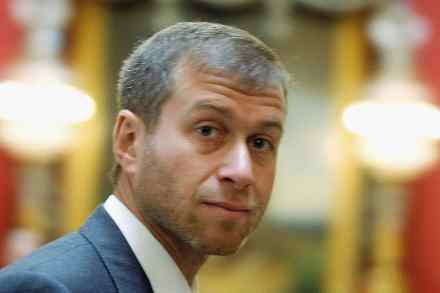
Russia is now 33 days into a war it expected would last 72 hours. Given the relative failure of the invasion, it is surprising anyone in the Russian security establishment has much time to spare for side projects. Yet, yesterday’s news that the Russian oligarch Roman Abramovich was poisoned during informal peace negotiations with the Ukrainians would suggest otherwise. While details are murky, according to the investigative journalism collective Bellingcat, billionaire Abramovich was engaged in shadow negotiations in the Ukrainian capital, Kyiv, earlier this month when he and his two Ukrainian interlocutors fell ill. The men later received medical treatment in Istanbul. Since the story broke, there has been a heady mix of clarifications, confirmations and counter-accusations.

Damian Thompson, Jade McGlynn and Nick Newman

24 min listen

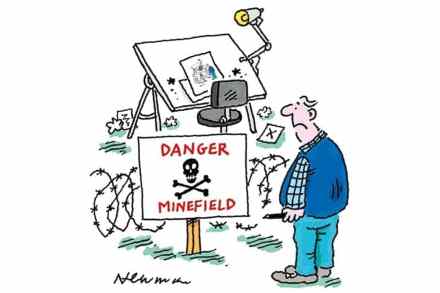
On this week's episode, we'll hear from Damian Thompson on the Patriarch in league with Putin. (00:58)Next, Jade McGlynn on how Russian TV is presenting the war to its people. (08:46)And finally, Nick Newman asks how should cartoonists respond to war? (17:35)Produced and presented by Sam Holmes and Max JefferySubscribe to The Spectator today and get a £20 Amazon gift voucher.

What TV is telling Russians – and why they believe it

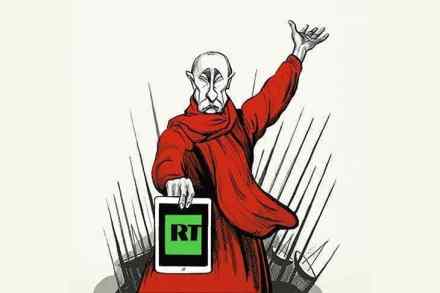
If you want to understand how Russians see the world, it helps to watch Russian TV. The Kremlin’s control over the airwaves permeates every part of Russia’s television schedules. There are no longer soaps or series during waking hours, just relentless TV shows about Russia’s place in the world. The popular and execrable ‘news’ discussion show 60 Minutes now often lasts two to three hours. It is as if EastEnders and Coronation Street were replaced with 200 minutes of state propaganda. Such shows depict Russia’s horrific assault on Ukrainian towns, cities and people as a special military operation. They are punctuated with clips of Vladimir Putin celebrating a successful and pre-emptive mission to free Donbas from genocidal Ukrainian butchers.

The Western Front

45 min listen

In this week’s episode: Has Putin’s invasion of Ukraine exposed the West’s weakness - or its strength?For this week, Sergey Radchenko, a Cold War historian writes about the draconian anti-war measures that Putin has imposed in Russia. He joins the podcast along with Dr Jade Glynn, a specialist in Russian memory and foreign policy at the Monterey Initiative in Russian Studies. (01:00)Also this week: has Russia’s invasion of Ukraine highlighted the hubris of the West? While Western countries unite in a chorus of criticism against Russia’s invasion of Ukraine. Rod Liddle writes that the invasion only highlights the impotence of the West. He is joined by James Forsyth, The Spectator’s political editor.

Putin’s Kremlin is obsessed with world war two

Putin's claim that the Russian invasion of Ukraine was intended to 'denazify' the country looked absurd when he made it last week. In the days since, as Russia adopts a more aggressive military response with cluster bombs reportedly being dropped and children caught in the crossfire, his ludicrous justification has been exposed for what it is. But for many Russians, who have not seen the horrific images emerging from Ukraine, Putin's claim is unlikely to seem so fanciful. While it seems darkly ironic for Putin to call Ukrainian leader Volodymyr Zelensky – who is Jewish – a neo-Nazi, there is nothing new about this false parallel being made.

Is Russia ready for life after Putin?

When Russians headed to the polls last week, the Duma election results were never in doubt: Putin’s United Russia party won two-thirds of the seats, while the rest went to the tame ‘systemic opposition’. But even if the outcome wasn't a surprise, the manner of Putin's victory should ring alarm bells about what happens in Russia when he eventually departs. The Kremlin ‘won’ the Duma elections insofar as United Russia received the number of seats it wanted. It did this on just 50 per cent of the vote, down on previous elections, with widespread violations, and at the cost of what little credibility the electoral process still enjoyed. In regimes like Russia, elections are not for the people, but for the autocrats.

How Britain can really help Belarus’s embattled opposition

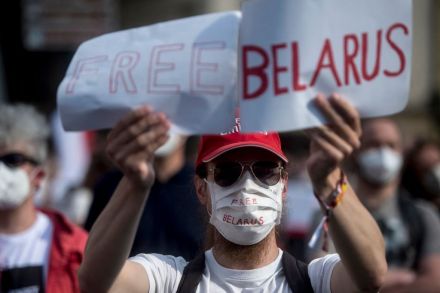
Belarus's opposition movement is gathering momentum. This week – just days after meeting president Biden – the country's opposition leader Sviatlana Tsikhanouskaya was in London to visit Boris Johnson and Dominic Raab. But what does this mean for ordinary Belarusians living under the rule of Alyaksandr Lukashenka, the brutal dictator still in charge of the country? Do they finally have cause to be optimistic about the future? As recently as April, Belarus’ democratic movement appeared to be running out of funding and impetus, with no clear strategy for ousting Lukashenka. Bolstered by a fearsome state security apparatus and Russian support, Lukashenka has unleashed a brutal crackdown on anyone who dares to challenge his 27-year reign.

The Kremlin’s plan to destabilise the West

On Sunday, Russia released its new National Security Strategy. In many ways, it picked up from where the 2015 version left off — on a crusade to politicise and polarise every aspect of Russian culture. This is not a strategy for the country’s security but for the government: the document sets out to mobilise the Russian nation, even Russian identity itself, against western bogeymen at home and abroad. Apart from some more sober references to ecology and partnership with China, most of the strategy reads as a paranoid diatribe against Russia’s oft-cited ‘internal and external enemies’. They loom large on nearly every page, lurking within discussions of national interest, societal cohesion, economics and strategic stability.

The Belarus hijacking reveals the West’s complacency

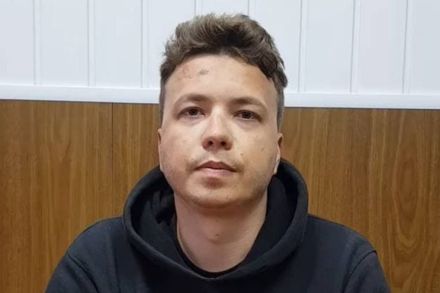
On Sunday evening an act of appalling state kidnapping took place over the skies of Europe. Four alleged KGB officers and a Soviet-era MIG-29 fighter jet forced a Ryanair flight, travelling between two EU capitals, to divert to Minsk. The hijacking was a carefully planned, outrageous operation. The Belarusian KGB (sadly not an anachronism) had claimed there was an explosive device onboard, but their real target was Roman Protasevich, a 26-year-old journalist. Protasevich is the founder of the NEXTA telegram channel, which supported and covered the anti-government protests that erupted in Belarus last August after falsified presidential elections.

How the West can respond to Putin’s military build-up

In the last few weeks, Russia has been flaunting its military build-up in and around Ukraine, sending 20,000 extra troops, artillery convoys, and trains heaving with weaponry to Crimea. To avoid this escalating into full-scale war, a more robust and consistent response is needed from the international community, as well as new fora and strategies to avoid repeating the same mistakes. Ever since Russia’s invasion of Ukraine in 2014, France and Germany have assumed leading roles in mediating the conflict. They are part of the ‘Normandy Quartet’ and mediators for the Minsk Protocol.

Boris’s Russia review will delight Putin

The strategy outlined within the integrated review lacks the urgency, agility, and need for ambiguity needed to take on the country it deems our ‘most acute threat’: Russia. Described as the ‘biggest review of our foreign, defence, security and development policy since the end of the Cold War’, in fact — when it comes to Russia — much of the IR reads more like a literature review than a 21st Century ‘Long Telegram’. Russia is referenced only fourteen times directly, and then with a great deal more descriptive analysis than comprehensive plans of action. Much of the content is welcome: one section deals with Russia under the new term of ‘state threats’.

How Putin reacts in a crisis

Despite its evident distaste for fair elections, the Kremlin is highly sensitive to public opinion — Vladimir Putin even has his own secret service polling agency, which he uses to weigh up policy decisions and gauge his popularity. The Kremlin combines these tools with state-of-the-art propaganda to promote Putin’s cult of personality, which naturally imposes on Russians his singular ability to protect them from internal and external enemies. Whenever Putin’s popularity is threatened, state media amplifies and heightens such narratives. We have seen that in the last couple of weeks, as Russia has been gripped by nationwide protests against corruption and in support of opposition leader, Alexei Navalny.

Russians are daring to dream of life after Putin

Alexei Navalny, Russia’s leading opposition figure, demonstrated unfathomable courage in returning home after the Kremlin had poisoned him with Novichok. Arrested on arrival, Navalny is now holed up in Moscow’s notorious Sailor’s Silence transit prison. Yet as he languishes behind bars, Navalny poses his greatest threat yet to Vladimir Putin’s regime. And today, on the streets of Russia, things could come to a head in the fight between Navalny and Putin. This week, Navalny’s Anti-Corruption Foundation released its biggest exposé yet: a YouTube investigation of Putin’s voracious greed.