Jacob Heilbrunn

Jacob Heilbrunn

Jacob Heilbrunn is editor of The National Interest. He lives in Washington DC

The underrated Kenny Dorham

From our US edition

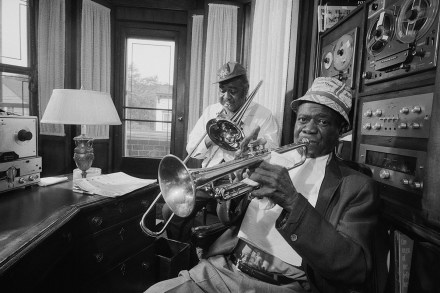
Kenny Dorham was one of the jazz greats. The closest player in modern times to his intimate sound is probably Roy Hargrove, who, like Dorham, hailed from the Lone Star State. But despite all the accolades from the jazz cognoscenti, there is something plaintive about his career, down to the liner notes for his own albums. Indeed, right from the first sentence. Take the 1956 album Kenny Dorham and the Jazz Prophets on the ABC-Paramount label: “Kenny Dorham is one of those artists who have not as yet been accorded their deserved share of recognition.

Durham

The January 6 committee is dismantling Trump

From our US edition

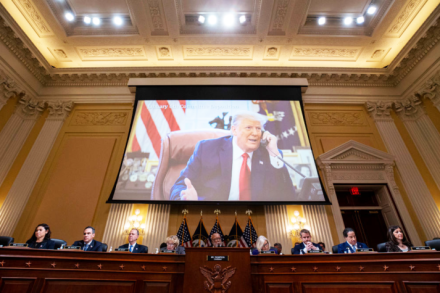
Joe Biden and Bennie Thompson may be laid up with Covid, but the January 6 committee, to borrow a phrase from Donald Trump, was ready to fight like hell on Thursday. “Doors have opened, new subpoenas have been issued, the dam has begun to break,” declared Representative Liz Cheney at the outset. “He chose not to act,” added Representative Adam Kinzinger, slamming “Trump’s dishonor and dereliction of duty.” Speaking of slamming, it was the footage of Trump smacking the lectern on January 7, as he stumbled through a video intended to display his displeasure with the violence that he fomented, that displayed the real Trump. Vexed, exasperated, distressed. “Yesterday’s a hard word for me,” he announced. “I don’t want to say the election is over.

A concert begun in darkness

From our US edition

It was all glitter at Blues Alley in Washington, DC when the trumpeter Terence Blanchard, who is the composer of a widely hailed opera called Fire Shut Up in My Bones that was recently performed at the Met, appeared in March with his E-Collective band as well as the Turtle Island Quartet to play several sets. Blanchard wore iridescent tennis shoes and played a miked trumpet with extra reverb that almost looked as though it was glowing in the dark. Periodically, he would tap his right foot onto an electronic device on the floor that manipulated his tones to extend them into the ether. Indeed, his audacious high notes lingered on long after he had stopped blowing. The collective is Blanchard’s foray into the world of deep funk. It definitely makes an impact.

Schächter

Is Bob Woodward overrated?

From our US edition

In the final year of Donald Trump’s presidency, I went to an event at the AFI Silver Theater and Cultural Center in Washington’s Maryland suburbs. The occasion wasn’t a film but an evening with Bob Woodward. He talked about the lessons of Watergate and what it was like to chase down all, or at least most, of the president’s men. He was, however, pretty coy when it came to talking about the big reveals he would make in an upcoming book about the Trump presidency. “Follow the money,” he winked. He intimated that there would be big revelations about Trump and Russia. What they might be he never said. The reverential crowd of several hundred Washingtonians was ready to burn incense at his feet. But the oracle simply refused to deliver.

woodward

It’s Midge Decter’s Republican Party now

From our US edition

In the late 1990s, I attended a conference on conservatism held by the American Enterprise Institute at the Mayflower Hotel. Various eminences of the right were in attendance, including Norman Podhoretz and Midge Decter. Podhoretz was on a panel with Glenn Loury, who had moved away from his conservative views, and Podhoretz ventilated his exasperation over this evolution. But the panel that really caught my eye was the one that Decter spoke on about American culture. She described a country in a state of breakdown, prompting her daughter, Rachel, to remark, “Mom, it isn’t that bad!” The audience laughed. For Decter, however, it was never a laughing matter. Decter, who recently died, formed what in retrospect can be seen as the vanguard of the culture war.

Conservatives need to forget about Hungary

From our US edition

In his novel The Prime Minister, the fifth in the Palliser series, Anthony Trollope has Plantagenet Palliser, the Duke of Omnium, enunciate his political credo. The Duke explains to Phineas Finn, who recently defended him in the House of Commons from the charge that he tried to purchase a seat for one of his supporters, that the belief that “political virtue is all on one side is both mischievous and absurd. We allow ourselves to talk in that way because indignation, scorn, and sometimes, I fear, vituperation, are the fuel with which the necessary heat of debate is maintained.” Finn responds, “There are some men who are very fond of poking the fire.” Just so.

hungary

Messenger service

From our US edition

When Art Blakey’s Jazz Messengers visited Japan for a two-week tour in 1961, they were among the first Western groups to tour the country. It didn’t take much for the locals to get the message. The legendary drummer’s band contained what might be his strongest lineup ever — Lee Morgan on trumpet, Wayne Shorter on tenor saxophone, Bobby Timmons on piano and Jymie Merritt on bass — and they were greeted by elated fans upon landing at Haneda Airport on New Year’s Day. “It was like a florist’s shop,” Blakey recalled. “They wanted me to make a speech but I couldn’t. I just cried.” For the band members, this maiden voyage was a deeply moving experience. Back home, they had been relegated to playing, more often than not, in smoky jazz clubs.

messengers

Zelensky basks in the world’s spotlight

From our US edition

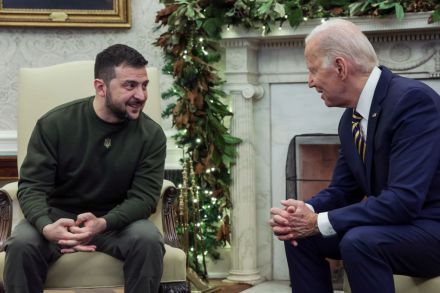
Ukrainian president Volodymyr Zelensky is flying high. The contrast between Zelensky, who virtually addressed Congress this morning, and Russian president Vladimir Putin, who rarely appears publicly, becomes starker almost by the day. Putin believed that he could launch a Blitzkrieg attack that would topple Zelensky but the very opposite has occurred. It is Putin who is cornered while Zelensky basks in the world’s spotlight. In his address, it was shrewd of Zelensky to fold Ukraine’s struggle for independence into the American saga. Essentially, he appealed to the New World to redress the balance of the Old World.

zelensky

It’s time for Germany to stand up to Russia

In his novel The Loyal Subject, which appeared on the eve of the first world war, Heinrich Mann, the brother of Thomas, satirised Wilhelmine Germany as a hotbed of chauvinistic nationalism. The servile nationalism that Mann mocked could not be further from the ethos of the Federal Republic of Germany today. So pervasive is Germany’s eirenic disposition that on Thursday, as Russian president Vladimir Putin ravaged Ukraine, Lieutenant General Alfons Mais, the head of the German army, took the unusual step of turning to LinkedIn to ventilate his exasperation at the impotence of his own fighting forces. ‘In my 41st year of peace-time service, I would not have thought that I would have to experience a war,’ Mais stated on Thursday.

Sibelius speaks

From our US edition

When it comes to music in the classical era, central Europe — or, to put it is where most of the action has taken place. Haydn, Mozart, Beethoven, Schubert and Brahms are, in a sense, the Big Five, commanding the limelight, with the likes of Mendelssohn and Mahler bringing up the rear. But if geography has somehow played a key role in the development of modern classical music, then another region has been gradually nudging its way into view. Names from northern Europe such as Kalevi Aho, Leif Segerstam, Per Nørgård and Vagn Holmboe must figure prominently in any tally of leading composers who have expanded the boundaries of musical expression.Take Holmboe’s brilliantly imaginative Concerto No. 11 for trumpet and orchestra.

Sibelius

Biden is ‘convinced’ Putin will invade Ukraine. Is Putin?

The only thing more sombre than President Joe Biden’s tone at his press conference on Friday afternoon was his funereal ensemble of dark suit and even darker tie. Biden made news with his declaration that the Russian president isn’t havering about invading Ukraine, if he ever really was. Instead, he’s made the decision, we were told, to attack Kyiv itself. A full blown invasion would be the big reveal, surpassing Hungary in 1956 or Czechoslovakia in 1968 If Biden’s remarks were anything to go by, Putin means business. Stories are circulating that Putin and his camarilla have drawn up extensive kill lists of prominent Ukrainians they intend to terminate in coming weeks.

Springtime for liberal interventionists

It’s springtime for liberal interventionism. Russian President Vladimir Putin may not have intended it, but he is doing a good job of revitalising Nato. The organisation was faltering only a few years ago. Now, by threatening Ukraine, Putin is probably extending its lifespan by several more decades, a feat that even the most ardent Atlanticists in Washington could not have accomplished on their lonesome. Recall that after the Iraq war, realism was in vogue. The talk was about restraint and realism, national interests and sobriety. President Donald Trump inveighed against the chiselers in Europe who were free-riding off of American largesse. President Joe Biden pulled out of Afghanistan. And now? Biden is sending arms to Ukraine.

Get with the program

From our US edition

It was Rust Belt versus Sun Belt. Over the holiday season, I visited Pittsburgh’s Heinz Hall, located in the heart of the city, and Miami’s New World Center, a concert hall in South Beach. The former, a one-time movie theater built in 1927, looks like an oversized jewel box stuffed with red velvet chairs and glitzy chandeliers. The latter, a spectacularly intimate venue designed by Frank Gehry, serves as the home of the New World Symphony, a local outfit that operates as a final training ground for musicians who have graduated from conservatories and want to go on to play in major orchestras. In their own way, each of the carefully executed performances underscored that the obituaries repeatedly pronounced for classical music as a preserve of elitist white males are so much bosh.

symphony

Biden’s Capitol speech shows how much he needs Trump

From our US edition

Joe Biden delivered. There was no somnolence, no quiescence. Instead, Biden lashed into his predecessor in unprecedented fashion to offer the most important speech of his presidency. It was a well-struck blow. Donald Trump cannot take Biden’s speech detailing his serial infamies lying down. Biden’s remarks were calculated to nettle, inflame and enrage Trump into further tipping his hand, such as it is. Biden, who was careful never to dignify him by mentioning his actual name, depicted Trump as a dissembler, a knave, a poltroon, a “remorseless, treacherous, lecherous, kindless villain” of Shakespearian proportions who is scheming, as far as possible, to subvert American democracy, whenever and wherever he can.

trump speech capitol

Style and substance

From our US edition

In Ravelstein, Saul Bellow’s thinly disguised account of the final years of the University of Chicago professor Allan Bloom, the narrator Chick and his close friend Abe Ravelstein go on a shopping spree in Paris sometime in the 1990s. For all their highfalutin philosophical talk about Athens versus Jerusalem and the like, Bellow makes it clear that there is a Dionysian as well as Apollonian cast to the bond between Chick and Abe. After departing the Hôtel de Crillon, their first stop is Lanvin. There, Abe is smitten by a beautiful flannel jacket retailing for $4,500. He buys it.

de mans
Marsalis

Wynton’s works

From our US edition

Jazz has periodically seen the rise of so-called “young lions.” The phrase was first used in 1961 as the title of a Lee Morgan LP put out by Vee-Jay Records, a black-owned company, with cover art that sports a photo of four lions lounging on a stone ledge. Then, in 1983, Elektra Records released an LP that was also titled The Young Lions, featuring Wynton Marsalis, Bobby McFerrin and a number of other young musicians who were focused on reclaiming the bebop tradition. Now, in late November, as Marsalis celebrated his sixtieth birthday with the Jazz at Lincoln Center Orchestra at the Rose Theater, his baritone saxophone player Paul Nedzela (as the New York Times reported) called out during a rehearsal, “It’s the Young Lions!

Liz Cheney’s high noon

From our US edition

Last night was Liz Cheney’s breakout moment. As Cheney read the various text messages from various Fox News luminaries and Donald Trump Jr. to former White House chief of staff Mark Meadows, she milked the moment, lingering over memorable phrases such as "he’s got to condemn this shit ASAP." And yet Sonny boy's plea was ignored. The old man reveled in the feculent mayhem. Once seen as a neoconservative ogress, Cheney has now achieved full redemption, morphing into the darling of the mainstream media for her refusal to dismiss the mob on January 6 as a bunch of tourists who had accidentally strayed into the Capitol. This is Cheney’s High Noon.

cheney

Roy Hargrove doubles up

From our US edition

There is a long tradition in jazz of duets between trumpeters and pianists. It’s a mercilessly revealing format, one that allows for no hiding on the part of either performer. But the payoff can be big. Consider the recording of the song “Weather Bird” by Louis Armstrong and Earl Hines in December 1928. Part of the epochal Hot Five and Hot Seven sessions that announced a new era in jazz, it featured Armstrong ripping up the old New Orleans playbook. Armstrong’s remarkable rhythmic innovations sometimes seem like the musical equivalent of a running back stutter-stepping to fake out his opponent before exploding downfield. He helped ensure that the Roaring Twenties really roared.

hargrove