How should Biden respond to Putin’s invasion of Ukraine?
24 min listen
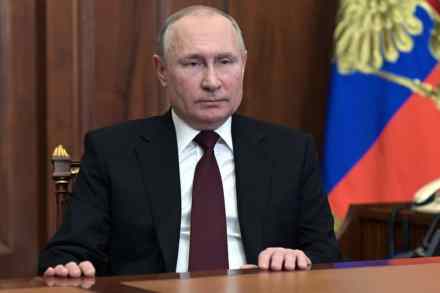
Freddy Gray talks to Jacob Heilbrunn, the editor of The National Interest, about Vladimir Putin's military action.
Jacob Heilbrunn is editor of The National Interest. He lives in Washington DC
24 min listen
Freddy Gray talks to Jacob Heilbrunn, the editor of The National Interest, about Vladimir Putin's military action.
From our US edition
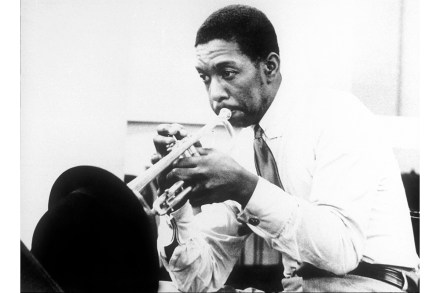
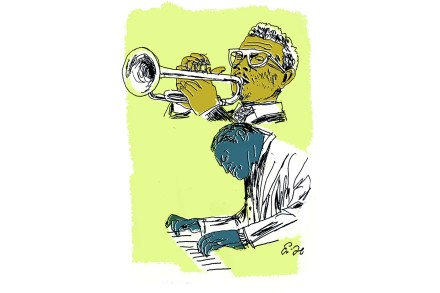
When it comes to music in the classical era, central Europe — or, to put it is where most of the action has taken place. Haydn, Mozart, Beethoven, Schubert and Brahms are, in a sense, the Big Five, commanding the limelight, with the likes of Mendelssohn and Mahler bringing up the rear. But if geography has somehow played a key role in the development of modern classical music, then another region has been gradually nudging its way into view. Names from northern Europe such as Kalevi Aho, Leif Segerstam, Per Nørgård and Vagn Holmboe must figure prominently in any tally of leading composers who have expanded the boundaries of musical expression.Take Holmboe’s brilliantly imaginative Concerto No. 11 for trumpet and orchestra.
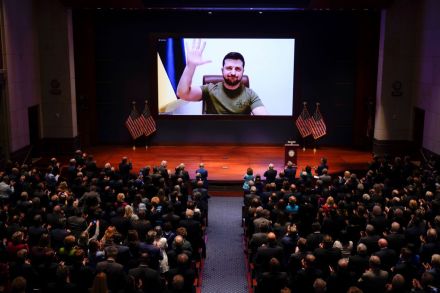
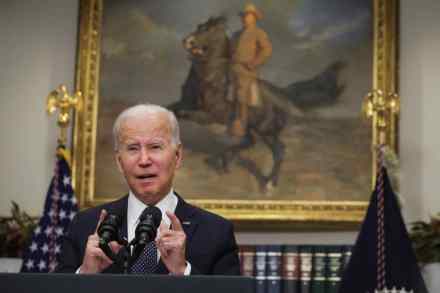
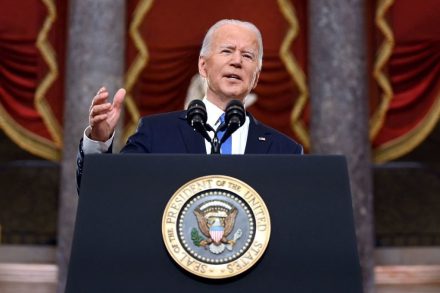
The only thing more sombre than President Joe Biden’s tone at his press conference on Friday afternoon was his funereal ensemble of dark suit and even darker tie. Biden made news with his declaration that the Russian president isn’t havering about invading Ukraine, if he ever really was. Instead, he’s made the decision, we were told, to attack Kyiv itself. A full blown invasion would be the big reveal, surpassing Hungary in 1956 or Czechoslovakia in 1968 If Biden’s remarks were anything to go by, Putin means business. Stories are circulating that Putin and his camarilla have drawn up extensive kill lists of prominent Ukrainians they intend to terminate in coming weeks.
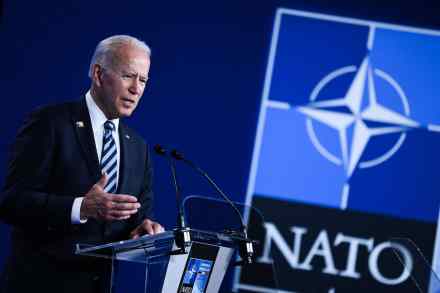
It’s springtime for liberal interventionism. Russian President Vladimir Putin may not have intended it, but he is doing a good job of revitalising Nato. The organisation was faltering only a few years ago. Now, by threatening Ukraine, Putin is probably extending its lifespan by several more decades, a feat that even the most ardent Atlanticists in Washington could not have accomplished on their lonesome. Recall that after the Iraq war, realism was in vogue. The talk was about restraint and realism, national interests and sobriety. President Donald Trump inveighed against the chiselers in Europe who were free-riding off of American largesse. President Joe Biden pulled out of Afghanistan. And now? Biden is sending arms to Ukraine.
From our US edition
It was Rust Belt versus Sun Belt. Over the holiday season, I visited Pittsburgh’s Heinz Hall, located in the heart of the city, and Miami’s New World Center, a concert hall in South Beach. The former, a one-time movie theater built in 1927, looks like an oversized jewel box stuffed with red velvet chairs and glitzy chandeliers. The latter, a spectacularly intimate venue designed by Frank Gehry, serves as the home of the New World Symphony, a local outfit that operates as a final training ground for musicians who have graduated from conservatories and want to go on to play in major orchestras. In their own way, each of the carefully executed performances underscored that the obituaries repeatedly pronounced for classical music as a preserve of elitist white males are so much bosh.
From our US edition
Joe Biden delivered. There was no somnolence, no quiescence. Instead, Biden lashed into his predecessor in unprecedented fashion to offer the most important speech of his presidency. It was a well-struck blow. Donald Trump cannot take Biden’s speech detailing his serial infamies lying down. Biden’s remarks were calculated to nettle, inflame and enrage Trump into further tipping his hand, such as it is. Biden, who was careful never to dignify him by mentioning his actual name, depicted Trump as a dissembler, a knave, a poltroon, a “remorseless, treacherous, lecherous, kindless villain” of Shakespearian proportions who is scheming, as far as possible, to subvert American democracy, whenever and wherever he can.
From our US edition
In Ravelstein, Saul Bellow’s thinly disguised account of the final years of the University of Chicago professor Allan Bloom, the narrator Chick and his close friend Abe Ravelstein go on a shopping spree in Paris sometime in the 1990s. For all their highfalutin philosophical talk about Athens versus Jerusalem and the like, Bellow makes it clear that there is a Dionysian as well as Apollonian cast to the bond between Chick and Abe. After departing the Hôtel de Crillon, their first stop is Lanvin. There, Abe is smitten by a beautiful flannel jacket retailing for $4,500. He buys it.
From our US edition
Jazz has periodically seen the rise of so-called “young lions.” The phrase was first used in 1961 as the title of a Lee Morgan LP put out by Vee-Jay Records, a black-owned company, with cover art that sports a photo of four lions lounging on a stone ledge. Then, in 1983, Elektra Records released an LP that was also titled The Young Lions, featuring Wynton Marsalis, Bobby McFerrin and a number of other young musicians who were focused on reclaiming the bebop tradition. Now, in late November, as Marsalis celebrated his sixtieth birthday with the Jazz at Lincoln Center Orchestra at the Rose Theater, his baritone saxophone player Paul Nedzela (as the New York Times reported) called out during a rehearsal, “It’s the Young Lions!
From our US edition
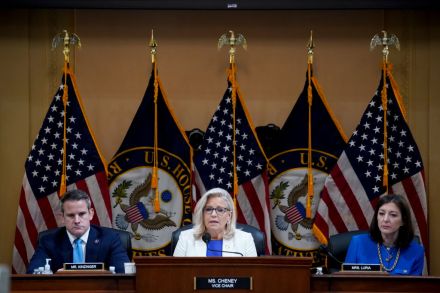
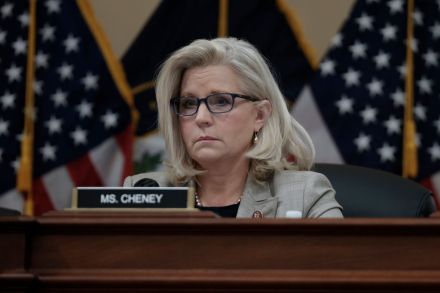
Last night was Liz Cheney’s breakout moment. As Cheney read the various text messages from various Fox News luminaries and Donald Trump Jr. to former White House chief of staff Mark Meadows, she milked the moment, lingering over memorable phrases such as "he’s got to condemn this shit ASAP." And yet Sonny boy's plea was ignored. The old man reveled in the feculent mayhem. Once seen as a neoconservative ogress, Cheney has now achieved full redemption, morphing into the darling of the mainstream media for her refusal to dismiss the mob on January 6 as a bunch of tourists who had accidentally strayed into the Capitol. This is Cheney’s High Noon.
From our US edition
There is a long tradition in jazz of duets between trumpeters and pianists. It’s a mercilessly revealing format, one that allows for no hiding on the part of either performer. But the payoff can be big. Consider the recording of the song “Weather Bird” by Louis Armstrong and Earl Hines in December 1928. Part of the epochal Hot Five and Hot Seven sessions that announced a new era in jazz, it featured Armstrong ripping up the old New Orleans playbook. Armstrong’s remarkable rhythmic innovations sometimes seem like the musical equivalent of a running back stutter-stepping to fake out his opponent before exploding downfield. He helped ensure that the Roaring Twenties really roared.
From our US edition
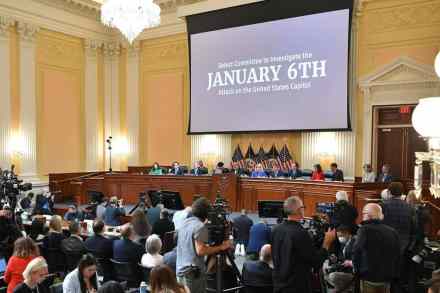
Congressman Adam Schiff is crowing. “It’s very positive,” he said on Sunday on NBC’s Meet the Press about the indictment of sometime Trump adviser Steve Bannon on two counts of contempt of Congress. He has a point. The indictment was never really about Bannon but about trying to create some shock and awe when it comes to eliciting testimony from other Trump janissaries such as his former chief of staff Mark Meadows. Bannon’s predicament, which he can try and spin to his personal advantage by portraying himself as a victim of the deep state, indicates that the January 6 commission is impeachment by other means.
From our US edition
As usual, P.G. Wodehouse put it best. “What is it Shakespeare calls sleep, Jeeves?,” Bertie Wooster inquires of his faithful manservant. “Tired Nature’s sweet restorer sir.” "Exactly. Well there you are, then,” Bertie complacently concurs. Perhaps it was this exchange that President Biden was pondering during the opening speeches at the COP26 when he apparently dozed off. A variety of interpretations of Biden’s behavior are possible. A charitable one is that he was behaving like any rational human being listening to a bunch of self-important gasbags would and simply tuned out. Another one, assiduously touted by his detractors, is that the old duffer simply can’t hack it any longer. Take him out in public for a few hours and it isn’t sleepy but somnolent Joe.
From our US edition
Heavens to Betsy! It seems that Tucker Carlson has gone full truther. Or, if you prefer, disinformer about the tawdry events of January 6, when a motley crew of Trump supporters and Oath Keepers, who often appear to be one and the same, somehow took it into their heads not simply to protest the outcome of the presidential election but to storm the Winter Palace. The trials of the perpetrators are ongoing. A House committee, which includes Liz Cheney as well as Adam Kinzinger, is investigating. And most Republican politicians, at least the ones with their eyes on regaining a congressional majority, are trying to put the episode firmly in the rear-view mirror. Not Tucker.
From our US edition
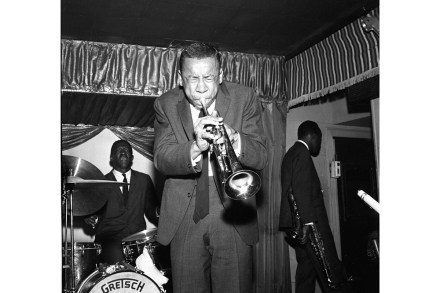
The jazz world has seen more than its share of tragic deaths, whether it was the trumpeter Clifford Brown perishing in a car crash at night on the Pennsylvania Turnpike at the age of 25 or saxophonist John Coltrane succumbing to liver cancer at 40. But perhaps there is no more confounding early demise than that of the bravura trumpeter Lee Morgan. Morgan, who played with the likes of Miles Davis, Dizzy Gillespie and Art Blakey as a teenager, was known for his swagger, which he liked to call ‘expoobidence’, (which he deployed as the title for an album for Vee-Jay records in 1960 called Expoobident). It all came to a swift terminus in February 1972 after his common-law wife Helen, a tough cookie if there ever was one, pulled out a .
From our US edition
There used to be an old joke that there were more members of the FBI who were members of the American Communist party than there were actual believers in rule from Moscow. Something like that seems to have occurred with the much ballyhooed 'Justice for J6' rally in Washington DC. Justice, schmustice. Much as I had expected, almost no one rallied to the rally. A grand total of two people were arrested. Seldom has Washington seemed more peaceful. The notion that DC was about to be stormed may have given a lascivious pleasure to those liberals convinced that the enemy is not just at the gates but within them already. But that was never in the cards. Having been caught napping on January 6, there was no way a repetition of those sanguinary events would recur.
11 min listen
Joe Biden's approval rating has dropped to 39 per cent, as he suffers from the botched withdrawal from Afghanistan, an ongoing crisis at the border with Mexico, and rising Covid cases. Is it a short term dip, could Biden's pandemic response wipe out the Democrats in the midterms, and will the 78-year-old still be president in 2028? Freddy Gray speaks to Jacob Heilbrunn, editor of the National Interest.
From our US edition
The late Edward Said invented, or at least brought into vogue, the notion of Orientalism. For a time this became the big boo word in academia, a handy phrase for casting a variety of writers, ranging from Jane Austen to Charles Dickens to Joseph Conrad, into the abyss for their putative imperial cast of mind when it came to depicting the inhabitants of the further reaches of the British empire. But soon enough, as a recent and lengthy erudite review in the London Review of Books noted, Said apparently found himself accused of the very same sin by the cultural revolutionaries that he had exposed. It turned out that the founder of Orientalism was (gulp) an Orientalist. My, my.
From our US edition
It’s starting to look as though President Joe Biden really does want to leave Afghanistan. In his speech today, Biden didn’t concede that he has blundered in ordering a pullout. On the contrary, he doubled down. The result was the most forceful, impassioned and persuasive speech of his young presidency. In essence Biden embraced the original Rumsfeld doctrine — conduct limited counter-terrorism strikes but don’t get stuck nation-building. Adopting a different course was the original sin of the George W. Bush administration, which became bogged down in Afghanistan as it prepared for war in Iraq. Now Biden is finally issuing a course correction. Any notion that Biden is senescent, a puppet of his advisers, or just plain loopy should be dispelled by his steely performance.
From our US edition
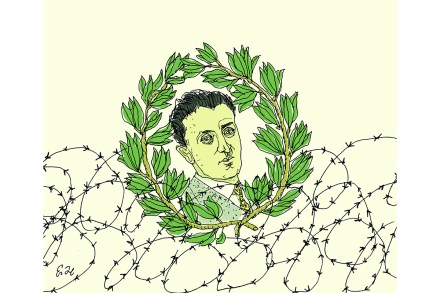
A few years ago, in my capacity as editor of the National Interest, I sent out a sonorous query to a variety of contributors asking them to comment for a forum on the direction of American foreign policy now that the Cold War was over. I promptly received a tart reply from Ferdinand Mount: 'Almost every word of the National Interest’s question could itself be questioned: has the Cold War ever definitively ended? Vladimir Putin doesn’t seem to think so.’ How right he was! His words came back to me last night with particular force when I attended an event on behalf of Belarusian democratic opposition leader Svetlana Tikhanovskaya last night, co-sponsored by the Lithuanian embassy and the Atlantic Council.
From our US edition
Don't call it a comeback! Whether it’s by popular acclamation or by a coup, as former national security adviser Michael Flynn suggested at a recent QAnon meeting, Donald Trump is apparently reckoning that he’ll be back in the White House by August. At least that’s the theory percolating among the Trump diehards ensconced at Mar-a-Lago. But then, nolens volens, came a contrary verdict from Lara Trump on Fox and Friends this morning: 'There are no plans for Donald Trump to be in the White House in August.' What a pity. It would be splendid to have Trump back in Washington even if only for the month of August. But keen-eyed observers will note that Lara confined her restriction to August. July remains open. So does September.