J. Scott Turner

J. Scott Turner is director of the Intrusion of Diversity project at the National Association of Scholars. Early in his career, he spent two years as a research officer in the Percy FitzPatrick Institute for African Ornithology at the University of Cape Town.

How mediocrity took over the Grammys

Is music getting worse? Rick Beato is a musician, producer and critic with more than five million YouTube subscribers. His answer would be: yes, pretty much. In a recent video, he compares the 2026 Grammy Song of the Year nominees to those of 1984. There are a few bright sparks among the slate of new songs, but Beato regards most of them as derivative, unoriginal and unlikely to be remembered past the end of the awards show. In contrast, 42 years on, all the 1984 nominees – Michael Jackson’s “Beat It,” The Police’s “Every Breath You Take” and Lionel Richie’s “All Night Long” among them – are firmly embedded in the popular music canon. One could ask the same question about science: has it gotten worse? My answer, I have to say, reflects Beato’s for music.
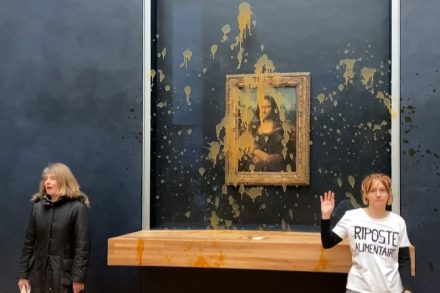
Environmentalism: from concern about clean air to throwing soup at the Mona Lisa

From our US edition

Garrett Hardin was a professor of biology and environmental studies at UC Santa Barbara. His “commons” was a metaphor drawn from the traditional English practice of shared grazing and agricultural land to which all members of a community had access. Commons were inherently prone to abuse, Hardin argued, because every user of the commons will exploit it to maximize personal benefit without regard to the other users, leading ultimately to the collapse of the commons as a useful resource. Hardin extended the metaphor of the commons to include all natural resources, including the air, water, other species, even the entire Earth. The tragedy of Hardin’s expansive commons was the inexorable march to environmental doom, driven by the folly of human freedom.

tragedy commons

The National Audubon Society considers canceling itself

From our US edition

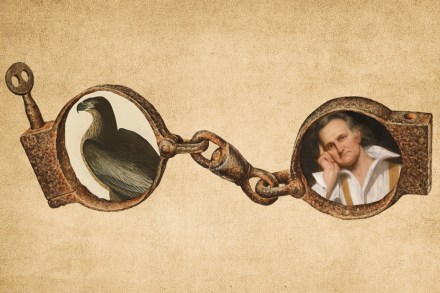
How thoroughly has diversity, equity and inclusion penetrated the sciences? “To the core!” at least if the recent travails of the National Audubon Society are any indication. For over two years, a woke storm has roiled the Society over whether it should purge its namesake, John James Audubon, from its title. After a year-long review, the Society’s Board of Directors recently announced its decision: Audubon’s name will stay. The Society’s CEO, Elizabeth Gray, defended the decision on the sensible grounds that, for whatever his faults, Audubon remains a pivotal figure in the history of science in our once young republic. His legacy includes establishing ornithology as the burgeoning field that it is today, which draws both on professional experts and passionate amateurs.

audubon

The dangerous rise of academic diversity quotas

From our US edition

Who should be the custodians of science? For centuries, scientists themselves have been. Now, their custodianship is under threat. Science has long operated as a sort of guild, with the guild managing its own practice and traditions. This holds for the guild’s continuity: admission of aspiring members to the guild is controlled by the guild itself. For the sciences, aspiring members must clear a competitive series of hurdles: apprenticeship (graduate school), journeyman (post-doctoral fellow and assistant professor), then full membership (tenured professor). For the past few decades, science’s stewardship has been shifting into the hands of an arriviste managerial class with no idea what science is or any real respect for it.

Biden’s science advisor falls to the woke

From our US edition

Last month, President Biden tapped Dr. Eric Lander to be his science advisor and lead a new "war on cancer" initiative. Just five days later, he was unceremoniously dumped. Nominees come and go all the time, of course, yet there was no doubt over Lander's scientific and managerial qualifications. He is a professor of biology at MIT and Harvard University. He was instrumental in steering the Human Genome Project to a point of actual utility, providing detailed genetic maps of heritable diseases, and proceeding from those clues to novel treatments. He is a skilled political operative, hobnobbing with the wealthy and powerful on his way to becoming the president and founding director of the Broad Institute of MIT and Harvard.

eric lander science

Too many scientists spoil the job market

From our US edition

In January, the American Association for the Advancement of Science released its 2021 annual report on diversity equity and inclusion, Nurturing Diversity, Equity and Inclusion in the Scientific Enterprise. The message? Those who are non-white, non-male, non-straight, etc., are apparently being barred from exploring science’s “endless frontier.” Such a thing could only come about if the sciences were governed by a kind of Jim Crow. For the good of science, this needs urgent correction. The AAAS will point the way. The claim seems odd.

Jordan Peterson and the crisis of totalitarian academia

From our US edition

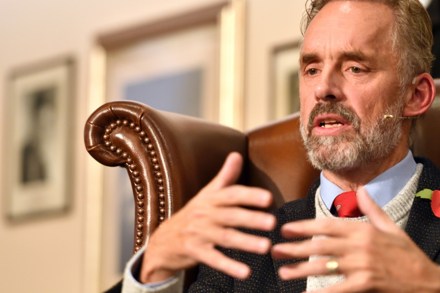
Jordan Peterson has left his professorial post at the University of Toronto. He announced his departure with characteristic blunt honesty in Canada’s National Post. Peterson first came to my attention in 2016, as he did for many, for his refusal to bow to demands to use novel pronouns preferred by the transgendered. For this, he was denounced as a bigot, his university threatened his career, his speaking events were disrupted, all done under the cloak of civility: all transgender people wanted was respect, to be addressed as who they were. How dare Peterson be so uncivil? Lost in the shrieking winds that enveloped him was his basic point: it’s no longer civility when it's backed up by the force of law.

jordan peterson