J P O'Malley

Interview with a writer: John Ashbery

From our UK edition

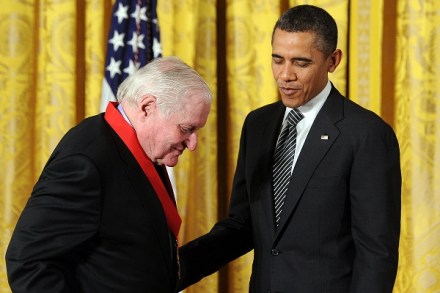
John Ashbery is recognized as one of the most eminent American poets of the twentieth-century. He also been called America’s greatest living poet today. Ashbery published his first book of poems Some Trees in 1956; it earned him the Yale Younger Poets Prize: a competition that was judged by W.H. Auden at the time. He has picked up many literary prizes, including the Pulitzer Prize for Poetry, the National Book Critics Circle Award and the National Book Award. At 85, he shows no signs of putting down his pen. He has recently published a collection of poems entitled Quick Question. Although the majority of critics have recognized his talent, many have also pointed to the fact that his poems don’t have — in the traditional sense — a specific subject matter.
Interview with a writer: John Burnside

From our UK edition

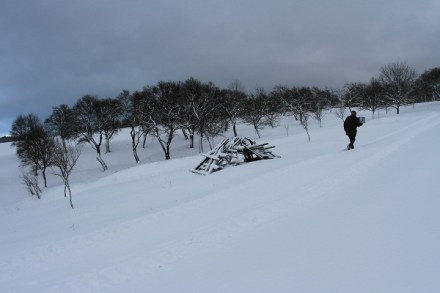
It’s Friday at 10am in a remote field in Fife. John Burnside is taking his morning walk, whilst simultaneously attempting to conduct a conversation with me down a dodgy telephone line. Within seconds he’s speaking about a concept of happiness— or lack of it— that goes back to philosophers such as Nietzsche and Schopenhauer. ‘I’m in the middle of a remote country hill in Scotland, so the reception is not really that good, especially in bad weather like this,’ he tells me, fading in and out of coherence.

Interview: Kofi Annan

From our UK edition

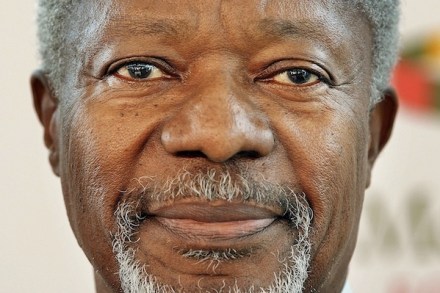
Kofi Annan is discussing his extraordinary career with William Shawcross this evening, but for those Spectator readers who weren't able to get tickets, he has also spoken to JP O'Malley about about growing up in Ghana, why he believes governments have to recognise terrorists, and why talking to tyrants sometimes actually saves lives. How did growing up in Ghana in the 1950s— the decade it gained Independence from Britain— shape your political outlook for the rest of your career? As a teenager, to see this struggle for independence taking place in Ghana was very powerful. I grew up with a sense that fundamental change was possible.

Yoram Kaniuk, reluctant soldier in 1948

From our UK edition

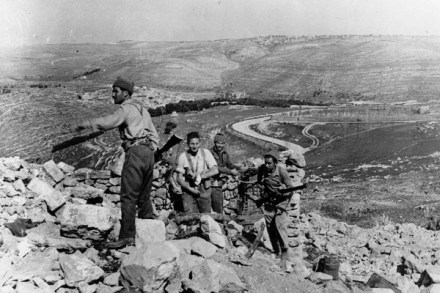
Yoram Kaniuk was born in Tel Aviv in 1930. After his experience in Israel’s 1948 War of Independence, Kaniuk moved to New York where he became a painter in Greenwich Village. Ten years later he returned to Tel Aviv, where he has lived ever since, working as a novelist, painter, and journalist. He has published various fiction, non-fiction, and children’s books over the course of his distinguished career. In 1948 — for which he was awarded the The Sapir Prize in 2010 — Kaniuk recalls fighting as a teenage soldier in Israel’s War of Independence. Told in the first person the book looks at how memory is a selective process; one that favours myth making and narrative, rather than recalling actual events.

A chapter of history

From our UK edition

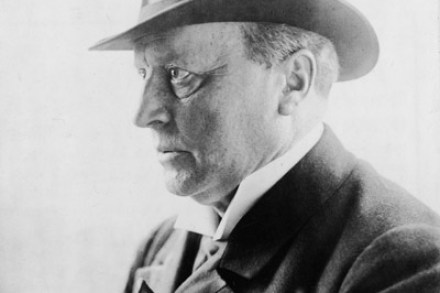
Michael Gorra’s Portrait of a Novel is a lucid critique of how Henry James came to write a book that would permanently change the art of literary fiction. The Portrait of a Lady was first published in 1881, with a second revised version appearing in 1908. James’s heroine is the spirited Isabel Archer — a young woman, fond of her freedom, who is betrothed to a respectable New England mill-owner. Isabel is unexpectedly rescued from this engagement, however, and taken by her aunt to Europe. Soon she inherits a fortune, which will bring with it, she believes, the independence she craves. But then, in Italy, she falls for the fascinating charm of Gilbert Osmond, and eventually marries him. It is here that the novel explores themes of morality, freedom and civilisation.

Sean O’ Brien: Poetry is political, all writing is political

From our UK edition

Sean O’ Brien was born in London in 1952. Shortly afterwards, he moved to Hull, where he grew up, thus firmly cementing an allegiance to the North of England: a subject he explores in much of his poetry. In these Collected Poems, that begin with his debut, The Indoor Park (1983), and end with his most recent collection, November (2011), O’ Brien displays his remarkable contribution to British poetry over the last three decades.

Secrecy and the State in Modern Britain

From our UK edition

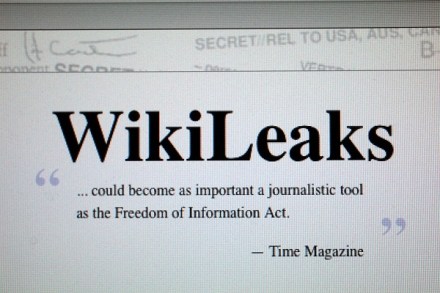
In his new book Classified: Secrecy and The State In Modern Britain, Dr Christopher Moran gives an account of the British state's long obsession with secrecy, and the various methods it used to prevent information leaking into the public domain. Using a number of hitherto declassified documents, unpublished letters, as well as various interviews with key officials and journalists, Moran’s book explores the subtle approach used by the British government in their attempt to silence members of the civil service, and journalists, from speaking out about information that was deemed classified.

Meeting J.G. Ballard

From our UK edition

In the programme Frost on Interviews that was recently rebroadcasted by BBC Four, the distinguished journalist, David Frost, attempted to understand what makes a compelling interview. Frost’s programme concentrated primarily on the actions of the interviewer. Various questions were asked, most notably: should one take a relaxed or heavy-handed approach with their guest? I tell this anecdote because I was half way through reading Extreme Metaphors: Selected Interviews with J.G. Ballard 1967-2008,when I stumbled upon this insightful programme. But the process Frost was speaking about was light-years away from the text I was reading. For J.G.

Wole Soyinka: Boko Haram must be destroyed

From our UK edition

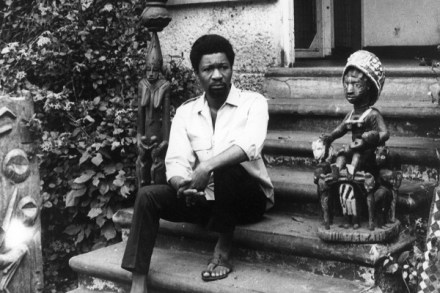
Born in 1934 in Nigeria, Wole Soyinka is the author of more than twenty plays, ten volumes of poetry, two novels, seven collections of essays and five autobiographical works. He won the Nobel Prize for Literature in 1986. He was the first black African man to win the prestigious prize His latest book, Of Africa, is a 200-page polemic that attempts to understand the contradictory nature of African politics. Two important questions that arise from Soyinka’s book are: what is Africa? And what do we understand of its history? Soyinka expends considerable effort in his book discussing how the nihilist nature of fundamentalist Islam is destroying societies in certain African nations: particularly in Somali, Mali, and Nigeria.

Sharon Olds’ fear and self-loathing

From our UK edition

Since the publication of her debut collection, Satan Says in 1980, which was awarded the inaugural San Francisco Poetry Center Award, Sharon Olds has become a prominent - and controversial - voice in American poetry. Olds’ work has been given many unflattering adjectives from her harshest critics: self-indulgent, sensationalist, solipsistic, and pornographic, to name a few. While her confessional, and overtly autobiographical style, may not be to every critics’ taste, Olds’ candid voice, describing her own troubled childhood; the human body; and a world which very often displays fear, violence, love and kindness, in equal measure, has seen her become one of the most widely read poets of her generation.

Interview: Ciaran Carson on translating Rimbaud

From our UK edition

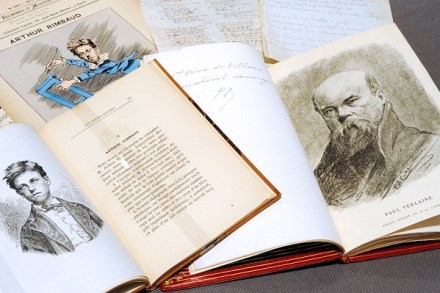
Ciaran Carson was born in Belfast in 1948, and published his first book of poetry, The New Estate, in 1976. Fans of Carson had to wait eleven years for his second book, The Irish for No (1987), which earned him the Alice Hunt Barlett Award. Belfast Confetti (1990) won The Irish Times Literature Prize for Poetry. In 1993 Carson won the first ever T.S. Eliot Prize for poetry, for his collection, First Language; while his 2003 collection, Breaking News, won the Forward Poetry Prize. That same year, Carson was appointed Professor of Poetry, and Director of the Seamus Heaney Centre for Poetry, at Queen’s University in Belfast; a position he has held since. Carson has also proved himself to be an accomplished translator.

Cult status: an interview with Mike McCormack

From our UK edition

Mike McCormack published his first book of short stories Getting it in the Head in 1996. The debut earned him the Rooney Prize for Literature, and was chosen as a New York Times notable book of the year in 1998. McCormack has published two novels: Crowe’s Requiem, and Notes From a Coma, which was shortlisted for the Irish Book of the Year Award in 2006. Forensic Songs, his latest collection of short stories, fuses traditional social realism with elements of science fiction, and the detective genre. While some stories here follow the path of straightforward naturalism; analyzing the difficult relationships within families; or the alienation of emigration, others probe issues that move into the world of futuristic surrealism.

Interview: James Lasdun’s art

From our UK edition

James Lasdun published his first book of short stories The Silver Age in 1985. The debut won him The Dylan Thomas Award, and was followed by Three Evenings another book of stories. In 1998, Italian filmmaker, Bernardo Bertolucci, directed the film ‘Besieged’, which was an adaptation of Lasdun’s short story ‘The Siege’. In 2002 Lasdun published his first novel The Horned Man. The book earned him the New York Times Notable Book of the Year and the Economist Best Book of the Year. His second novel Seven Lies was shortlisted for the 2007 James Tait Black Memorial Prize. Lasdun is also a highly acclaimed poet. His collections include A Jump Start; The Revenant and Landscape with Chainsaw, which was shortlisted for the T. S.

Interview: Mary Robinson

From our UK edition

In 1990 Mary Robinson became Ireland’s first female president. As a progressive liberal, Robinson seemed a very unlikely candidate for the job, in what was then, a deeply conservative country.  Throughout the 70s and 80s, she worked as a human rights lawyer, as well as a Senator, arguing a number of landmark cases that challenged various clauses in the Irish constitution that failed to protect minorities. Robinson fought on behalf of women, who were effectively treated as second-class citizens, homosexuals, who were criminalized for their sexual orientation, and she also campaigned to change the law on the sale of contraceptives, which were illegal in Ireland, without prescription, until 1985. When she became President, Robinson was determined to reinvigorate the role.

Interview: John R. MacArthur on the US election

From our UK edition

When Barack Obama entered the White House in January 2009, millions of citizens across the United States believed it was a new dawn for the American political system. Obama promised a presidency that would tear up the rulebook when it came to party loyalty; campaign fundraising, corruption; and the petty issues of partisan politics. But he would soon learn that attempting to transform the money machine and vested interest groups that run Washington would be near impossible. First released in September 2008, John R. MacArthur’s ‘You Can’t Be President: The Outrageous Barriers To Democracy in America’ is a book that openly criticizes Obama from the liberal left.

Howard Jacobson interview

From our UK edition

While Howard Jacobson’s prose works are renowned for their wit, energy, and self-deprecating, priapic jokes, his latest book, Zoo Time, is perhaps his most light-hearted to date. The protagonist is a struggling novelist, Guy Ableman: a red-blooded male with a penchant for the filth-merchants of English literature. Ableman has two predicaments: the first is his inability to sell any books. The second is his wish to sleep with Poppy, his alluring and sophisticated mother-in-law. Although the book is meant to be read with the smarmy, tongue and cheek tone that Jacobson has become famous for, the novel also passes judgment on a more serious matter: the crisis that has befallen the world of literary fiction.

Roger McGough interview

From our UK edition

As Roger McGough approaches 75, his latest collection of poems As Far As I Know shows him writing with the same blend of mischievous word play, subversion of cliché and distinctive sense of humor that makes him one of Britain’s most popular poets. McGough became a prominent force in the late 1960s when his poems were included in ‘The Mersey Sound’: a Penguin anthology that has since sold over a million copies. To date, McGough has published over fifty collections of poetry for both adults and children. His work has always reached a wide audience due to its incredible accessibility.

Interview: James Kelman

From our UK edition

Born in Glasgow in 1946, James Kelman left school at fifteen to begin an apprenticeship as a compositor. His first collection of short stories ‘An Old Pub Near the Angel’ was published in the United States in 1973. It was another nine years before his first novel 'The Busconductor Hines appeared. Kelman has received several prizes for his fiction including: the Cheltenham Prize for Greyhound for Breakfast and the James Tait Black Memorial Prize for ‘A Disaffection’. His fourth novel, ‘How Late it Was, How Late’, landed him the Booker Prize in 1994, amid a storm of controversy. To date he has published eight collections of short stories, eight novels, and two books of essays.

Don Paterson interview

From our UK edition

Don Paterson was born in 1963 in Dundee. He moved to London in 1984 to work as a jazz musician, and eventually began to write poetry. In 1993, Faber published his debut collection, Nil Nil, which won the Forward prize. In total, he’s published seven collections and three books of aphorisms. Paterson has won the prestigious T.S. Eliot prize for poetry twice. Other awards include: the Whitbread prize, and The Geoffrey Faber memorial prize. He received an OBE in 2008, and teaches poetry at the University of St Andrews.

Similar, but very different

From our UK edition

Richard Ford published his debut novel A Piece of My Heart in 1976.  But it was The Sportswriter — which introduced the world to Frank Bascombe, and other marginalised characters trapped on the edge of the American Dream — that distinguished Ford as a serious literary force. The two books that followed, Independence Day, which won him the Pulitzer prize in fiction, and Lay of The Land, completed the Frank Bascombe trilogy. Canada, his seventh novel, begins in Montana in 1960. It’s narrated by Dell Parsons, the son of a retired Air Force pilot, and a schoolteacher. The novel begins when Dell’s parents, Bev and Neeva, are sent to jail for robbing a bank, leaving him and his twin- sister, Berner, to fend for themselves.