J P O'Malley

Interview: Bernard Wasserstein and the Nazi genocide

From our UK edition

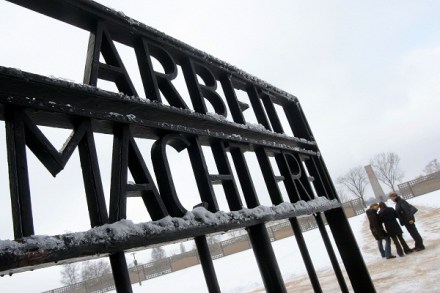
As 1930s Europe moved towards the catastrophe of the Second World War, much of the greater part of the continent —  for Jews — was being turned into a giant concentration camp. Bernard Wasserstein’s On the Eve, The Jews of Europe Before the Second World War, captures the sorrows and glories of European Jewry in the decades leading up the Nazi genocide. From the shtetls of Lithuania, to the salons of Vienna, Jewish culture was already on the road to extinction. Wasserstein’s book also proves that contrary to received wisdom, there was a growing awareness that Jews were approaching a cataclysmic extinction. Bernard Wasserstein was born in London and has taught at Oxford, Sheffield, Jerusalem, Brandeis, and Glasgow Universities.

Kevin Barry’s magic

From our UK edition

Reading a short story by Kevin Barry is a bit like listening to a kraut-rock-record from the 1970s. The foundations are built on a solid rhythm. Then every so often, the form veers left-field, unveiling a portal to a world of magic. In this sense, you could argue that Barry is an experimental writer. He spends considerable time wrestling with language, bending each turn of phrase and piece of dialogue into shape, until he’s convinced he can make it sing. As far as modulating with the form itself, Barry works from tradition: giving his readers short vignettes of isolated individuals — mostly men, who have failed in one way or another.

Racism and real estate

From our UK edition

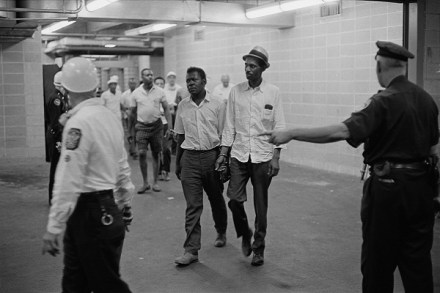
If racism presupposes that different ethnic groups cannot live harmoniously together, then segregation puts that theory into practice. Carl H. Nightingale’s Segregation: A Global History of Divided Cities, teaches us that separating cities along racial colour-lines, has always concerned one commodity: real estate. Cities, Nightingale observers, are places where people of several races are meant to come together. But this has not been the case. Instead, residential segregation and city-splitting politics — across the globe — has ensured that by putting a coerced colour-line in place, white-power has remained the definitive norm.

Interview: Jorie Graham’s poetry

From our UK edition

Possessing a meticulously detailed and layered style, as well as having an exceptional ability to describe nature, Jorie Graham’s poetry is primarily concerned with how we can relate our internal consciousness to the exterior natural world we inhabit. In 1996, The Dream of the Unified Field: Selected Poems, 1974-1994, earned Graham the Pulitzer Prize in poetry. She is currently the Boylston professor of poetry at Harvard University. Her forthcoming book, Place will be her twelfth collection to date. She spoke to the Spectator about why poetry needs to be reclaimed to the oral tradition, how technology is corrupting our imagination, and why her work is laced with contradictions and paradoxes. What sort of ideas/ themes are you dealing with in your new collection, Place?

Interview: John Irving on writing sexuality

From our UK edition

John Irving’s latest novel, In One Person is narrated by a bisexual writer, Billy Abbot, who recalls his high school days from the 1950s, in the small New-England town of First Sister — where the majority of the cross-dressing residents are more likely to celebrate polymorphous perversity than puritanical punishment. Billy takes a fancy to various people, including: his stepfather; his friend’s mother; the captain of the school wrestling team; and the local librarian, Miss Frost — who reveals to Billy a secret regarding her own identity. The mood of the latter half of the book darkens when Billy moves to New York in the 1980s, witnessing the AIDS epidemic. Irving published his debut novel Setting Free the Bears in 1968.