J P O'Malley

Stalin’s Spanish bezzie

From our UK edition

During the Spanish civil war the single greatest atrocity perpetrated by the Republicans was known as ‘Paracuellos’. This was the village where an estimated 2,500 prisoners loyal to Franco were executed by leftish militiamen between November and December 1936. Even though the facts of this massacre are now widely known, one question still remains: who

Interview with a poet: Richard Murphy, an old Spectator hand

From our UK edition

Richard Murphy was born in County Mayo in Ireland in 1927. He spent part of his childhood in Ceylon (now Sri Lanka) where his father was the last British mayor of Colombo. From the age of eight he attended boarding schools in Ireland and England, eventually winning a scholarship to Oxford. In 1959 Murphy moved

Amartya Sen interview: India must fulfil Tagore’s vision, not Gandhi’s

From our UK edition

Amartya Sen is Thomas W. Lamont University Professor and Professor of Economics and Philosophy at Harvard University. Sen’s previous books include: Development as Freedom; Rationality and Freedom; The Argumentative Indian; Identity and Violence, and The Idea of Justice. In 1998 Sen won the Nobel Prize in Economics. Much of the work done by the Indian

Korea – the 60 year war

From our UK edition

In the early morning hours of June 25, 1950 the opening shots of the Korean War were fired. At the time, few could have predicted how seminal this event would be in shaping world history. While the Korean War itself was only fought over a period of three years, no peace agreement was ever reached.

Professor Steve Jones: Why I think religion is a bad thing

From our UK edition

Steve Jones is Emeritus Professor of Genetics at University College London. Some of his previous books include: The Language of Genes, Y: The Descent of Men, The Single Helix, and Darwin’s Island. Jones’ latest book is called The Serpent’s Promise: the Bible Retold by Science. The title suggests that Jones uses the Bible as a

Jesse Norman interview: Edmund Burke, our chief of men

From our UK edition

When he arrived in London, Burke had a very brief career in law. He soon dedicated his time to critical thinking, writing and politics. Burke published a number of ground breaking books, including: A Philosophical Enquiry into the Origin of Our Ideas of the Sublime and Beautiful, and Reflections on the Revolution in France. In

Interview: Jared Cohen and The New Digital Age

From our UK edition

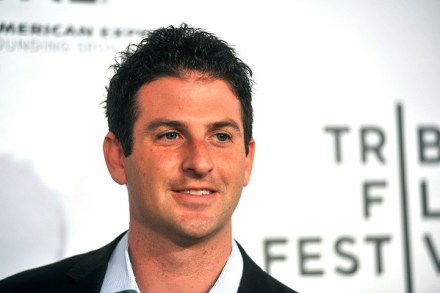
Jared Cohen is Director of Google Ideas, a think tank set up by Google dedicated to understanding global challenges by applying technological solutions. Cohen is also an Adjunct Senior Fellow at the Council on Foreign Relations. He previously served as a member of the U.S. State Department’s Policy Planning Staff, working as a close advisor

Interview: David Graeber, leading figure of Occupy

From our UK edition

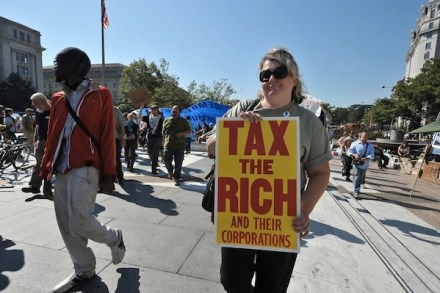
The anarchist movement in the United States has had the support of leading libertarian intellectuals, such as Noam Chomsky; but it has lacked a figure who could transform its guiding principles into something resembling a political movement. In the autumn of 2011, David Graeber seemed to be the man who could drag anarchism into mainstream

Interview with a writer: Kevin Maher

From our UK edition

Kevin Maher’s debut novel The Fields is set in the suburban streets of south Dublin in 1984. The story is narrated by Jim Finnegan: an innocent 13-year-old boy who lives in a carefree world that consists of hanging out in the local park and going on nightly bike rides with his geeky friend Gary. But

Interview with a writer: John Banville

From our UK edition

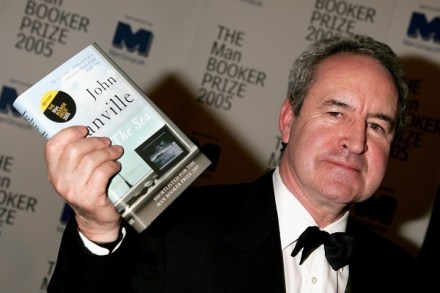
The salubrious surroundings of the Waldorf Hotel seem like a very apt setting to interview a master of style and sophistication. When I arrive in the lobby, John Banville is nowhere to be seen. Peeping into the bar, I notice a grey haired man with a moustache, wearing a tuxedo, softly playing a grand piano.

Interview with a writer: Jaron Lanier

From our UK edition

In his new book, Who Owns The Future?, computer scientist, Jaron Lanier, argues that as technology has become more advanced, so too has our dependency on information tools. Lanier believes that if we continue on our present path, where we think of computers as passive tools, instead of machines that real people create, our myopia will

Interview with a writer: Jared Diamond

From our UK edition

In his latest book The World Until Yesterday, Jared Diamond analyses the behavioral differences between human beings in tribal stateless-societies and those living in bureaucratic nation states. Diamond says that if states only came into existence 5,400 years ago, and agriculture in the last 11,000, human beings have been wandering nomads for most of history. Therefore,

Interview with a writer: John Gray

From our UK edition

In his new book The Silence of Animals, the philosopher John Gray explores why human beings continue to use myth to give purpose to their lives. Drawing from the material of writers such as J.G. Ballard, Joseph Conrad, Ford Madox Ford, John Ashbery, Wallace Stevens and others, Gray looks at how we can reinvent meaning

Interview with a writer: Professor Neil Shubin

From our UK edition

Following in the footsteps of the great tradition of paleontologists like Stephen Jay Gould, and evolutionary biologists such as Ernst Mayr, Neil Shubin, professor in the Department of Organismal Biology and Anatomy at the University of Chicago, has spent a considerable part of his career discovering fossils around various parts of the world. These have