Ismene Brown

Sex on legs

From our UK edition

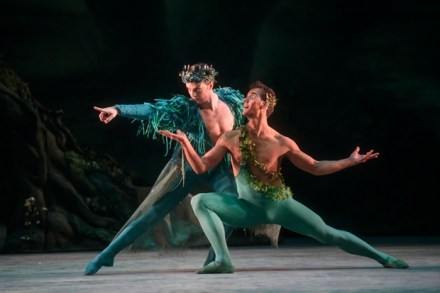
That joke about the young bull who tells the old bull, ‘Hey, Dad, see all those cows — let’s run and get one of them,’ and the old one replies, ‘Let’s walk and we can have the lot,’ is of course far too politically incorrect to tell these days. But it did creep into my mind last week watching Birmingham Royal Ballet’s double bill of Frederick Ashton’s masterworks, The Dream and A Month in the Country. He’s the old bull, and after the Duracell rogering in Christopher Wheeldon’s Strapless the other week, the serene, sly, ceaselessly sensuous way Ashton seduces you in those ballets, with choreography that never stoops to representing sex itself, comes like a caress after a grunt.
Notes on a scandal

From our UK edition

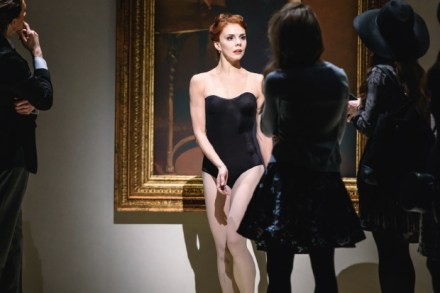
How could it possibly go wrong? The magnetic, seething Russian star Natalia Osipova playing the tragic woman in John Singer Sargent’s magnetic, enigmatic portrait of Madame X, all alabaster skin, black dress and arrogantly sexy profile. A Mark-Anthony Turnage-commissioned score, a top-prestige Bolshoi co-production, and enough scenery to rebuild Canary Wharf. If only Christopher Wheeldon’s new Covent Garden ballet Strapless were a scandal, like the portrait itself when originally unveiled in Paris in 1884, or like Kenneth MacMillan’s Manon at its première. If only it could be dubbed a tasteless exhibition of an undesirable type of female. Instead, it’s just a polite little flop, vastly over-decorated, overcomplicated, and with a whiff of evasion about it.

Unforgettable fire | 4 February 2016

From our UK edition

How much of a compromise does a fashionable choreographer loved by all have to make with his paymasters? When he’s unfashionable, it’s only the Arts Council he has to please. When the world wants a piece of him, he has London’s Sadler’s Wells and the Roundhouse, Grenoble, Paris, Luxembourg, Montreal, Hong Kong, Taipei, Wolfsburg, Brighton, Amiens, Bruges, Amsterdam, Rheims and Leicester producers all tugging at his sleeve, offering support for the quasi-divine creation but wanting to get their spanner into the works somewhere. In which light I take my hat off to Khan.

Turkish delight

From our UK edition

I’ve seen some people saying that English National Ballet’s Le Corsaire is so out-of-date it’s risible to see it staged in the 21st century. Sex trafficking, men in black with scimitars in Istanbul, pirates trading slaves across the Mediterranean, rich fat men rubbing their jewelled paws over fresh young bodies — pshaw indeed! But I’d like to have heard Tamara Rojo, ENB’s artistic director, pitch to her board and sponsors to get the shiploads of doubloons she needed to stage it with the bling and panache its spectacle requires. An even tougher sell might have been getting her multiracial dancers on board with playing slaves and slave-dealers. So yes, I reckon Le Corsaire is bang-on current as a project.

I’m having trouble finding an anti-woman conspiracy in dance

From our UK edition

I’m bemused by the outburst of claims that female choreographers are under-represented, held back, or discouraged by 'institutionalised sexism' from unveiling their contributions to the richness of British dance. Only a fortnight ago I was thinking about what to write for my first 2016 piece, and this was the very question on my lips. Why was English National Ballet doing a special all-women choreography programme in 2016 as a protest statement when so many of the best things made in dance last year and the previous year were by female choreographers? But I decided I’d keep that powder dry until ENB come to the stage.

Off the page

From our UK edition

Dance has its own archaeological periods, and 2016’s schedules are confirming what 2015 indicated — that the era of dances with scientists is over. If you’ve an aversion to digital fidgets and have felt left out in recent years, you will wallow in stories galore this year. There are big new ballets coming about The Odyssey, Frankenstein, Jane Eyre; of which Mark Bruce’s boldly miniaturised The Odyssey, launching into Britain’s county theatres next month before fetching up at Wilton’s Music Hall, is a most alluring prospect. Last year we saw from both Wayne McGregor and Christopher Wheeldon, the Royal Ballet’s master-stylists of crisp abstract ballet, an enthusiastic rush to reinvent old-fashioned narrative.

Why did a Russian ballet dancer throw acid in his boss’s face?

From our UK edition

The 16th June 1961 and 17th January 2013 are two indelible dates in the annals of Russian ballet. Two events that left the world gobsmacked — the escape of a Cold War fugitive and an acid attack by a subordinate on his boss — all enhanced in strangeness and sensational interest because they came out of the ballet world, a world largely closed to the rest of us. By a coincidence that’s as informative as it is lucky, two gripping documentary films emerge right now which tell these stories with dramatic effect, but also suggest a cultural link between the defection of the Kirov’s bad boy Rudolf Nureyev and the ghastly assault upon the Bolshoi Ballet artistic director Sergei Filin.

Bird brained

From our UK edition

For all the billing and cooing on public forums about the Royal Ballet’s The Two Pigeons revival, there’s a silent majority out there who daren’t speak for fear of the Twitter ordure that would fall on them. The box office and the empty seats attest to them. You’ll have not the smallest difficulty in booking coachloads in for any of the 11 performances remaining as I write. The curious thing is that the revival of this ballet some 30 years after it last fluttered in Covent Garden came about because of overwhelming public demand, says the Royal Ballet’s artistic director Kevin O’Hare.

Ménage à trois

From our UK edition

Mark Baldwin, artistic director of Rambert Dance, must take responsibility for most of the good times I’ve had recently, midwife to a litter of excellent things born out of curiosity and an unfussed love of culture, particularly music. A true artistic director (cf my complaint last time). On to the creative table at Rambert HQ this year he has thrown ideas about brass bands, a Picasso painting, something challengingly old-school for the Rambert orchestra to play, a new commissioned score or two, a bold, even foolhardy, decision to declare the Rolling Stones passé and say goodbye to Christopher Bruce’s popular but now irredeemably dated Rooster.

West End wannabe

From our UK edition

The love that asks no questions, the love that pays the price... The amount of unconditional love sloshing about at the Royal Ballet for choreographers and dancers is making this autumn in Bow Street a test of loyalty. At his season press conference Royal Ballet artistic director Kevin O’Hare smilingly promised us that the 2020 season might contain only works made in the past ten years. God preserve us. Two of the autumn’s three bills so far have been mixed programmes dominated by new or recent in-house contemporary ballets, and only Liam Scarlett’s Viscera, in the current bill, should be longlisted for 2020.

Wherefore art thou Romeo?

From our UK edition

You always remember your first time, don’t you? And in ballet one imagines that Juliet wants to remember her first Romeo as a thunderclap. So the Royal Ballet’s director Kevin O’Hare, for reasons best known to himself, gives the most exciting new young star the Royal Ballet has seen for years the role of Juliet and...Matthew Golding as Romeo. And so it was that Francesca Hayward’s mesmerising debut in this most prized of all Royal ballerina roles will be remembered as a bomb exploding in a vacuum. This Juliet will have to hunt for a new Romeo to find her match; she will have better nights to remember than that first one, which should have been so precious. While we, the public, can only grind our teeth in frustration at such a casting cock-up.

Giselle has floored many a ballerina — it did so again last week

From our UK edition

English has all sorts of emotive metaphors for how we feel about the ground. We’re floored. Or well grounded. Or earthbound. Life’s a minefield, so watch where you step. Stay on your toes. One moment we’re walking on air, next brought down to earth. Which is not at all the same as being down-to-earth. We have a fractious, if necessary, relationship, then, with the floor. Dancers even more so. If you were watching the Bolshoi’s live cinema relay of Giselle on Sunday, you will have seen its hyper-exquisite prima ballerina Svetlana Zakharova come clattering down in a most unghostly fashion in Act 2.

Gutted!

From our UK edition

There was blood on the walls and floor at the birth of Kenneth MacMillan’s Romeo and Juliet in 1965. The violence of the subject was matched by the goings-on in the wings, the scrap over the first-night casting, in which the original Juliet, the young Lynn Seymour, found herself relegated down the list having had an abortion to take the role. Due to Machiavellian box-office politics, the première was staged with Fonteyn and Nureyev as the young lovers, and rising star MacMillan, horrified at being steamrollered, quit the Royal Ballet. None of the smell of blood and fury survives in the Royal Ballet’s scrupulously scrubbed-down 50th anniversary staging.

Fighting talk | 17 September 2015

From our UK edition

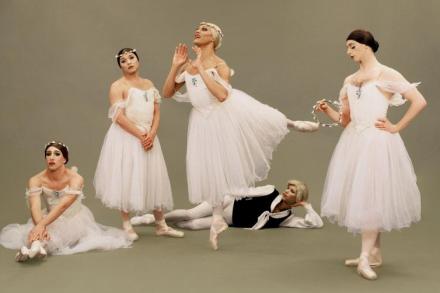
If there’s one thing scarcer than hen’s teeth in serious choreography nowadays, it’s a light heart. When was the last time we had something jolly created in the artform that brought us La Fille mal gardée, Coppélia and Les biches? Still, the first week of the start of the dance year was all good stuff, if sombre (and Les Ballets Trockadero de Monte Carlo are over from New York at the Peacock right now, thank heavens). English National Ballet’s Lest We Forget bill of new ballets was made last year for the start of the first world war centenary, but deserved repeating as a demonstration of serious ballets by accomplished choreographers. War ballets tread a fine line between pacifist drool and emotional catharsis.

Sylvie Guillem is telling porkie-pies: this is not a vegan body

From our UK edition

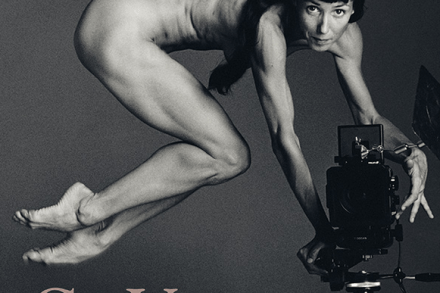
The evangelical vegan ballerina Sylvie Guillem has been caught in a porkie-pie in her fervour to promote radical action against the meat industry. The anti-animal products brigade Peta has just unveiled a new campaign headlining on a photograph of the dazzling, naked Guillem as a declaration of the strength and health of veganism. It’s been picked up everywhere on the net with the subheading: ‘Guillem shows off her new vegan physique.’ It neatly chimes with Guillem’s final performances as a dancer and her preparation to re-emerge on the world stage as an environmental activist. Peta’s campaign coverline runs thus: ‘Sylvie Guillem, one of the greatest dancers of our time, is vegan.

Martian moves

From our UK edition

Every August when London dims, Edinburgh calls, promising nothing less than ‘the greats of the arts’ at the International Festival. As if this beautiful, haunting city wasn’t enough enticement, I always pack high expectations for the EdFest, which in the past has delivered some staggeringly good international dance events that commercially biased London could not entertain. Though in recent years things have gone off a bit, this year the ‘great’ box was ticked several times. Israel Galván’s mesmerisingly extraterrestrial flamenco dancing has been seen in London before.

Ballet critics are not writing for dancers

From our UK edition

Some fans of Jonathan Ollivier, the fine dancer who was killed on his motorbike recently on the day he was to perform one of his best roles, the brooding sexpot in Matthew Bourne’s The Car Man, have been mourning that he wasn’t alive to see his glowing obituaries. Separately, I see that last week Rupert Pennefather of the Royal Ballet suddenly decided to leave ballet, aged 34. Next month he was due to open the new Covent Garden season in Romeo and Juliet. Again, fans have been commenting, this time noting that he never got a particularly enthusiastic press from the critics, and querying whether it might have been a factor in his quitting this young.

Afterthoughts

From our UK edition

The blackness that sweeps along the stage behind Sylvie Guillem’s disappearing figure in the Russell Maliphant piece on her farewell tour is an astonishing moment. One flinches. An eclipse has happened and the light has just run away with her. All gone. Michael Hulls’s momentous lighting states Guillem’s intentions as clearly as Elias Benxon’s filmwork in the closing piece, Mats Ek’s Bye, which shows this singular performer quitting her elite world of imagemaking and humbly, nervously, going out to join the masses in the street. After lights out, she intends there to be no legacy.

Pulp fiction

From our UK edition

Hot, languorous, sizzling… I was thinking what an ideal show Matthew Bourne’s noir comedy is to watch on a summer’s evening in T-shirt and shorts as you sip a cold beer in a plastic cup and feel all toasty while the garage mechanics are bumping and grinding away at Dino’s Diner. Then the rain started chucking it down outside, the temperature fell, and I found myself ruminating on how a dance show feels different if you’ve just been watching it, rather than feeling it in your skin and body. The great thing about Bourne’s choreographic style is that it feels like something you might have done yourself during some summer in your life.

All you need is love | 16 July 2015

From our UK edition

What could induce a grown-up, rational, childless person to go to see the ballet of Cinderella? You’ll expect to cringe at the panto comedy; on the other hand, you do not want to see verismo child-abuse and uglies-baiting. So what’s left for modern eyes? Two things: the Prokofiev score — as magical a charmer as Tchaikovsky’s Nutcracker — which plays with the contrasts of grotesque and beautiful, misery and hopefulness, and glistens with fairy dust in the right places. The overture melts the heart, the waltzes make you want to dance up into the sky.