Ismene Brown

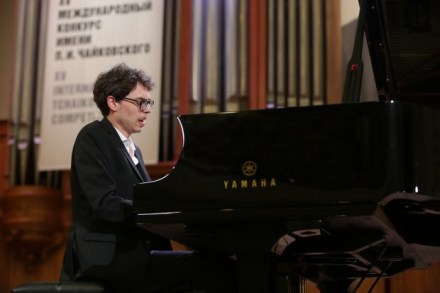
The self-taught French pianist who wowed the Tchaikovsky music competition

From our UK edition

Vladimir Putin was sitting a few rows in front of me last Thursday evening in Moscow listening patiently to three hours of classical music without interval. I could not imagine David Cameron or HMQ doing the same - Britain’s Got Talent is more their cup of tea. But then classical music is as much a part of Russian politics as its attitude to neighbours and this was the winners’ gala of the monumental four-yearly Tchaikovsky music competition, which never ceases to be a political event. That was why I went, after all - to see how today’s politics would play on the choice of top prizes, whether Russia would sweep everything, given present geopolitical sabre-rattling and this being Tchaikovsky’s 175th anniversary.
Dying of the light

From our UK edition

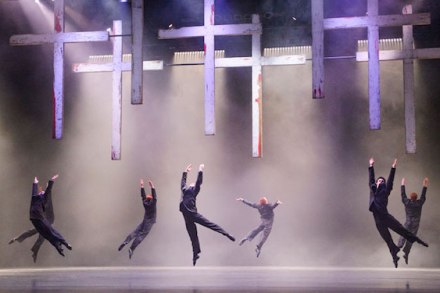
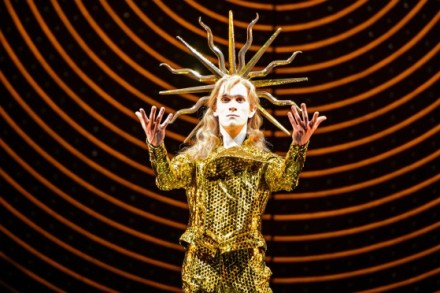
It’s a comfort that the creation of a new ballet inspired by French court entertainment can still happen in the amnesiac ballet country that Britain has become. The idea of making a modern-day meditation on the first ballet — Louis XIV’s 12-hour epic Le Ballet de la nuit (1653) — is as intellectual as Wayne McGregor’s roping in of cognitive science as source material. It faces many of the same traps when it comes to capturing that elusive necessity: theatricality. Only David Bintley could do this, deploying his artistic authority as the 20-year director of Birmingham Royal Ballet as any French despot would. The scheme’s theatricality is innate. Le Ballet de la nuit starred the 14-year-old Louis.

Walking with cadence

From our UK edition

I often regret that I’m writing in the past tense here, but never more than about milonga. It is such a smash show in every way that by rights it would be having a six-month run where everyone can see it, rather than five measly days at the elite Sadler’s Wells dance theatre where people aren’t put off by a choreographer’s tripartite name that takes several goes to pronounce. Tango has a way of curdling in show presentation — just to say ‘thrusting loins and stiletto toes’ is already a Strictly-type parody. Sidi Larbi Cherkaoui is something of an expert cook, however.

The long goodbye

From our UK edition

There’s been a clutch of middle-aged danseuses taking leave of life in one way or another recently. We’ve seen the abject (Mariinsky star Diana Vishneva’s solo show at the Coliseum) and the magnetic (Alessandra Ferri mournfully channelling Virginia Woolf at the Royal Ballet). A fortnight ago, the Paris Opéra’s aristocratic Aurélie Dupont retired from the stage in one of her great roles, as did American Ballet Theatre’s stellar women Paloma Herrera and Xiomara Reyes in New York. For top ballerinas and their fans it’s a harsh act of killing, a flower cut off in its fullest bloom. Darcey Bussell has said she sank into depression when she retired at 38, which lifted only when she returned to showbiz and telly.

Can you ballet-dance to words?

From our UK edition

Can you ballet-dance to words? How can choreography make any seriously worthwhile addition to a piece of music like Mahler’s vocal symphony Das Lied von der Erde? Kenneth MacMillan’s 1965 ballet Song of the Earth, currently on at Covent Garden, is frequently hailed as a masterpiece, but just as often you read comments by people baffled by it, lost in its length and orchestral density, and in their incomprehension of the German/Chinese verses that provided both composer and choreographer with their narratives. The Royal Opera House authorities believed the exercise shouldn’t be attempted at all, and MacMillan, fresh in 1965 from the huge success of his new Romeo and Juliet (premiered by Fonteyn and Nureyev), quit the Royal Ballet to make it in Germany.

Woolf haul

From our UK edition

People have been saying that Wayne McGregor’s new Woolf Works has reinvented the three-act ballet, but not so. William Forsythe reinvented the three-act ballet 20 years ago with Eidos: Telos, a mesmerising masterpiece that I found myself recalling as I watched the McGregor. There are many formal similarities: the search for sense through words, the woman facing darkness and death, the central act in period costume, spectacular light, video, ambitious structures on stage, and so on. You get the picture. McGregor’s work isn’t reinventing the wheel — it just reinflates it with a jet of new hot air. Since last week’s première, every possible view has been taken about Royal Ballet’s Woolf Works, from rapture to loathing.

Why dance needs a Simon Cowell

From our UK edition

I have more and more time for Simon Cowell. On Britain’s Got Talent on Saturday night he was dishing out his hard-faced reality check to the parade of wannabes who as usual range from silly asses through competent-karaoke to on-the-money in Sycospeak. I also admire the wily care for words with which he crafts his highest possible praise - ‘You’re probably quite honestly one of the best we’ve ever had on this competition.’ At least five legal outs there. Meanwhile over on the BBC’s first Young Dancer competition live on BBC Two, ‘they were all winners’, every one of them, according to the beaming presenters. Just competing makes you a winner, yes, we know. Now, I don’t mind that on Masterchef when the contestants are amateurs.

Boys on the march

From our UK edition

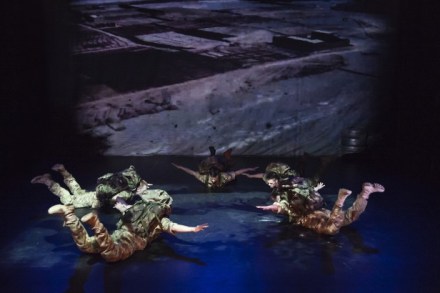
In dance, it’s usually the moment the boys start fighting that challenges your suspension of disbelief. Synchronised fencing (MacMillan’s Romeo and Juliet), unison goosestepping (Grigorovich’s Spartacus), even the Sharks and Jets in Robbins’s West Side Story, are formation set-pieces designed to arouse us. Last year there was a bunch of ballets made by British choreographers to mark the first world war centenary, which artfully focused on sorrow. But high tension, apprehensiveness, emotional denial — what’s really in the fighter’s head — these are physically antipathetic to dance’s expansive language. This is why Rosie Kay’s 5 Soldiers: The Body is the Frontline is so powerfully striking and bold a dance work.

Lethal weapon

From our UK edition

The current talking-point at the Royal Ballet is the Russians milling around. One can sound unfortunately as if one’s starting a Ukip conversation here, but the Royal Ballet never used to be short of half a dozen home principals, any one of whom could be looked on as sufficiently glittery to attract the opening-night audience. Right now, though, the recent loss of a wonderful generation of artists — Cojocaru, Kobborg, Rojo, Benjamin, Polunin — has left the top rank rather thinned of true star quality, especially among the women. Hence the excitement at the recruiting to the Royal of Natalia Osipova from the Mikhailovsky and Bolshoi, Vadim Muntagirov from English National Ballet, and the guests Iana Salenko and Evgenia Obraztsova recently in Swan Lake.

Why is British dance training so poor? ‘Diversity’ is trumping quality

From our UK edition

A very British thing happened at the dance industry conference last weekend. Three of the UK’s most celebrated contemporary choreographers said British contemporary dance training is not up to snuff. Foreign dancers were better trained from a younger age, they said, were fitter, readier, worked harder. That’s why they got more jobs in British companies than UK-trained graduates. The two instant results were (a) a chorus of outraged denial from the dance establishment and (b) the resignation of the chairman of Dance UK, the umbrella body and ‘voice of dance’, which staged the conference. Now, its chairman, Farooq Chaudhry, was certainly playing some fairly brutal politics.

Crossing cultures

From our UK edition

For an Indian woman to make a dancework about La Bayadère is a promising prospect. This classical ballet of 1877 by Russia’s French-born genius Marius Petipa tells the simple story of an Indian temple dancer — essentially a religious sex slave — whose potential salvation by an amorous young soldier is dashed when he expediently marries the rajah’s daughter. Death and transfiguration ensue in some addictively gorgeous balletic poetry, along with all sorts of improbable exotica to please the tsar’s eye. Londoner Shobana Jeyasingh, born in India, trained as a traditional Bharatanatyam dancer, and is a contemporary dance choreographer of keen intelligence, if sometimes letting her brain get the better of her choreographic imagination.

Birmingham Royal Ballet review: A Father Ted Carmina Burana

From our UK edition

We ballet-goers may be the most self-deceiving audiences in theatre. Put a ‘new work’ in front of us and half of us go into conniptions because the classical palace is being brought down and the other half into raptures at not having to sit through some old-hat ballet-ballet. Twenty years ago, David Bintley was appointed artistic director at Birmingham Royal Ballet. For his debut creation there, having defined himself at Covent Garden as a well house-trained classical choreographer, he picked on Carl Orff’s bold, brash choral work about naughty medieval priests, Carmina Burana. The London critics’ reception was broadly (if I remember rightly — I was one of them) sniffy.

Dance has never addressed whether making money is a good or bad thing. It’s time to do so

From our UK edition

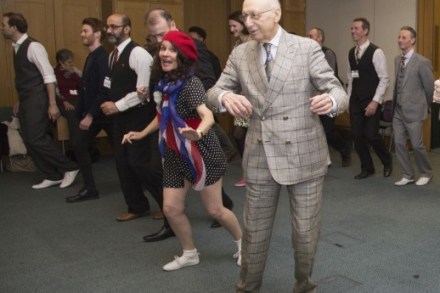
A couple of weeks ago some dance instructors went to Westminster to coach MPs to shake their tushes for the cameras, while they promised to support a ‘dance manifesto’ for Britain. Since then the image of MPs twerking has stuck to the inside of my head like snail slime on my hands. I’ve scrubbed away with the mental Swarfega but I can still sense those lovely, lively honourable members of a certain age who feel they can best drum up public support for British dance by going onto the floor themselves. You might be surprised that there exists an All-Party Parliamentary Group for Dance in Westminster at all.

Leonid Yakobson: the greatest ballet genius you’ve never heard of

From our UK edition

On YouTube there’s a brief dance video of a Viennese waltz so enchanting that not even Fred and Ginger in ‘Cheek to Cheek’ can outcharm it. A dandy in top hat and a captivatingly pretty girl in bonnet and white frills do ecstatic jumps and twirls in each other’s arms to the seething Rosenkavalier waltz. That it’s Soviet is almost unbelievable — still more so that it dates from the still Stalinist 1954. But this is a gem by Leonid Yakobson, a choreographer who was one of the USSR’s most arresting modern voices, yet of whom you will find rare mention in the West or Soviet ballet histories.

50 shades of beige: English National Ballet’s Modern Masters at Sadler’s Wells, reviewed

From our UK edition

My moment of the week was stumbling into the shocking, fantastical Cabinet of Curiosities in the Alexander McQueen show at the V&A. On the walls were tier upon tier of dresses, shoes and headdresses, feathered, leathered, beaded, painted, razored, or tenderly embroidered with a fairy needle. Rotating at the centre of the room was the Spray Paint Dress that a dazed Shalom Harlow wore while robots ejaculated paint over her in 1998. What could be more sinisterly resonant of classical ballet’s erotic world? McQueen made his one and only ballet working with Sylvie Guillem 18 months before his suicide — remember her as the cross-gender Chevalier d’Eon in Eonnagata? But fashion was a vastly more permissive (and richly resourced) playpen for his darkling artistry.

A legendary piece of iconoclastic dance returns. Does the piece still stand up?

From our UK edition

Funny how things turn upside-down with time. A work of contemporary dance that made an iconoclastic splash decades ago is revived today, exactly as it was, as if it were a museum piece. Yet more long-standing dance traditions — such as flamenco and circus — are constantly being remodelled. The contemporary work is that legendary 1987 invention of Eurocrash by the Belgian dance-inventor Wim Vandekeybus, What the Body Does Not Remember. The icons it trashed included rules about the place of grace in dancing, even the place of knowledge — Vandekeybus was a photographer and experimental theatre performer when he made this, his first dance piece, never bettered. Those icons have had boots in their faces for a generation since, so does this piece stand up?

Will the real Swan Lake please stand up

From our UK edition

It is the end of an era — the Royal Ballet’s extravagant Fabergé-egg Swan Lake production by Anthony Dowell is on its last legs. When this 28-year-old production finishes the current run on 9 April, that will be it for one of the most controversial classical productions of the past half-century. It’s the one set in Romanov Russia, festooned with ribbons and golden squiggles, with swans in champagne ball-gowns rather than pristine white feathers. Hallucinatory, glamorous and opulently symbolist? Or hectic, fussy and tatty? Adjectives divide between the adoring and the withering for Yolanda Sonnabend’s Gustave Moreau-esque designs and for Dowell’s hyperactive staging.

The Kremlin is dictating Russian culture once more – and it’s neo-Soviet and anti-Western

From our UK edition

It’s suddenly gone icy-cold in Russia’s arts relations with us and the US. Last year’s Russia-UK Year of Culture just snicked under the wire before the political chill started building up ice in all sorts of unexpected places. The international acclaim for the epic Russian film Leviathan, up for a Best Foreign Film Oscar, was sneered at by the feverishly nationalistic culture minister Vladimir Medinsky. Recently he denounced the film as 'perfectly calculated to pander' to western views of a bleak modern Russia, and he has previously proposed that only movies properly celebrating today’s Russia should be allowed either public funding or a release.

The Associates at Sadler’s Wells reviewed: another acutely inventive work from Crystal Pite

From our UK edition

The prodigious streetdancer Tommy Franzén pops up everywhere from family-friendly hip-hop shows by ZooNation, Boy Blue and Bounce to serious contemporary ballet by Russell Maliphant and Kim Brandstrup, but he’s a bit of a Macavity. He ought to be recognised as a star, but he effaces himself award-winningly in others’ work. That chameleon quality is a problem with his venture into the solo limelight, a Charlie Chaplin tribute, SMILE, on the Sadler’s Wells triple bill of associate choreographers last week. Franzén’s mercurial moves are always thrilling to watch, and his creative extension of Chaplinesque capering into some acrobatic popping and b-boying does OK in making the Little Tramp a street brother of hip-hop’s outsiders.

London International Mime Festival review: on juggling, dance and Wayne Rooney’s hair transplant

From our UK edition

January is something of a palate-cleanser for the year, as the London International Mime Festival flies in plane-loads of companies bearing gnomic names in a kind of dance-world Desperanto that’s equally incomprehensible in every language. Like cars or tourist T-shirt slogans, titles like Plexus or Ephemeral Architectures label what’s now called ‘visual theatre’, with copious explanatory notes translated between four languages, gaining comic value at every stage. I don’t know why they don’t just write, ‘We’re playing. The sponsor paid.’ (Mark Morris is the only choreographer I know who says, ‘I make up dances and you watch ’em.