Isabel Hardman

Isabel Hardman

Isabel Hardman is assistant editor of The Spectator and author of Why We Get the Wrong Politicians. She also presents Radio 4’s Week in Westminster.

David Cameron’s moving Hillsborough statement

From our UK edition

In many ways, today showed this current Parliament and the Prime Minister at their best. David Cameron hadn't brought Flashman with him to Prime Minister's Questions today in any case, but for his statement on the Hillsborough tragedy, he adopted a solemn and respectful tone. The whole chamber was still, save for sharp intakes of breath from MPs as horrifying findings from today's report from the Hillsborough independent panel were read to them. The worst was that many more - possibly 41 -  lives could have been saved had the response to the disaster been adequate. 'Anyone who has lost a child knows the pain never leaves you.

Michael Gove rebuffs calls for a GCSE remark

From our UK edition

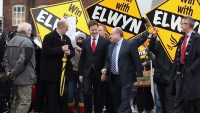
Michael Gove faced a tough grilling from MPs on the Education Select Committee this morning about the row over GCSE English results. But the Education Secretary gave as good as he got, launching a fierce attack on the Welsh education minister Leighton Andrews for putting children in Wales at what he said was a disadvantage by ordering a remark of the papers. He told the packed committee room: 'I believe that the children who have been disadvantaged are children in Wales. I think the decision by the Welsh education minister, Leighton Andrews, is irresponsible and mistaken.

Osborne to drop debt target to avoid ‘nightmare’ cuts

From our UK edition

George Osborne is in for a really rocky autumn to follow the dismal summer he's just survived as chancellor. The Times and the Guardian are both reporting this morning that the Chancellor is set to drop his key fiscal target of having public sector net debt as a proportion of GDP falling by 2015 as a result of higher government borrowing and lower tax receipts. Osborne has decided that the political fallout from abandoning this target, which he has long touted as a sign of the success of his policies, would be smaller than the 'nightmare' of further cuts, particularly the £10 billion cuts to the welfare budget.  Jonathan wrote in July about the approach of a 'hideous choice' for the Chancellor if growth downgrades continue.

Nick Clegg: I don’t think gay marriage opponents are bigots

From our UK edition

Nick Clegg is currently eating a Ben & Jerry's ice cream called 'Appley Ever After' with gay marriage campaigners celebrating the government's consultation on introducing civil marriage for same-sex couples. Things didn't go all that appley for the Deputy Prime Minister earlier today, though, when the Cabinet Office sent out what he later claimed was a draft of his speech that he was never going to give, which said: 'Continued trouble in the economy gives the bigots a stick to beat us with, as they demand we “postpone” the equalities agenda in order to deal with “the things people really care about”. As if pursuing greater equality and fixing the economy simply cannot happen at once.

How a new whip saved a new minister from an embarrassing rebellion

From our UK edition

It was not the ideal first outing for a new minister at a committee approving new legislation. Justice Minister Helen Grant arrived at the committee considering two compensation schemes last night to discover Conservative backbenchers in uproar. None of the MPs had been able to get their hands on the explanatory notes for the legislation, which covers the Victims of Overseas Terrorism Compensation Scheme 2012 and the Criminal Injuries Compensation Scheme 2012. So they did not know, until they arrived at the evening meeting, that they would be expected to approve sweeping cuts to compensation for postmen attacked by dangerous dogs and other victims of crime.

Picking the next Bank of England Governor

From our UK edition

Treasury questions is one of the more entertaining spectacles on offer in the Commons. There's the standard banter between George Osborne and Ed Balls - today we saw the Chancellor dub his opposite number 'the member for Unite west', with Ed Balls noting in his reply that at least he'd only been heckled by a few trade unionists rather than the entire Olympic stadium. There were new ministers to welcome too: Greg Clark received such a warm cheer that he joked he felt 'like Boris Johnson'. But the centrepiece of the session was - along with the confirmation that the Autumn Statement will take place on the rather wintery date of 5 December - George Osborne's announcement about the appointment of the next Bank of England governor.

UK trade deficit narrows

From our UK edition

It's been a funny 24 hours, hasn't it? The UK has had good news from the tennis and good news on the economy. Unusual, particularly in the latter's case, where the news may appear better than it actually is. Figures from the Office for National Statistics released today show the UK's trade deficit narrowed to £1.5 billion in July from a £4.3 billion deficit in June. There was a 9.3 per cent rise in exports of goods to £25.8 billion, and a 2.1 per cent drop in imports by £700 million to £32.9 billion. Before everyone gets too excited, though, the dramatic rise is partly down to June's figures being so terrible after the disruption caused by the Queen's Diamond Jubilee bank holiday.

Briefing: Universal Credit

From our UK edition

MPs are due to debate the government's plans for universal credit in the House of Commons this afternoon. The Opposition Day motion questions whether ministers have 'failed to properly account for numerous basic details of how the scheme will work', and calls for them to address 'deep flaws' in the project. So where is the project at the moment, and what are those deep problems? The background Work and Pensions Secretary Iain Duncan Smith unveiled the universal credit at the Conservative party conference in 2010. It was based on the work that his think tank, the Centre for Social Justice had carried out when Duncan Smith was in opposition, and led to the publication of a white paper called 'Universal Credit: welfare that works' in November 2010.

Vince Cable calls time on ‘laissez-faire’

From our UK edition

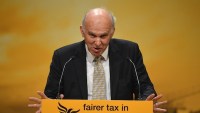
Vince Cable's speech on the government's industrial strategy today is expected to signal the end of a 'laissez-faire' approach to business. But the Business Secretary appeared un peu trop détendu himself when describing plans for a state-backed business bank on the Today programme. 'This is, as I say, something we're discussing within government at the moment. There is a scope for example for rationalising our activities as well as new lending. But the scale and scope is something that I'm discussing with the Chancellor at the moment.' There wasn't much detail on offer, other than that this bank 'may well' involve state lending. But as Sam Coates points out this morning, a real bank would take years to set up.

Ofqual pressured exam board on English GCSE

From our UK edition

If any members of the education select committee were wondering if they would have enough questions for their witnesses today, last night's scoop from the Times Educational Supplement might give them a few pointers. Leaked letters seen by the newspaper show exams regulator Ofqual pressured the Edexcel exam board to raise the grade boundaries on its English GCSE just two weeks before the summer results were published. A letter from Ofqual's director of standards Dennis Opposs to Edexcel on 7 August 2012 says: 'This may require you to move grade boundary marks further than might normally be required.' Though Edexcel disagreed, saying its proposed grades were 'fair', Opposs pushed the board again, arguing it was obliged to ensure its results were consistent with other boards.

Iain Duncan Smith denies threat to universal credit

From our UK edition

Allowing Iain Duncan Smith to dig his heels in at the Work and Pensions department in last week's reshuffle sent out two messages. The first was that the Prime Minister is not as authoritative as he should be: telling someone that you'd rather they moved to one department, but that it's ok for them to remain where they are isn't exactly 'butch', to borrow the PM's own favourite word. The second is that the Prime Minister was worried about the future of the DWP's reforms, and was keen to put someone else in charge of implementing the behemoth computer system for the universal credit, even though events meant he was unable to do so. Liam Byrne prodded Duncan Smith on this today at Work and Pensions questions.

Where Brendan Barber has a point

From our UK edition

Brendan Barber's last speech as General Secretary to the annual TUC Congress in Brighton made a salient point about what politicians can learn about the private sector from the G4S debacle. Ministers may well dismiss the majority of Barber's comments about cuts and labour market reform without poring through the transcript, but there was one attack that he made that will ring true for those on the right as well as the trade union officials sitting in the conference hall. Using the Olympics as his grand theme, Barber said: 'Private is always better than public, they argue. Not true, as we saw all too clearly when it came to Olympic security.' He added: 'Congress, it's right to celebrate the Olympics, but it's even more important to learn from them.

Boris muscles in on Davies’ airport inquiry

From our UK edition

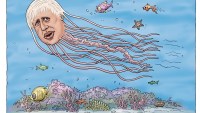
Boris Johnson has already denied that the work he is carrying out on airport capacity in London is a rival commission to the one set up by the Government and led by Sir Howard Davies. 'I was a bit flummoxed by that,' he told LBC this morning. 'What we're doing is we are going ahead with our contribution to the Howard Davies commission.' It doesn't actually matter whether the Mayor is holding an inquiry called the Johnson Inquiry Into Airports, with its own logo and press launch, or whether he's actually just calling experts together to develop a detailed submission to the Davies Commission as he suggests he is. The point is that in nine months' time, two years before the government's commission reports, Boris will announce his own solutions to the demand for greater aviation capacity.

‘Nobody likes being in coalition’

From our UK edition

The coalition's leaders like to stick to the line that the partnership is professional and business-like when they describe how policy is made. Newly-appointed business minister Michael Fallon struck a slightly different note this morning, though, when he appeared on the Today programme. He said: 'I think everybody has been frustrated: nobody likes being in coalition and everybody's impatient for growth.' He chose his words carefully when describing the 'different perspectives' that he and his new boss Vince Cable take on the labour market and deregulation: 'We're in different parties, we come from different perspectives and sometimes you'll see we use different language.

Anna Soubry’s NHS clean-up operation

From our UK edition

Anna Soubry has given a wonderfully colourful interview to The Times today about her new job as Health Minister. The Conservative MP jumps through the usual hoops of having to talk about how she loves wearing high heels but doesn't enjoy baking cupcakes, but she also makes a number of striking comments about health policy. The most-widely-picked-up have been her comments on euthanasia. She told the newspaper: 'The rules that we have about who we don't prosecute allow things to happen but there's a good argument that we should be a bit more honest about it.' Norman Lamb appeared on Sky News this morning to say he also felt there was good reason to look at reform of assisted suicide laws.

Coffee House interview: Roger Bootle

From our UK edition

Roger Bootle is managing director of Capital Economics, and winner of the Wolfson Economics Prize. As the government launches another attempt at boosting UK growth, the economist, who describes himself as a 'rare right-wing Keynesian' shares his thoughts on ministers' economic prowess with Coffee House readers. Do you think the government will be able to fight the next general election on the issue of the economy? 'I think it's too early to tell, but if the economy is completely flatlining and the deficit does not go down - which seems to me to be perfectly possible, there are strong signs things are going to look bad for them.

Ex-health minister attacks health policy

From our UK edition

Sometimes, when a minister is sacked, he or she goes to ground for a little while, licking their wounds and avoiding journalists keen for a comforting chat about their new backbench life. Not so Paul Burstow, who can barely have cleared his desk in the Health Department before launching an attack in the Evening Standard on that same department's policy. Burstow has embarrassed colleagues by spending the past year campaigning against the closure of the accident and emergency and maternity units at St Helier Hospital in his constituency while working as a health minister. He tells the newspaper today that the plans are 'dangerous' and fundamentally flawed.

Lib Dems prepare for fight on welfare and taxes

From our UK edition

Nothing is certain at a Liberal Democrat conference other than plenty of discussion of benefits and taxes. The left-leaning wing of the party - the Social Liberal Forum - has released a series of potential amendments and emergency motions for the party's autumn conference. The list is an interesting indication of what the grassroots (the SLF likes to describe itself as the 'soul' of the Lib Dems) are most worried about. There's an amendment from the irrepressible Lord Oakeshott, which adds a line to a motion due for debate on the Tuesday of the conference, called 'Tackling Inequality at its Roots'. The peer's addition is, surprisingly, calling for a full mansion tax.

Govt to support Barwell’s mental health bill

From our UK edition

'This isn't staged, I promise,' Gavin Barwell joked as an MP bounded up to our table in the Portcullis House atrium to demand why the Croydon Central MP hadn't been given a job in the reshuffle. Had he turned something down, his colleague asked, throwing his hands up in the air in despair. Rather like Robert Halfon, though, it's not a bad thing Barwell remains on the backbenches as at least his campaigning zeal is undented by the appearance of red boxes on his desk. Instead, the Tory MP's desk has a private members' bill sitting on it which has its second reading next Friday. It's the Mental Health (Discrimination) (No.2) Bill, which calls for three changes to the law around what people suffering from a whole range of mental health issues can and can't do.