Isabel Hardman

Isabel Hardman

Isabel Hardman is assistant editor of The Spectator and author of Why We Get the Wrong Politicians. She also presents Radio 4’s Week in Westminster.

Bookbenchers: Peter Wishart | 26 August 2012

From our UK edition

Over on the books blog, SNP MP Pete Wishart shares his favourite books with Spectator readers. He reveals which tomes he'd save from a burning Scottish - rather than British- Library. There's plenty more Scots culture on offer, along with a tiger who came to tea, and the more practical reading material he'd set for his son now that he's a student.

May and Green put up the barricades on migration targets

From our UK edition

David Cameron is already going to struggle to hit his target of taking net migration from 250,000 to the tens of thousands. But I understand that the Home Office is nervous that other Whitehall departments could undermine that target further, seeing immigration as one sinew that could be strained as they begin to panic about growth. Look closely, and you can see an inter-governmental battle being fought. Theresa May and Damian Green have been on manoeuvres today, highlighting the government's progress in cutting net migration. The Home Secretary has an op-ed in The Sun on Sunday, where she also lists some of the areas which have been tightened to 'make life in the UK much more uncomfortable' for illegal immigrants.

Cameron under pressure on Heathrow

From our UK edition

David Cameron and his Liberal Democrat partners are coming under increasing pressure from Tory ministers and other senior party figures to U-turn on a third runway at Heathrow. Yesterday, in what appeared to be a bid to take over from Justine Greening as Transport Secretary, Grant Shapps became the first minister to call on the Prime Minister to drop the government's opposition to development at the airport. Today sees the first Cabinet minister to openly voice concerns: Owen Paterson, the Northern Ireland Secretary. The Sunday Telegraph reports that Paterson has urged colleagues in Cabinet meetings to re-consider the third runway, fearing that economic growth in Northern Ireland will suffer.

Ofqual to investigate GCSE results

From our UK edition

Labour and the teachers' unions have had their way: there is going to be an official inquiry into the GCSE results. The exams regulator Ofqual is only investigating the English results, though, saying there are 'questions about how grade boundaries were set in a very small number of units across the year'. In a letter to the National Association of Head Teachers, Ofqual chief regulator Glenys Stacey wrote: 'We recognise the continuing concerns among students, parents and teachers about this year's GCSE English results. We will look closely at how the results were arrived at. We will do this quickly, but thoroughly, so that we ensure confidence is maintained in our examinations system.

Reshuffling the whips won’t solve Cameron’s rebel problem

From our UK edition

One of the biggest problems that David Cameron faces at the moment is discipline within his own party. He was astonished by the size of the rebellion on the second reading of the House of Lords Reform Bill, which he had expected to be much smaller. He is now considering what to do with the many talented Conservative rebels as he approaches the September reshuffle: does he promote some more of those who revolted over Europe, but leave the Lords rebels languishing in career Coventry for a little longer? The Guardian carries a story by Nick Watt which suggests Cameron isn't just going to tackle bad behaviour by keeping rebellious spirits on side, though.

The IMF’s ‘too far, too fast’ warning

From our UK edition

There is great excitement in some circles at a paper from the International Monetary Fund which has emerged in the past 24 hours. This piece of research warns that cutting government spending too quickly can weaken economies permanently and lead to even deeper recessions. It says: The analysis in this paper shows that withdrawing fiscal stimuli too quickly in economies where output is already contracting can prolong their recessions without generating the expected fiscal saving. This is particularly true if the consolidation is centred around cuts to public expenditure - likely reflecting the fact that reductions in public spending have powerful effects on the consumption of financially-constrained agents in the economy - and if the size of the consolidation is large.

Forget school sports: the Paralympic row could be far more toxic

From our UK edition

The Paralympic flame is now burning in Trafalgar Square ahead of the Games' opening ceremony on Wednesday. As it was lit, Boris Johnson encouraged London to 're-ignite the spirit of the Golden Games' for the Paralympics, which London looks ready to do, given the record sales of 2.3 million tickets (a lesson in endurance and determination to succeed in spite of many obstacles in itself, given the quality of the Locog website that sells those tickets). As with the Olympics, even though the Paralympics are not about politics, they still offer an opportunity for some to make political points. During the first Games, the arguments focused largely on school sports and were as amusing as they were vitriolic.

Harry snaps expose Leveson’s regulatory headache

From our UK edition

Prince Harry's naked outing on the front page of today's Sun has already prompted  60 complaints to the Press Complaints Commission about a breach of the Prince's privacy. It also illustrates the problem facing Lord Leveson as he prepares to make his recommendations on the future of press regulation. The Sun's editorial, which it published alongside the now infamous picture on its front page, argues that it was perfectly reasonable to defy the warnings from the Royal Family's legal team not to print the snaps which have been circulated across the globe via the internet. The piece says: It is absurd that in the internet age newspapers like The Sun could be stopped from publishing stories and pictures already seen by millions on the free-for-all that is the web.

Why do the Lib Dems love leaflets so much?

From our UK edition

Polling analyst Mark Gettleson has a fascinating piece of research on ConHome today about the implications for the Conservatives of a collapse in the Liberal Democrat vote in 2015. In summary, it will be bad news for the Tories. Gettleson argues that in seats where the Lib Dems come third, those who had supported the party did so on the basis of national political messages. He says: 'It is with these voters that an obvious left-right split becomes important - more precisely a Labour vs Coalition one. While Liberal Democrat voters who feel favourably towards the Coalition may well stick with Mr Clegg rather than leap to the defence of their incumbent Conservative, those who find the idea of going into bed with the Tories revolting will switch directly to Labour.

You can’t judge a school by its sports fields

From our UK edition

There's a glass case in the hall of Number 10 at the moment which contains a large sports bag with two shiny Olympic medals poking out. This wasn't left behind by a Team GB athlete: it's actually an enormous, elaborate cake, complete with icing zips. Downing Street staffers are looking forward to eating this part of the Olympic legacy soon. A considerably less tasty leftover from the Games is the row over school sports provision. During the Olympics, I argued that the Prime Minister's interventions on the matter were largely unhelpful, but as Fraser and Matthew d'Ancona have pointed out, schools selling off old tennis courts to pay for new gyms, or a proliferation of Indian dancing classes will become more common under the freedoms they now enjoy.

Straining every sinew a just that little bit further for growth

From our UK edition

The Institute of Directors added a bit more moss to the rolling stone of worry about the government's growth agenda today, releasing the results of a survey of business leaders that condemned a list of the government's reforms as 'ineffective'. It's worth looking at the full list of areas where the respondents felt the government is failing to deliver, but in short simplifying the planning system was deemed the least ineffectual set of reforms, with reducing tax complexity the area where the government scored worst. Now, before Chuka Umunna gets too excited about the words 'too far and too fast', the IoD's members did support the government's deficit reduction measures. But this survey does add to the growing consensus that something must be done about growth this autumn.

Pay study embarrasses teaching unions

From our UK edition

The teaching unions like to dismiss talk of introducing regional pay to the public sector as a plan that will hit deprived areas hardest. Their fierce opposition to the plans touted by Michael Gove and other ministers threatens to crystallise into strike action should the government make any serious moves towards the changes. But research from Bristol University published today changes the terms of the debate rather, as it suggests that pupils are paying the price for a national pay rate for teachers. The study, which compared pay to performance in around 3,000 schools, found that in areas where salaries in the private sector are significantly higher than in schools, pupils can drop one GCSE grade in one subject.

Greek PM seeks breathing space on cuts

From our UK edition

Greek Prime Minister Antonis Samaras is looking for a breather this morning as he meets Jean-Claude Juncker, head of the eurozone finance ministers, to discuss Greece's ability to make the €11.5 billion of cuts in order to secure its next tranche of bailout cash. Samaras has told German newspaper Bild that his country needs 'breathing space' and is expected to try to persuade Juncker to give him an extra two years to make the necessary reforms, arguing that the Greek elections meant time for this was lost. Juncker may well refuse to offer leeway on this. Meanwhile German politicians continue to talk tough on the matter: Dr Michael Fuchs was on Radio 4 this morning expressing his doubts about Greece getting the extra time Samaras wants.

MPs and voters turn on Osborne

From our UK edition

The Treasury received some bad news today, so it sent out Chloe Smith to respond instead of her boss George Osborne. The economic secretary made the same point as Fraser about Labour's alternative strategy when she responded to the latest borrowing figures this afternoon. She said: 'Their strategy would be to borrow more and to spend more and we cannot take that kind of decision in these circumstances.' But she then added: 'What these figures really show is the importance of sticking to the plan that has won Britain international credibility.' The 'international credibility' line is quite interesting as presumably Smith is referring to Britain's credit rating, which Danny Alexander said recently was 'not the be-all and end-all'.

‘Rape as most people understand it’

From our UK edition

George Galloway got a spade out today and made a statement in which he attempted to clarify his comments about the allegations against Julian Assange. He dug himself a little deeper, saying that 'what occurred is not rape as most people understand it'. Assange is wanted in Sweden - but not yet charged - on allegations of rape, unlawful coercion and sexual molestation. Rod Liddle blogs that he thinks Galloway has a point. The law says he does not. There is a lesson to be learned from Galloway's comments, though, which is that rape is not well understood at all. When he says something is 'not rape as most people understand it', this is because society still largely imagines rape as an unexpected attack on a woman walking down a dark alley late at night.

Lib Dems push Treasury on mansion tax

From our UK edition

The Treasury's consultation on taxing residential property transactions closes this Thursday, and the Liberal Democrats are using it to push their preferred policy of a full mansion tax. The party has asked its members to send this email to the Treasury: I am writing in response to HM Treasury's public consultation on the taxation of residential property transactions. Ultimately, I want the government to go further and introduce a full mansion tax charge of 1 per cent annually on all properties worth £2 million or more, with an option of delaying payment for those who are asset-rich but cash-poor. If the government wants those with the broadest shoulders to bear the burden of austerity then it should look seriously at a full mansion tax.

Ministers take brand NHS to the world

From our UK edition

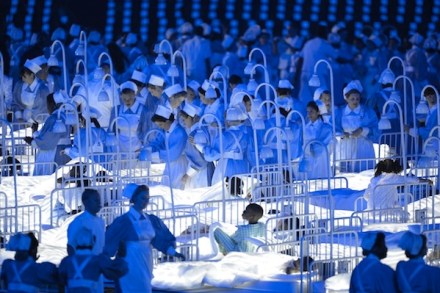
Danny Boyle had us all fooled. There we were, thinking the dancing nurses and luminous NHS logo in his opening ceremony for the Olympic Games were part of a piece of 'Marxist propaganda', when actually he was sneakily paving the way for what Labour this morning derided as the 'rampant commercialisation' of the health service. Yes: it turns out that the Olympic opening ceremony was just one big fat right wing advertising ploy to entice the world to buy into Brand NHS. Whoops. The government is opening an agency called Healthcare UK, which is designed to set up contacts between world-respected NHS operations and private clients overseas.

Eurozone leaders prepare for Grexit

From our UK edition

On one level, a government minister confirming that their colleagues are discussing the possible break-up of the eurozone is hardly a surprise. It would have been far more controversial had Finland's foreign minister Erkki Tuomioja pitched up on the World at One this afternoon and told Martha Kearney that eurozone finance ministers were not engaged in contingency planning at some level. But Tuomioja's comments that a Grexit was 'something that everybody in every ministry of finance and in central banks, and national central banks, is looking into' are still significant as they show politicians are less worried by the effect public hints about an exit will have and more by the inevitability of that exit. Tuomioja said: 'We certainly do not hope this will happen.

Is selling off expensive council homes such a bright idea?

From our UK edition

Here's a policy that looks like it could be a vote winner while helping to solve Britain's housing crisis: selling off expensive council homes. Think tank Policy Exchange has published a paper this morning proposing that local authorities be allowed to sell luxurious properties in their boroughs as they become vacant in order to raise money for new, cheaper social properties. The report's author, Alex Morton, believes this could lead to 28,500 expensive properties being sold off each year, raising £5.5 billion for new housing construction. The idea is also, unsurprisingly, quite a popular one with voters.

A U-turn on rail fares would buoy up backbenchers

From our UK edition

It's not unusual in politics for what would in abstract seem a sensible policy to become hugely unpopular when it hits Westminster. Most Conservative MPs would agree, in principle, that placing the burden of the cost of rail travel on the shoulders of those who actually travel by train is far more sensible than the money coming from all taxpayers, regardless of whether they use the rail network, and regardless of whether they live in commuter-land or not. But it was also inevitable that this week's huge price rise would be very difficult for MPs to sell to their constituents when the cost of living is rising across the board. Today's story in The Observer quoting MPs who want the government to change course on this matter does feature a fair number of commuter belt constituencies.