Ian Williams

Ian Williams

Ian Williams is a former foreign correspondent for Channel 4 News and NBC, and author of Vampire State: The Rise and Fall of the Chinese Economy (Birlinn).

China’s Ponzi banks are teetering

From our UK edition

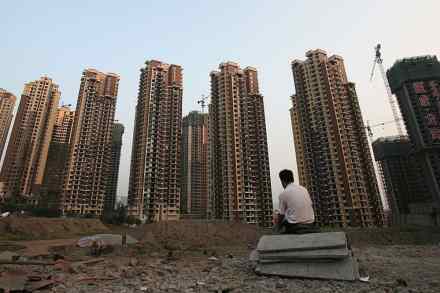
What began as a run on a handful of provincial banks is rapidly morphing into one of China’s worst financial scandals, threatening the stability of the country’s heavily indebted financial system. It poses a serious challenge to a Communist party obsessed with social order, which has thuggishly cracked down on desperate depositors demanding their money back. At the weekend, protesters in Henan’s capital Zhengzhou were charged, beaten and dragged away by unidentified security officials dressed in white shirts and dark trousers, who appeared to be working in concert with uniformed police.

China’s increasingly authoritarian Covid pass

From our UK edition

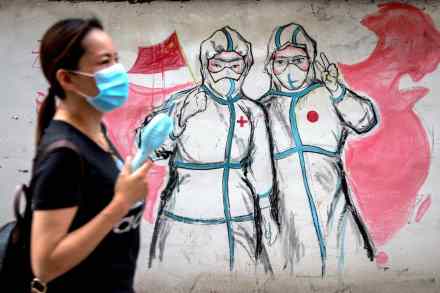
A Chinese health app, developed to enforce the Communist party’s draconian Covid-19 restrictions, is being repurposed to tighten political control on dissidents and others deemed to be troublemakers. Only the very young and very old are exempt from the compulsory National Health Code System. The ‘traffic light app’, as it has been dubbed, assigns Chinese citizens a colour code: green, yellow or red to signify Covid infection risk. Those with green are free to move around; red can mean instant quarantine. The app requires users to submit information about their health status and other personal details, while at the same time harvesting online behavioural and location data.

Xi Jinping and the Chinese rumour mill

From our UK edition

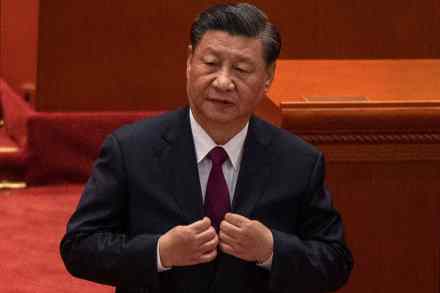
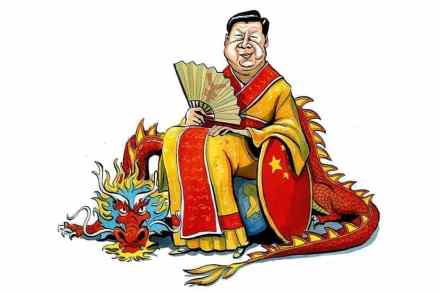
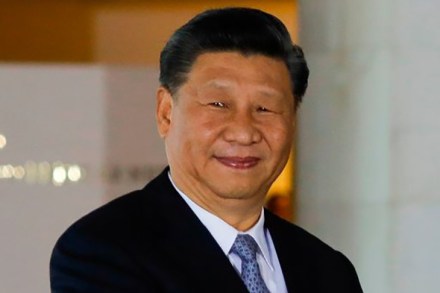
The Beijing political rumour mill has gone into overdrive in recent weeks, seizing upon every nuance and reading between every line for signs of the impending downfall of ‘Xi dada’ (Big Daddy Xi). All kinds of stories are being circulated about President Xi Jinping's health, with reports over squabbling over his likely successor. Chinese premier Li Keqiang is being tipped. The predicted replacement of Xi by Li has its roots in differences on the economy and Covid-19, so the rumours go – and there does appear to be a split of sorts. In his public pronouncements Xi has doubled down on zero-Covid above all else. He has made little mention of China’s economic hardships, urging officials to stick with his Covid elimination strategy as a mark of loyalty.

Inside Taiwan’s plan to thwart Beijing

From our UK edition

37 min listen

In this week’s episode:Ian Williams, author of The Fire of the Dragon: China’s New Cold war, and Alessio Patalano, Professor of War and Strategy in East Asia at King’s College London, talk about how the war in Ukraine has changed the thinking in Taiwan. (00:37) Also this week: Was Sue Gray’s report on Downing Street parties a game-changer or a damp squib? The Spectator’s editor, Fraser Nelson, and our political editor, James Forsyth, join the podcast to discuss the fallout from partygate. (15:39) And finally:If rising restaurant prices are causing you grief, you're not alone. Writer Yesenda Maxtone Graham and The Spectator’s Wikiman columnist, Rory Sutherland, join the podcast.

Inside Taiwan’s plan to thwart Beijing

From our UK edition

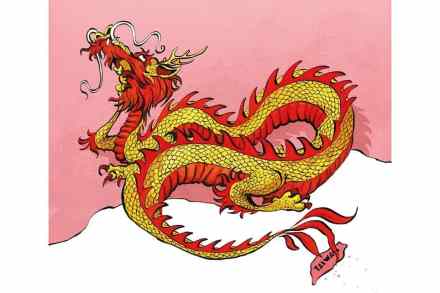
Taipei   Nowhere is watching Russia’s faltering attempt to crush its democratic neighbour more closely than Taiwan. The Ukraine war is seen in Taipei as a demonstration of how determined resistance and the ability to rally a global alliance of supporters can frustrate a much larger and heavily armed rival. Taiwan has spent the past few years planning how it would cope if China attacked. It is developing a doctrine of defence warfare right out of the Ukrainian playbook. China was carrying out military exercises off the east coast of the island last week when I met Joseph Wu, Taiwan’s foreign minister. ‘They keep circling in that area,’ Wu says. ‘Nonstop for two weeks, and it is very threatening.

China’s zero-Covid horror show is inspiring Taiwan to open up

From our UK edition

Taipei Nowhere is watching the zero-Covid horror show unfolding in China more closely than Taiwan, where it is encouraging the island to ease restrictions, even as cases of the infectious Omicron variant spike. Taiwan’s premier Su Tseng-chang has said the extreme measures being imposed on the other side of the Taiwan Strait are ‘cruel’ and his country would not follow suit. From next week, mandatory quarantine for arrivals in Taiwan will be cut to seven days from the current ten, as the island moves gradually towards a policy of trying to live with the virus.

Xi has made his choice: he is sticking with Vladimir Putin

From our UK edition

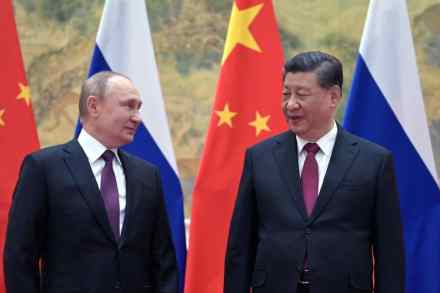
Xi Jinping has made his choice. He is sticking with his ‘best friend’ Vladimir Putin, and no end of Russian atrocities or wishful thinking in the west is going to alter that. Their axis of autocracy presents a far-reaching challenge to western democracies, which the UK in particular is struggling to come to terms with. There has been a chorus of western voices calling on China to act ‘responsibly’, exercise its influence with Putin, and generally live up to its supposed commitment to the principles of sovereignty and territorial integrity. That will not happen. Those principles were always a myth, but fundamentally Xi and Putin have too much in common. China’s state-owned media has continued to echo Moscow’s denials of war crimes.

China’s demographic time-bomb is ticking faster

From our UK edition

The latest warning was stark – that China’s population will shrink this year, more than a decade faster than forecast, and the country will become a ‘super-aged’ society by 2035. The economic implications will be a ‘huge thing’. This came not from what Beijing has dismissed as ‘western doomsayers’, but from Zheng Bingwen, director of the Center for International Social Security Studies at the Chinese Academy of Social Sciences, and one of China’s most respected observers of population trends. He said the ratio of pensioners to workers will rise to 25 per cent in 2030, is expected to exceed 43 per cent in 2050, and is happening much faster compared with other countries.

The battle for zero-Covid is being fought in Shanghai

From our UK edition

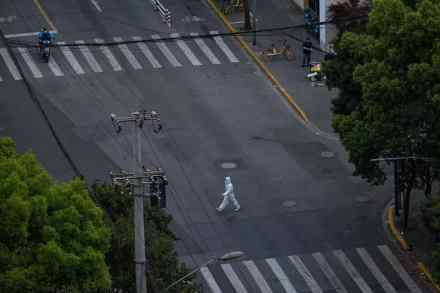
Confusion is infecting Shanghai. The authorities are dithering over a promised easing of severe lockdown rules in the face of record cases of Covid-19 and widespread anger over their cack-handed way they have handled the crisis. The city has become a test for China’s faltering zero-Covid strategy, with nervous Communist party leaders sending mixed signals – announcing a change in the rules, while insisting they will stick to what they now characterise as a ‘dynamic’ zero-Covid policy ‘without hesitation or wavering’. At the weekend, vice-mayor Zong Ming announced a reclassification of Shanghai’s districts according to the severity of the outbreak.

Is China beginning to distance itself from Russia?

From our UK edition

The read-outs from Friday’s two-hour call between Joe Biden and Xi Jinping were so different, that you have to wonder whether the two leaders were on the same line. The White House version had Biden bluntly warning China of the consequences of providing assistance to Russia, while Beijing’s take presented Xi as a peacemaker ‘The Ukraine crisis is something we don’t want to see,’ Xi reportedly said. ‘Conflict and confrontation are not in the interests of anyone.’ The American read-out focussed narrowly on Ukraine, China’s on the broader relationship between the two countries. Global Times, the usually strident Communist party tabloid, described it as a ‘constructive interaction’.

Will China come to Putin’s rescue?

From our UK edition

Joe Biden appears to be trying to force China’s hand over Ukraine. This follows days during which Beijing has tied itself in knots, offering to play a ‘positive role’ for peace, but refusing to criticise Russia – avoiding even calling the invasion an invasion, and echoing Moscow’s justifications. US Officials at the weekend briefed American news outlets that Russia has asked China to provide military equipment, and requested additional economic assistance to help cushion the impact of Western sanctions. The officials, keen to protect their intelligence sources, declined to say precisely what Russia was seeking, nor what China’s response had been.

Xi Jinping and the plight of Chinese nationals in Ukraine

From our UK edition

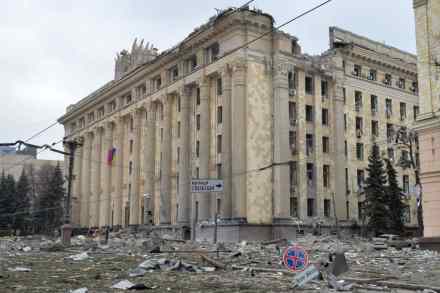
The plight of desperate Chinese nationals in Ukraine has further battered Xi Jinping’s credibility, testing his continued refusal to condemn the barbarity of his ‘best friend’ Vladimir Putin. There have been unconfirmed reports that four Chinese students were among 13 killed when a Russian rocket hit a dormitory of Kharkiv’s Academy of Culture. Students took to social media to plead for help when none came from the Chinese embassy in Kyiv. ‘The embassy never comes, no plane comes. We can only save ourselves. They abandoned us,’ said one post on Weibo, a Twitter-like platform. A video post claimed students were being shot at indiscriminately by Russian soldiers.

China is tying itself in knots over Ukraine

From our UK edition

A few hours after Vladimir Putin sent his tanks into Ukraine, Beijing announced that Russian wheat, previously barred because of fungal contamination, was now disease-free and large scale imports to China would begin. It was a first tangible sign of Xi Jinping’s willingness to cushion the blow of western sanctions on the Russian economy, and in effect underwrite Putin’s Ukrainian aggression. Russia is one of the world’s biggest wheat producers, and trade is highly vulnerable to western restrictions. China’s wheat lifeline followed the signing last month of a 30-year contract for Russia to supply natural gas to China’s north east and a commitment to far greater energy cooperation.

Unmasking ‘panda diplomacy’

From our UK edition

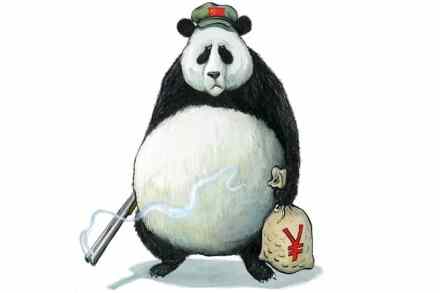
The star of the Beijing Winter Olympics wasn’t an athlete: it was Bing Dwen Dwen, the spacesuit-clad panda mascot. It was deployed to cover the harsher political edges of the games, and was romping around on the ice at the closing gala. Bing Dwen Dwen is only the latest example of China’s use of ‘panda diplomacy’, so successful over recent decades. The Chinese Communist party has long used them as envoys to potential partners. A bill now wending its way through the US Congress strikes at the heart of panda diplomacy. If it passes, it will keep American-born giant panda cubs in the US, which would break China’s monopoly on these vulnerable animals.

‘Xi Jinping Thought’ is taking over China’s classrooms

From last fall, in an extension of a personality cult not seen since Mao Zedong, “Xi Jinping Thought” is being incorporated into China’s national curriculum. School textbooks are emblazoned with Xi’s smiling face, together with heartwarming slogans telling readers as young as six that their leader is watching over them. “Grandpa Xi Jinping is very busy with work, but no matter how busy he is, he still joins in our activities and cares about our growth,” reads one. “Xi Jinping Thought” must be taught at all levels of education, from elementary school to graduate programs, and there is special emphasis on capturing the minds of the youngest children.

china climate xi jinping thought

China breaks new records in the Surveillance Olympics

From our UK edition

Never before have the participants in a major sporting event been so closely monitored as in this Winter Olympics in Beijing. The 1980 Summer Olympics in Soviet Moscow were nothing in comparison. Athletes are competing under a blanket of observation, ostensibly to keep Covid at bay, yet imposed by a paranoid Communist party for whom critical words or thoughts are as dangerous as any virus. Everyone attending the games, including athletes, support staff and media, must install on their phones an app, My 2022, which harvests a wide range of personal data. It has the ability to censor and track its users, according to cybersecurity experts who have examined the app. The app is used to submit health information such as Covid test results and vaccination status.

The dangerous alliance between Russia and China

From our UK edition

The growing alliance between Russia and China is something we shouldn’t lose sleep over, their long history of mutual suspicion runs too deep – or so we are told. Such a view is too complacent by half. China and Russia’s mutual hostility towards the West and their opportunism also run deep. And even if their burgeoning alliance is a marriage of convenience, it is still a very dangerous one. As Russia has massed more than 100,000 troops near the Ukrainian border, the nightmare for western strategists is that Vladimir Putin’s actions are being coordinated with those of Xi Jinping in and around the Taiwan Strait, where China’s military intimidation of Taiwan has reached new levels of intensity.

How China spies on the West

From our UK edition

In December last year Oxford University students were offered £15,000 in prize money if they could solve challenges relating to the surveillance and tracking of devices and their users. ‘Huawei welcomes a selection of top-of-the-class students to their 2021 University Challenge’, the invitations read. The company added that the technology would be used for ‘business intelligence’ and ‘security services’. The invitation to the ‘hackathon’, as Huawei described it, was aimed at data science students, and was relayed by Oxford’s careers service just a few weeks before Christmas.

China’s zero-Covid policy is becoming unsustainable

From our UK edition

With just three weeks until the opening of the Winter Olympics in Beijing, Covid-19 is creeping ever closer to the capital. The Communist party is seeking to isolate Beijing from the rest of the country to keep the virus at bay and the games on track. But its zero-Covid policy, a desperate game of Whac-A-Mole with the virus, is looking increasingly unsustainable. All routes between Beijing and Tianjin have been closed after an outbreak in the port city, which is adjacent to the capital. Flights and high-speed train services in and out of a city of 14 million people have been cancelled and highways closed after the discovery of 126 cases in recent days, all of them the highly contagious Omicron variant. A third round of mass testing has been ordered.

Britain is finally waking up to China’s influence operations

From our UK edition

The biggest surprise in Thursday’s security warning about a Chinese agent seeking to influence British politicians is that it came as a surprise at all. The Chinese Communist Party operates a vast and growing influence operation in Britain, which has pretty much been allowed free rein. The warning came from MI5 in the form of an ‘interference alert’ sent to House of Commons Speaker, Sir Lindsey Hoyle, which he then passed on to MPs. It warned that Christine Lee, a lawyer, was ‘knowingly engaged in political interference activities on behalf of the United Front Work Department of the Chinese Communist party.