Ian Williams

Ian Williams

Ian Williams is a former foreign correspondent for Channel 4 News and NBC, and author of Vampire State: The Rise and Fall of the Chinese Economy (Birlinn).

Where has Xi Jinping’s foreign minister gone?

From our UK edition

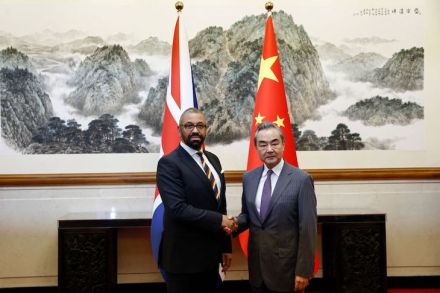
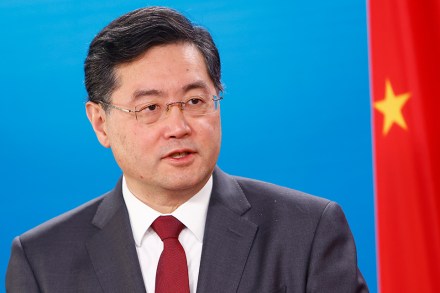
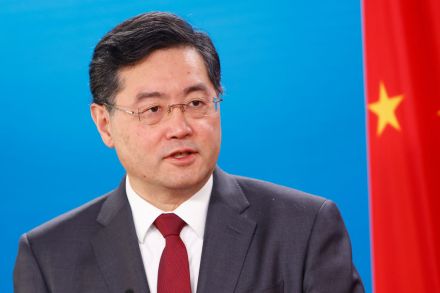
This is the week that James Cleverly planned to be in Beijing to ‘engage, robustly and also constructively’ with China’s communist leaders. But the Foreign Secretary put his trip on hold because the man he planned to engage went missing. Since 25 June foreign minister Qin Gang has vanished without trace, leaving Cleverly twiddling his thumbs and the world wondering what on earth is going on at the top of the Chinese Communist party. The whole bizarre spectacle underlines the challenges of engaging with a system that is so deeply opaque. The mystery deepened on Tuesday when state media reported that Qin was being replaced by his predecessor Wang Yi after just seven months in the job. There was no explanation, and no word on the fate of Qin.
Road rage: the great motorist rebellion has begun

From our UK edition

38 min listen

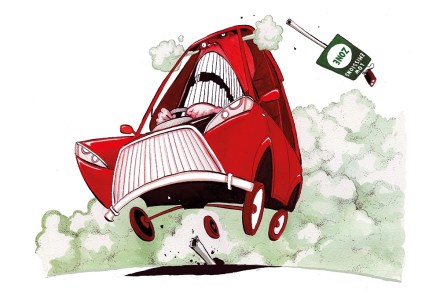
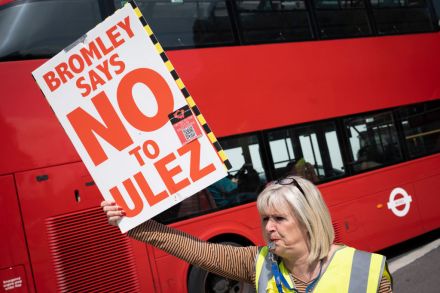
This week:In his cover piece for the magazine Ross Clark writes about ‘the war on motorists'. He argues that the backlash against London Mayor Sadiq Khan’s expansion of Ulez is just the beginning, as motorists – and Labour MPs – prepare to revolt. He joins the podcast alongside Ben Clatworthy, transport correspondent at the Times, to discuss whether the Ulez expansion is just a money-grab. (01:11).  Also this week: In his piece for The Spectator, journalist Ian Williams compares both Labour and Conservative policy on China. He says that Labour is gearing up to take a much more hawkish stance on China. He is joined by Charles Parton, senior associate fellow at RUSI, who worked as a diplomat in China for over two decades.

The strange disappearance of China’s foreign minister

From our UK edition

It is strange and surreal, even by the standards of the looking-glass world of the Chinese Communist party (CCP). Foreign Minister Qin Gang has disappeared, not seen in public since 25 June and the information vacuum about his whereabouts has inevitably been filled with all manner of rumour about marital infidelity, a love child, and even the dark world of foreign espionage. First the facts, as far as there are any. Qin, a former ambassador to the United States is a protégé of CCP leader Xi Jinping. He was regarded as a rising star, one of the new generation of aggressive ‘wolf warrior’ diplomats and was appointed foreign minister in December ahead of others who were regarded by China watchers as more senior.

Tory floundering over China is a gift to Labour

From our UK edition

Earlier this month, a Chinese spy reportedly tried to enter a private House of Commons meeting with Hong Kong dissidents. The alleged spy claimed to be a lost tourist, and there was a brief stand-off before he quickly left. The area was far from those usually visited by tourists, and some Hongkongers, fearing for their safety, covered their faces during the event. ‘I believe this man was a [Chinese Communist party] informer,’ said Finn Lau, one of two pro-democracy activists at the meeting who have CCP bounties on their heads. ‘This is one of the remotest committee rooms in parliament. And it is on the top floor. It is not a coincidence that a random Chinese tourist was outside the room at the exact right time and was attempting to access the event.

Xi’s iron fist is hurting China’s economy

From our UK edition

Mao Zedong had a big thing about contradictions. They were the basis of life, driving it forward, the old despot once mused. But even he might have struggled to understand today’s Communist party – which is desperately trying to drum up foreign investment while simultaneously hounding foreign companies out of the country. The latest figures on inward investment will have made grim reading for the elderly leaders in Zhongnanhai, their compound in Beijing. Foreign investment fell to $20 billion in the first quarter of 2023, compared with $100 billion over the same time last year, according to the research firm Rhodium Group. This comes as the economic recovery following China’s reopening after Covid-19 is rapidly running out of steam. June exports fell 12.

Britain’s China policy has been completely demolished

From our UK edition

China is engaged in a ‘whole of state’ assault on the UK and the government’s approach has been ‘completely inadequate’. That is the devastating verdict of today’s long-awaited report on China by parliament’s Intelligence and Security Committee. The committee accepts that Chinese influence and interference activities may be difficult to detect, but questions whether the government has even been looking in the first place. ‘China’s size, ambition and capability have enabled it to successfully penetrate every sector of the UK’s economy,’ it states.

The secret life of China’s Banksy

From our UK edition

The crypt of St John’s Waterloo feels serene and secure, a world away from the bustling city above. ‘I will spend the day here, because I feel safe here,’ Badiucao tells me. The dissident political cartoonist, who has been called ‘China’s Banksy’, is preparing to display his work on the crypt’s newly restored brick walls as part of an exhibition by exiled artists. ‘I don’t walk alone in any city. I don’t feel safe,’ he says. I meet him soon after he flies in from Warsaw, where the Chinese government tried to close down his solo show, ‘Tell China’s Story Well’. Chinese diplomats pressured the Polish government and the Ujazdowski Castle Centre for Contemporary Art, which hosted him.

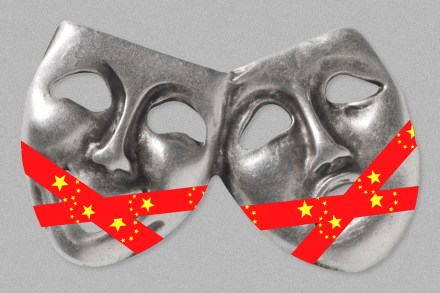
Gag order: China’s stand-up comedy crackdown

From our UK edition

‘The Chinese Communist party is probably the funniest thing that exists,’ the dissident artist Ai Weiwei once told me, ‘but it doesn’t have a sense of humour.’ The brave band of comics in China’s fledgling stand-up comedy scene are discovering that poking fun at the grim-faced old men who run the country with an ever-tighter grip is a dangerous pursuit. Last month, at a comedy club in Beijing’s Dongcheng district, 31-year-old Li Haoshi mocked a military slogan coined by President Xi Jinping. Li said that ‘Forge exemplary conduct! Fight to win!’ reminded him of his two dogs chasing a squirrel. A clip of the show spread rapidly online.

China is forcing its chatbots to be socialist

From our UK edition

So now it’s official, Chinese chatbots will have to be ‘socialist’ and woe betide any tech company that allows its AI creation to have a mind of its own. While the communist party wants to lead the world in AI, it is terrified of anything with a mind of its own ‘Content generated by generative artificial intelligence should embody core socialist values and must not contain any content that subverts state power, advocates the overthrow of the socialist system, incites splitting the country or undermines national unity,’ according to draft measures published Tuesday by China’s powerful internet regulator, the Cyberspace Administration of China (CAC).

Macron has made a fool of himself in China

From our UK edition

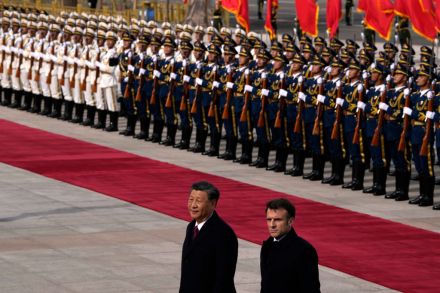
At least there was no six metre-long table in Beijing separating Emmanuel Macron from Xi Jinping. But their meeting was about as fruitless as the French president’s socially distanced chat with Xi’s ‘best friend’ Vladimir Putin in Moscow last year, shortly before the Russian leader sent his tanks into Ukraine. Macron’s visit to China was a performance, aimed to bolster his credentials as an international statesman at a time of troubles at home There was something very retro about the Macron’s visit to China. It led to a scene almost from centuries ago when foreign plenipotentiaries would trail to the Middle Kingdom bearing gifts and seeking favours from the emperor.

What would be the real cost of defending Taiwan?

From our UK edition

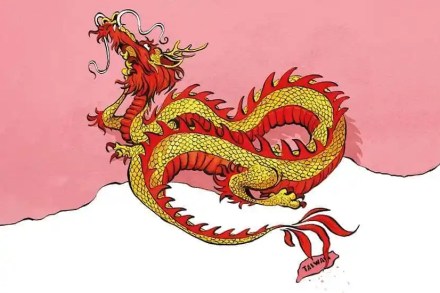
It’s 2026 and China begins its invasion of Taiwan with an intense missile bombardment that in a few hours destroys most of the island’s navy and air force. The Chinese navy begins ferrying its main invasion force of tens of thousands of soldiers and equipment across the Taiwan Strait. But all is not lost. US submarines, bombers, and fighter jets, reinforced by Japan’s Self-Defense Forces, rapidly cripple the Chinese fleet. The People’s Liberation Army is defeated, and communist party rule in China destabilised, but victory for the US and its allies comes at an enormous cost. Chinese missiles destroy US bases in Japan and Guam; the US loses dozens of ships, including two aircraft carriers, hundreds of aircraft, and thousands of servicemembers.

It’s time for a reckoning with Chinese big tech

From our UK edition

It has been a bumpy week for China’s beleaguered technology giants. They are under increasing scrutiny overseas, and the communist party continues to tighten the screws on them at home. In many ways they are also their own worst enemies. The UK has become the latest government to ban the Chinese-owned TikTok from government devices over security concerns. Parliament has also banned the app from its network. This follows similar bans from the European Union and 11 countries, including France, New Zealand, Denmark and the US. Western lawmakers are unconvinced by TikTok’s often cack-handed attempts to distance itself from its Chinese parent, ByteDance, and that company’s obligations to the Chinese communist party.

Ian Williams, Kara Kennedy and Oscar Edmondson

From our UK edition

20 min listen

This week: Ian Williams asks how China will cope with the rise of AI chatbots (00:56), Kara Kennedy recounts her upbringing in the Welsh ‘murder capital’ of Pontypridd (08:11), and Oscar Edmondson makes the case for the BBC World Service (13:38).  Presented by Natasha Feroze.

ChatCCP: how will China cope with AI?

From our UK edition

The Chinese Communist party faces a conundrum: it wants to lead the world in artificial intelligence and yet it is terrified of anything with a mind of its own. Chinese regulators have reportedly told domestic tech companies not to offer their users ChatGPT, the Microsoft-funded chatbot that can provide seemingly well-researched answers to pretty much any question you can think to ask it. China Daily, a CCP mouthpiece, has admitted that the technology has already gone ‘viral’ in China. The paper said that AI could give ‘a helping hand to the US government in its spread of disinformation and its manipulation of global narratives for its own geopolitical interests’.

Xi Jinping’s chilling words for Putin

From our UK edition

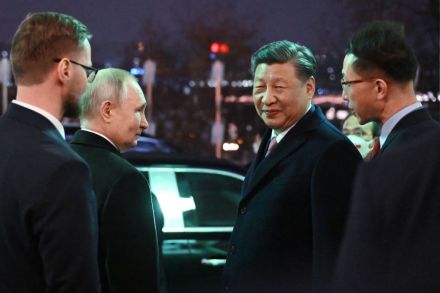
It was perhaps the most intriguing moment of their Moscow summit. As Xi Jinping left the Kremlin last night, he stood face to face with Vladimir Putin and told the Russian leader, ‘Change is coming that hasn’t happened in 100 years and we are driving this change together’. The two men clasped hands, smiling. ‘I agree,’ Putin said, briefly bringing up his free hand to hold Xi’s arm. The Chinese leader then added, ‘Please take care, dear friend’. Both regard western democracies as decadent and in decline and share a culture of grievance and victimhood  Xi then walked down a step and into his limousine. Putin stood awkwardly at the curb side, waving, and very briefly appeared to bow his head as Xi’s cavalcade swept away. He cut a rather lonely figure.

Beijing is already bankrolling Putin’s war

From our UK edition

It hardly seems like the most propitious time for Xi Jinping to be visiting Moscow. There’s an international arrest warrant out for his host Vladimir Putin for war crimes, and the man Xi has described as his ‘best friend’ spent the weekend inspecting land he’s snatched from Ukraine – in gross violation of the principles of sovereignty and territorial integrity, which Xi endlessly trumpets. On the eve of today’s formal talks in the Russian capital, the US said Xi should press Putin to end his barbarity. ‘We hope that President Xi will press President Putin to cease bombing Ukrainian cities, hospitals and schools, to halt the war crimes and atrocities and to withdraw his troops,’ said John Kirby, the White House’s National Security Council spokesman.

A Cold War mindset is thriving in Beijing

From our UK edition

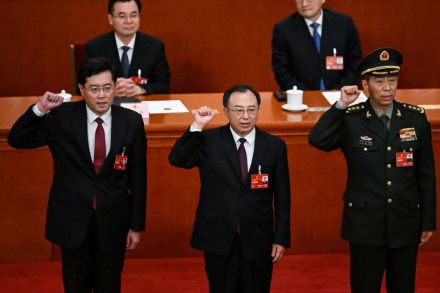
China’s new foreign minister Qin Gang has come out growling, using his first media appearance to accuse the US of ‘all-out containment and suppression’. He said his country’s friendship with Russia was a beacon of strength and stability which ‘set an example for foreign relations’ and asked: ‘Why should the US demand that China refrain from supplying arms to Russia when it sells arms to Taiwan?’ He said that China and the US were heading for inevitable conflict if Washington does not mend its ways. It was a fiery performance, even by the standards of Beijing’s ‘wolf warrior’ diplomats. The tirade took place on the sidelines of the annual meeting of China’s rubber-stamp parliament, the National People’s Congress (NPC).

China is trying to strangle the world’s solar panel industry 

From our UK edition

China is moving to consolidate and exploit its position as world leader in solar power technologies, by restricting the export of key components. The move could deliver a severe blow to the European and American solar industries and is a stark warning about the dangers of over-dependence on Beijing for critical technologies of the future. It also illustrates the impact of China’s industrial-scale cyber theft.  Beijing is reportedly looking to add raw materials and other vital items used in the manufacture of solar panels to a list of items that could be restricted in order to ‘help safeguard national security’ and require special permission for export.

The vast scale of Beijing’s high-tech balloon programme

From our UK edition

There will no doubt be some tense moments in the boardrooms of western technology companies over the coming days after the revelation that the Chinese spy balloon shot down after traversing the United States had western-made components with English-language writing on them. The finding was reportedly contained in intelligence briefings to US lawmakers and will almost certainly lead to still greater scrutiny of the sale to China of advanced ‘dual-use’ technology.