Ian Williams

Ian Williams

Ian Williams is a former foreign correspondent for Channel 4 News and NBC, and author of Vampire State: The Rise and Fall of the Chinese Economy (Birlinn).

Why is the UK not blaming China for the MoD hack?

From our UK edition

The personal details of members of the UK’s armed forces appear to have been the latest target of China’s prolific cyber spies, with the Ministry of Defence’s payroll system containing the names, bank details and some addresses of up to 272,000 people on its books targeted by hackers. The government though is directing its fury at the hapless MoD contractor whose systems were breached, rather than the suspected perpetrators in Beijing. Defence secretary Grant Shapps said the attack was carried out in recent days and was ‘the suspected work of a malign actor’. He would not name the actor, though in multiple background briefings China was identified as prime suspect – a ‘fabricated and malicious slander’, according to the Chinese embassy in London.

Why was Blinken’s China visit so underwhelming?

From our UK edition

It had been billed as an electrifying encounter – the US Secretary of State preparing to confront Beijing with a catalogue of global misdemeanours, ranging from stepped up support for Russian aggression against Ukraine to the intimidation of ships in the South China Sea belonging to US treaty ally, the Philippines, and the systematic breaking of world trade rules by flooding the market with heavily subsidised electric vehicles (EVs) and other renewable tech. ‘Russia would struggle to sustain its assault on Ukraine without China’s support,’ Antony Blinken said on Friday, at the end of a three-day trip that included meetings with his Chinese counterpart Wang Yi and with President Xi Jinping. ‘I made clear that if China does not address this problem, we will.

The Xi files: how China spies

From our UK edition

38 min listen

This week: The Xi files: China’s global spy network. A Tory parliamentary aide and an academic were arrested this week for allegedly passing ‘prejudicial information’ to China. In his cover piece Nigel Inkster, MI6’s former director of operations and intelligence, explains the nature of this global spy network: hacking, bribery, manhunts for targets and more. To discuss, Ian Williams, author of Fire of the Dragon - China's New Cold War, and historian and Guardian columnist Simon Jenkins joined the podcast.. (02:05) Next: Lara and Gus take us through some of their favourite pieces in the magazine, including Douglas Murray’s column and Gus’s interview with the philosopher Daniel Dennett.

Why the EU is raiding Chinese companies

From our UK edition

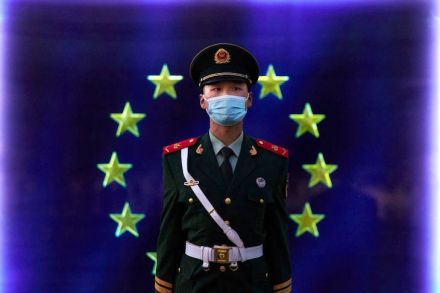
The target of Wednesday’s dawn raid has been on the radar of western security services for some time. There has been growing concern that Nuctech, which manufactures airport baggage scanners for European airports and ports, poses a potentially serious risk to national security. But the European Union officials who raided the Warsaw and Rotterdam offices of the Chinese company this week were far more interested in the company’s spreadsheets, as they searched for evidence of unfair trade practices. It’s easy to see a touch of the Al Capone in Wednesday’s raid, which was by competition officials Nuctech is part-owned by the Chinese government and was once run by the son of former Chinese leader Hu Jintao.

The trouble with David Cameron’s China links

From our UK edition

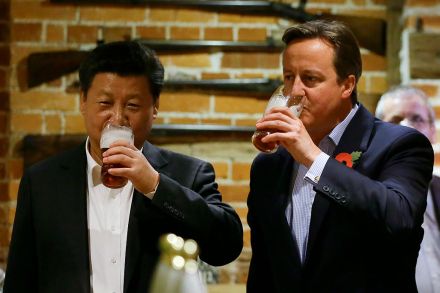
In the years following his resignation as prime minister, David Cameron appeared to become the poster child for elite capture by the Chinese Communist party. This is a term used to describe the process by which the CCP co-opts former officials and business people, usually through lucrative jobs and contracts with CCP-linked entities. Usually the officials have retired, or at least are beyond their best-by date, but still deemed useful for extending CCP legitimacy and influence. Rarely – like the reminted Lord Cameron of Chipping Norton – do they return to positions of considerable political power, dealing with the very government that helped keep them in comfort over recent years.

The rusting Philippine ship raising US-China tensions

From our UK edition

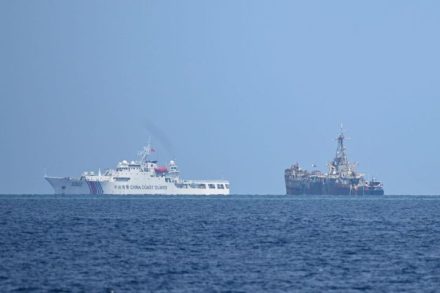
The rusting and disintegrating hulk of a former Second World War landing ship has become an unlikely but dangerous flashpoint in US-China relations. The Sierra Madre, built for the US navy to land tanks, has for several decades been stranded on a shoal in the South China Sea. But now it has become a symbol of Beijing’s growing aggression in the region and its disdain for international law. The Philippines, which bought the ship in 1976, intentionally grounded her on the largely submerged Second Thomas Shoal in the Spratly islands in 1999 to defend their claim to the territory. There she has remained to this day as a lonely symbol of sovereignty and home to a small contingent of Philippine marines.

US businesses are falling out of love with Xi’s Chinese dream

From our UK edition

A US diplomat in Beijing once told me a story of an American businessman hospitalised in the city of Ningbo after being hit at the airport by an electric buggy that was ferrying a group of Chinese VIPs who were late for their flight. The authorities confiscated his passport, demanding he pay for the damage to the buggy before he could leave. The diplomat was outraged, but when he got to Ningbo to provide help, the businessman told him to go home, explaining that he wanted to pay the fine since he was on the cusp of a big deal and didn’t want to upset the authorities. To the diplomat it was just one more example of the indignities that businesspeople were prepared to put up with for a slice of the mythical China market.

Hungary has become China’s useful idiot

From our UK edition

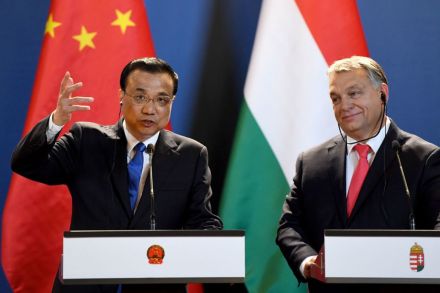
This week a security deal was announced that could see Chinese police on the streets of Hungary. Despite this, there was remarkably little fanfare about the agreement – just a few vague details in public statements made days after the deal was signed between the interior ministers of the two countries. Yet is represents another troubling challenge by Hungary’s authoritarian leader Viktor Orban to both Nato and the EU, of which he remains an increasingly troublesome member.

China calls the shots in its alliance with Russia

From our UK edition

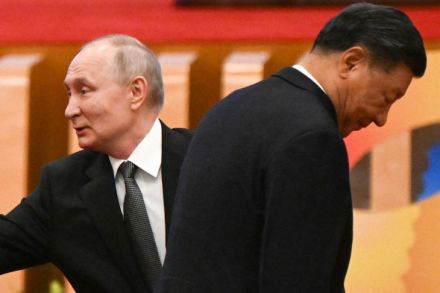
There has been a strange atmosphere at recent top level meetings between ‘best friends’ China and Russia. It is not so much the elephant in the room as the pipeline running through it, with Moscow almost over-eager to talk about what has been billed as one of their most important joint economic projects, while Beijing has been doing its best to change the subject. That project is the Power of Siberia 2 gas pipeline, which is supposed to carry 50 billion cubic metres (bcm) of natural gas a year from the Yamal region in northern Russia to China, by way of Mongolia. It was conceived more than a decade ago but has taken on a new urgency for Moscow after the invasion of Ukraine, with the Kremlin eager to double gas sales to China.

Taiwan’s voters defy Beijing

From our UK edition

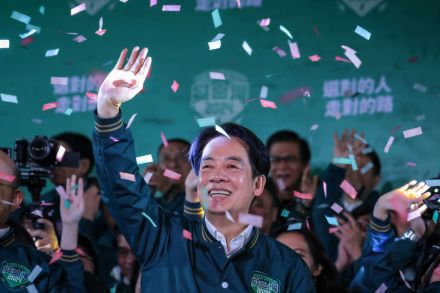
Taiwan’s voters have defied Beijing’s threats and intimidation and elected as president the most independence-minded of the candidates for the job. After a typically boisterous election, Lai Ching-te of the China-sceptic Democratic Progressive Party (DPP) declared victory Saturday evening, having received just over 40 per cent of the vote in Taiwan’s first-past-the-post system. ‘We’ve written a new page for Taiwan's history of democracy,’ he told reporters, after winning by a bigger margin than expected. Hou Yu-ih from the more China-friendly Kuomintang (KMT) came second with 33.4 per cent, while Ko Wen-je of the populist Taiwan People's Party (TPP) received 26.4 per cent.

Why has Xi Jinping purged his senior commanders?

From our UK edition

The Chinese Communist party will no doubt throw a militarised tantrum should Saturday’s election in Taiwan be won by Lai Ching-te, the more independence-minded of the candidates. Yet behind these histrionics lies an army in turmoil, with a purge of top generals raising serious doubts as to whether it is up to the task of fighting a war.  The CCP has spent billions of dollars expanding and modernising its armed forces at a pace rarely seen in peacetime, with the aim of creating a cutting edge force. But the money thrown at the generals and their hunger to acquire shiny new kit has fuelled increasingly deep-seated corruption in its rapacious ranks.

‘This is a massacre of thoughts’: the exiled Chinese artist Ai Weiwei on his cancellation

From our UK edition

This should have been a busy holiday period for the Chinese artist Ai Weiwei. His exhibition at London’s Lisson Gallery was due to open last month and others were planned in New York, Paris and Berlin. They have all now been cancelled because Ai himself has been cancelled – not by the Chinese Communist party this time, but by the ‘free’ West. Weiwei had posted on X (formerly Twitter) his thoughts about the Israel-Hamas war. However, his comments appeared to more generally attack Jewish influence and power. He wrote: ‘The sense of guilt around the persecution of the Jewish people has been, at times, transferred to offset the Arab world. Financially, culturally, and in terms of media influence, the Jewish community has had a significant presence in the United States.

How China weaponises its cuddly giant pandas

From our UK edition

So Yang Guang and Tian Tian are on their way back to China. Rather like a pair of high-profile celebrities, the giant pandas travelled in convoy to Edinburgh airport this morning, with every detail of their last days in the UK scrutinised in dewy-eyed detail. They’re not travelling business class, not quite, but they do have specially constructed metal crates apparently complete with sliding padlock doors, bespoke pee trays and removable screens so the keepers accompanying them can check on them during the flight. ‘I think they'll be fine. I'm sure they'll have a safe journey,’ said Rab Clark, the zoo’s blacksmith, who built the crates.

Power shifts at the Biden-Xi summit

From our UK edition

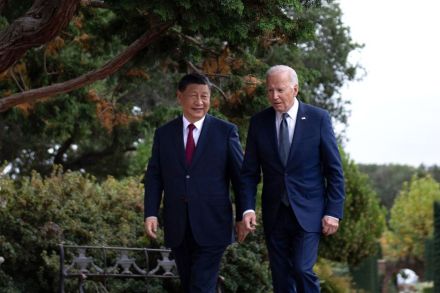
Perhaps the most important achievement of the summit between Xi Jinping and Joe Biden was that it was held at all. Expectations were set low and were duly met – assuming the modest agreements are carried through. There was little progress on issues that have pushed relations to the lowest point in four decades, and Xi still remains a ‘dictator’ in the eyes of the American president. Asked if he still held that view at the end of a carefully choreographed solo news conference, at which only four questions were allowed, Biden said, ‘Look, he is.

Can China contain Evergrande’s collapse?

From our UK edition

The Chinese Communist party appears set to kill off its largest economic zombie, while gambling that it can control the fallout. Evergrande, the world’s most indebted developer, first defaulted almost two years ago, as China’s property bubble began to burst. It has since been able to stagger on from one crisis to another, while struggling to restructure its mountain of debt and sell its assets. Now even the CCP seems to have decided this is untenable. The problem for the party is that Evergrande is not the only occupant of China’s economic valley of the living dead, and the impact of its collapse may be impossible to control. The signs of a final reckoning have been growing over recent days.

The mystery of China’s missing ministers

From our UK edition

Two down and who knows how many more to go. This week, Defence Minister Li Shangfu became the latest of China’s top leaders to vanish, reportedly caught up in a corruption scandal. He has not been seen for three weeks and his disappearance comes three months after that of foreign minister, Qin Gang, and follows a purge at the top of China’s Rocket Force, which oversees its rapidly expanding nuclear arsenal. Li lasted just six months in the job, having been appointed in March. At a security forum in Beijing late last month, one of his last public appearances, Li said the world was entering a period of ‘instability’ – though that term would seem to apply more aptly to the top echelons of the Chinese Communist party.

China’s ‘standard map’ is a chilling reminder of its imperial ambitions

From our UK edition

The Chinese Communist Party’s ‘standard map’ is updated each year to include Beijing’s ever-extending territorial claims. Neighbours see it as a sinister measure of Beijing’s imperialist threat, but to the party it is a sacred document, a badge of legitimacy, encapsulating its historic grievances and its growing ambition. It must be faithfully reproduced in school textbooks and in government and corporate handouts and plastered to the walls of workplaces and classrooms.  The timing of the latest edition is unfortunate – or perhaps deliberate – coming just ahead of next week’s summit of G20 countries in Delhi, a meeting that President Xi Jinping intends to snub. It seemed to send a message that China really doesn’t care what its neighbours think.

James Cleverly is clueless on China

From our UK edition

At least James Cleverly had somebody to meet. The Foreign Secretary's last effort to get to Beijing was postponed after his Chinese counterpart disappeared in late June. Former foreign minister Qin Gang has not been seen or heard of since. Gang's whereabouts are as mysterious as Cleverly’s China policy, which is beginning to feel a lot like a re-tread of the incoherent and failed past strategy of ‘engagement’. That policy, as far as it can be described as one, was driven by greed and gullibility. It added up to little more than kowtowing to Beijing, largely ignoring its growing repression at home and aggression overseas, while at the same time allowing Communist party-linked entities unfettered access to the most sensitive corners of the British economy and academia.

Why is China purging its nuclear missile force?

From our UK edition

The top commanders of China’s nuclear forces have been targeted by President Xi Jinping in his latest purge, adding an extra layer of intrigue to the unexplained disappearance of Qin Gang, the country’s foreign minister. China’s rocket force will have been of special interest to western intelligence agencies On Monday, Chinese media announced that Wang Houbin, a former deputy commander in the navy, has been appointed head of the People’s Liberation Army Rocket Force, which oversees China’s conventional and nuclear missiles. This is the first time in 40 years that the top job has gone to somebody outside the unit. Li Yuchao, the previous head of the force, has been missing for weeks and several other top officers, including two of Li’s deputies, have also disappeared.

Will Italy leave China’s ‘atrocious’ Belt and Road Initiative?

From our UK edition

For some time now the world has being growing increasingly wary of China’s Belt and Road Initiative (BRI), but rarely has any member of the scheme launched a broadside quite like that of Italy’s defence minister, Guido Crosetto, who described his country’s decision to join as ‘improvised and atrocious’. In an interview at the weekend, he said that the BRI had brought little benefit to Italy and one of the most pressing question his government now faced was how best to escape its clutches. The BRI is often described as an international infrastructure project, through which the world will be blessed with Chinese-built roads, railways, ports and power stations.