Ian Thomson

Ian Thomson is the author of books including Dante’s Divine Comedy: A Journey Without End.

Satirising the artful Hoxha

From our UK edition

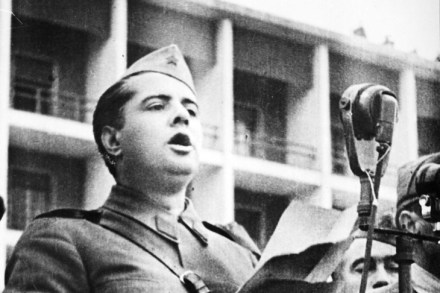
Blood, they say, is quick on the knife in Albania, where Balkan-style revenge killings, known as giakmarrje (‘blood-takings’), settle ancient scores and land disputes. The great engine of vengeance — the old idea of purification by blood — was explored by the Albanian novelist Ismail Kadare in his first novel, General of the Dead Army. Published in communist Albania in 1963, the novel told of an Italian army officer who returns to the Balkan outpost after the second world war in order to bury his fallen compatriots. It remains a magnificent allegory of life and death under totalitarian dictatorship.

Blackouts and white coats

From our UK edition

In the cult Steve Martin film The Man With Two Brains, a doctor falls in love with a surgically removed brain. The object of his desire (fizzing, if I remember rightly, in a demijohn of formaldehyde) makes for an enduring gothic comedy of the mind. On the movie’s release in the early 1980s, neuroscience was still in its infancy. Men in white coats were cutting up monkey brains and their laboratories smelled of monkey urine. In recent years, however, neuro-imaging has changed the study of the human mind completely. Rainbow-coloured images on the scanner screen reveal our most precious and mysterious organ in all its alien complexity. Computer imaging may yet fathom the mystery of epilepsy.

The art of getting by

From our UK edition

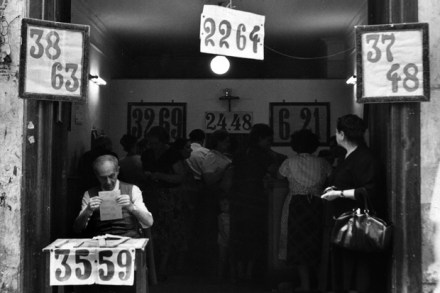
Naples, ragamuffin capital of the Italian south, is reckoned to be a hive of pickpocketing and black-market manoeuvrings. (A Neapolitan gambling manual advises: ‘Rule Number 1 — always try to see your opponent’s cards.’) Crime is not the whole picture, of course. To look out across the Bay of Naples remains a visual education in the grand style as the twin, dromedary-like mounds of Vesuvius shadow the dead cities of Pompeii and Herculaneum. Erri De Luca, one of Italy’s bestselling authors, was born in Naples in 1950, and understands perfectly the city’s obscure exuberance of life. The Day Before Happiness, a novella, unfolds amid the card-sharps, prostitutes and barefoot scugnizzi (urchins) who scrimped and scuffled in the city during the postwar years.

Rewriting holy writ

From our UK edition

Jesuits, the leading apologists for Rome and Catholic revival in Elizabethan England, cast a long shadow over the paranoid post-Armada years. For one thing, they set much store by Romish ‘persuasion’ (sophistical reasoning) and were often superb linguists. Among the languages codified by Jesuits were Guaraní in Paraguay and Sri Lankan Tamil. Jesuit attempts to translate the Bible into local vernaculars were often less successful, however. Japanese converts to Jesuitism apparently still believe that Noah survived the flood in a canoe; scribal error had corrupted the Ark into an unlikely means of salvation.

Filming the Final Solution

From our UK edition

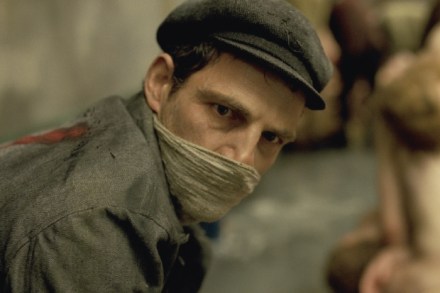
In July 1986, nine months before he died, I met the Italian author and Auschwitz survivor Primo Levi at his home in Turin. He was in shirtsleeves for the interview and the concentration camp tattoo 174517 was visible on his left forearm. (‘A typical German talent for classification,’ he tartly observed.) If This is a Man, Levi’s chronicle of survival, offers a warning to those who deliver facile judgments of condemnation: only those who have survived the Nazi camps have the right to forgive or condemn. Attempts to recreate the Final Solution on screen were mostly a ‘macabre indecency’, said Levi.

Diced heart and a full-bodied red

From our UK edition

Valerio Varesi, the Turin-born crime writer, displays a typically Italian interest (I would say) in conspiracy theory. The Italian term dietrologia, which translates, not very happily, as ‘behindology’, presumes that shadowy consortia are everywhere manipulating political scandals. A Woman Much Missed, the fourth of the excellent Commissario Soneri thrillers to be translated into English, unfolds in present-day Parma amid rumours of Mafioso-style machinations. As always, Varesi’s lugubrious, cigar-puffing detective Soneri retains a degree of disabused integrity and is a trencherman, moreover, as he seeks out only the best buffalo-milk mozzarella and bottles of Bonarda red. Under it all, though, lies a deepening corruption, where justice may not prevail.

Wild man of the woods

From our UK edition

The other day I visited a psychic medium in Croydon, south-east London. Mavis Grimstick (not quite her real name) boasted an ability to hear the dead — ‘clairaudience’. Her front room, hung with plastic foliate Green Man gargoyle motifs and photographs of Stonehenge, was grimly inimical to mediumship and made me want to make a joke about striking a happy medium. ‘Have you been meditating of late? No? ’Cos I’m getting a gorgeous greenish light off of you, and it’s making me feel ever so sunshiny.’ She fluttered her hands. ‘Yes, I like the psychic aura that you have, but why do I see Stonehenge?’ (The roar of an airplane coming in to land over Gatwick muted my reply.

The joy of physics

From our UK edition

Physics is said to go deeper than other sciences into the riddle of existence. The laws of physics — gravity, energy, motion, time — underpin those of chemistry, astrophysics and meteorology combined. So an understanding of the world requires a basic understanding of physics; something which has just become a little easier thanks to a cult book by an Italian academic which is due to be stuffed into an extraordinary number of stockings this Christmas. Seven Brief Lessons on Physics, by Prof Carlo Rovelli, has already sold more copies in his native Italy than Fifty Shades of Grey. The English translation has become Penguin’s fastest-selling science debut ever.

Here’s to Bill

From our UK edition

Often, Christmas is a time for moaning after the night before, when the seasonal drinking is remembered (if remembered at all) with bewilderment and a degree of guilt. The illusion of drink-fuelled happiness — what James Joyce called ‘tighteousness’ — is familiar to most of us, even if the hangover seems a cruel price. The most effective remedy for a thumping head is to take a hair of the dog that bit you. Eddie Condon, the jazzman, recommended two quarts of bourbon; Samuel Taylor Coleridge swore by a breakfast of laudanum and fried eggs. By rights, the hangover should curb further drinking. Nobody wants to see their tongue pale and furry again in the bathroom mirror.

Why I’m in love with Róisín Murphy

From our UK edition

Róisín Murphy, the Irish singer-songwriter, is currently touring Europe with her Mercury Prize-shortlisted new album, Hairless Toys. The album, with its odd disco-grooves, dub rhythms and dark, loopy synth sounds, combines pop futurism with a retrospective 1970s edge. The album is tinged with an autumnal sense of loss and the self-examination of an older woman looking back on her life. 'The things I’ve seen', the 42-year-old Murphy sings, in a mournful whisper. Why 'the Irish Grace Jones' (as Vanity Fair called Murphy) is not better known outside her native Ireland is a mystery. On stage Murphy is supremely powerful because she knows how to keep still. She thinks about the slightest raising of her arms or silent snapping of her fingers.

The Grand Tour

From our UK edition

The Grand Tour usually culminated with Naples, ragamuffin capital of the Italian south, where Vesuvius offered a visual education in the grand style. Some Grand Tourists, among them Lord Byron, got as far as Greece; but Italy was coveted as the glittering birthplace of the Renaissance — a haven of art on the Arno. In some ways, then, Britain became civilised through its contact with Italy. ‘A man who has not been to Italy,’ Samuel Johnson observed in 1776 (perhaps ironically), ‘is always conscious of an inferiority.’ The grand habit of touring the Continent for its art and classical antiquity flourished from the mid-17th century until the advent of rail transport in the 1840s.

Shock and awe in Coventry, 14 November 1940

From our UK edition

On 14 November 1940, at seven in the evening, the Luftwaffe began to bomb Coventry. The skyline turned red like an eclipse of the sun as clouds of cinders, lit red by the blaze, floated down over the great West Midlands city. Coventry seemed to have been hit by a meteorite. The mile-high roar of magnesium incendiary flames created a firestorm in which over 554 people died and twice as many were wounded. Life as Coventrians had known it, lived it and loved it, came to an end that Thursday night. Hitler’s first Blitz on an English city had taken the inhabitants by complete surprise. In the space of 11 hours, buildings and people were torn apart, crushed and suffocated.

Cats, whisky and modernity: the J.G. Ballard I knew

From our UK edition

That cinema is having another Ballardian moment will surprise few fans. J.G. Ballard, who died of cancer in 2009 at the age of 78, was one of the darkest, most unsettling of post-war British novelists. In a career that spanned half a century from his debut as a science-fiction writer in the mid-1950s, his surreal imagination confronted such subjects as nuclear catastrophe and planetary drought. His discomfiting novel Crash (1973) attributed a deviant sexuality to the road accident. Ballard had a taste for ‘automobile pornography’, according to his biographer John Baxter, and fantasised about having sex with Margaret Thatcher in the back of the prime-ministerial Daimler V8. In 1991, I called on Ballard at his home in Shepperton off the M3, where he had lived for 30 years.

Cruising

From our UK edition

By the end of my ten-day Atlantic crossing to New York, a new wellbeing seemed to radiate from me. Lulled by the motion and murmurings of the rocking sea, I slept like a baby. I was never bored. Queen Mary 2, the Cunard Line’s flagship, has everything from a ballroom, planetarium and library to an art-deco Titanic-style dining hall. Passengers do not want for anything: there’s even a mortuary. The last time I shipped out to New York from Southampton was in 1961, when I was a baby. We stayed in New York for more than a year while my father worked for a Wall Street investment bank.

The trip of a lifetime

From our UK edition

Aldous Huxley reported his first psychedelic experience in The Doors of Perception (1954), a bewitching little volume that soon became the Newest Testament among the happening people. One spring morning in 1953 the 58-year-old Englishman ingested four-tenths of a gram of mescalin in his Hollywood garden and waited for the visionary moment. When he opened his eyes he saw pure California neon dust. ‘I was seeing what Adam had seen on the morning of his own creation.’ Evelyn Waugh was not alone in thinking that Huxley had gone bonkers in his American exile. (‘Huxley has done more than change climate and diet.

Salvation through music

From our UK edition

Ours is the era of everybody’s autobiography. Bookshops groan with misery-lit memoirs — Never Let Me Go, Dysfunction Without Tears — which dilate on anorexia, alcoholism, cruel bereavement. When is a life worth telling? B.S. Johnson, the London-born novelist (and tireless chronicler of himself), put the most revealing sexual details into his autobiographical novels of the 1960s. They might have amounted to mere solipsistic spouting, were the writing not so good. James Rhodes, a 40-year-old classical musician, was repeatedly raped at his London prep school in the early 1980s. In his memoir, Instrumental, Rhodes tells how he found salvation in music and became one of our leading concert pianists.

Beautiful, bedevilled island

From our UK edition

The Arabs invaded Sicily in the ninth century, leaving behind mosques and pink-domed cupolas. In the Sicilian capital of Palermo, Arab rule was generally tolerant, its dolce far niente evocative of sultans, minarets, concubines and other jasmine-scented delights. Walking round Palermo today, however, one is assailed by less lovely smells. Parts of the city remain unreconstructed since the Allies bombed it in 1943: fire-blackened palazzi and rubble-strewn slumlands speak of the Mafia’s systematic ransacking of the public coffers. A still darker side of Palermo finds expression in the 19th-century catacombs of the Capuchin friary, situated near the Arab-Fatamid pleasure palace of La Zisa (‘the magnificent’).

The dreamer

From our UK edition

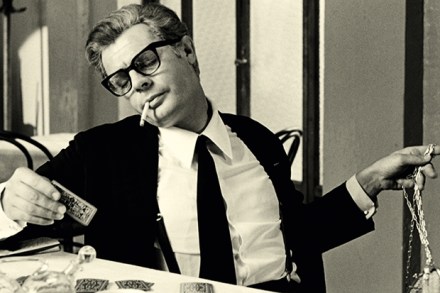
Federico Fellini’s La Dolce Vita was a box-office triumph in Italy in 1960. It made $1.5 million at the box office in three months — more than Gone With the Wind had. ‘It was the making of me,’ said Fellini. It was also the making of Marcello Mastroianni as the screen idol with a curiously impotent sex appeal. No other film captured so memorably the flashbulb glitz of Italy’s postwar ‘economic miracle’ and its consumer boom of Fiat 500s and Gaggia espresso machines. Unsurprisingly, the Vatican objected to the scene where Mastroianni makes love to the Swedish diva Anita Ekberg (who died earlier this year at the age of 83) in the waters of the Trevi fountain. Sixties Rome became a fantasy of the erotic ‘sweet life’ thanks in part to that scene.

‘I will call the police!’: My close encounter with ‘revenue protection’

From our UK edition

‘Make yourself a happy bunny this Easter with cheap tickets and egg-cellent deals!’ chirped the Abellio train company advert. I use Abellio’s Greater Anglia service regularly from London and was looking forward to a nice fluffy ride to Norwich. I was late for the 9 a.m. train but the Liverpool Street station Abellio assistant smilingly informed me I wouldn’t need to pay extra for the later train. I bought a cup of coffee and presented my ticket to the barrier staff at platform 11. A dignified-looking man of African origin with ritually scarred cheeks seemed to be unusually officious. Tapping my ticket with the sharp end of a pencil he said: ‘This will not do. Show me your ID. Please.’ I fished out my University of East Anglia lecturer card.

Life in the LA ghetto was nasty, brutish and short — until one brave detective took on the gangs

From our UK edition

Los Angeles ghetto life — thrashed, twisted and black — is not a world that most Americans care to visit. Black Angelinos can be — and for a period in the 1980s and early 1990s, were — murdered for a trifle. The slightest act of ‘disrespect’ may call for a tit-for-tat killing, where an entire family is rubbed out to avenge a perceived affront. Such disregard for human life is unknown in the white neighbourhoods of LA. Is there a specifically black predisposition to gun crime? Or is that too narrow an assumption? The violence endemic to Watts, Compton and other black LA suburbs is reckoned (by some) to be a delayed response to the cruelty of plantation life.