Ian Thomson

Ian Thomson is the author of books including Dante’s Divine Comedy: A Journey Without End.

The invisible man: The Glass Pearls, by Emeric Pressburger, reviewed

From our UK edition

Not all Germans were swayed by Hitler, but the majority were. Karl Braun, the fugitive Nazi doctor at the heart of Emeric Pressburger’s 1966 novel The Glass Pearls, was devoted to the furtherance of so-called ‘science’ under the Führer. In the interests of research he cut up the brains of a number of concentration camp

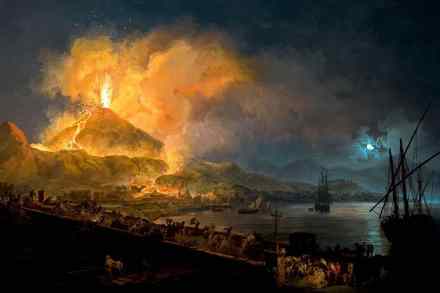
Naples will never escape the shadow of Vesuvius

From our UK edition

Naples, the tatterdemalion capital of the Italian south, is said to be awash with heroin. Chinese-run morphine refineries on its outskirts masquerade as ‘legitimate’ couture operations that transform bolts of Chinese silk into contraband Dolce & Gabbana or Versace. The textile sweatshops are controlled by the Neapolitan mafia, or Camorra. All this was exposed by

Celebrating Konstantin Paustovsky — hailed as ‘the Russian Proust’

From our UK edition

When is a life worth telling? The Soviet writer Konstantin Paustovsky’s six-volume autobiography The Story of a Life combines high drama with heroic misadventure in a comico-lyrical amalgam of history and domestic detail that enchants from start to finish. Why Paustovsky is not better known outside his native Moscow is a mystery. In the mid-1960s

Dark days in the Balkans: life under Enver Hoxha and beyond

From our UK edition

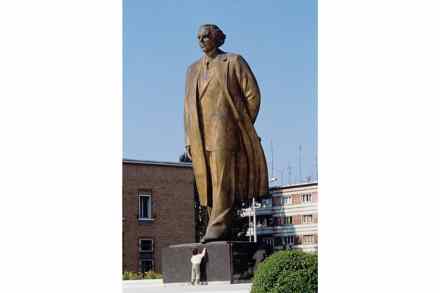
For many in the West, Albania remains as remote and shadowy as the fictional Syldavia of the Tintin comics. The country came into existence only in 1912, with the decline of the Ottoman Empire. Its first ruler, King Zog, was ousted by Mussolini when he invaded in 1939. Hitler used Albania as a springboard for

Darkness, desolation and disarray in Germany

From our UK edition

In Geoffrey Household’s adrenalin-quickening 1939 thriller Rogue Male, a lone English adventurer takes a potshot at Hitler and then runs for cover. Few Germans were brave or reckless enough to resist the Führer. Once Hitler’s lunacy had become manifest, however, the dilemma for German patriots was painful: to love the Fatherland yet desire the downfall

It takes a trained ear fully to appreciate Indian music

From our UK edition

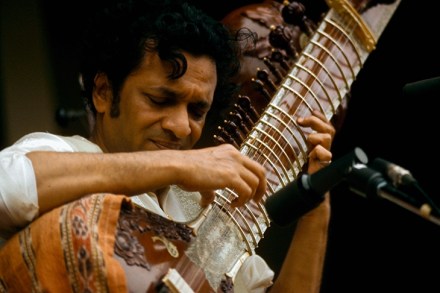
At George Harrison’s 1971 concert for Bangladesh, awkwardly, the audience applauded after Ravi Shankar and his musicians had paused to tune their sitars and tablas. ‘If you appreciated the tuning so much,’ Shankar said, half in jest, ‘I hope you’ll enjoy the music even more.’ To the untrained ear, Indian music may sound unmelodious and

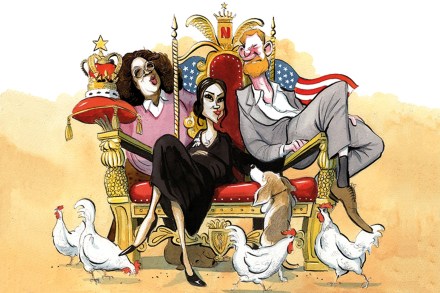
Battle royal: Harry and Meghan’s brand of revenge

From our UK edition

36 min listen

Is it fair to blame Meghan for the Royal Family’s problems? (00:55) Why is China censoring a book of Dante’s poetry? (12:40) Would you go to moon? (24:50) With The Spectator‘s US editor Freddy Gray; The Spectator’s restaurant critic Tanya Gold; author Ian Thomson; Kerry Brown, professor of Chinese Studies at King’s College London; The

My fight to stop the Chinese censors sanitising Dante

From our UK edition

My book on Dante Alighieri was due to come out in Chinese translation later this year, but first I had to consent to sizeable cuts. Even by the standards of other authoritarian states the Beijing censors struck me as overzealous. It seems odd that the medieval Italian poet could cause such unease among modern-day totalitarians.

CIA spies lose faith

From our UK edition

With its grim John le Carré atmosphere, communist Eastern Europe in the late 1980s was a melancholy, out-at-elbow place. The Estonian capital of Tallinn crawled with Russian money-changers (‘Comrade, we do deal?’). The television in my hotel room was detuned from capitalist Finnish to Soviet channels, but I was able to pick up Miami Vice

Alasdair Gray gives us a vivid new Paradiso

From our UK edition

As every Italian schoolchild knows, The Divine Comedy opens in a supernatural dark wood just before sunrise on Good Friday 1300. Dante Alighieri, a figure in his own work, has lost his way in middle age and is alone and frightened in the darkness. The ghost of the Roman poet Virgil is about to show

City of dazzling mosaics: the golden age of Ravenna

From our UK edition

When we refer to someone as ‘Byzantine’ we usually mean guileful or too complicated and labyrinthine in manner or speech. Perhaps the term is ill-applied: Byzantium, the medieval Greek city on the Bosporus which the Roman Emperor Constantine I renamed Constantinople, was not in essence an unfathomable, over-hierarchical or manipulative sort of place. It flourished

Should we all be prepping for the end of days?

From our UK edition

In the Covid-19 crisis the calamity-howlers have found a vindication: go back to survival mode and bunker down because nobody believed Noah until it was way too late. Bunker: Building for the End Times, a hybrid of reportage and philosophical musing, considers contemporary survivalist culture in all its manifest craziness, from the doomsday realtors who

Animation lends itself readily to propaganda

From our UK edition

Qasem Soleimani, the Iranian major-general blown up by the US over the New Year, will have seen himself arrested by Saudi troops in a computer-animated film of the ‘liberation’ of Iran from Ayatollah rule. Saudi Deterrent Force was a six-minute fantasy released online by anonymous video-makers in Saudi Arabia in 2017. It was viewed over

Franco’s exhumation could help decide the Spanish election

From our UK edition

I was no sooner in Madrid than General Franco was exhumed from his mausoleum not far from El Escorial. An air force helicopter ferried his remains from the Valley of the Fallen, where a gigantic stone cross marks the dictator’s grave as well as that of 34,000 Spanish Civil War dead. For four decades the