Ian Thomson

Ian Thomson is the author of books including Dante’s Divine Comedy: A Journey Without End.

Samuel Beckett’s bleak humour lives gleefully on

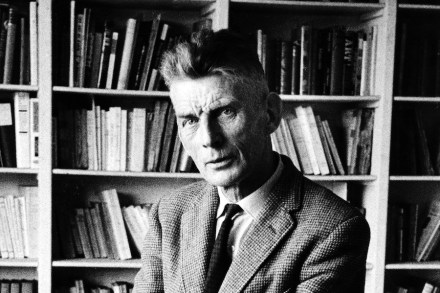
Samuel Beckett, with his quizzically peering gaze and handsome, hawk-like appearance, has long been the academic’s pin-up. Endless PhD dissertations exalt the Irish writer, who was born 120 years ago in Dublin on 13 April 1906, as an unsmiling existential hermit figure when he was really nothing of the sort. Over the 60 years of his writing career, Beckett created a memorable gallery of tramps, waifs and other 'crotchety moribunds' who find a lugubrious comedy in human failings. 'Nothing is funnier than unhappiness,' declares a character in Endgame, while Estragon in Waiting for Godot pines for death in a dry climate where they 'crucify quick'. Beckett’s terminal vision was bleakly humorous – and comedy often intruded on his life.
How Ulysses horrified the stuffed shirts of New York’s literary establishment

From our UK edition

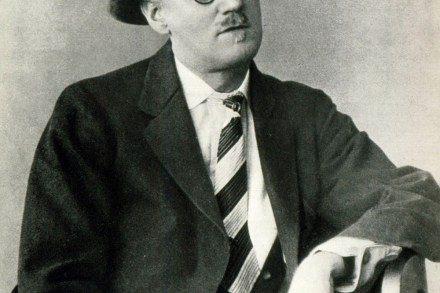
The word ‘obscene’, according to the dictionary, refers to anything ‘offensively or grossly indecent, lewd’. By the standards of the day, the Little Review was a borderline obscene, certainly at times salacious, literary journal. For the crime of serialising Ulysses – James Joyce’s then unpublished steamy masterwork – it was made to face obscenity charges. Operating out of Chicago and New York from 1914 to 1929, the journal introduced American readers to such modernist heavyweights as Ezra Pound, Wyndham Lewis and Gertrude Stein. It was not just a platform for bookish shock effects; it altered the course of American literary culture. James Joyce, who relished litigation, dreamed of a trial of Ulysses as clamorous as that of Madame Bovary Margaret C.

The Venice Ghetto was a landmark in the history of Jewish persecution

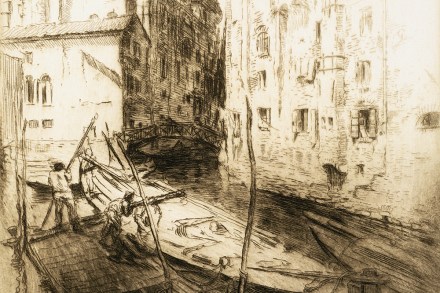
The word ‘ghetto’ is said to derive from the Venetian dialect term for ‘foundry’: ghèto. In the early 16th century, on the orders of the Doge, Jews were herded en masse from the centre of Venice to the Ghetto Nuovo, or New Foundry district, where metal workers had long cast cannon for the Venetian fleet. The Ghetto – the first of its kind on the Italian peninsula and anywhere in the world – became a model for segregated Jewish quarters throughout Europe. It was soon blighted by poverty, malnutrition and disease. The Ghetto Nuovo was a landmark in the history of Jewish persecution. In this fascinating history of the New Foundry and its inhabitants, Alexander Lee conjures the Adriatic seaport in all its strange glory.

Forgetting was the best defence for the Kindertransport refugees

From our UK edition

Michael Moritz, one of Silicon Valley’s most successful venture capitalists, really has got it in for Donald Trump. America is currently in a ‘dark age’ of authoritarian governance, he claims, which spurns legality and liberal do-gooders everywhere. As a lifelong Democrat, Moritz was appalled when, in 2017, Trump failed to denounce the alt-right protestors who chanted ‘Jews will not replace us!’ at a torchlit rally in Virginia. Understandably, Moritz is alarmed by the tide of anti-Semitism today. His Jewish parents narrowly escaped death in Hitler’s Germany when they came to the UK on the Kindertransport. The 71-year-old Moritz now asks the question: how long before the iron-studded jackboot returns to Europe?

Leonardo Sciascia and the reshaping of the detective novel

From our UK edition

Northern Italians sometimes speak of Sicily as the place where Europe finally ends. The island was conquered in the 9th century by Arab forces from north Africa, who left behind mosques and orchards of pistachio and almond. The Arab influence remains strongest in the Mafia-dominated west of Sicily where the sirocco blows in hot from Tunisia. Leonardo Sciascia, the Italian detective novelist and essayist, was born in Racalmuto in western Sicily in 1921. The town takes its name from the Arabic rahal maut, ‘dead village’, after Arab settlers found the area devastated by plague. It appears thinly disguised as Regalpetra in Sciascia’s work. For years the Mafia infiltrated the town’s sulphur industry, but the mines are derelict now and the landscape looks denuded.

Zadie Smith muses on the artist-muse relationship

From our UK edition

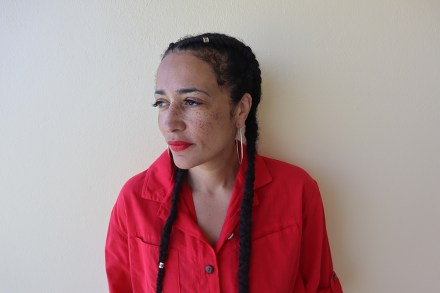
Zadie Smith was born in 1975 in the UK to a Jamaican mother and a British father, and grew up in the ethnically multi-shaded London borough of Brent. Her novels and essays often conjure the polyglot confusion and vibrant streetscapes of Willesden in north-west London where she went to school. Dead and Alive takes us from her beloved Kilburn High Road (Afro-wig emporia, pound shops) to an appreciation of a Stormzy concert at Glastonbury. This fourth essay collection is unfailingly interesting: Smith is uniquely placed to chart the vagaries of life in mixed-up, mixed-race Britain. Some of the greatest essayists of the 20th century were American. (Only a wordy journal such as the New Yorker could accommodate the long stroll, as perfected by Gore Vidal.

Auschwitz-themed novels are cheapening the Holocaust

From our UK edition

Israel would not have been born when it was – 1948 – without Hitler’s genocidal war on European Jewry. Dispossessed Jews had to be provided with a home. In the rush to establish a Jewish state in Palestine, safeguarding Arab nationalism was not the most pressing concern. Israel’s foundation thus marked a turning point in the fortunes of the world more grievous than anyone could have anticipated. Most European nations supported Israel during the Arab-Israeli war of June 1967, when President Nasser of Egypt moved his troops into Sinai on the Israeli border and, as part of a violent pan-Arabist ideology, vowed to eliminate Jews (and Christians).

Britain’s new role as a bastion of black culture

From our UK edition

One of the great works of journalism to have come out of the Jamaican-British encounter is Journey to an Illusion by the late Donald Hinds. Published in London in 1966, the book is made up of a series of interviews with Commonwealth citizens who had settled hopefully on these shores after the war. Hinds, who was born in Jamaica in 1934 and worked in London as a bus conductor, was disappointed to find that the British were not only unmindful of the Commonwealth, but disinclined to help African-Caribbean immigrants. (Gallingly for him, Italians in the Soho confectionary business were extended a warmer welcome, even though they had fought on Hitler’s side.) Inevitably as a ‘clippie’ on double-deckers, Hinds was exposed to racism.

Ian Thomson, Patrick Kidd, Mike Cormack, Ursula Buchan and Richard Bratby

From our UK edition

36 min listen

On this week’s Spectator Out Loud: Ian Thomson on what the destruction of the Hotel Oloffson means for Haiti (00:54); Patrick Kidd analyses Donald Trump and the art of golf diplomacy (06:43); Mike Cormack reviews Irvine Welsh’s Men In Love (16:49); Ursula Buchan provides her notes on the Palm House at Kew (20:38); and, Richard Bratby argues that Johann Strauss deserves better than to be the victim of snobbery – plus listen to the end for an extract from Strauss’s Emperor Waltz (24:24).  Produced and presented by Patrick Gibbons.

Hotel Oloffson is ruined – and so is Haiti

From our UK edition

Earlier this month, in Haiti’s tatterdemalion capital of Port-au-Prince, armed gangs burned down the Hotel Oloffson. As news of the attack spread, both Haitians and foreigners mourned the loss of one of the most beautiful gingerbread mansions in the Caribbean. Thinly disguised as the Hotel Trianon in Graham Greene’s 1966 novel The Comedians, the Oloffson had served as a meeting place for writers, journalists, actors and artists of every stripe and nationality. Past guests include Nöel Coward, John Gielgud, Marlon Brando, Tennessee Williams, Jacqueline Onassis and Mick Jagger (who wrote ‘Emotional Rescue’ there). Laughably, a room had been named after me as the author of a book on Haiti.

The Alfred Hitchcock of British painting

From our UK edition

Carel Weight, the inimitable painter of London life and landscape, was my godfather. I remember a clownish-faced elderly man with an air of mild quizzical enquiry, who for 16 years held one of the most important teaching jobs in Britain. In charge of painting at the Royal College of Art when David Hockney passed through, Weight taught the ‘Pop People’ (as he called them) – Peter Blake, Patrick Caulfield and R.B. Kitaj – as well as Bridget Riley, Leon Kossoff, John Bellany and the singer-songwriter Ian Dury. Weight himself never received the critical recognition he deserved. He was overshadowed to a degree by abstract expressionism, which crash-landed from the US in the 1950s. His day may yet come.

A psychopath on the loose: Never Flinch, by Stephen King, reviewed

From our UK edition

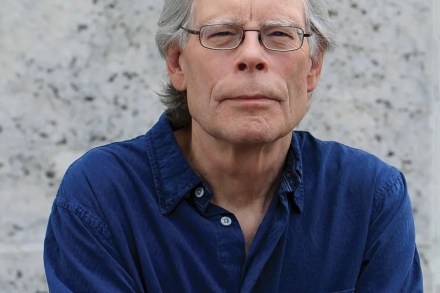
Stephen King, 77, is a writer of towering brilliance whose fiction appeals to a reading public both popular and serious. His 60th novel, Never Flinch, unfolds in Buckeye City, Ohio, where a serial murderer is on the loose under the alias of Bill Wilson – the name of the man who co-founded Alcoholics Anonymous. Wilson has sworn to kill 14 people in revenge for the death of a friend and former alcoholic who was framed and convicted for child pornography offences. The plot is steeped in AA lore (‘Honesty in all our affairs’) and an awareness of the deleterious effects of drinking to excess. It’s no secret that King is himself a recovering alcoholic.

The mystical masterpiece from Stalag VIII-A

From our UK edition

Olivier Messiaen was a French composer steeped in the solitude and ecstasy of Catholic mysticism: everything he wrote was dedicated to the greater glory of God. He was in thrall to the liturgical works of Stravinsky, but also to the percussive cling-clang of Javanese gamelan music and other eastern sonorities. His thirst for ‘un-French’ music sometimes put him at loggerheads with the Paris old guard who found him as fandangled and foreign as a pagoda. His ability to create new possibilities in sound was of course what made him modern. Messiaen was scarcely 20 when he wrote his hauntingly strange Préludes for piano in 1929 and the no less mysterious orchestral suite Les offrandes oubliées (Forgotten Offerings).

Norman Lewis – a restless adventurer with a passion for broken-down places

From our UK edition

The travel writer Norman Lewis, the son of a Welsh psychic medium, died in Essex in 2003 at the age of 94. In his darkly comic autobiography, Jackdaw Cake, he relates how, in 1937, his mother built a spiritualist church in the north London suburb of Enfield as a sort of Taj Mahal memorial to her late husband (who was a retail pharmacist as well as a psychic). Enfield is not a likely pocket of the paranormal, but the Enfield Beacon of Light is still going strong. During its table-rapping and other spook-dabbling sessions no one is allowed to make jokes about striking a happy medium. Spiritualism is dead serious. Lewis’s humdrum upbringing in Edwardian Enfield – aspidistras, astral-planing – was far removed from the social privilege of most literary travellers.

Philip Womack, Ian Thomson, Silkie Carlo, Francis Young and Rory Sutherland

From our UK edition

28 min listen

On this week’s Spectator Out Loud: Philip Womack wonders why students can't tackle university reading lists (1:12); Ian Thomson contemplates how much Albania has changed since Enver Hoxta’s dictatorship (6:12); Silkie Carlo reveals the worrying rise of supermarket surveillance (13:33); Francis Young provides his notes on Hallowe’en fairies (20:21); and Rory Sutherland worries that Britain may soon face a different type of migrant crisis (24:08).  Produced and presented by Patrick Gibbons.

Albania has long lived in Italy’s shadow

From our UK edition

Albanians are descended from the most ancient of European peoples, the Illyrians. The country came into existence only after 1912 with the demise of Ottoman power in Europe. Its first ruler, the glorified Muslim chieftain King Zog, was hounded out by Mussolini when fascist Italy invaded in 1939. (Zog was put up in London for a while at the Ritz.) Five years later the Nazi Germans were expelled by the Albanian resistance fighter Enver Hoxha. Outwardly a Stalinist, the artful Hoxha was a Muslim-born Ottoman dandy figure who terrorised his Balkan fiefdom through retaliatory murders, purges and the trap-door disappearance of class enemies. Albania has long lived in Italy’s shadow.

Starving street urchins sell their sisters in the chaos of Naples, 1944

From our UK edition

Naples is ‘certainly the most disgusting place in Europe’, judged John Ruskin. The boisterous yelling in the corridor-like streets and beetling humanity filled the Victorian sage with loathing. (‘See Naples and die’ became for Ruskin ‘See Naples and run away’.) In the city’s obscure exuberance of life he could see only a great sleaze. Naples still has a bad name. Tourists tend to hurry on through to visit the dead cities of Pompeii and Herculaneum, or jet-set Capri, renowned for the debauched excesses of Tiberius. Naples may lack the monumental grandeur of Rome, but visiting it constituted the gracious end to the Grand Tour during the 17th and 18th centuries. Naples, one-time Arcady of Bourbon kings and queens, has seen better days.

Ian Thomson, Andrew Watts, Sam Leith, Helen Barrett and Catriona Olding

From our UK edition

32 min listen

On this week’s Spectator Out Loud: Ian Thomson reflects on his childhood home following the death of his sister (1:20); Andrew Watts argues that the public see MPs as accountable for everything though they’re responsible for little (7:40); Sam Leith reveals the surprising problem of poetical copyright (13:47); Helen Barrett reviews Will Noble’s book Croydonopolis and explores the reputation of a place with unfulfilled potential (19:48); and, Catriona Olding ponders moving on from loss to love (26:09).  Produced and presented by Patrick Gibbons.

The deep sorrow of losing a sibling

From our UK edition

My sister died last summer, before her time, at 58. Her death has left me shaken with sorrow and remorse: we did not always get on. The other day I accompanied her daughters and husband to scatter her ashes on the Thames at Greenwich in south London where she and I had grown up. The great muddy waterway would take Clare’s ashes out to sea eventually. People like Liz Truss live in Greenwich now, but in my time the inhabitants were Labour-voting bohemian types. Daniel Day-Lewis (a brattish schoolboy) lived down the road from us on Crooms Hill with his poet father Cecil. At Greenwich Theatre opposite, Max Wall performed his anarcho-comic piano sketches on Friday nights. Claire Tomalin was a near neighbour (as was, later, Jonathan Sumption).

Katy Balls, Owen Matthews, Kate Andrews and Ian Thomson

From our UK edition

28 min listen

This week Katy Balls asks whether Rishi is a risk taker or whether he’ll choose to play it safe as Conference season approaches (01.17), Owen Matthews explains why America is still Ukraine’s best hope for victory (07.27), Kate Andrews is totally baffled and exasperated by the British refusal to get checked out by a doctor (15.34) and Ian Thomson reports from Sicily on the Godfather, Greek Temples and a misunderstanding involving mascarpone cheese (20.50). Produced and presented by Linden Kemkaran.