Ian Leslie

Ian Leslie is a journalist who writes The Ruffian Substack. His next book, John and Paul: A Love Story In Songs, is on the relationship between John Lennon and Paul McCartney.

Why centrists have an anger problem

There is an argument that the (further) disgrace of Peter Mandelson has been magnified out of all proportion. Mandelson was fired from his government post several months ago. These latest revelations will rightly ensure his permanent exclusion from civic life and possibly his inclusion in jail, but they shouldn’t be the dominant story of the day. Britain has much bigger and more urgent problems than the question of how to withdraw an honorary title from someone who can make no use of it anyway.Yes, the affair raises a question mark against Prime Minister Keir Starmer’s judgement, but the page is already dense with those. The marginal value of this one is near zero. Why aren’t we obsessing over our chronically sluggish economy? Our failure to build houses and infrastructure?

Keir Starmer is a populist who is bad at populism

For all his problems, Keir Starmer has never been a victim of high expectations. When he entered Downing Street in 2024, voters did not throng the streets as they did for Tony Blair in 1997. There was little talk of new dawns. Britain was too battered by Brexit and its aftermath, and by a series of dismayingly inadequate Tory prime ministers, to feel optimistic about its next leader. Starmer’s reversals stem from a staggering lack of forethought about how to run the country he had just spent three years campaigning to govern Then there was the leader himself, a man almost incapable of inspiring warmth or excitement. Voters accepted him as the least bad option. But there was also a sense that he was solid, dependable and competent.

Classical music is worth the effort

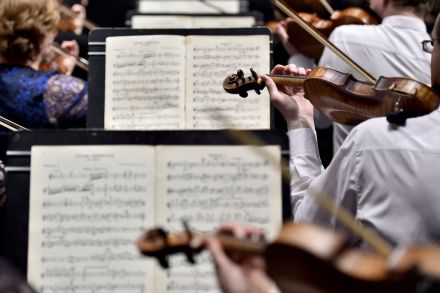
Last week I attended a performance of Mahler’s Symphony No.3 at the Barbican Centre in the City of London. Gustavo Dudamel conducted his former orchestra, which he nurtured to global fame: the Simón Bolívar Symphony Orchestra from Venezuela. It was a special night, as pretty much every performance of this symphony is. Mahler’s third is gigantic in every sense. His level of ambition for it was insane. He set out to do nothing less than capture the whole world: the creation of the earth, mountains and valleys, flora and fauna; all of music, high and low: the village band, church choir and Romantic orchestra; and all of humanity: joy and nostalgia and pain and terror, and, above all, love.

The advert that radicalised me

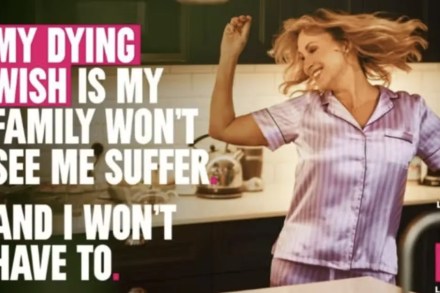
This is one of a series of posters that adorn the walls of Westminster Underground station, through which many MPs and aides travel to work. On Friday, MPs will be voting on whether or not to legalise assisted dying. The posters, funded by a campaign group called Dignity In Dying, present a series of individuals happily contemplating the prospect of ending their own lives. The vibe is feel-good, joyful and glossy, somewhere between a cosmetics brand and Kamala Harris ‘24. I think they are the creepiest ads I’ve ever seen. When this bill was introduced a couple of months ago, I didn’t have much of an opinion on the issue. I’d read that things were getting pretty weird in Canada and the Netherlands, so I was wary.

Keir Starmer is ruthless. But is that wise?

In 2019 Labour lost its fourth election in a row and suffered its worst defeat since 1935. The party was crushed, not just electorally but emotionally. In 2015, it had parted ways with Ed Miliband and fallen for Jeremy Corbyn, like a wounded lover rushing from one dysfunctional relationship into an even worse one. For four years it tore itself apart in a series of unseemly internecine rows over a leader despised by most of its own MPs, pilloried in the press, and held in contempt by voters, including traditionally Labour voters. Ideologues held sway in the party’s institutions and at its grassroots. The electoral map had been reshaped to the Tories’ advantage, perhaps permanently, by Brexit. Labour now needed a staggering 123 additional seats to win a majority.

Why the mid-1960s was the golden age of pop music

On a Monday evening in May 1966, Paul McCartney and John Lennon visited a nightclub called Dolly’s in Jermyn Street. The two Beatles were accompanied by two Rolling Stones, Brian Jones and Keith Richards. Already at the club was Bob Dylan, stopping off in London on his European tour. Dylan had first met Lennon and McCartney nearly two years earlier at the Delmonico Hotel in New York. All four Beatles, then in the first flush of American success, had gone to meet him after playing to thousands of screaming teenagers at a tennis stadium in Queen’s. Their fascination with his lyrical and emotional maturity was already showing in their songs. Although Dylan was less likely to admit it, the influence went both ways.

Andrew Doyle and Ian Leslie: How do we disagree?

51 min listen

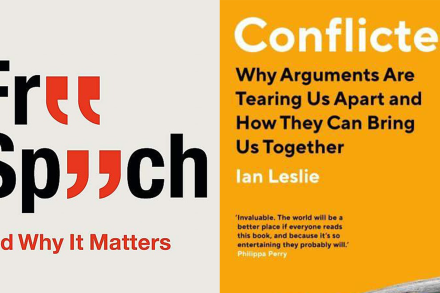
The public conversation - especially on social media - is widely agreed to be of a dismally low quality. In this week’s Book Club podcast I’m joined by two people who have ideas about how we can make it better. Andrew Doyle’s new book is Free Speech: And Why It Matters; Ian Leslie’s is Conflicted: Why Arguments Are Tearing Us Apart And How They Can Bring Us Together. We talk free speech, tribalism, cancel culture - and how we can learn to disagree more productively.