Ian Acheson

Ian Acheson

Professor Ian Acheson is a former prison governor. He was also Director of Community Safety at the Home Office. His book ‘Screwed: Britain’s prison crisis and how to escape it’ is out now.

Fining parents for their children’s crimes misses the point

From our UK edition

Justice Secretary David Lammy is planning an overhaul of the youth justice system that would see the parents of young offenders more likely to be fined or even jailed for failing to deal with their children's behaviour. The Ministry of Justice is planning to strengthen the power of parenting orders issued by the courts in the hope it will help prevent children from embarking on lives of crime. Lammy is right: parents do bear moral responsibility for the conduct of their children, and the state must not be embarrassed about saying so.


Prevent has become a dumping ground for troubled young men

From our UK edition

Prevent was created in 2003 as part of Britain's national strategy for countering violent extremism; its purpose is to spot and stop tomorrow’s terrorists. Instead, as the Home Affairs committee quietly concedes in a report out today, it has become a catch‑all dumping ground for every troubling young man with a TikTok habit, a nebulous grievance and no clear ideology at all. That is not a technical glitch. It is the logical endpoint of a system that has forgotten its purpose, inverted its threat picture and now measures success in referrals rather than disrupted plots. Buried in the committee’s sober prose is an extraordinary admission: there has been an 'escalation in Prevent referrals involving no clear ideology and no clear signs of radicalisation to terrorism'.

Long may the Met’s phone theft crackdown continue

From our UK edition

I was in London recently carrying a simple piece of kit I never thought I would need: a lanyard tethering my phone to my wrist. This would make it harder for my mobile to be snatched from my hands on the street by latest scourge plaguing London: gangs of masked young men on e-bikes targeting pedestrians for their phones. This phenomenon has threatened to make our capital’s premier shopping destinations no-go areas for worried pedestrians. Only 1 per cent of reported phone thefts from hotspots like Oxford street result in a conviction. In recent years, the Met police have been accused of indifference to the crime, which had reached record levels, increasing 84 per cent between 2021 and 2024.

‘Supermax’-style prisons for terrorists are overdue

From our UK edition

David Lammy had a good outing yesterday – they are as rare as hen’s teeth when you’re leading the Ministry of Justice – so he ought to take the win. The Deputy Prime Minister was in the House of Commons to make a statement on a report by Jonathan Hall KC into prison terrorist separation centres, following a horrific attack on officers at one of these units in HMP Frankland last year. Convicted Islamist Hashem Abedi, responsible for the Manchester Arena bomb atrocity in 2017, allegedly attacked prison staff in the separation unit last October, attempted to murder three officers  by stabbing them with improvised weapons and scalding them. It was a ferocious and unprovoked assault in what should have been one of our most closely supervised and secure pieces of prison real estate.

How Shabana Mahmood’s police reforms could backfire

From our UK edition

This afternoon, Home Secretary Shabana Mahmood unveiled a set of sweeping police reforms. These include increased police response times, the reduction of constabularies from 42 across the country to 12, a new licensing regime for officers and a new centralised agency, the National Police Service, created to deal with national challenges such as organised crime, terrorism and cyber fraud. A national centre for policing will also be created to centralise and rationalise training, equipment and IT. These proposals will require a huge amount of (mostly performative) change and a years-long transition to a new policing model that will likely outlast Mahmood's tenure.

The crisis in Britain’s newest prison is embarrassing

From our UK edition

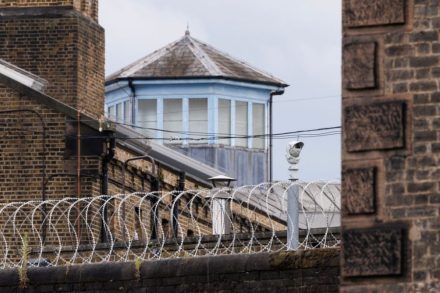
Local monitors at Britain’s newest £400 million ‘super prison’, HMP Millsike, have written to ministers to raise the alarm about plunging standards there. Millsike, a medium security category C prison in the Vale of York, opened in March last year and run by Mitie Custodial Services, has a capacity of 1,500 prisoners. It’s not clear how many prisoners it currently houses, but it’s very obvious from this red alert to prisons minister Lord Timpson that they – and not the prison custody officers – are already the ones in control.  Mitie was awarded a contract worth £329 million to run the prison in the spring of 2024. Let’s see what the taxpayer is getting in return since it opened last March.

The terrible cost of the Met Police’s diversity drive

From our UK edition

In the shadow of recent scandal, the Metropolitan Police's tougher vetting regime promised a cultural renaissance. Yet the admission yesterday that thousands of recruits slipped through without proper vetting, breeding predators within, reveals a force still haunted by its own institutional rot. After the conviction of PC Wayne Couzens for the rape and murder of Sarah Everard while a serving officer five years ago, the Casey report into the force described an organisation that was culturally and operationally incapable of stopping very bad people from becoming warranted police officers. Tough new measures were introduced that doubled refusal rates for applicants and nearly 100 officers and staff were dismissed as a result of a re-vetting process.

Britain’s justice system has failed Andrew Clarke

From our UK edition

In 42 months’ time we will be at the start of yet another summer that Andrew Clarke will never see. That’s the amount of time the law has decided Mr Clarke’s killer Demiesh Williams, convicted of manslaughter, should spend in custody before being released on license. Our sentencing guidelines and the judge interpreting them have failed to deliver justice that is recognisable to many people outraged at that leniency. That is a dangerous place to be in an already low-trust society. The facts are that Mr Clarke and Williams got involved in an altercation at a south east London Sainsbury’s in March this year after Williams pushed into a queue in front of him. The location and context could not be more banal in contrast to the devastation that followed.

Mahmood must not waste her chance to reform the police

From our UK edition

The Home Secretary is feeling the collars of our 43 chief constables. Shabana Mahmood has let it be known that she favours a dramatic reduction in police forces in England and Wales to as few as 12. Her comments come ahead of the publication of a white paper on policing in the new year. The white paper has, in typical fashion, been delayed because – in a style now familiar to both her admirers and detractors – Mahmood wishes to be bolder than the many previous attempts to reform policing which have become stuck in the bureaucratic glue over the past few decades. We do need urgent reform in policing but not simply in the dead language and terminology of the bean counter.

Should the police use facial recognition on children?

From our UK edition

Should cops spy on kids? The revelation that police are including surveillance of young people in their expanding use of live facial recognition (LFR) systems to detect criminals and deter crime has upset the civil liberties lobby and a few MPs. Should we take these concerns seriously? LFR was introduced in south Wales in 2016 and was rolled out nationwide in England and Wales from 2020 onwards. The operating principles have evolved during pilot schemes but are now built around cameras in liveried vans passively scanning crowds and comparing the faces of citizens against a database. Artificial intelligence scans the biometric details, alerting the operator to ‘hits’ against a curated ‘watchlist’.

Good riddance to Police and Crime Commissioners

From our UK edition

So farewell then, Police and Crime Commissioners (PCCs). The government has just announced that this weak and useless experiment in local democracy will be terminated. Few people will notice outside the cottage industry of ineffectual crime busters who will be receiving redundancy notices. That’s part of the problem. Elected PCCs were introduced in 2010 as a flagship Conservative commitment to get police chiefs to respond to local priorities on crime. Instead, they become symbols of wasteful bureaucracy, partisan meddling and bungling oversight. They were set up to replace opaque and often toothless policing authorities composed of local councillors.

Why Prevent doesn’t work

From our UK edition

Our state counterterrorism strategy ‘Prevent’ is overwhelmed. This is the strand of our national plan, ‘Contest’, to defeat extremism. Prevent is charged with spotting and stopping tomorrow’s terrorists, but the official data on its operation over the last reporting year, released yesterday, paints a picture of mission creep and distraction and an organisation and that can’t do this job. Far from identifying people who want to kill for ideas, Prevent has become a repository for vulnerable and often dangerous young people who have been failed by every other state agency. Its net is cast so wide that very bad people have fallen through it and into atrocious crimes.

The real reason prisoners keep being accidentally released

From our UK edition

You’d need a heart of stone not to feel sympathy for Alex Davies-Jones. Labour’s minister for victims was on human sandbag duty for the Justice Secretary David Lammy this morning – tasked with explaining to the media why there had been another two accidental releases of convicted prisoners. The fact these blunders came only days after an another illegal migrant sex offender was released instead of deported was difficult enough to defend. But her response – which amounted to some waffle about sending in ‘tech experts’ – might make Lammy reconsider deploying junior ministers who seem to know even less about our chaotic penal system than he does.

Terror is becoming worryingly familiar in Britain

From our UK edition

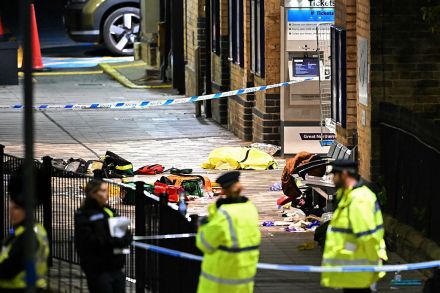
After the very latest mass casualty attack on Saturday night, on a busy London North Eastern Railway train in Huntingdon, police and government quickly told us not to speculate about the motives of the alleged attacker. Eleven people were hospitalised in the attack, with one in a critical condition at the time of writing. It’s hard not to speculate when a banal experience most of us are familiar with – a train journey – is brutally upended in this way. It is hard to ignore the fact that we are seeing more and more people with no ideology resorting to extreme, often spontaneous violence But we must stop there, apparently, to be told by some politicians that the enemy is not the maniacs who increasingly threaten us but the danger of speculating about their motives.

How the state tried to ‘safeguard’ Axel Rudakubana

From our UK edition

The Southport inquiry into the murderous frenzy of Axel Rudakubana has broken for half term. Officials who have been already damned by their own evidence of incompetence and disarray must be thanking their lucky stars that the accidental release of Hadush Kebatu from HMP Chelmsford has stolen the media’s attention. But this is a slow-motion disaster that has far to go. It's almost impossible to list the mountain of professional failures across our protective agencies that led to that fateful day in July 2024 and the national riots that followed. And we are only in the foothills of this investigation. The findings will be explosive and yet entirely predictable. The failures will likely illustrate a profound and systemic collapse in the UK’s safeguarding network.

Jim Gamble is the right man to lead the grooming gang inquiry

From our UK edition

We desperately need the national inquiry into child grooming gangs to get underway – both for the sake of the many victims and to hold both institutions and individuals to account. After months of backsliding then hopeless dithering by this government we are close to getting an inquiry chair appointed. Two candidates are in the frame, one of them is Jim Gamble. Since his name has been announced, he has been the subject of completely unwarranted attempts to blacken his reputation by casting him as an unsuitable establishment stooge. I would argue he’s exactly the sort of person we need to rip the covers off this child protection scandal.

Only Harry Potter can charm Devon’s drivers

From our UK edition

As a title, Harry Potter and the Potholes of Devon wouldn’t survive the editor’s pen – but sometimes life is more spellbinding than fiction. Just ask the villagers of Lustleigh, a few miles from where I live on Dartmoor, who have J. K. Rowling’s franchise to thank for making one of the lanes of their chocolate-box home usable again.  For years, Lustleigh residents have been cursed by gaping holes in the road surfaces. But last week the TV company HBO, which is filming in the village for its adaptation of the young wizard’s exploits, was forced to do what Devon County Council apparently couldn’t and fill in the holes on one path themselves.

How was Ian Watkins killed in prison?

From our UK edition

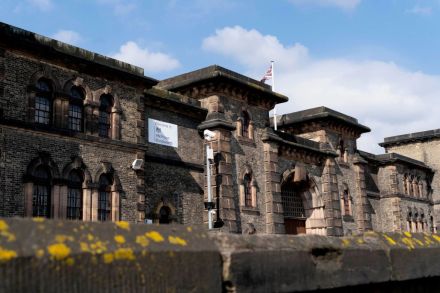
Why should we care about a degenerate paedophile allegedly put to death by those locked up with him in prison? Ian Watkins, the former lead singer of the Welsh rock band the Lostprophets, was reportedly stabbed to death in HMP Wakefield yesterday. Watkins was convicted in 2013 of multiple counts of sexual violence against children, including babies, in offences so depraved many people would say he deserved his execution by the state. He was serving a 29-year sentence. Two prisoners have been arrested by West Yorkshire police on suspicion of his murder. Absent any sympathy for the wretched way this man lived and died, this incident is important because of what it says about the dire state of our high security jails.

Should Stephen Lawrence’s killer be freed?

From our UK edition

David Norris was convicted of the racist murder of Stephen Lawrence in April 1993 and now wants to be released from prison. Should he be? That is a question the Parole Board will consider as Norris has now served the minimum custodial term of a life sentence imposed in 2011. This body has the power to direct his release or refuse it on the grounds of risk to the public. While it is independent of politics, the profile of the perpetrator and the seriousness of the case means the new Justice Secretary, David Lammy – who has described the murder of Lawrence as a ‘seminal moment’ in shaping his understanding of racism in the criminal justice system – might well attempt to appeal any direction to release Norris.

The ghost of October 7 haunts one Israeli kibbutz

From our UK edition

A little over two months ago, I stood in the fallow murderscape of the Nir Oz kibbutz facing towards the barbed border fence with Gaza. Once, this village in southern Israel was a thriving community of 400 Jewish people, known for their left-wing ideologies and progressive ideals. But, two years ago on this very day, 500 Hamas terrorists smashed holes in the security wall, poured into Israel and stormed this quiet kibbutz. Nir Oz suffered the worst violence per capita of any village in the country that day, with a quarter of its population either slaughtered or taken hostage. Now only burned and looted cottages remain in this deserted memorial to inconceivable cruelty.