Ian Acheson

Ian Acheson

Professor Ian Acheson is a former prison governor. He was also Director of Community Safety at the Home Office. His book ‘Screwed: Britain’s prison crisis and how to escape it’ is out now.

Gentler stop and search tactics won’t keep Britain safe

What sort of mojo do you want your police officer to bring with them the next time you’re stopped and searched? The Metropolitan police asked Londoners to help them use this procedure better: one quoted consultation response was to stop using ‘bad energy’ in such an encounter. Perhaps the answer to London’s awful street crime problem is more astrology than criminology. Such comments have influenced the creation of a new ‘charter’ eighteen months in the making, which signals the advent of kinder, gentler frisking in the nation’s capital. Of course, most people reading this piece will never have reason to be approached by a police officer in the street, detained and subject to their possessions being examined.

Cracking down on Facebook won’t stop teenagers being radicalised

I’ve yet to meet an oncologist, thank God. But if I did turn up to be told I had cancer I wouldn’t expect him to start treating me with a chainsaw. That was my thought this morning when I read that our national counter-terrorism chief had described the effect of exposing kids to violent content online as carcinogenic. Matt Jukes, Asistant Commissioner for Specialist Operations for the Met Police, suggested that a ban on social media for the under 16s was a way to address the scourge of adolescent maniacs mobilised by online extremism who turn hateful thought into lethal action.

Why do Home Office staff think talk of two-tier policing is ‘extremist’?

How do you create a low-trust society? One way to do so is to have an administrative class which seems to treat the views of ordinary people with contempt. Today’s news of a leaked Home Office report on counter-extremism is a classic of the genre. The report, commissioned by the Home Secretary, Yvette Cooper, in the wake of the August 2024 riots, says that claims of ‘two-tier policing’ are a ‘right-wing extremist narrative'.  This is a rather bold assertion, not least because the widely held and almost certainly correct perception that police obfuscation over the identity of the Southport child murderer Axel Rudakubana was a catalyst for disorder in the summer. Trust in our public institutions is at historically low levels.

Prevent is not solely to blame for Southport failings

The assailant in the Southport massacre has pleaded guilty to the murders of three children in the town last year. Keir Starmer has leapt with unusual speed to authorise a public inquiry into what drove Axel Rudakubana into his frenzy of killing and if it could have been prevented. We now know that the state’s protective agencies crossed Rudakubana multiple times; he was referred three times to the government’s Prevent strategy, which is supposed to spot and stop tomorrow’s terrorists before hateful thought turns into lethal action. Prevent officials can’t be the only agency under scrutiny for their handling of this case The Prevent strategy has been under huge scrutiny recently following the publication of a review of its effectiveness by the writer Sir William Shawcross.

Empty pledges won’t solve the knife crime epidemic

On 23 September last year at 6.30 p.m. in the evening in a street in Woolwich, London, Daejaun Campbell cried out, ‘I’m 15, don’t let me die’ as he bled out on a pavement after being stabbed. You probably won’t remember Deajaun but he was a one of nine children murdered by knives in London last year. He was a young black man in a city where victims and perpetrators often share the same ethnicity. An investigation by the Times has revealed that over half the 576 black people murdered by knives between 2013 and 2023 were aged between 16 and 24. London bucks a national trend that reports knife crime in line with demographics – predominantly committed by white people aged in their 30s. In our capital the majority of offenders sentenced for knife offences are aged 18-20.

How front-line police were failed in the summer riots

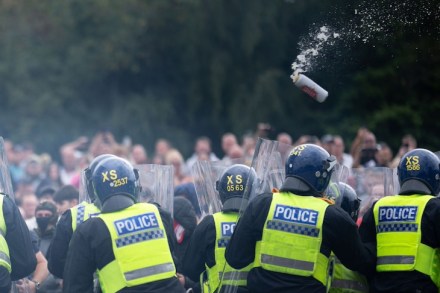
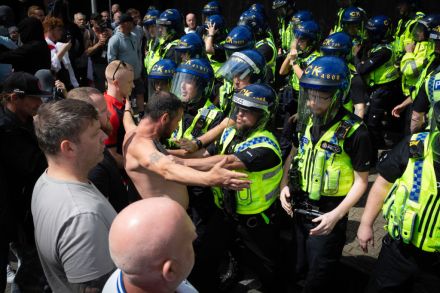
The police establishment has delivered its initial verdict on this summer’s rioting, following the massacre of children at Southport. Andy Cooke, His Majesty’s Chief Inspector of Constabulary and a former chief constable for Merseyside, yesterday published the first part of a report ordered by the Home Secretary to examine the policing response and make recommendations. The review very clearly states that forces underestimated the power and potency of ‘extreme nationalist sentiment’ and that this was a significant aggravating factor in the rioting that disfigured communities across the country. Is this a justifiable focus?

Why Labour’s policing targets won’t work

This week, the Home Secretary Yvette Cooper plans to announce new police performance targets. Perhaps the government has been stung by the growing perception that Labour's stance on law and order consists mainly of hurty words overreach and emptying jails. But as the legacy of well-meaning but dumb crime policies introduced by the last Labour administration shows, Cooper should beware the law of unintended consequences. Back in the late Noughties, I was by day the Home Office’s senior official in South West England, accountable for crime, drugs and counter terrorism. By night, I struggled into an ill-fitting stab vest and became Special Constable 74170. It gave me a unique opportunity to see nationally imposed crime targets from both ends of the telescope.

Is Airbnb to blame for rising crime in London?

Does Airbnb drive up crime in London? That’s the question posed of the world’s most successful short-term rental service in new research by the Cambridge Institute of Criminology. The UK's holiday rental market is enormous, projected to reach £3.5 billion this year. Airbnb eats up a sizeable chunk of that revenue; millions on the move take advantage of what the platform has to offer in the nation's capital. And surely where there’s brass there’s muck? Well, sort of. The research claimed a 'positive association' between areas of London where there were high levels of Airbnb and increased criminality.

Mass prisoner releases aren’t working

Today, over a thousand offenders will walk out of jail early as part of the government’s ongoing emergency scheme to ease the pressure on our crippled prison system. This time at least officials have dropped the pretence that no dangerous criminals will walk free earlier than a judge decided they should serve. Goodbye just deserts, hello justice by logistics.   It remains to be seen whether we’ll witness the previous disgraceful scenes of people celebrating with champagne in front of our prisons.  But our criminal justice system is so hollowed out by complacency and incompetence, I wouldn’t bet against it happening again.  As well as undermining public confidence in the rule of law, these mass releases are not freeing up space in our prisons either.

Texas-style reforms won’t save our prisons

Texas. Big country, big ideas. The new Lord Chancellor and Justice Secretary Shabana Mahmood has become enamoured with an intriguing idea from the Lone Star state – letting prisoners out early for good behaviour. Those of you who still watch reruns of Porridge on BritBox will be having déjà vu. Back before the Criminal Justice Act of 1991 ended it due to preference for a more risk-based approach, remission was a central feature of prisoners' lives. Good behaviour could earn you days off your sentence up to one third of time you were due to serve. The penalty of misbehaviour was lost remission. The prison population in 1991 was about half what it is now. We also need action to restore order and control Necessity, however, is the mother of invention.

Labour’s early prison release scheme can’t afford to fail

Are you ready for SDS40? You might need to be if you’re unlucky enough to live in a high crime area. This is the anodyne descriptor for the government’s emergency release of an estimated 5,000 offenders this month and next, having served only 40 per cent of their sentence in prison custody. This is the result of a hospital pass from the outgoing Conservative government who passed laws to lock more people up for longer without any coherent thought about where they would be banged up. The statutory instrument to allow this release in two tranches comes into effect on 10 September. About 2,000 prisoners are set to be released then into community supervision by the probation service.

How long can our prison system carry on like this?

Can the Ministry of Justice carry on without our failing prison system seizing up altogether? Today we learned that Magistrates are being urged by the Chief Judge not to send convicted offenders to prison until room can be made for them in prison cells. After the riots last month, there are only a few hundred jail cells left for male adults nationally. Police custody cells that housed hundreds of arrested rioters are being used by ‘Operation Safeguard’ to deal with prison overspill. Under Operation ‘Early Dawn’, court hearings are being delayed until jail space becomes available. Bail conditions could be more draconian than being locked up in a prison where it’s easier to get Ketamine than a working kettle Even so, these desperate measures are obviously not enough.

Why the police have lost the public’s trust

The Home Secretary has admitted a thing that has long been known to those of us without close protection officers: that in many communities, people often feel that ‘crime has no consequences’.  Her remarks this morning also acknowledged another pretty obvious fact: that the country has lost respect for the police. Yvette Cooper’s words are strikingly overdue. The government’s own crime data for last year tells a sorry tale: in England and Wales, the proportion of crimes resulting in a charge was 5.7 per cent. An increasing number of cases are closed with no suspect identified – nearly 40 per cent. Nearly three-quarters of burglary cases are closed without an offender being held to account.

Can our prisons take these ‘thugs’?

16 min listen

Keir Starmer will be chairing his first Cobra meeting, as the government continues to grapple with the rioting that has broken out across the country. The weekend saw numerous examples of violence, including at hotels thought to be hosting asylum seekers. We had a statement from the prime minister condemning the ‘right wing thuggery’, but do we need a more complete approach to extremism? And will our prisons and our courts be able to accommodate the huge influx of offenders?  Oscar Edmondson speaks to Katy Balls and Ian Acheson, senior advisor to the Counter Extremism Project.  Produced by Oscar Edmondson.

Can our prisons take these thugs?

The last comparable period of civil disorder in this country happened in 2011. Then as now, the courts acted with speed and severity to try to quell five days of rioting in multiple locations, which traumatised the nation, caused hundreds of millions in damage and injured more than three hundred officers. The head of the Crown Prosecution Service at the time was one Keir Starmer. Now, as prime minister, he seeks again to confront the horrific street violence with the same apparent energy and determination. But can a punitive response work to stop violence that has at times threatened to overwhelm the police? Times have changed, and our criminal justice system is in tatters.

The ‘community cohesion’ concept explains confusing police tactics

Merseyside police were very keen to rule out the Southport attack as ‘terrorism-related’. This was despite subsequent remarks from the Home Office that counter-terrorism police were still assisting the investigation. That muddled explanation will fall on deaf ears. Whether this turns out to be an act encompassed within the dry legalistic definition of terrorism, the dead are still dead. Why are the police in the firing line this weekend? Why have they not been more forthcoming originally on details? Could a quicker reaction have dampened the riots we have seen over the past few days? One reason that the police strategy looks so baffling could be Merseyside’s concern that nebulous ‘community cohesion’ must be protected at all costs. Was it a flawed calculation?

Of course whole-life prisoners should be banned from marrying

Is there any point in rehabilitating prisoners sentenced to ‘whole life’ tariffs, who will die in custody? Today’s announcement banning such prisoners from a fundamental human right – to get married – would suggest the state thinks there isn’t. This act, contained in an innocuous statutory instrument is a rare example of retribution in action. We don’t hear much about revenge in our criminal justice discourse these days – that, after all, is the less pretty descriptor for one of the three main aims of imprisonment. Society takes revenge for harm done on the part of the individual because crime is a societal hurt. This is the reason why such trials are styled as Rex or Regina vs the alleged perpetrator. By convention, these are crimes against the King.

Can Labour solve our prisons crisis?

16 min listen

Justice secretary Shabana Mahmood has acknowledged that ‘our prisons are on the point of collapse’. She has announced that, from September, most prisoners serving sentences of less than four years will be released 40 per cent of the way through their sentences instead of the halfway point, which is currently the case. The policy will ease pressure on prisons, but the question remains; could this backfire? Katy Balls speaks to Fraser Nelson and Professor Ian Acheson, former prison governor and former Director of Community Safety at the Home Office. You can listen to Shabana Mahmood on Women With Balls here.

How Labour’s jail strategy could come unstuck

Let’s talk cobblers. The Prime Minister has responded to the jail space crisis by ennobling the nation's shoe mender-in-chief James Timpson and making him minister for prisons, probation and parole. This is a bold move but not one without risk. It would only take one high-profile crime committed by a prisoner on early release to plunge the strategy into crisis Timpson has made his fortune out of the ubiquitous key cutting and watch repair outlets that sprout from many big supermarkets. He’s less well known for a passionate interest in penal affairs. He became the first household name retailer to employ carefully screened prison leavers in his shops and they have returned his trust by becoming some of his best workers.

There is no quick fix for Britain’s overcrowded prisons

Imagine the scene. It’s Friday morning and the new Secretary of State for Justice, Shabana Mahmood, has just slipped into the big chair. Her predecessor has left her a note on the desk, ‘I'm afraid there is no cell space. Kind regards – and good luck! Alex.' With prison capacity running at 99 per cent and new jails still on the far horizon, the first priority of the new Lord Chancellor is to stop the criminal justice system grinding to a halt. Keir Starmer, aware that the shelf life of ‘inherited mess’ will be brutally short, has gone on TV to prepare public opinion for the emergency early release of prisoners to continue and go even further. The party's tough on crime poetry pre-election will collide with the prosaic reality of full, anarchic prisons.