Ian Acheson

Ian Acheson

Professor Ian Acheson is a former prison governor. He was also Director of Community Safety at the Home Office. His book ‘Screwed: Britain’s prison crisis and how to escape it’ is out now.

Should Stephen Lawrence’s killer be freed?

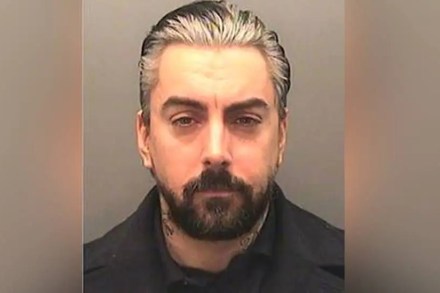
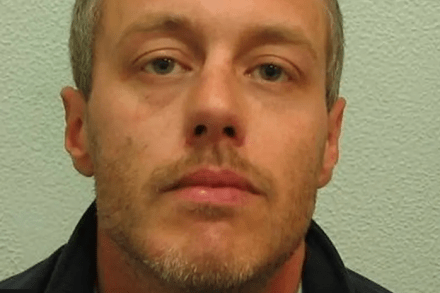
David Norris was convicted of the racist murder of Stephen Lawrence in April 1993 and now wants to be released from prison. Should he be? That is a question the Parole Board will consider as Norris has now served the minimum custodial term of a life sentence imposed in 2011. This body has the power to direct his release or refuse it on the grounds of risk to the public. While it is independent of politics, the profile of the perpetrator and the seriousness of the case means the new Justice Secretary, David Lammy – who has described the murder of Lawrence as a ‘seminal moment’ in shaping his understanding of racism in the criminal justice system – might well attempt to appeal any direction to release Norris.

The ghost of October 7 haunts one Israeli kibbutz

A little over two months ago, I stood in the fallow murderscape of the Nir Oz kibbutz facing towards the barbed border fence with Gaza. Once, this village in southern Israel was a thriving community of 400 Jewish people, known for their left-wing ideologies and progressive ideals. But, two years ago on this very day, 500 Hamas terrorists smashed holes in the security wall, poured into Israel and stormed this quiet kibbutz. Nir Oz suffered the worst violence per capita of any village in the country that day, with a quarter of its population either slaughtered or taken hostage. Now only burned and looted cottages remain in this deserted memorial to inconceivable cruelty.

Britain can’t pin Manchester’s attack on ‘assailants alone’

Ministers aren't always the quickest to take accountability in a time of crisis. So, it is easy to see why, after yesterday’s atrocity at a Manchester synagogue, the line being pedalled by the Home Secretary Shabana Mahmood this morning was that responsibility for the attack lies with ‘the assailants alone’. Snappy rhetoric, but it won't keep Britain’s Jews any safer from harm. The trajectory of radicalisation that seems to have taken the suspect Jihad Al-Shamie from hateful thoughts to murderous action takes not just a village, but an institutionalised nation. That’s a growing void of responsibility no number of words can paper over.

Does tagging prison leavers really stop them reoffending?

Finally, some good news for the Ministry of Justice (MoJ) – tagging works! Last week, the prisons minister was unleashed to proclaim that the latest data on electronic monitoring (EM) of offenders not in custody shows the concept works. Well, up to a point, Lord Timpson. A study of 3,600 offenders on tagging orders has reportedly shown a statistically significant reduction in their rates of reoffending compared with non-tagged prison leavers. It fell from 33 per cent to 26 per cent, which is not bad for government work. We should be grateful that giving ankle tags to offenders means only a quarter of them will go on to commit burglaries, thefts or robberies. There is, of course, a zero-risk baseline to compare this ‘progress’ against – incarceration.

Facial recognition will save lives at Notting Hill Carnival

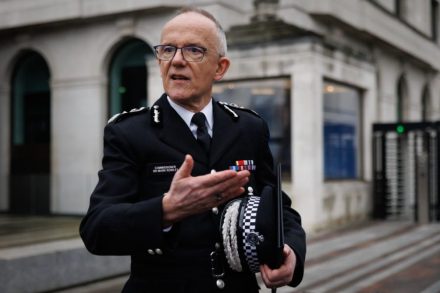
If Big Brother is watching you, who is watching Big Brother? A coalition of the willing has come together to challenge the Metropolitan police over plans to use facial recognition technology to prevent disorder at this weekend’s Notting Hill Carnival. Civil liberties and anti-racist groups have written an open letter to the Met Commissioner Sir Mark Rowley raising ‘significant concern’ over both the concept of mass surveillance at the festival and claims that the technology is racially biased against people in ethnic minorities. We should not dismiss these allegations lightly.

How to solve Britain’s shoplifting epidemic

Fifteen years ago, at the tail end of Blairism, I was running things for the Home Office in Southwest England. We had well-funded schemes across the region to tackle ‘prolific and other priority offenders’ (PPOs) who were torturing communities with crime. It seems almost quaint in the present context to recall the enthusiasm and effectiveness of the five local constabularies on my patch to prosecute the ‘catch and convict’ strand of the strategy. Rates of reoffending plummeted. The aim was straightforward: make life impossible for those engaged in criminal impunity. Those determined criminals who committed disproportionate levels of burglaries and shoplifting were harried from the moment they left their front doors. The message was uncompromising – give up or get banged up.

Police chiefs must learn to use their common sense

Britain’s top cop club has released new guidance to forces in England and Wales on when and how to describe the suspects of serious crimes. It’s a day late and a dollar short. The National Police Chiefs Council (NPCC), stirred from their deckchairs by nationwide riots of only twelve months ago, are now advising constabularies that it’s probably a good thing in most circumstances if people's ethnicity and immigration status are disclosed at the point of charge. If you’re wondering why it takes this body in conjunction with the College of Policing to tell chiefs they are allowed to use common sense, you’re in good company.

The Met Police dealt with the Palestine Action protest admirably

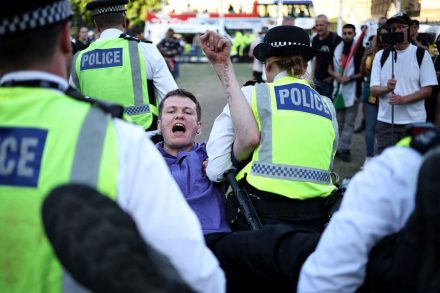
Jonathan Porritt’s arrest under the Terrorism Act 2000 is the apogee of a ‘luxury belief.’ Unlike the dozens of other younger people arrested in Westminster on Saturday for supporting the proscribed organisation Palestine Action (PA), Sir Jonathon Espie Porritt, 2nd Baronet CBE is a longstanding member of the administrative and political boss class. He declared himself ‘privileged’ to be nicked with the grandiose pomposity reserved for people who, by age or means, are insulated from any consequences. Others, inspired by their sanctimony, face potentially lifelong consequences for financial independence and freedom of movement, citizenship or employment, whether arrested or convicted.

Are Britain’s prisons ready for this summer’s protests?

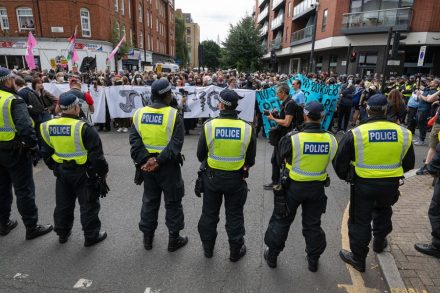
We’re looking at a busy weekend for the country's criminal justice system, already permanently running red hot. The activist group Defend our Juries is organising a mass protest in London on 9 August to oppose the government's ban on Palestine Action (PA), which was proscribed as a terrorist organisation in early July. The stated purpose is to overwhelm the police and courts to prove the proscription is not just immoral in their eyes but unworkable. I have my own difficulties with the proscription of PA, not because I remotely support their aims but because I believe they act more as an organised criminal enterprise for which we have actually already got some quite draconian legislation. This could be used to close down such flagrant disregard for our laws and criminal damage.

How police chiefs can win back Britain’s trust

Policing and crime commissioners haven’t exactly fired up the public imagination since they were introduced in 2012. PCCs were intended to make police forces more accountable, but you’re more likely to come across one in the headlines for personal misconduct than their crime-fighting zeal. However, there are some signs of change in the air thanks to our crisis of illegal migration. Hampshire and the Isle of Wight's PCC Donna Jones revealed yesterday that she had been effectively told to ‘shut up for the sake of diversity’ by a new Labour minister after comments she made on the widespread disorder last August following the Southport attack.

Farage is right: our police must be tougher

A few years ago, I was encouraged to apply for a role within the College of Policing for an advisory body on a revamped code of ethics for police officers. When asked what sort of qualities the code should embody, my answer was succinct: ‘moral and physical courage.’ I didn’t make the cut, of course, and was sent a rejection letter that said the days of insolent corner boys like me were over, thanks very much. I was put in mind of this yesterday when Reform announced its new agenda on crime and policing. The party's leader Nigel Farage said that thousands of new police officers will fill the streets, paid for by cancelled bat tunnels and wind farms.

Must we forgive the 7/7 bombers?

‘Bear in mind these dead, I can find no plainer words,’ wrote the Northern Irish poet John Hewitt reflecting on the Troubles's terrible death toll. How we remember the victims of terrorism and articulate the harm it causes comes to mind today, the 20th anniversary of the 7/7 Islamist attack on London’s transport network. The bombings killed 52 commuters and sentenced hundreds more to a life without limbs, eyes or peace of mind. Not everyone can or should subscribe to ‘don’t look back in anger’ Many of the victims of 7/7 have spoken in detail about how they have used sometimes miraculous escapes to reframe their lives and give them new purpose. Others have spoken about the freedom and closure of forgiveness.

Terrorist prisoners should be kept on a military base

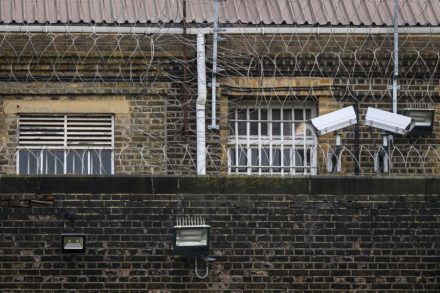
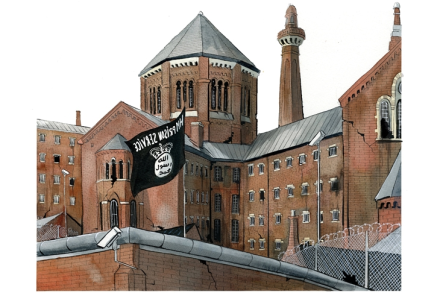
The murder of a prison officer on duty is closer now than at any time in the last 25 years. That was the inevitable conclusion I reached after the shadow justice secretary Robert Jenrick commissioned me to look into the threat posed by terrorists inside our high-security prisons and the safety of front-line staff in across our chaotic and dysfunctional penal estate. The impetus was a number of atrocious attacks in what ought to be our securest facilities – allegedly carried out by extremists using improvised weapons to maim and murder officers.

Labour’s prison reforms will flop without more police funding

The sentencing reforms announced by Labour last week were primarily an attempt to address a capacity crisis. This is something we need to be clear on, however much David Gauke's report is embellished by talking points borrowed from the progressive criminal justice commentariat. Eliminating short sentences of twelve months or less is not about community safety, it's about logistics. This morning’s warning shot by the country's top police chiefs that a lack of investment will jeopardise their ability to carry out these reforms underscores the risk posed when our bursting jails are emptied of still dangerous offenders without regard for the impact.

The police have questions to answer after the Liverpool car incident

Could the carnage and horror that played out on the streets of Liverpool city centre yesterday have been averted? We now know that 24 people were hospitalised, four with very serious injuries, when a car drove into crowds attending Liverpool’s Premier League championship victory parade. Merseyside constabulary, undoubtedly stung by their mishandling of the Southport attack details, which contributed to a week of national rioting last year, were commendably quick off the mark. We knew very quickly that the individual believed to be the driver of the vehicle was a 53-year-old white British man from the city. While the motive remains unknown, terrorism has been firmly ruled out.

The good and the bad of the sentencing reforms

Our prisons are nearly full to bust once again so the Ministry of Justice has been flying some kites ahead of the review of sentencing led by recovered Tory David Gauke. The ‘leaked’ idea involves the reintroduction of remission of time spent in prison for good behaviour. While the Justice Secretary Shabanna Mahmood is said to be impressed with how a similar system in Texas cut the prison population dramatically, the idea of time of your sentence for behaving yourself is quintessentially British. Most episodes of the BBC comedy Porridge will contain a reference to remission, granted or removed and how it shapes an offender’s journey. That’s because from 1948 to 1991 it was embedded in the system.

Is the era of cowardly criminals hiding from court over?

The disconnect between actions and consequences that bedevils this country’s justice system suffered a modest reversal today. The government has announced that legislation will be introduced to compel convicted offenders to appear before the judge at a sentencing hearing or face sanctions. This honours a promise made by Keir Starmer's predecessor Rishi Sunak after he met the parents of Olivia Pratt-Korbel, a nine-year-old girl murdered by Thomas Cashman last year. Cashman refused to attend the court in an act of utter cowardice. Will these new powers be used? That is a question with a political answer. The fact that a few additional days in prison on top of a 42-year minimum sentence or no access to the gym would only have a symbolic effect in this case misses the point.

The HMP Frankland attack should never have happened

How do you break the rule of law inside our jails? You could do worse than try to murder a prison officer on duty, which by all accounts nearly came to pass yesterday. The terrorist Hashem Abedi, the brother of the Manchester Arena bomber, reportedly came within seconds of doing so in a frenzied attack on prison officers in the separation unit of HMP Frankland. Three were sent to hospital, seriously injured by a combination of stab wounds and burns from hot oil. I know a thing or two about separation units. I called for their creation when I did an independent review of Islamist extremism in our prisons, as ordered by the editor of this magazine, who was then Justice Secretary.

Are our jails unfixable?

The Commons Public Accounts Committee (PAC) report, published today, addresses the prison cell crisis in the UK, highlighting huge government and organisational failures in managing prison capacity. We may be wary of the term, but it is yet another description of a system in crisis, with many prisoners stuffed into ‘inhumane conditions’, looked after by a battered and overwhelmed front line of officers, many of whom leave before they have finished their probation. This latest devastating critique focuses on a four-way car crash of broken promises, wild miscalculations, reactive mismanagement and the absence of solid planning. The PAC is the group of cross-party MPs who scrutinise government spending.

Britain is not prepared for car ramming terrorist attacks

At least two people have died and several injured after a car was driven down a busy shopping street yesterday in Mannheim, in western Germany. A 40-year-old man has been arrested. It is not clear yet if this attack was ideologically motivated. But car attacks like this are becoming horrifyingly common in Germany. In Magdeburg and Munich either side of last Christmas a total of seven people were murdered in two separate car rammings. In both cases, the suspected attackers were foreign nationals.